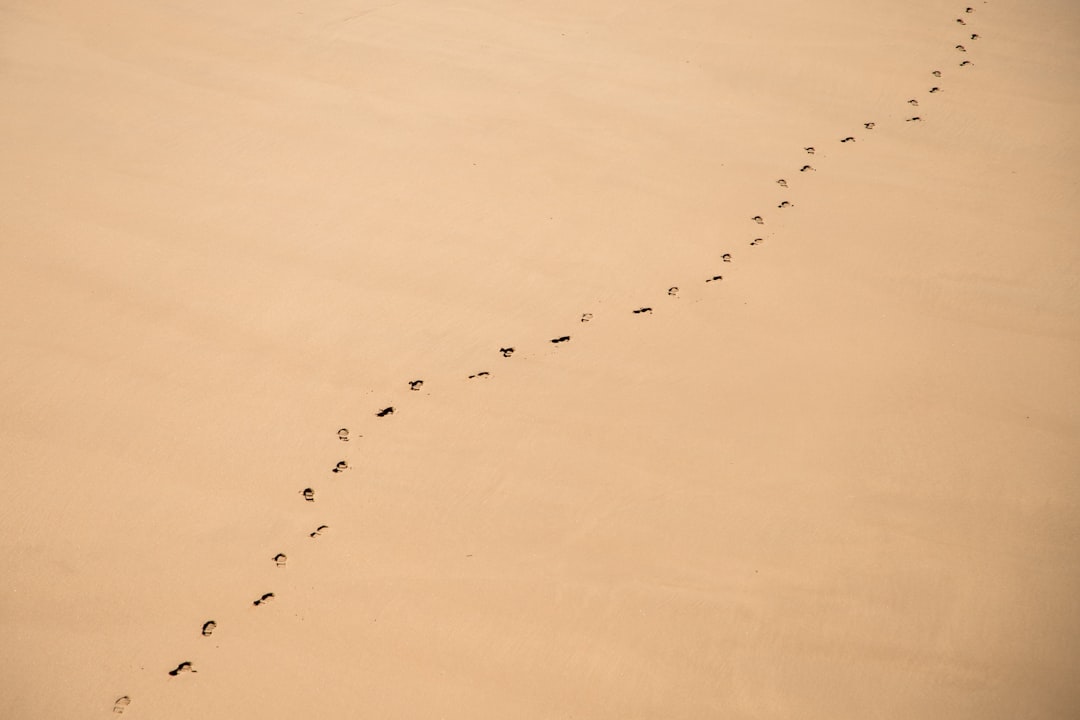
Lake Otero, nestled in the stark, sun-baked expanse of New Mexico, has long been a place of quiet mystery. For millennia, its shores have witnessed the passage of time, the slow erosion of rock, and the ephemeral marks of life. Recently, however, this ancient lakebed has yielded a discovery of extraordinary significance: a collection of human footprints, preserved in the hardened mud, that push the boundaries of our understanding of early human presence in North America. This article delves into the remarkable story of Lake Otero’s ancient footprints, exploring their discovery, their scientific implications, and the profound questions they raise about our human past.
The story of the Lake Otero footprints began not with a grand scientific expedition, but with the patient observation of nature and a keen eye for detail. The lake itself, though often reduced to a dry, dusty basin, holds within its layers a testament to wetter epochs. These sedimentary deposits, over countless years, have acted as a natural canvas, preserving ephemeral traces of the life that once roamed its edges.
A Persistent Drought and Revealing Mud
For many years, Lake Otero has been a stark reminder of the arid New Mexico climate, its once-prominent waters receding to a mere memory for most. However, this prolonged period of drought, while devastating for the region’s current ecosystems, proved to be a serendipitous catalyst for archaeological discovery. As the lakebed dried and cracked, the layers of sediment began to loosen and shift. It was within these newly exposed, hardened mud layers that the first hints of something extraordinary began to emerge.
The Role of Wind and Erosion
The relentless force of the New Mexico wind, often a source of frustration for those living in the region, played a crucial role in the initial uncovering of the footprints. Over time, the wind eroded the surface layers of the lakebed, gradually exposing the buried strata. These erosional processes, working in concert with the drying and cracking of the mud, began to reveal subtle indentations that were unlike the natural undulations of the terrain.
The Accidental Discoverer
The individual credited with the initial discovery of the Lake Otero footprints is a testament to the power of citizen science and the importance of noticing the unusual. While the specific identity of the discoverer is often subject to local lore and varying accounts, the consensus points to an observant individual, likely a local resident or a regular visitor to the area, who was familiar with the landscape. This person, perhaps out for a walk or engaged in routine land management, noticed a series of distinct impressions in the hardened mud that seemed too regular, too deliberate, to be mere geological formations.
Recognizing the Unmistakable Shape
What set these particular impressions apart was their clear, undeniable resemblance to human feet. The distinct heel strike, the arch, and the individual toes were all discernable, even after thousands of years of burial. This was not the amorphous imprint of an animal or the random pattern of water flow; these were the unmistakable signs of bipedal locomotion, of humans walking across the ancient mud.
The discovery of ancient footprints at Lake Otero has sparked significant interest among archaeologists and historians, as they provide valuable insights into the lives of early human inhabitants in the region. For those looking to explore more about ancient technologies and the mysteries surrounding lost civilizations, a related article can be found at Unlocking the Mysteries of Lost Tech. This article delves into the intriguing connections between ancient innovations and their impact on modern understanding of human history.
Scientific Scrutiny and Initial Assessments
The initial report of the footprints, once it reached the scientific community, was met with a mixture of excitement and cautious skepticism. Extraordinary claims require extraordinary evidence, and the implications of such a find were profound. A rigorous process of investigation and verification was set in motion to confirm the authenticity and age of these remarkable impressions.
The Archaeological Survey
Once alerted to the potential discovery, archaeologists and paleontologists from local universities and research institutions quickly organized expeditions to Lake Otero. Their primary objective was to conduct a thorough survey of the area, map the extent of the footprint field, and collect initial data. This involved careful documentation of each individual print, noting its size, shape, depth, and orientation.
Meticulous Mapping and Documentation
The survey team employed a variety of techniques to ensure comprehensive data collection. Ground-penetrating radar was considered, though the nature of the hardened mud made its effectiveness uncertain. Instead, the team relied on meticulous hand-mapping, using GPS coordinates to precisely locate each significant print. High-resolution photography, often from multiple angles and with specialized lighting, was used to capture the details of each impression. In some cases, casts were made of particularly well-preserved prints, allowing for more detailed analysis in a laboratory setting.
Preliminary Age Estimation
The crucial question surrounding the Lake Otero footprints was their age. Were they recent imprints, or did they represent a truly ancient presence? Scientists employed several methods to begin answering this question.
Stratigraphy and Geologic Context
The first clue to the age of the footprints came from their geological context. The footprints were found in a specific layer of sediment that was clearly identifiable as belonging to a past epoch when Lake Otero was filled with water. Geologists studied the surrounding rock formations and sediment layers to establish a relative age for this stratum.
Understanding Lake Otero’s Paleo-environment
Scientists have long studied the paleo-environment of Lake Otero, understanding that it has experienced cycles of wet and dry periods over vast stretches of time. The specific sedimentary layers where the footprints were found could be correlated with periods of significant lake activity, indicating a time when humans would have had reason to be present at its shores.
Radiocarbon Dating of Associated Organic Material
To obtain a more precise age, scientists looked for organic material within the sediment layers that were directly associated with the footprints. This could include ancient plant matter or even microscopic remains of organisms that lived at the time the footprints were made. Radiocarbon dating of this organic material provides a numerical age range for the sediment and, by extension, for the footprints. Initial radiocarbon dating provided dates that were startlingly ancient, suggesting a human presence far earlier than many previously accepted timelines.
The Implications of an Ancient Presence

The dating of the Lake Otero footprints, placing them tens of thousands of years in the past, sent ripples of excitement and debate through the scientific community. These findings have the potential to fundamentally alter our understanding of the peopling of the Americas, challenging established theories and opening new avenues of research.
Challenging Established Timelines
For decades, the prevailing scientific consensus, based on archaeological evidence such as the Clovis culture, suggested that humans first arrived in North America around 13,000 years ago. The Lake Otero footprints, with their much older dates, directly contradict this timeline, suggesting a much earlier migration into the continent.
The Clovis First Theory and its Demise
The “Clovis First” theory, named after the distinctive fluted projectile points found at Clovis, New Mexico, had dominated North American archaeology for much of the 20th century. It posited that the Clovis people were the first humans to inhabit the Americas, migrating from Asia across the Bering Land Bridge. However, a growing body of evidence, including finds like the Lake Otero footprints, has begun to dismantle this long-held theory.
Evidence of Pre-Clovis Sites
The discovery at Lake Otero is part of a broader trend of archaeological findings that point to pre-Clovis human presence in North America. Sites such as Monte Verde in Chile, Paisley Caves in Oregon, and now Lake Otero in New Mexico, collectively build a compelling case for human occupation of the Americas occurring thousands of years before the Clovis period.
Rethinking Migration Routes and Strategies
If humans were present in North America as early as the Lake Otero footprints suggest, it necessitates a re-evaluation of how they arrived and how they adapted to their environment. The traditional Bering Land Bridge migration route, while still a likely factor, may not have been the only pathway, or the entire story.
Alternative Migration Hypotheses
The possibility of coastal migrations, where early humans traveled along the Pacific coastline by boat, is gaining traction. The Lake Otero footprints, found inland, could represent the descendants of such groups who then moved further into the continent. Alternatively, there may have been multiple waves of migration over extended periods, with different groups employing diverse strategies for dispersal.
Adaptation to Diverse Environments
These ancient peoples would have had to possess remarkable adaptability to thrive in the varied landscapes of North America, from the icy northern regions to the arid deserts. The Lake Otero footprints, found in what would have been a wetland environment, hint at their ability to exploit diverse ecological niches.
The Nature of the “Otero People”

While the footprints provide irrefutable evidence of human presence, they offer only glimpses into the lives of the individuals who made them. The scientific pursuit now focuses on inferring as much as possible about these ancient people from the scant evidence available.
Physical Characteristics and Gait
The size and shape of the footprints offer clues about the physical characteristics of the individuals. Scientists can estimate the height and possibly the weight of the individuals based on the depth and length of their impressions.
Foot Size and Stature Estimation
By measuring the length and width of the footprints, and using established anthropological formulas, researchers can estimate the approximate stature of the individuals. This allows for a comparison with other early human populations and can help determine if these were short-statured hominins or early anatomically modern humans.
The Stride and Pace of Life
The spacing between consecutive footprints can provide insights into the gait and speed of movement of the individuals. Were they walking briskly, or moving at a more leisurely pace? Were they traveling alone or in groups, indicated by the clustering of prints?
Social and Behavioral Insights
Beyond physical attributes, the arrangement and patterns of the footprints can offer tantalizing clues about the social behaviors of these ancient populations.
Group Dynamics and Movement Patterns
The presence of multiple sets of footprints, some overlapping or running parallel, can suggest group travel. Were these families, hunting parties, or simply individuals moving through the landscape? The patterns of their movement, whether in a straight line or with detours, can reveal aspects of their daily activities and intentions.
Environmental Interactions
The location of the footprints, at the edge of a ancient lake, suggests a direct interaction with the environment. They were likely present to access water, hunt aquatic or terrestrial animals that frequented the lake, or gather resources. This underscores their reliance on and adaptation to the natural world.
Recent discoveries at Lake Otero have unveiled ancient footprints that provide fascinating insights into early human activity in North America. These findings not only shed light on the lives of prehistoric peoples but also connect to broader themes of human evolution and adaptation. For those interested in the evolution of labor and its historical context, an intriguing article explores the transformation of the American factory worker, which can be found here. This connection highlights how our understanding of ancient societies can inform our perspective on modern work dynamics.
Future Research and Lingering Questions
| Location | Date Discovered | Age of Footprints | Number of Footprints |
|---|---|---|---|
| Lake Otero, White Sands National Park, New Mexico | 2009 | 21,000 years old | More than 400 footprints |
The discovery at Lake Otero is not an end point, but rather a starting point for a wealth of future research. The site holds the potential to unlock even more secrets about early human history, but it also raises new questions that will drive scientific inquiry for years to come.
Preserving a Priceless Heritage
The preservation of the Lake Otero footprints is of paramount importance. These fragile traces of the past are vulnerable to natural forces and human impact, requiring careful management and protection.
Conservation Efforts and Site Management
Scientists and conservationists are working together to develop strategies for protecting the footprint site. This includes limiting public access to sensitive areas, establishing buffer zones, and implementing measures to mitigate erosion and other environmental threats.
The Ethics of Excavation and Study
Discussions are ongoing about the ethical considerations of further excavation or disturbance of the site. The goal is to balance the scientific imperative to learn with the need to preserve this irreplaceable cultural and natural heritage for future generations.
Unanswered Questions and New Frontiers
Despite the immense significance of the Lake Otero footprints, many questions remain unanswered, prompting new avenues of research.
The Extent of the Footprint Field
While a significant number of footprints have been identified, it is possible that the full extent of the field remains undiscovered. Further surveys and potentially more advanced remote sensing techniques could reveal a much larger area of preserved human activity.
Genetic and Biomolecular Analysis
Future advancements in paleogenetics could potentially allow for the analysis of DNA fragments preserved in the mud, offering insights into the lineage and genetic makeup of these ancient people. This would be a groundbreaking step in understanding their relationship to modern human populations.
The Role of Other Fossil Sites
The Lake Otero discovery will undoubtedly spur renewed interest and investigation at other potential early human sites across the Americas. Scientists will be re-examining existing evidence and searching for new locations that might hold similar ancient clues, contributing to a more complete picture of human migration and settlement. The whispers of ancient footsteps at Lake Otero echo across time, inviting us to listen, to learn, and to reconsider everything we thought we knew about our shared human journey.

These Footprints Could Rewrite the Story of the First Americans
FAQs
What are the Lake Otero ancient footprints?
The Lake Otero ancient footprints are a collection of fossilized footprints found in the White Sands National Park in New Mexico. These footprints are believed to be over 10,000 years old and are thought to have been left by early inhabitants of the area.
How were the Lake Otero ancient footprints discovered?
The footprints were discovered by a team of researchers from the United States Geological Survey (USGS) who were conducting a survey of the area. The footprints were found in a dried-up lake bed and were preserved by the unique geological conditions of the region.
What do the Lake Otero ancient footprints tell us about early human history?
The footprints provide valuable insight into the behavior and movement patterns of early humans in North America. They also offer evidence of the presence of humans in the region during the last ice age, shedding light on their migration patterns and interactions with the environment.
How are the Lake Otero ancient footprints being preserved?
The footprints are being carefully documented and studied by a team of researchers to ensure their preservation. The USGS is working with the National Park Service to develop a plan for protecting and managing the footprints for future generations.
What is the significance of the Lake Otero ancient footprints?
The footprints are significant because they provide a rare and valuable glimpse into the lives of early humans in North America. They offer a tangible connection to our ancient ancestors and contribute to our understanding of human history and migration patterns.