
The icy grip of the Arctic has always held a magnetic allure for explorers, a vast and unforgiving frontier promising glory and discovery. Among the most persistent and ultimately tragic of these adventurers was Sir John Franklin, a man whose name became inextricably linked with the enduring mystery of the Northwest Passage. His final expedition, launched in 1845, was intended to be the triumphant charting of a navigable sea route connecting the Atlantic and Pacific Oceans, a dream that had tantalized mariners for centuries. Yet, this ambitious endeavor would instead plunge into an enigma that would haunt the British Admiralty and captivate the public imagination for decades.
For centuries, the quest for a Northwest Passage was driven by a potent cocktail of economic, political, and scientific ambitions. European powers, particularly Britain, sought a shorter maritime route to the riches of Asia, bypassing the lengthy and perilous journeys around the southern tip of Africa. The passage was not merely a geographical curiosity; it was seen as a strategic imperative, a potential gateway to trade and a testament to naval prowess.
Early Ventures and the Growing Understanding of the Arctic
The early attempts to find the passage were fraught with hardship and often ended in failure, yet each expedition chipped away at the vast unknown. Explorers like Martin Frobisher and Sir Martin Frobisher braved the icy waters in the 16th century, laying the groundwork for future endeavors. The 17th century saw figures like Henry Hudson push further north, discovering vast bodies of water that bore his name, but still failing to connect the oceans.
The British Admiralty’s Persistent Support
The British Admiralty, recognizing the strategic importance of the passage, consistently funded and dispatched expeditions. This patronage, while enabling exploration, also placed immense pressure on commanders to succeed. The Arctic, however, proved a formidable opponent, its frozen expanses and unpredictable ice conditions presenting challenges that often overwhelmed even the most seasoned mariners. The scientific curiosity also played a role, with expeditions aiming to study the region’s unique flora, fauna, and geological formations.
Sir John Franklin’s ill-fated expedition to find the Northwest Passage has long captivated historians and adventurers alike, highlighting the challenges of Arctic exploration in the 19th century. His journey not only symbolizes the quest for new trade routes but also reflects the geopolitical tensions that arise in contested territories. For a deeper understanding of the modern implications of such explorations, you can read the article on navigating these complex geopolitical landscapes at Navigating Contested Territories: A Complex Geopolitical Landscape.
Sir John Franklin: A Seasoned Arctic Explorer
Sir John Franklin was not a novice when he embarked on his fateful voyage in 1845. His career was punctuated by a series of Arctic expeditions, each contributing to his growing reputation as a capable and resilient leader. His experiences had honed his skills in navigation, survival, and leadership in the most extreme conditions imaginable.
Early Expeditions and Growing Recognition
Franklin’s Arctic career began in the early 19th century. He participated in Captain David Buchan’s expedition to the North Pole in 1818 and later led his own overland expedition to the Arctic coast of North America from 1819 to 1822. This grueling journey, marked by extreme hardship and starvation, nonetheless produced valuable cartographical information and scientific observations. His subsequent expedition, from 1825 to 1827, further solidified his standing as a seasoned explorer.
The Appeal of Command: The 1845 Expedition
By 1845, Franklin was a highly respected figure within the Royal Navy, a Rear-Admiral with a distinguished service record. When the opportunity arose to command a major expedition to finally solve the Northwest Passage, it was a natural fit. The Admiralty, eager to see the passage charted, provided significant resources for this ambitious undertaking. The expedition was equipped with two state-of-the-art ships, HMS Erebus and HMS Terror, designed to withstand the rigors of Arctic ice.
The Grand Departure: Setting Sail for the Unknown

In May 1845, Sir John Franklin, at the age of 59, stood on the deck of HMS Erebus, ready to embark on what he hoped would be the crowning achievement of his career. The two ships, crewed by experienced officers and men, were provisioned for three years, a testament to the optimism and confidence surrounding the expedition. The departure from Greenhithe, England, was met with public fanfare and widespread anticipation of success.
The Best Equipped Expedition to Date
The 1845 expedition was, by all accounts, the best-equipped Arctic expedition launched up to that point. HMS Erebus and HMS Terror were reinforced with iron plating to protect them from ice damage, and they carried an unprecedented supply of provisions, including a substantial amount of canned food, a relatively new technology that promised better preservation. The ships were also equipped with steam engines for auxiliary power, a significant technological advancement for Arctic exploration.
The Last Sighting and the Silence
The expedition sailed north, meeting supply ships in Greenland for final provisions. The last confirmed sighting of Franklin’s ships was by whaling captain Peter Corry on July 26, 1845, near Baffin Island. They were reportedly sailing west, into the icy embrace of the Arctic, with the hope of a swift passage. From this point onwards, a chilling silence descended, and the world began to wait.
The Vanishing Act: The Fate of Franklin’s Expedition
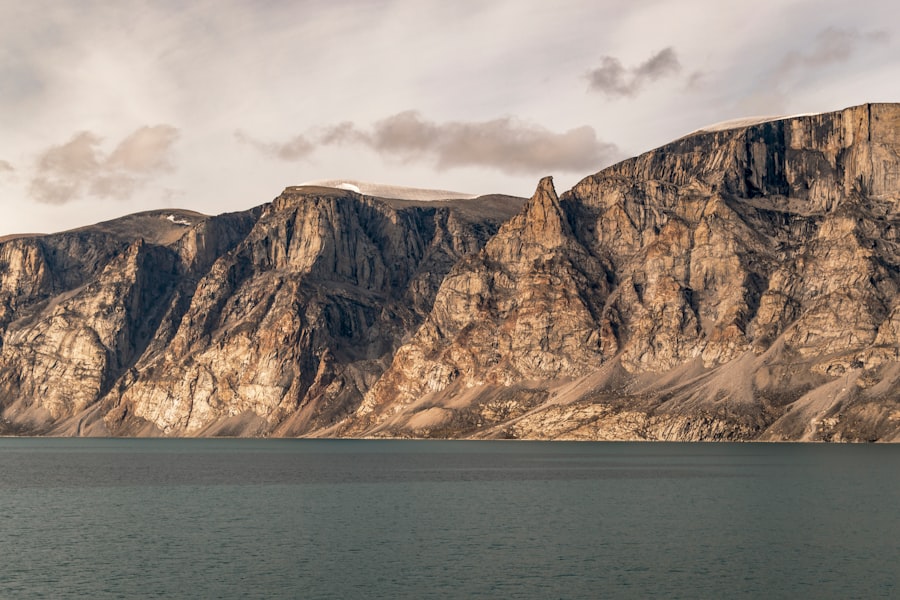
As months turned into years, the silence from Franklin’s expedition grew more profound and increasingly alarming. The Admiralty initially held onto hope, but as the expected return date passed without any word, concern began to mount. The fate of the 129 men aboard Erebus and Terror became one of the greatest maritime mysteries of the 19th century.
Initial Search Efforts and Growing Despair
The British Admiralty, under pressure from the public and Franklin’s concerned wife, Lady Jane Franklin, initiated a series of search expeditions. These early efforts, beginning in the early 1850s, were hampered by the vastness of the Arctic and the limited knowledge of the region. Despite the bravery of the searchers, they found no trace of the missing ships or their crew.
Grim Discoveries: The Ice-Bound Ships and the Inuit Testimony
It wasn’t until 1854 that the first concrete, albeit grim, evidence emerged. Explorer John Rae, conducting an overland expedition for the Hudson’s Bay Company, encountered Inuit who recounted a harrowing tale of a ship and its starving crew found on the King William Island. The Inuit spoke of seeing European sailors walking inland, many succumbing to illness and starvation. Rae also discovered artifacts belonging to the Franklin expedition, including cutlery and a plate bearing the Admiralty crest, confirming the tragic fate of at least some of the crew.
The Discovery of the Wreckage
Decades later, in the 21st century, the mystery finally began to unravel with the discovery of the wrecks of HMS Erebus and HMS Terror. In 2014, Parks Canada located the remains of HMS Erebus, remarkably well-preserved in the frigid Arctic waters off King William Island. Three years later, HMS Terror was discovered nearby, also in excellent condition. These underwater discoveries provided invaluable insights into the final days of the expedition, offering tangible evidence of the ships’ fate and the desperate struggle for survival.
Sir John Franklin’s ill-fated expedition to navigate the Northwest Passage has long captivated historians and adventurers alike, shedding light on the challenges faced by explorers in the 19th century. His journey is often compared to the earlier explorations of Antarctica, where pioneers braved the harshest conditions in search of new territories. For those interested in the broader context of exploration during this era, an insightful article can be found that discusses various explorers of Antarctica before 1820. You can read more about these remarkable figures and their contributions to exploration by visiting this link.
Echoes of Tragedy: The Legacy of the Lost Expedition
| Expedition | Year | Outcome |
|---|---|---|
| First Expedition | 1819-1822 | Unsuccessful |
| Second Expedition | 1825-1827 | Unsuccessful |
| Third Expedition | 1845-1848 | Disappeared |
The disappearance of Sir John Franklin’s expedition left an indelible mark on maritime history and the collective consciousness. The prolonged search efforts, the heartbreaking discoveries, and the enduring mystery all contributed to a powerful narrative of human courage and the unforgiving nature of the Arctic.
The Human Cost: Starvation, Disease, and Desperation
The evidence gathered from Inuit testimony and subsequent archaeological finds painted a stark picture of the expedition’s end. The ships had become trapped in the ice, likely in the Victoria Strait, forcing the crew to abandon them and attempt to trek south. The lack of a navigable passage, coupled with dwindling supplies and the onset of scurvy and possibly botulism from the canned food, led to widespread starvation and death.
The Endurance of the Mystery and Public Fascination
For over a century, the fate of Franklin and his men remained a potent enigma. This mystery fueled countless books, articles, and debates. Lady Jane Franklin’s tireless advocacy for continued searches, her personal investment in expeditions, and her unwavering belief in her husband’s return captivated the public. The story became a cautionary tale of ambition and the immense power of nature.
Modern Discoveries and the Unraveling of the Enigma
The discovery of the wrecks of Erebus and Terror in the 21st century marked a turning point in understanding the expedition’s final moments. Archaeological investigations aboard the wrecks have yielded a wealth of information, from personal effects to shipboard equipment, offering a more nuanced picture of the crew’s daily lives and their desperate struggle for survival. These modern discoveries have helped to finally unravel the threads of this long-standing mystery, transforming speculation into historical fact. The story of Sir John Franklin and his lost expedition serves as a poignant reminder of the human spirit’s drive for exploration, the risks inherent in venturing into the unknown, and the enduring power of unanswered questions.
129 Men Vanished in the Arctic. Then We Found Their Ships.
FAQs
What is the Northwest Passage?
The Northwest Passage is a sea route that connects the Atlantic and Pacific Oceans through the Arctic Ocean. It is located along the northern coast of North America and has been a sought-after route for centuries due to its potential for trade and transportation.
Who was Sir John Franklin?
Sir John Franklin was a British Royal Navy officer and explorer who led several expeditions in search of the Northwest Passage in the 19th century. He is best known for his ill-fated final expedition, during which he and his crew disappeared while attempting to navigate the Northwest Passage.
What happened to Sir John Franklin’s final expedition?
Sir John Franklin’s final expedition, known as the Franklin Expedition, set sail in 1845 with two ships, the HMS Erebus and HMS Terror. The expedition was lost, and all crew members perished. The exact fate of the expedition remained a mystery for many years until the wrecks of the two ships were discovered in the Arctic in 2014 and 2016.
Why is the Northwest Passage significant?
The Northwest Passage is significant because it offers a potential shortcut for maritime trade between the Atlantic and Pacific Oceans. It has long been a subject of exploration and debate due to its strategic and economic importance.
Has the Northwest Passage been successfully navigated?
Yes, the Northwest Passage has been successfully navigated, but it remains a challenging and treacherous route due to its icy conditions and unpredictable weather. In recent years, the melting of Arctic ice has made the passage more accessible, leading to increased interest in its potential for commercial shipping.