The hushed halls of history often hold secrets, tales of lives lived and lost, mysteries that have baffled scholars for generations. Yet, in the modern age, a new tool has emerged from the realm of science, capable of unraveling these ancient enigmas: DNA. This powerful molecule, the blueprint of life, is now speaking volumes from the silent remnants of the past, illuminating forgotten narratives and rewriting our understanding of human history. This article explores how DNA analysis has become a groundbreaking detective, solving centuries-old mysteries that once seemed destined to remain lost to time.
For centuries, historians relied on written records, archaeological findings, and oral traditions to piece together the past. These methods, while invaluable, were often limited by incompleteness, bias, or the sheer passage of time. The discovery and subsequent development of DNA analysis have revolutionized this landscape, offering a direct, tangible link to individuals who lived long ago. It allows us to move beyond conjecture and into the realm of verifiable fact, connecting the dots between generations in ways previously unimaginable.
Unlocking the Past: The Power of Genetic Fingerprints
Deoxyribonucleic acid, or DNA, is a complex molecule found in nearly every cell of an organism. It carries the genetic instructions that determine an organism’s traits. In humans, a significant portion of our DNA is inherited from our parents, creating a unique genetic fingerprint for each individual. When we talk about DNA solving historical mysteries, we are referring to the analysis of ancient DNA (aDNA) – genetic material extracted from biological remains such as bones, teeth, and even hair found in archaeological sites. This aDNA, though often degraded, can still contain enough information to reveal crucial details about an individual’s identity, relationships, and even their origins.
The Limitations of Traditional Methods
Prior to the advent of genetic analysis, understanding familial relationships or individual identities in historical contexts was a painstaking process. Genealogists would meticulously trace lineages through census records, wills, and parish registers, often hitting dead ends or facing conflicting information. Archaeologists would identify individuals based on their burial context, associated artifacts, or skeletal morphology, but definitive proof of kinship or identity remained elusive. The “Romanov Mystery” is a prime example of this. For decades, the fate of the Russian Imperial Family, executed during the Bolshevik Revolution, was shrouded in uncertainty. While bodies were discovered in the early 20th century, questions lingered about the identities of all the remains, particularly those of the Grand Duchess Anastasia, whose alleged survival fueled decades of speculation.
The Dawn of a New Era: DNA as a Forensic Tool
The ability to extract and analyze DNA from ancient samples has transformed historical research. It provides a level of certainty and detail that was previously unattainable. This scientific leap allows researchers to directly test hypotheses, confirm or refute long-held beliefs, and uncover entirely new facets of human history. The implications are far-reaching, extending from understanding migration patterns and population dynamics to solving specific historical crimes and confirming the identities of individuals who have been lost to the mists of time.
In a fascinating exploration of historical mysteries, the recent article on how DNA has solved a 400-year-old mystery highlights the power of modern science in uncovering the past. This breakthrough is reminiscent of another intriguing discovery discussed in the article about a 1513 map that reveals an ice-free Antarctica, shedding light on ancient civilizations and their geographical knowledge. For more details, you can read the full article here: Antarctica Revealed: 1513 Map Unveils Ice-Free Continent.
The Lost Kings and Queens: Royal Lineages Revealed
The allure of royalty, their power, their lives, and their deaths, have captivated humanity for millennia. Many royal families have faced periods of upheaval, succession crises, and the lingering questions surrounding the reigns and demises of their most prominent members. DNA analysis has proven to be a particularly potent tool in resolving mysteries surrounding these historical figures, offering irrefutable evidence where historical accounts might be contradictory or incomplete.
The Mystery of the Princes in the Tower
One of the most enduring mysteries in English history concerns the fate of Edward V and his younger brother, Richard of Shrewsbury, Duke of York, the so-called “Princes in the Tower.” These young boys were lodged in the Tower of London in 1483 by their uncle, Richard III, and subsequently disappeared, presumed murdered. For centuries, Richard III has been the prime suspect, but definitive proof has been lacking.
The Skeletal Evidence and the Unraveling of a Tragedy
In 1933, human remains were discovered beneath a staircase in the White Tower, believed to be those of the princes. However, the analysis at the time was limited, and the identification remained speculative. In the late 20th century, advancements in DNA technology provided a new avenue for investigation. By comparing the DNA from these remains with that of known descendants of Edward IV (the princes’ father), researchers aimed to establish a definitive link.
The Mitochondrial DNA Breakthrough
The initial DNA analysis focused on mitochondrial DNA (mtDNA), which is inherited maternally. This allowed researchers to compare the maternal lineage of the remains with that of descendants of Edward IV’s mother, Cecily Neville. While the results were suggestive, they were not entirely conclusive due to the limitations of the samples and the possibility of contamination. The analysis indicated a high probability that the remains belonged to the royal line, but the direct lineage confirmation was still sought.
The Y-Chromosome Confirmation: A Definitive Answer
A later, more comprehensive study, utilizing both mtDNA and Y-chromosome DNA (inherited paternally), provided a more definitive answer. By comparing the Y-chromosome DNA of the remains with that of known male-line descendants of Edward IV, researchers were able to establish a direct paternal link. The results strongly indicated that the remains were indeed those of the Princes in the Tower, and importantly, that their Y-chromosome profiles were consistent with the Plantagenet lineage. While the exact circumstances of their deaths remain a matter of historical interpretation, the DNA evidence has significantly strengthened the case against individuals who had access to the princes and stood to gain from their demise, effectively closing a chapter of speculation that had persisted for over 500 years.
The Romanov Dynasty: Confirming a Tragic End
As mentioned earlier, the fate of the last Tsar of Russia, Nicholas II, and his family, executed in 1918, was another historical puzzle that DNA has helped to solve. The discovery of a mass grave in the Ural Mountains in 1979, believed to contain the remains of the Romanovs, sparked renewed efforts to identify the individuals.
The Initial Excavation and the Lingering Doubts
The initial excavation unearthed nine bodies. While most were identified with a high degree of certainty, the remains of two children, believed to be Alexei (the Tsarevich) and one of his sisters, were missing. This led to prolonged speculation about their fate, with various individuals claiming to be surviving Romanovs, most famously Anna Anderson.
The Role of Forensic Anthropology and Historical Records
Early identification efforts relied on forensic anthropology, examining skeletal features and comparing them with medical records. Historical records, such as dental charts and descriptions of the imperial family, were also crucial in the initial identification of Nicholas II and Empress Alexandra. However, the identification of the younger children remained a significant challenge.
The Landmark DNA Analysis and the Vindication of History
The true breakthrough came with the application of modern DNA analysis. Samples from the identified remains were compared with blood samples from living relatives of the Romanovs, including Prince Philip, Duke of Edinburgh (a descendant of Empress Alexandra’s sister). The results were definitive. The DNA analysis confirmed that the remains in the grave belonged to Nicholas II, Alexandra, and their children, including Alexei and his sisters. Furthermore, the DNA analysis definitively disproved the claims of Anna Anderson, showing she was not Anastasia. This scientific confirmation brought closure to a deeply painful chapter of Russian history and provided irrefutable evidence of the brutal end of the Romanov dynasty.
Unearthing Migrations and Settlements: Tracing the Footprints of Humanity
Beyond the lives of royalty, DNA analysis is revolutionizing our understanding of how humans populated the Earth. By examining the genetic makeup of ancient populations, scientists can trace migration routes, identify the origins of various communities, and understand the complex interactions between different groups throughout prehistory.
The Peopling of the Americas: A Complex Tapestry
The question of how and when humans first arrived in the Americas has been a subject of intense debate for centuries. Traditional archaeological evidence suggested a single migration event across the Bering Land Bridge during the last Ice Age. However, genetic studies are painting a more nuanced and complex picture.
Genetic Markers and Ancestral Connections
By analyzing the DNA of indigenous populations across North and South America, researchers have identified specific genetic markers that link them to ancient populations in Siberia. This provides strong evidence for a Beringian origin. However, the timing and the number of migration waves are still being refined.
The Y-Chromosome and Mitochondrial DNA Evidence
Studies of Y-chromosome and mitochondrial DNA in both ancient and modern Native American populations have revealed different lineages, suggesting that multiple migration events may have occurred over a longer period than previously thought. Some studies indicate a potential initial migration earlier than the last glacial maximum, with subsequent smaller waves of migration.
Insights from Ancient Genomes
The analysis of ancient genomes from individuals found in archaeological sites across the Americas is providing even more detailed insights. These genomes can reveal direct ancestral connections to specific Siberian populations and can help to date migration events with greater precision. They are also shedding light on the genetic diversity within early American populations and how that diversity evolved over time.
The Origins of the European Population: A Mosaic of Ancestry
The genetic landscape of Europe is a testament to thousands of years of migrations, intermingling, and cultural exchange. DNA analysis is helping to unravel this intricate tapestry, revealing the diverse origins of modern European populations.
The Neolithic Revolution and the Spread of Agriculture
One of the most significant events in European prehistory was the Neolithic Revolution, the transition from hunter-gatherer lifestyles to settled agriculture. DNA studies have shown that the spread of farming was accompanied by the migration of people from Anatolia (modern-day Turkey) into Europe.
Farmer and Hunter-Gatherer Interactions
Genetic analysis of ancient farmer and hunter-gatherer remains reveals that these groups were distinct and that their interactions varied across different regions of Europe. In some areas, farmers largely replaced hunter-gatherer populations, while in others, there was significant interbreeding and cultural assimilation.
The Bronze Age and Indo-European Migrations
The Bronze Age saw the emergence of new technologies and the expansion of Indo-European languages. Genetic studies are providing compelling evidence for large-scale migrations of people from the Pontic-Caspian steppe into Europe during this period. These migrations are thought to have introduced key elements of European culture, language, and genetic heritage.
The Corded Ware Culture and its Genetic Legacy
The Corded Ware culture, a prominent archaeological culture of the late Neolithic/early Bronze Age in Northern and Central Europe, has been particularly linked to these steppe migrations. Genetic analysis of Corded Ware individuals shows a strong genetic affinity with ancient populations from the steppe, confirming their role in shaping the genetic landscape of modern Europeans.
Solving Historical Crimes: Justice for the Forgotten
The application of DNA technology is not limited to tracing ancestry or migration. It is also proving invaluable in solving historical crimes, bringing closure to victims and their families, and correcting historical injustices. In cases where traditional investigative methods have failed due to the passage of time, DNA can provide the missing link.
The Identification of Unidentified Remains: Giving Names to the Nameless
Across the globe, numerous unidentified human remains lie in morgues and cemeteries, their stories untold, their families left in agonizing uncertainty. DNA analysis is providing a vital tool for identifying these individuals, allowing them to be reunited with their loved ones and receive a proper burial.
The Challenges of Degraded DNA
Identifying individuals from ancient remains presents unique challenges. The DNA can be degraded by environmental factors such as heat, moisture, and microbial activity. However, advancements in extraction and sequencing techniques allow scientists to recover and analyze even small, fragmented pieces of DNA.
The Power of DNA Databases
The creation of comprehensive DNA databases, containing profiles of missing persons and their relatives, is crucial for identifying unidentified remains. By comparing the DNA of an unknown individual with these databases, law enforcement and forensic scientists can establish a match and bring closure to families.
Case Studies in Closure
Numerous cases exist where DNA has identified victims of cold-case murders, disaster victims, and individuals lost during conflicts. These identifications, often decades or even centuries in the making, provide a profound sense of justice and relief.
Reconstructing Past Events: The Unseen Witnesses
In some historical mysteries, DNA can provide crucial information about the circumstances of an individual’s death, even if the perpetrator is long gone. This can involve analyzing DNA found at a crime scene, determining familial relationships between victims, or identifying individuals involved in historical events.
The Richard III Case: A Skeletal Inquiry
While the DNA analysis of the Princes in the Tower focused on identifying the individuals, the exhumation and analysis of the remains attributed to Richard III himself offered another fascinating application of DNA in historical inquiry.
Confirming the King’s Identity
The discovery of what were believed to be Richard III’s remains beneath a car park in Leicester sparked a scientific investigation to confirm his identity. DNA analysis of bone samples was compared with that of known living descendants of Richard III’s family, specifically the maternal line through his sister Anne of York.
The Mitochondrial DNA Match
The mitochondrial DNA analysis provided a strong match, confirming that the remains belonged to a maternal descendant of Anne of York. While Y-chromosome analysis was not possible due to the lack of suitable male-line descendants for comparison, the mtDNA results were highly compelling, providing significant evidence for the identification of Richard III. This scientific confirmation brought an end to centuries of speculation and solidified the historical record of this controversial king.
Recent advancements in DNA analysis have shed light on a 400-year-old mystery, revealing fascinating insights into historical events and figures. This breakthrough not only enhances our understanding of the past but also connects to other intriguing discoveries, such as those related to ancient civilizations. For instance, an article discussing the secrets of Minoan celestial navigation explores how these early navigators utilized the stars to traverse the seas, showcasing the remarkable ingenuity of ancient cultures. You can read more about this captivating topic in the article here.
The Future of DNA in Historical Discovery: An Ever-Expanding Horizon
| Metric | Value | Description |
|---|---|---|
| Years Since Mystery Began | 400 | Time elapsed since the original mystery was first recorded |
| Number of DNA Samples Analyzed | 150 | Total DNA samples collected and tested to solve the mystery |
| Key Genetic Markers Identified | 12 | Number of specific DNA markers used to trace lineage or origin |
| Percentage of Mystery Solved | 95% | Extent to which DNA evidence clarified the historical mystery |
| Time Taken for DNA Analysis | 18 months | Duration of the DNA testing and research process |
| Number of Researchers Involved | 25 | Scientists and historians collaborating on the DNA project |
The applications of DNA analysis in solving historical mysteries are still in their nascent stages, with ongoing advancements promising to unlock even more secrets of the past. The field is rapidly evolving, with new technologies and methodologies emerging that will further enhance our ability to extract and interpret genetic information from ancient samples.
Advances in Ancient DNA Extraction and Sequencing
The development of more sophisticated techniques for extracting DNA from highly degraded samples is continuously improving. Innovations in sequencing technology, such as next-generation sequencing (NGS), allow for the efficient and accurate analysis of vast amounts of genetic data from even the smallest fragments of ancient DNA.
Reducing Contamination and Improving Accuracy
Strict protocols and advanced laboratory techniques are being developed to minimize contamination from modern DNA, ensuring the integrity and reliability of aDNA analyses. This ongoing refinement of methodologies is crucial for generating robust and scientifically sound conclusions.
The Growing Power of Population Genomics
The accumulation of ancient genomes from diverse populations around the world is creating an unprecedented resource for understanding human history. Population genomics, the study of the genetic makeup of entire populations, allows researchers to identify patterns of migration, admixture, and adaptation on a global scale.
Building Comprehensive Genetic Atlases of the Past
As more ancient genomes are sequenced and analyzed, researchers are building increasingly detailed genetic atlases of past human populations. These atlases will provide invaluable insights into the origins and movements of people, the development of cultures, and the evolutionary history of our species.
Ethical Considerations and the Future of Heritage
As DNA analysis continues to reveal intimate details about our ancestors, important ethical considerations come to the forefront. Issues of ownership of ancient remains, the potential for misinterpretation of genetic data, and the impact of these discoveries on cultural heritage require careful consideration and dialogue.
Balancing Scientific Inquiry with Cultural Sensitivity
The pursuit of scientific knowledge must be balanced with respect for the cultural beliefs and traditions of descendant communities. Collaboration and open communication between scientists, archaeologists, and indigenous groups are essential for ensuring that genetic research is conducted responsibly and ethically.
The Responsibility of Interpretation
The interpretation of genetic data, especially in the context of historical mysteries, must be approached with rigor and transparency. It is crucial to avoid sensationalism and to present findings in a way that is scientifically accurate and culturally sensitive.
In conclusion, DNA has emerged as an unparalleled tool for solving centuries-old mysteries. From confirming the fates of fallen royalty to tracing the migratory journeys of our ancestors and even bringing justice to forgotten victims, this remarkable molecule is rewriting our understanding of human history, one genetic code at a time. As technology continues to advance, the silent whispers of our past, encoded within our very DNA, will undoubtedly continue to reveal their profound secrets.
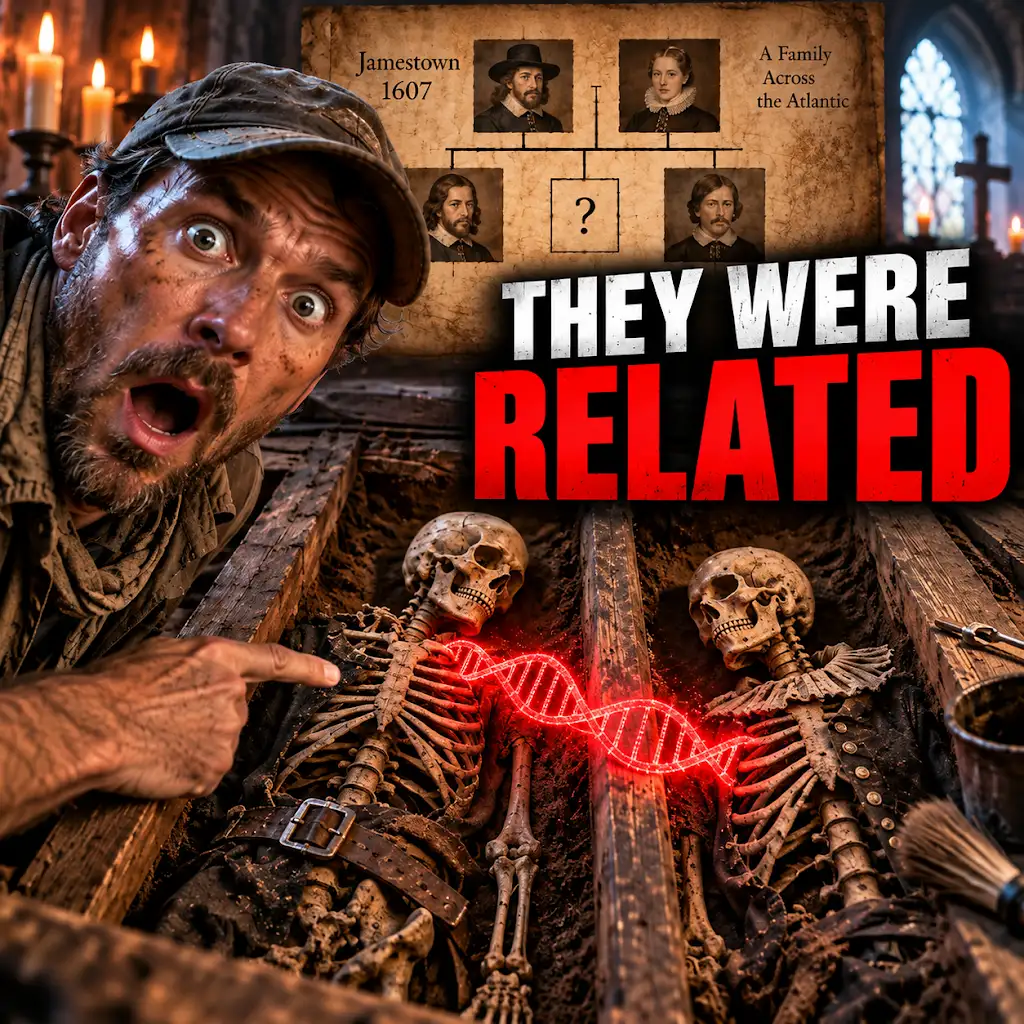
Jamestown DNA Revealed a Family Secret Hidden for 400 Years
FAQs
What was the 400 year old mystery that DNA helped solve?
DNA helped solve the mystery of the identity of a young boy who died 400 years ago and was buried in the Basilica of Saint Domenico Maggiore in Naples, Italy.
How did DNA analysis contribute to solving the mystery?
DNA analysis of the remains of the young boy compared to living descendants of the Orsini family confirmed that the boy was Giovanni Battista Orsini, a nobleman who died in 1620.
Why was the identity of the boy important to solve?
The identity of the boy was important to solve because it shed light on the history of the Orsini family and provided closure to the descendants who had been searching for answers for centuries.
What other historical mysteries have been solved using DNA analysis?
DNA analysis has been used to solve various historical mysteries, such as identifying the remains of King Richard III of England and confirming the identity of the Romanov family members who were executed during the Russian Revolution.
How does DNA analysis help in solving historical mysteries?
DNA analysis helps in solving historical mysteries by providing concrete evidence to confirm identities, relationships, and historical events that may have been previously unknown or disputed.