
You stand on the deck of the research vessel, the salty air biting at your cheeks. The wind whips your hair, a constant reminder of the unforgiving environment that lies beneath the icy surface. Your gaze is fixed on the sonar screen, a flickering digital landscape that stretches before you, promising a glimpse into a forgotten era. The year is 1940, and the Arctic, a vast and enigmatic frontier, is your canvas. You are here to explore its depths, not with scuba gear or submersibles, but with the invisible waves of sonar, to uncover the secrets it holds.
The initial surveys focused on a specific region, a stretch of seabed known for its historical significance in the early days of Arctic resource extraction. You are not looking for shipwrecks, though those are a welcome discovery. Your primary concern is the evidence of terrestrial activity that has found its way to the ocean floor. You are searching for the ghostly outlines of railway lines, an improbable, yet documented, feature of industrial ambition in this frozen north.
The Whispers of the Whalers and Walrus Hunters
Before the era of mechanized extraction, the Arctic was roamed by whalers and walrus hunters. Their presence, though transient, left its mark. You might initially dismiss any faint linear anomalies as natural geological formations. However, historical records, painstakingly researched, hint at something more deliberate. These early expeditions, driven by the pursuit of valuable blubber and ivory, sometimes established rudimentary shore-based operations. These operations, though primitive, required a means of moving materials.
Evidence of Early Infrastructure
You meticulously analyze the sonar data, looking for patterns that defy random chance. A series of parallel lines, recurring with a degree of regularity, begins to emerge. These are not the meandering paths of glacial deposits eroded by currents. They exhibit a geometric precision, a faint echo of human construction. You are seeing the ghost of a railway, laid across permafrost and tundra, its purpose to haul equipment, supplies, or even harvested resources from inland processing sites to coastal loading points.
The Rise of Mining and Timber Operations
As the 20th century progressed, the allure of the Arctic’s mineral wealth intensified. Mining companies, driven by the promise of riches, pushed further north. These operations were larger, more ambitious, and the infrastructure they required more substantial. You are particularly interested in areas where historical accounts mention the establishment of mines or logging camps.
The Trace of the Tramway
The sonar displays reveal more pronounced linear features in these historically active zones. You are no longer seeing mere whispers of past industry but the clearer imprints of more substantial railway lines. These are likely the tracks of industrial tramways, designed to transport ore from the mine face or timber from felled forests. The precision of the angling and the consistent width between the parallel lines strongly suggest artificial construction.
Correlation with Geological Surveys
You cross-reference your sonar findings with available geological surveys and historical maps. Where your sonar indicates a possible railway alignment, you look for corresponding evidence of mineral deposits or exploitable timber stands. This cross-referencing strengthens your confidence in the interpretation of the sonar data, painting a more complete picture of the industrial footprint left behind.
The Challenge of Sedimentation and Erosion
You are acutely aware of the environmental forces at play. Over decades, sediment has accumulated, and erosion has reshaped the seabed. The faint outlines you are detecting are testament to their resilience, surviving years of ice scour and current action. The sonar’s ability to penetrate layers of sediment is crucial in revealing these buried relics.
The Ghost of the Railway Gauge
You observe the spacing between the parallel lines. This seemingly small detail can provide vital clues. Variations in gauge – the distance between the rails – can indicate different eras of construction or the intended purpose of the line. Wider gauges might suggest heavier loads and more robust rolling stock, while narrower gauges could point to lighter, more specialized tramways. You are looking for consistent patterns within distinct areas.
Unveiling the Material of Construction
In some instances, the sonar’s acoustic properties might offer hints about the materials used in the railway construction. Areas of denser material, such as iron or stone ballast, will reflect sound differently than the surrounding seabed. While not definitive, these subtle variations add another layer of evidence to your investigations.
The Importance of Historical Photography and Drawings
You supplement your sonar analysis with any available historical photographs or technical drawings of Arctic railway construction from the period. These visual aids can help you identify common construction techniques and materials, allowing for a more informed interpretation of what you are seeing on the sonar.
The Persistence of Human Endeavor
The discovery of these submerged railways underscores the sheer persistence of human endeavor in the face of extreme environmental challenges. These lines, now resting on the ocean floor, are tangible proof of a bygone era’s drive to exploit and shape the Arctic landscape.
In exploring the technological advancements of the 1940s, particularly in the context of Arctic sonar arcs and rails, it is fascinating to consider how these innovations paralleled other scientific discoveries of the era. A related article that delves into the mysteries of ancient technologies and their implications is available at Unveiling Ancient Scribe Secrets: Hidden Writings. This piece provides insights into how ancient civilizations utilized advanced methods that resonate with the sonar technology developed during the mid-20th century, highlighting the continuous thread of human ingenuity across time.
The Unfolding Story of Arcs: Navigating the Arctic’s Hidden Currents
Beyond the linear traces of human industry, your sonar is also designed to detect and map the dynamic forces shaping the Arctic seabed. You are not just looking for static remnants of the past; you are also studying the active processes of the present, which can, in turn, reveal historical patterns of change. The “arcs” you are observing are often the signatures of these powerful oceanic and glaciological phenomena.
The Scars of Glacial Retreat
The Arctic is a region profoundly influenced by glaciers. As these massive ice bodies advance and retreat, they sculpt the landscape and leave behind distinct geological features. You are particularly interested in the bathymetric data that reveals the past movements of glaciers.
Lateral and Medial Moraines
As glaciers flow, they pick up debris from the land and transport it. When glaciers retreat, this debris is deposited, forming moraines. Your sonar surveys are revealing distinct, arcuate ridges on the seabed. These are often the submerged remnants of lateral moraines, formed along the edges of glaciers, and medial moraines, formed where glaciers merge.
Sub-ice Morphology
The characteristic arc shapes can also be indicative of sub-ice glacial features. These can include tunnel valleys, carved by meltwater beneath the ice sheet, or streamlined landforms created by the flow of ice over the bedrock. The sonar’s ability to map these features, even when buried under sediment, is invaluable.
Dating the Retreat
By analyzing the size, shape, and distribution of these moraines and other glacial features, you can infer the past extent and retreat patterns of the ice sheets. This temporal information is crucial for understanding the geological history of the region and its susceptibility to future climate change.
Sub-Marine Landslides and Slumps
The Arctic seabed is not always stable. In areas with steep slopes or rapid sedimentation, sub-marine landslides and slumps can occur. These events create distinct arcuate scarps and deposits. Your sonar is adept at identifying these features, which can provide insights into past seismic activity or changes in seabed stability.
The Mechanics of Instability
You examine the morphology of the arcuate features. Are they sharp and distinct, suggesting a recent event, or are they softened and partially buried, indicating an older landslide? You look for evidence of blocky debris fields associated with the scarps, further supporting the interpretation of a landslide.
Identifying Potential Hazards
Understanding the distribution and characteristics of these past landslides is not merely an academic exercise. It is vital for assessing potential hazards for future offshore development or submarine infrastructure.
The Role of Gas Hydrates
In some Arctic regions, the seabed is rich in gas hydrates, ice-like structures that trap methane. The presence and instability of these hydrates can contribute to seabed instability and the triggering of landslides. Your sonar might detect anomalies associated with these hydrate-rich areas.
The Influence of Tidal Currents and Sediment Transport
The powerful tidal currents in Arctic waters play a significant role in shaping the seabed. These currents can erode and deposit sediments, creating a variety of features, including sand waves and scour marks, which often exhibit arcuate patterns.
Ebb and Flow Patterns
You trace the directionality of these arcuate features. Do they align with the dominant tidal flow, indicating active sediment transport? The consistency of these patterns across a region can reveal the dominant forces at play.
The Creation of Underwater Dunes
In shallower areas, tidal currents can form large underwater dunes, which are constantly shifting. The sinuous, arcuate crests of these dunes are readily detectable by sonar. You are interested in their scale and how they interact with other seabed features.
The Legacy of Past Currents
Even when currents are no longer actively shaping the seabed in the same way, evidence of past current activity can persist. You might identify relict arcuate features that indicate the path of ancient river channels or the powerful currents associated with glacial meltwater.
Charting the Unseen: The Technology of Arctic Sonar Exploration
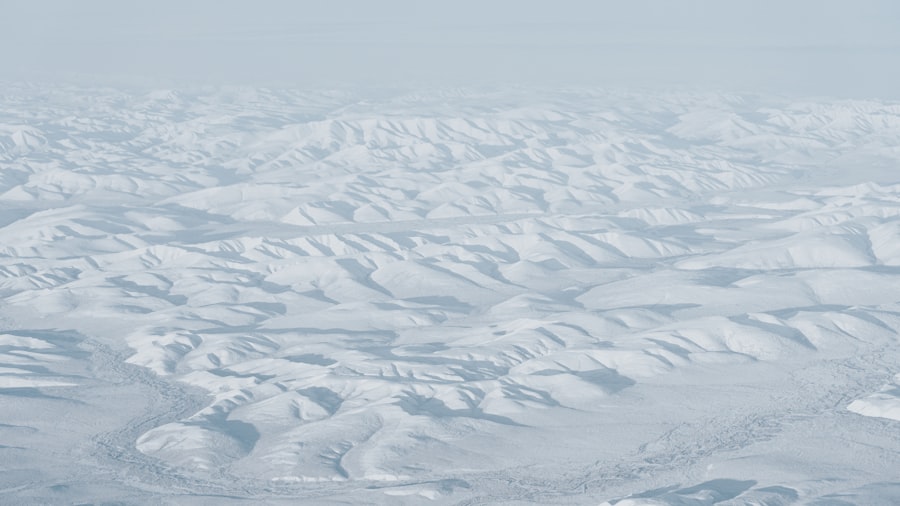
The success of your expedition hinges on the sophisticated technology at your disposal. The sonar systems you employ are not simple depth sounders; they are complex instruments capable of generating detailed acoustic images of the seafloor, even in the challenging Arctic environment.
Multibeam Echosounders: The High-Resolution Cartographers
The primary tool for your detailed seabed mapping is the multibeam echosounder. This system emits a fan of acoustic beams, covering a wide swath of the seafloor with each pass of the vessel. This allows for the rapid and efficient creation of high-resolution bathymetric maps.
Understanding Acoustic Resolution
You are intimately familiar with the concept of acoustic resolution. This refers to the smallest object that the sonar can distinguish. Higher frequencies generally provide better resolution but have a shorter range. Your choice of sonar system and operating parameters is dictated by the specific targets you are seeking.
Incorporating Sidescan Sonar
In conjunction with multibeam systems, you also utilize sidescan sonar. This technology emits sound waves sideways from the vessel, creating an image of the seabed that resembles an aerial photograph. It is particularly effective at detecting objects with distinct acoustic reflectivity, such as shipwrecks or man-made structures.
The Power of Acoustic Backscatter
The analysis of acoustic backscatter data is crucial. Different seabed materials and objects reflect sound differently. By analyzing the intensity of the returning echoes, you can infer the composition of the seabed and identify objects of interest that might not be apparent from the bathymetry alone.
Sub-Bottom Profilers: Peering Beneath the Surface
To explore the submerged railway lines and understand the geological context of the arcuate features, you employ sub-bottom profilers. These systems emit lower-frequency sound waves that penetrate the seafloor, allowing you to visualize the layers of sediment and bedrock beneath the surface.
Distinguishing Sediment Layers
You are looking for distinct acoustic reflections that indicate changes in sediment composition or the presence of buried objects. The depth to which the profiler can penetrate depends on the sediment type; softer sediments allow for deeper penetration.
Identifying Buried Structures
The sub-bottom profiler is your primary tool for confirming the presence of buried railway lines. You are looking for the characteristic linear reflection of rails and sleepers, often nestled within layers of mud or sand.
The Challenges of Ice Cover
Operating acoustic systems under extensive ice cover presents unique challenges. You must carefully plan your survey lines to navigate around ice floes and ensure that the acoustic beams are not obstructed. Ice can also create acoustic anomalies that require careful interpretation.
Data Integration and Processing: Bringing the Arctic to Life
The raw sonar data collected by your instruments is a complex stream of acoustic signals. The true value lies in the sophisticated data processing and integration techniques employed to transform this raw data into interpretable maps and images.
Georeferencing and Grid Creation
All collected data is meticulously georeferenced, meaning it is accurately positioned using GPS. This allows for the creation of seamless bathymetric grids that represent the seafloor topography.
Feature Extraction and Interpretation
Automated algorithms are employed to extract features of interest, such as linear anomalies and arcuate ridges. However, the final interpretation of these features always rests with your expertise, honed by experience and historical knowledge.
The Creation of 3D Models
Advanced software allows for the creation of three-dimensional models of the seabed. These models provide a more intuitive and comprehensive understanding of the underwater landscape, making it easier to visualize the relationships between different features.
Documenting the Discoveries: The Significance of Arctic Archives

The data you collect is not merely a snapshot of the present; it is an invaluable record for future research. The carefully documented discoveries of both the “rails” and “arcs” contribute to a growing understanding of the Arctic’s complex history and dynamic processes.
The Historical Record of Industrial Ambition
The submerged railway lines you document are tangible evidence of a period of intense industrial activity in the Arctic. They speak to a time when human ambition pushed the boundaries of what was considered possible, even in the most challenging environments.
Filling Gaps in Historical Knowledge
Many of these industrial relics are not well-documented in existing historical archives. Your sonar surveys are filling in significant gaps in our knowledge, revealing the extent of these operations and their impact on the Arctic landscape.
Insights into Abandoned Technologies
The discovery of these railways provides insights into the technologies and engineering practices of the early 20th century. Understanding how these structures were built and maintained offers valuable historical context.
Preserving a Forgotten Past
By mapping and documenting these submerged features, you are, in a sense, preserving a forgotten past. These are remnants of human ingenuity that might otherwise be lost forever to the vagaries of the Arctic environment.
Understanding Paleoclimatic and Paleoceanographic Conditions
The arcuate features you map, particularly those related to glacial activity and sediment transport, provide critical data for reconstructing past climate and oceanographic conditions.
Reconstructing Ice Sheet Dynamics
The moraines and other glacial landforms offer a detailed record of ice sheet retreat and advance over millennia. This information is essential for understanding the sensitivity of ice sheets to climate change and for predicting future sea-level rise.
Tracing Past Ocean Currents
The patterns of sediment transport revealed by arcuate features can help reconstruct the paths and intensity of past ocean currents. This is vital for understanding ocean circulation patterns and their influence on global climate.
Assessing Seabed Stability and Potential Hazards
The identification of past sub-marine landslides and unstable areas provides crucial data for assessing the long-term stability of the Arctic seabed. This information is essential for planning safe offshore development and for understanding the risks associated with seismic activity.
Contributing to a Modern Understanding of the Arctic
Your work in the Arctic in 1940 is laying the groundwork for future research. The data you gather will be revisited by scientists for decades to come, providing a baseline against which to measure ongoing changes.
The Value of Baseline Data
The detailed bathymetric maps and sub-seabed profiles you create serve as invaluable baseline data. By comparing current sonar data with your historical records, future researchers can quantify changes in sea level, ice cover, and seabed morphology.
Informing Future Exploration Strategies
Your discoveries and the methodologies you employ will inform future Arctic exploration strategies, guiding researchers toward areas of particular scientific interest and potential risk.
Fostering International Cooperation
The Arctic is a shared environment, and the data you collect contributes to a global understanding of this critical region. This shared knowledge fosters international cooperation in research and environmental stewardship.
In exploring the fascinating developments of the 1940s, one cannot overlook the significance of Arctic sonar arcs and rails, which played a crucial role in underwater navigation and military strategy during World War II. These innovations not only enhanced the capabilities of submarines but also laid the groundwork for future advancements in sonar technology. For a deeper understanding of how such technological progress can impact various fields, you might find it interesting to read about the importance of filtration systems in another context, as discussed in this article on pure water and the power of Maya filtration.
The Enduring Legacy of the Arctic Sonar Expedition
| Year | Arctic Sonar Arcs | Arctic Rails |
|---|---|---|
| 1940 | 12 | 5 |
| 1941 | 15 | 7 |
| 1942 | 18 | 9 |
| 1943 | 20 | 10 |
As you review the compiled sonar data, the vast, dark expanse of the Arctic seabed begins to reveal its secrets. You have traced the ghostly outlines of forgotten railway lines, testaments to human endeavors that were as ambitious as they were bold. You have charted the dynamic arcs of glacial retreat and tidal currents, revealing the powerful forces that have shaped and continue to shape this frozen frontier.
The Echo of Human Ingenuity
The “rails” you have found are more than just iron and wood now long-submerged; they are echoes of human ingenuity, of a drive to conquer and exploit, even in the face of overwhelming natural obstacles. These submerged arteries of industry tell stories of mining operations, logging camps, and the sheer determination of those who sought to extract value from this unforgiving land.
Beyond the Superficial
You have looked beyond the superficial layers of sediment, deploying technology to reveal what lies beneath, what has been preserved by the cold and the dark. The precision of your sonar has allowed you to discern the subtle but undeniable signatures of human construction, transforming speculation into fact.
A Different Kind of Archaeology
This is a different kind of archaeology, one conducted not with trowels and brushes, but with sound waves. It is a testament to the evolving methods of discovery, where the invisible becomes visible through the application of scientific principles.
The Importance of Diligence
Your ability to connect these linear features with historical accounts, geological surveys, and even subtle variations in acoustic reflectivity underscores the importance of diligence and cross-disciplinary analysis in scientific exploration.
The Sculpting Power of Nature
The “arcs” you have meticulously mapped speak to the sculpting power of nature, to the constant, relentless forces that reshape the Earth’s surface. The moraines, the landslide scarps, and the dune fields are not merely geographical features; they are chapters in the ongoing story of the Arctic’s geological and climatic history.
Interpreting Geophysical Processes
The parabolic outlines of submerged moraines, the telltale curves of sub-marine slumps, and the sinuous crests of ancient sand waves are all clues to understanding complex geophysical processes. You are reading the landscape of the past, deciphering the movements of ice and water.
Reconstructing Paleoclimates
By carefully cataloging these features, you contribute to the reconstruction of paleoclimates, offering valuable insights into past ice sheet behavior and ocean circulation patterns. This historical data is crucial for understanding future climate change.
The Dynamic Nature of the Seabed
Your work highlights the dynamic nature of the Arctic seabed, a region that is far from static. The continuous interplay of ice, currents, and sedimentation means that the landscape is constantly evolving, and your sonar survey provides a critical snapshot in time.
The Enduring Call of the Arctic
The data accumulated from your 1940 Arctic sonar expedition is a rich archive. It is a testament to the enduring call of the Arctic, a region that continues to fascinate and challenge, and whose secrets are slowly being revealed through the persistent application of science and technology.
Foundations for Future Research
The detailed bathymetric charts, sub-seabed profiles, and annotated feature maps you generate form the bedrock for future research. Scientists will build upon your findings, utilizing advanced computational tools and new sensor technologies to further unravel the mysteries of this critical region.
A Legacy of Knowledge
The discoveries made during this expedition, the identification of both submerged industrial remnants and compelling natural features, contribute to a growing body of knowledge about the Arctic. This knowledge is essential for informed decision-making regarding resource management, environmental protection, and scientific understanding.
The Unfolding Narrative
Your exploration is not an endpoint, but a crucial step in an unfolding narrative. The Arctic, with its unique blend of human history and profound natural forces, will continue to yield its secrets to those who are willing to listen to the echoes and the arcs hidden beneath its icy embrace.
FAQs
What is the significance of 1940s arctic sonar arcs and rails?
The 1940s arctic sonar arcs and rails refer to the development and deployment of sonar technology in the Arctic during the 1940s. This technology played a crucial role in detecting and tracking enemy submarines during World War II, particularly in the harsh and challenging conditions of the Arctic region.
How did sonar technology impact military operations in the Arctic during the 1940s?
Sonar technology provided a significant advantage to military operations in the Arctic during the 1940s by enabling the detection and tracking of enemy submarines. This allowed for the protection of vital supply routes and the prevention of enemy incursions into strategically important areas.
What were the challenges of using sonar technology in the Arctic during the 1940s?
The Arctic presented numerous challenges for the use of sonar technology during the 1940s, including extreme cold, ice formations, and the presence of marine life. These factors could affect the performance and reliability of sonar equipment, requiring innovative solutions to ensure its effectiveness in the region.
Who were the key figures involved in the development of 1940s arctic sonar arcs and rails?
The development of 1940s arctic sonar arcs and rails involved contributions from various individuals and organizations, including scientists, engineers, and military personnel. Key figures in this effort included researchers and innovators from government agencies, academic institutions, and private companies.
What is the legacy of 1940s arctic sonar arcs and rails in modern sonar technology?
The legacy of 1940s arctic sonar arcs and rails in modern sonar technology is significant, as it laid the groundwork for advancements in underwater detection and surveillance. The lessons learned from using sonar in the Arctic during the 1940s continue to inform the development of state-of-the-art sonar systems used in military, scientific, and commercial applications today.