The persistent echo of catastrophic deluge stories across disparate human cultures has long captivated scholars and the public alike. These ancient flood myths, appearing in the oral traditions, religious texts, and epic poems of civilizations spanning continents and millennia, offer a window into humanity’s earliest attempts to understand the world and its forces. They are not merely tales of destruction, but complex narratives that encode social values, spiritual beliefs, and profound anxieties about creation, destruction, and renewal. Exploring these myths allows for a deeper appreciation of shared human experiences and the enduring power of storytelling.
The sheer prevalence of flood narratives across geographically and chronologically distinct cultures is one of the most striking aspects of global mythology. From the fertile crescent of Mesopotamia to the indigenous peoples of the Americas, and from ancient Greece to the islands of the Pacific, variations on the theme of a world-ending or world-transforming flood are remarkably consistent. This ubiquity has led to extensive scholarly debate, with theories ranging from a collective unconscious archetypal memory to the widespread transmission of a single original narrative.
Unearthing the Oldest Accounts: Mesopotamian Deluges
Among the earliest written records of flood myths are those found in ancient Mesopotamia, the cradle of civilization. These Sumerian and Babylonian tales provide a foundational blueprint for many subsequent flood narratives.
The Epic of Gilgamesh: Utnapishtim’s Salvation
The most famous Mesopotamian flood story is undoubtedly found within the Epic of Gilgamesh. This epic poem, dating back to the 2nd millennium BCE, recounts the adventures of the king of Uruk. To escape death, Gilgamesh seeks out Utnapishtim, a divinely blessed man who survived a great flood orchestrated by the gods. Utnapishtim recounts how the restless god Enlil, angered by the too-noisy humans, decided to wipe them out. Ea, a god who favored humanity, warned Utnapishtim in a dream and instructed him to build a massive boat. Utnapishtim, his family, and all living creatures were saved by boarding this ark. After the floodwaters receded, Utnapishtim sent out birds – a dove, a swallow, and a raven – to find land. The raven did not return, signifying that the waters had gone down. The gods rejoiced at the humans’ survival, and Utnapishtim was granted immortality. The parallels to the biblical Noah’s Ark are striking and have been a subject of intense scholarly scrutiny.
The Atra-Hasis Epic: A More Detailed Divine Conflict
Before the Epic of Gilgamesh, the Atra-Hasis epic, likely dating to the 17th century BCE, offers a more detailed account of the gods’ motivations and the construction of the ark. In this narrative, the gods become tired of the hard labor that humans perform for them. Initially, they contemplated famine or plague, but the human population’s incessant noise and demands proved too much for Enlil, who persuaded the other gods to unleash a flood. The god Enki (Ea in Babylonian) once again intervenes, revealing the divine plan to the pious human Atra-Hasis, whose name means “Exceedingly Wise.” Atra-Hasis is instructed to build a boat and bring his family, craftsmen, and animals. The flood is depicted as a seven-day event, utterly devastating. Upon landing, Atra-Hasis makes a sacrifice, and the gods, ravenous for sustenance, gather around the offering. Enlil, upon realizing that a remnant of humanity has survived, expresses his anger but is eventually appeased by the other gods, who pledge to exercise more restraint in the future. Atra-Hasis provides a compelling insight into the early Mesopotamian worldview, where divine caprice and human obedience were central themes.
The Biblical Narrative: Noah’s Ark and Divine Covenant
The most widely known flood myth in the Western world is undoubtedly the biblical account of Noah’s Ark in the Book of Genesis. This narrative shares significant similarities with its Mesopotamian predecessors, yet it imbues the story with a distinct theological message.
Genesis and the Corruption of Humanity
The Genesis account begins with God observing the pervasive wickedness and corruption of humanity. Displeased and grieved by mankind’s sinful ways, God resolves to destroy all living creatures from the face of the earth with a great flood. However, Noah is described as a righteous man, blameless in his generation, who walked with God. Therefore, God chooses Noah and his family to preserve life. God instructs Noah to build an ark of gopher wood, specifying its dimensions and the provision of food for all aboard. Noah is commanded to bring his wife, his three sons (Shem, Ham, and Japheth), their wives, and pairs of every living creature – seven pairs of clean animals and birds, and one pair of unclean animals. The flood begins with the opening of the “windows of heaven” and the bursting forth of the “fountains of the great deep.” The waters prevail for 150 days, covering even the highest mountains. After the waters recede, the ark comes to rest on the mountains of Ararat. Noah sends out a dove, first to find dry land, then a raven, and finally another dove, which returns with an olive leaf, indicating the receding waters. Once the earth is dry, Noah and his family, along with the animals, disembark and offer a sacrifice to God.
The Covenant of the Rainbow
Following the flood, God makes a covenant with Noah and all living creatures, promising never again to destroy all life on earth with a flood. The rainbow is established as the sign of this covenant, a visible reminder of God’s promise and a symbol of hope and reconciliation between God and humanity. The Genesis narrative emphasizes divine justice and mercy, portraying the flood as a cleansing event to rid the world of sin, followed by a renewed beginning under God’s divine assurance. The meticulous details of the ark’s construction and the emphasis on lineage and preservation highlight the foundational importance of this story in the Abrahamic faiths.
The origins of flood myths can be traced back to various ancient civilizations, each offering unique interpretations of catastrophic events. For a deeper understanding of how these myths may relate to historical climate changes, you can explore the article on the Piri Reis map and its implications for ice sheet mass balance. This article provides insights into how ancient knowledge and environmental shifts may have influenced the creation of such myths. To read more, visit this link.
The Serpent and the Flood: Indigenous American Traditions
Across the vast and diverse landscapes of North America, flood myths are deeply embedded within the rich oral traditions of indigenous peoples. These narratives often feature powerful spiritual beings, the transformation of the land, and the resilience of the human spirit.
The Serpent as a Primeval Force
In many indigenous American flood stories, serpents, particularly those associated with water, play a significant role. These beings are often depicted as ancient, powerful entities that can either cause or quell floods, reflecting a complex relationship with the often-destructive power of water.
The Flood and the Underwater Nations
Some Native American traditions describe floods as cataclysmic events caused by beings dwelling beneath the waters. These could be giant serpents, water spirits, or entire underwater nations who, angered by human actions or simply asserting their power, unleash their watery domain upon the land. Survivors often retreat to high ground or are rescued by benevolent spirits. These stories can serve as cautionary tales about respecting the natural world and the spiritual beings that inhabit it.
The Serpent’s Role in Creation and Destruction
In certain creation myths, the serpent is an integral part of the primordial chaos from which the world emerges. The flood can be seen as a return to this chaotic state, a cosmic reset. Conversely, the serpent can also be a life-giver or a protector, helping humans survive the deluge, often through guidance or by providing a means of escape. The duality of the serpent – its association with both danger and salvation – is a recurring theme.
The Great Flood of the Pawnee Sky People
The Pawnee people, dwelling in what is now Nebraska and Kansas, have a profound creation and flood narrative that involves the Sky People and the underworld. Their stories depict a time when humans lived in the underworld and emerged onto the surface.
The Loss of the Sun and the Subsequent Flood
According to Pawnee mythology, a great flood occurred when the Sky Chief became angry due to the actions of their people, specifically the theft of a sacred object. The Sky Chief withdrew the sun, plunging the world into darkness and causing a devastating flood. The surviving humans, guided by the Morning Star, made their way to a sacred lodge. Later, the Sun was returned, and the floodwaters receded. This myth highlights the interconnectedness of the celestial, terrestrial, and underworld realms and the consequences of human transgressions.
Survivors and the Re-establishment of Order
The Pawnee myth, like many others, emphasizes the survival of a select group and their role in re-establishing order after the cataclysm. Their ability to endure and adapt, often with the help of spiritual guidance, underscores the theme of human resilience. The story also reinforces the importance of sacred rituals and proper relationships with the divine and natural world.
Ancient Greece: Deucalion and the Rebirth of Humanity
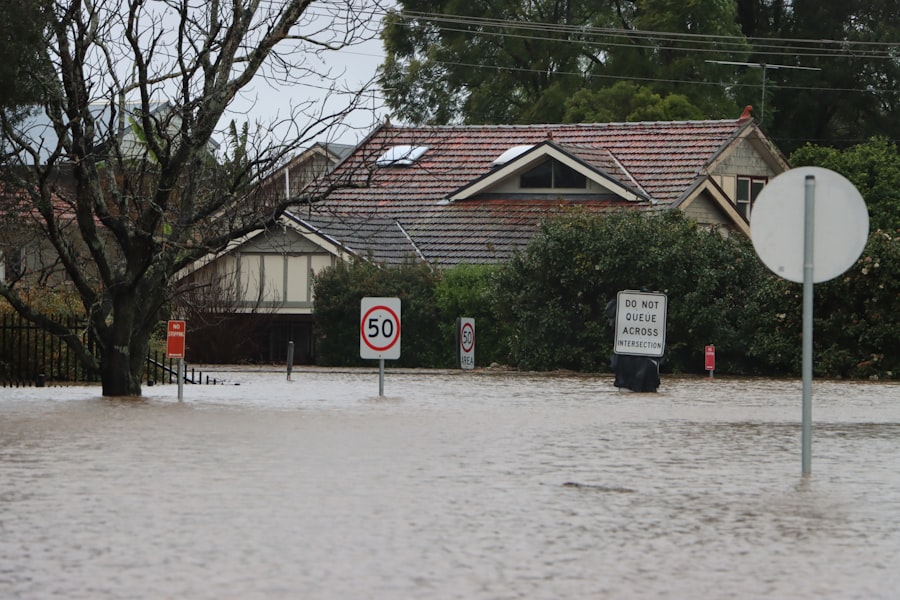
The Greek mythology offers its own distinct version of a world-ending flood, a narrative that emphasizes divine intervention, human nobility, and the cyclical nature of creation.
Divine Wrath and Human Wickedness
Greek myths often attribute divine jealousy or anger as the catalyst for cataclysmic events. In the case of the flood, the gods, particularly Zeus, were angered by the impiety and wickedness of humanity.
The Reign of Lycaon and the Age of Iron
The Olympian gods, witnessing the growing depravity and violence of the humans of the “Iron Age,” lamented the state of mankind. King Lycaon of Arcadia was particularly notorious for his impiety, even allegedly attempting to serve Zeus human flesh as a meal. Enraged by such barbarity, Zeus resolved to cleanse the earth of its corrupted inhabitants. This act of divine judgment was not an act of arbitrary malice but a response to the moral decay of humankind.
Deucalion and Pyrrha: The Sole Survivors
Among the morally upright, the gods spared only two mortals: Deucalion, the son of Prometheus, and his wife Pyrrha, the daughter of Epimetheus and Pandora. They were warned of the impending deluge by Prometheus and instructed to build an ark.
The Ark and the Receding Waters
Deucalion and Pyrrha embarked on their ark, drifting across the tempestuous seas for nine days and nine nights. When the waters finally began to recede, their vessel landed on Mount Parnassus. Like Noah, they sent out birds to gauge the dryness of the land. Upon reaching dry ground, they offered sacrifices to Zeus and the other gods, expressing their gratitude for their survival. Their piety and devotion were rewarded, reflecting the Greek belief that the gods favored those who honored them.
The Rebirth of Humanity: Stepping Stones of Stone
After the flood destroyed all other humans, Deucalion and Pyrrha were desolate, having survived but with no other humans left. They prayed for guidance and a way to repopulate the earth. A divine oracle instructed them to cast the bones of their mother behind them. Deucalion, understanding that “mother” referred to Mother Earth, began to throw stones behind him.
The Transformation of Stones into Humans
As Deucalion threw stones, those he cast transformed into people. The stones he threw became men, and the stones Pyrrha threw became women. Thus, through this miraculous act, humanity was reborn from the earth itself, a testament to the resilience and continuity of life, albeit with a direct divine intervention to facilitate the process. This myth offers a particular Greek perspective on renewal, emphasizing the regeneration of the human race through a symbolic connection to the earth.
The Flood in Asian Mythologies: Diverse Narratives of Survival

Asia, with its immense geographical diversity and ancient civilizations, boasts a rich tapestry of flood myths, reflecting a multitude of cultural experiences and beliefs. These narratives often intertwine with creation stories and express unique cosmological views.
Ancient India: Manu and the Cosmic Fish
The Indian subcontinent, a land of great spiritual and cultural depth, features a prominent flood myth in its ancient scriptures.
The Matsya Avatar of Vishnu
The Puranic tradition in Hinduism recounts the story of Manu, a righteous king and ancestor of humanity. During a period of intense cosmic dissolution, when the earth was threatened by a great deluge, the god Vishnu appeared to Manu in the form of the Matsya Avatar, a divine fish.
The Divine Guidance and the Ark
The Matsya Avatar warned Manu of the impending flood and instructed him to build a large boat, a ‘Rudra’s Ark,’ and to gather seeds of all creation and pairs of all living beings. The divine fish then towed Manu’s boat through the cataclysmic waters, protecting him and the creatures onboard. This story emphasizes the role of the divine in preserving creation and the importance of righteous individuals who heed divine guidance. It also highlights the cyclical nature of creation and destruction in Hindu cosmology.
Chinese Mythology: Gun, Yu, and the Taming of the Great Waters
China’s long and complex history is punctuated by tales of epic floods and the heroic figures who combated them.
The Great Flood During the Reign of Emperor Yao
According to Chinese legend, a catastrophic flood occurred during the time of Emperor Yao. The relentless rains and overflowing rivers caused widespread devastation, displacing communities and threatening to swallow everything. The cause of the flood is often attributed to the disarray of the natural order and the inability of humans to control the powerful forces of water.
The Taming Efforts of Gun and Yu
The task of controlling the flood fell to two heroic figures: Gun and his son Yu. Gun’s initial approach was to build a series of dams and levees, but his efforts were ultimately unsuccessful, and he was even banished for his failure. His son, Yu the Great, learned from his father’s mistakes and adopted a different strategy. Yu focused on channeling the waters through extensive drainage systems and canals, working tirelessly for thirteen years to control the raging rivers.
The Establishment of the Xia Dynasty
Yu’s relentless dedication and ingenuity in taming the flood were instrumental in saving China. His success earned him immense respect and led to the founding of the first dynastic state, the Xia Dynasty. The story of Yu the Great is deeply ingrained in Chinese culture, symbolizing perseverance, leadership, and the triumph of human effort over natural disaster. It underscores the importance of understanding and working with the natural world rather than simply trying to resist it.
Many cultures around the world have their own flood myths, often reflecting their unique environments and historical experiences. These stories, which frequently involve a great deluge and a hero who survives, can be traced back to ancient civilizations. For a deeper understanding of how such myths may relate to historical events, you might find it interesting to explore the article on the Piri Reis map and its implications for our understanding of ancient geography and navigation. You can read more about it in this related article.
The Enduring Legacy of Flood Myths
| Origin | Region | Myth |
|---|---|---|
| Mesopotamia | Middle East | The Epic of Gilgamesh |
| Greece | Europe | The story of Deucalion and Pyrrha |
| India | South Asia | The story of Manu and the Matsya Avatar |
| China | East Asia | The story of Yu the Great and the Great Flood |
The omnipresence and enduring power of flood myths across diverse cultures speak to their fundamental significance in the human experience. These narratives are more than just ancient stories; they are cultural touchstones that reflect our deepest fears, hopes, and understandings of the world.
Reflections of Environmental Catastrophes
One of the most compelling explanations for the universality of flood myths is the possibility that they are rooted in actual, albeit localized, catastrophic flood events experienced by early human communities. Given that many early civilizations developed in fertile river valleys, susceptible to periodic and devastating floods, it is plausible that these traumatic events were seared into collective memory and passed down through generations, evolving into the epic narratives we know today.
Archetypal Narratives of Renewal and Transformation
Beyond historical memory, flood myths resonate on a deeper, psychological level. They function as potent archetypes, representing themes of cleansing, rebirth, and the cyclical nature of existence. The flood serves as a dramatic upheaval, a purification that sweeps away the old and corrupt, making way for a new beginning. This pattern of destruction and subsequent renewal mirrors life’s own processes of change, loss, and eventual recovery, both on an individual and collective level.
Cultural Preservation and Social Cohesion
Flood myths often serve a vital role in preserving cultural identity and promoting social cohesion. They transmit fundamental values, moral lessons, and historical knowledge from one generation to the next. The shared experience of listening to and retelling these stories can create a powerful sense of community and belonging. The act of survival, often through cooperation and adherence to divine or ancestral guidance, reinforces the importance of communal responsibility and shared destiny.
In conclusion, the exploration of ancient flood myths reveals a fascinating interplay of shared human experience, environmental memory, and profound spiritual and cultural expression. From the sophisticated theological narratives of Mesopotamia and the Bible to the intricate animistic tales of indigenous Americans and the heroic sagas of China, these enduring stories continue to offer valuable insights into humanity’s relationship with the divine, the natural world, and the perpetual human quest for meaning in the face of overwhelming forces.

Could Humanity Remember a World That No Longer Exists?
FAQs
What are flood myths?
Flood myths are stories found in many cultures around the world that describe a great flood that destroys the earth, often as a punishment from the gods. These myths typically involve a hero figure who survives the flood and helps to repopulate the earth.
What are some famous flood myths?
Some of the most well-known flood myths include the story of Noah’s Ark in the Bible, the Mesopotamian Epic of Gilgamesh, and the Hindu story of Manu. These myths share common themes of divine punishment, survival, and the renewal of life after the flood.
What are the origins of flood myths?
The origins of flood myths are complex and varied. Some scholars believe that these myths may have originated from actual historical floods that occurred in ancient times, while others argue that they are symbolic representations of natural disasters and the cycle of life and death.
Why are flood myths found in so many different cultures?
Flood myths are found in diverse cultures around the world because floods are a common and devastating natural disaster that has affected human societies throughout history. The universality of flood myths may also reflect the shared human experience of facing the destructive power of nature.
What is the significance of flood myths?
Flood myths hold significance as they provide insight into the ways that ancient cultures understood and interpreted natural disasters, as well as their beliefs about the relationship between humanity and the divine. These myths also continue to resonate with people today, serving as cautionary tales and sources of inspiration.