Cambodia, a land often remembered for its more recent tumultuous history and the tragic legacy of the Khmer Rouge, holds within its verdant landscapes and ancient stones the echoes of a civilization that once dominated Southeast Asia. A compelling documentary, “Exploring Ancient History: Cambodia,” endeavors to unearth these buried narratives, transporting viewers back to the zenith of the Khmer Empire and its subsequent transformations. This cinematic journey is not merely a historical recounting; it is an immersive experience, meticulously piecing together the fragmented puzzle of a bygone era through stunning visuals, expert interviews, and a profound appreciation for the enduring spirit of the Cambodian people.
The film masterfully navigates the grand sweep of Cambodian history, beginning with the very foundations of its civilization and tracing its evolution through periods of unprecedented power, artistic achievement, and eventual decline. It challenges the perception of Cambodia solely through the lens of its modern struggles, inviting audiences to witness its former glory and understand the cultural tapestry woven by centuries of innovation, spirituality, and political prowess. The documentary aims to provide a nuanced understanding, moving beyond simplistic narratives and delving into the intricate social structures, religious beliefs, and engineering marvels that defined its ancient past. It serves as a vital reminder that beneath the scars of recent history lies a foundation of immense cultural wealth and a lineage of remarkable ingenuity.
The Dawn of a Civilization: Early Settlements and the Rise of Kingdoms
The documentary begins its exploration by delving into the earliest known human settlements in Cambodia, setting the stage for the emergence of complex societies. It underscores the strategic importance of Cambodia’s geography, situated at the crossroads of major trade routes and blessed with fertile river valleys, which fostered early agricultural development and population growth.
Pre-Angkorian Kingdoms: Fuelling the Flames of Ambition
Long before the iconic towers of Angkor Wat pierced the Cambodian skyline, distinct kingdoms were already taking shape. The film meticulously reconstructs the lives and societies of these early principalities, such as Funan and Chenla. It highlights the significant cultural and political interactions with neighboring civilizations, particularly India, whose influence profoundly shaped religious practices, political ideologies, and artistic conventions. Archeological evidence, including intricate pottery, remnants of early urban planning, and inscriptions on stone, are brought to life, offering tangible connections to these nascent civilizations. The documentary emphasizes that the foundations of Angkorian grandeur were laid by these preceding kingdoms, their ambitions and innovations paving the way for what was to come.
The Diffusion of Indian Culture: A Symbiotic Relationship
A cornerstone of the early Cambodian narrative, as presented in the documentary, is the pervasive influence of Indian culture. This was not a passive assimilation but rather a vibrant exchange. Experts discuss how Sanskrit script, Hindu and Buddhist philosophies, and elements of Indian governance and art were adopted and adapted, interwoven with indigenous traditions to create a uniquely Khmer identity. The film showcases early temple architecture, often predating the Angkorian period, which bear clear stylistic markers of Indian inspiration, yet with distinct local interpretations. The impact of these philosophical and religious systems on the worldview and societal organization of these early Cambodian peoples is a central theme, illustrating how deeply ingrained these external influences became.
For those interested in the rich tapestry of ancient history, particularly in relation to Cambodia, a fascinating article can be found that explores the broader implications of historical trade practices. The article discusses how ancient trade routes have shaped modern economic frameworks, which can provide valuable context for understanding Cambodia’s historical significance in regional trade. You can read more about this intriguing connection in the article titled “The Impact of Nearshoring on Global Trade Frameworks” available at this link.
The Golden Age of Angkor: Zenith of Khmer Power and Ingenuity
The heart of the documentary undoubtedly lies in its exploration of the Angkorian period, a golden age that witnessed the construction of monumental temples and the establishment of a vast empire. The sheer scale and architectural sophistication of the Angkorian civilization are presented with awe-inspiring clarity, leaving viewers with a profound sense of wonder.
The Suryavarman II Dynasty: Architects of an Empire
The film dedicates significant attention to the Suryavarman II dynasty, the epoch that saw the rise of the mighty Khmer Empire. It details the military prowess and administrative acumen that allowed the Khmer rulers to expand their dominion across much of mainland Southeast Asia. Archeological findings and historical texts are analyzed to understand the socio-political structure of this era, including the complex hierarchical society, the role of the king as a divine ruler, and the elaborate systems of taxation and labor mobilization. The documentary emphasizes the strategic military innovations and logistical capabilities that underpinned the empire’s expansion.
Angkor Wat: A Testament to Divine Ambition and Engineering Brilliance
Angkor Wat, the crown jewel of Cambodian heritage, is explored in breathtaking detail. The documentary dissects its architectural design, from the meticulously planned layout of its galleries and courtyards to the intricate bas-reliefs that narrate epic tales and everyday life. Experts elaborate on the engineering feats involved in its construction, the sophisticated understanding of hydraulics, and the sheer human effort required to quarry, transport, and assemble millions of tons of sandstone. The film contemplates the religious and cosmological significance of Angkor Wat, its role as a terrestrial representation of the Hindu cosmos, and its eventual transformation into a Buddhist sanctuary. The visual splendor of the edifice, captured through drone footage and detailed close-ups, makes it an unforgettable protagonist in its own right.
Angkor Thom and the Bayon Temple: Faces of Divinity and Humanism
Beyond Angkor Wat, the documentary delves into other significant Angkorian sites, most notably Angkor Thom and its enigmatic Bayon Temple. The vast walled city of Angkor Thom, with its impressive gates and central temples, is presented as a testament to the empire’s administrative and urban planning capabilities. The Bayon Temple, with its multitude of smiling stone faces, is a particular focus, eliciting discussions about its spiritual meaning, its representation of King Jayavarman VII’s benevolent rule, and the striking humanism that seems to emanate from its serene visages. The film explores the shift in religious focus towards Mahayana Buddhism during Jayavarman VII’s reign, as evidenced by the temple’s iconography.
The Spiritual and Cultural Fabric: Hinduism, Buddhism, and Khmer Worldviews
The spiritual landscape of ancient Cambodia played an instrumental role in shaping its art, architecture, and societal values. The documentary meticulously unpacks the complex interplay of religious beliefs that defined this era.
The Sacred Mount Meru: Cosmic Architecture and Divine Mandate
The concept of Mount Meru, the cosmic mountain at the center of the Hindu universe, is presented as a fundamental organizing principle in Angkorian temple construction. The documentary explains how temples like Angkor Wat were conceived as miniature replicas of this sacred mountain, with their staggered towers representing its peaks and surrounding moats symbolizing the cosmic ocean. This architectural philosophy underscored the divine mandate of Khmer kings, who saw themselves as earthly embodiments of the gods, mediating between the human and divine realms. The film visualizes these cosmological connections through intricate animations and expert explanations of religious iconography.
The Evolution of Beliefs: From Hindu Deities to Buddhist Enlightenment
The documentary traces the evolution of religious practices, highlighting the initial dominance of Hinduism, with its pantheon of deities like Vishnu and Shiva, and the subsequent embrace of Buddhism. It emphasizes that this transition was not a sudden abandonment but a gradual absorption and adaptation, with indigenous animistic beliefs also persisting and influencing the spiritual landscape. The film showcases the striking visual evidence of this religious syncretism in temple carvings and inscriptions, illustrating how different deities and symbols were incorporated and reinterpreted within a evolving spiritual framework. The legacy of these religious traditions continues to resonate in modern Cambodian culture.
The Role of Monks and Priesthood: Guardians of Knowledge and Tradition
The documentary sheds light on the crucial role of monks and the priesthood in ancient Cambodian society. They were not only spiritual leaders but also custodians of knowledge, keepers of religious texts, and advisors to the royal court. Their influence permeated daily life, shaping rituals, education, and the moral compass of the populace. The film explores the elaborate ceremonies and rituals that were integral to religious life, often depicted in the detailed bas-reliefs found in the temples, providing a window into the spiritual practices and beliefs of the time.
Decline and Transformation: The Unraveling of an Empire
Even the most powerful empires eventually face challenges, and the documentary grapples with the complex factors that contributed to the decline of Angkorian power.
Internal Strife and External Pressures: Seeds of Disintegration
The film examines the internal challenges that began to weaken the Khmer Empire. Debates among historians and archeologists are presented regarding the potential impact of succession disputes, economic strains, and growing discontent within the vast empire. Simultaneously, external pressures from rising neighboring powers, such as the Siamese (Thai) kingdoms, are discussed as significant contributors to the empire’s diminishing influence. The documentary avoids offering simplistic answers, instead presenting a multifaceted view of the decline, acknowledging the interplay of internal vulnerabilities and external threats.
The Shifting Tides of Trade and Power: A New Regional Order
The documentary highlights how changes in regional trade routes and the emergence of new dominant powers gradually eroded Angkor’s strategic advantage. The rerouting of maritime trade and the rise of new economic centers likely contributed to the decline of Angkor’s economic influence. The military defeats and territorial losses sustained against neighboring kingdoms further accelerated this process, leading to a gradual decentralization of power. The film suggests that the grand empire, once a beacon of power, began to splinter, with its once unified territories becoming increasingly independent or falling under the sway of new rulers.
The Legacy of Abandonment and Rediscovery: A City Recaptured by Nature
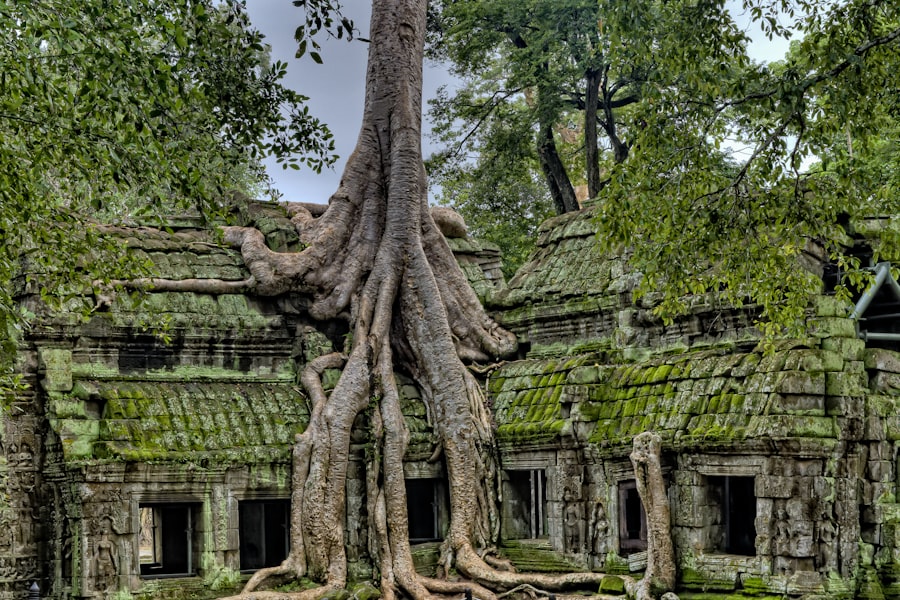
The eventual abandonment of Angkor as the capital, though not a complete disappearance of the Khmer people, is explored with a sense of poignant beauty. The documentary portrays how nature gradually reclaimed the magnificent city, with jungle roots entwining with stone structures, creating a dramatic and evocative spectacle. The rediscovery of Angkor by French explorers in the 19th century is also touched upon, emphasizing how this rediscovery sparked a global fascination with Cambodia’s ancient past and initiated a long process of preservation and study.
In exploring the rich tapestry of ancient history, the documentary on Cambodia offers a fascinating glimpse into the Khmer Empire and its architectural marvels, such as Angkor Wat. For those interested in delving deeper into the mysteries of ancient civilizations, a related article discusses the intriguing topic of lost technologies in history. You can read more about this captivating subject in the article here, which complements the insights gained from the Cambodian documentary.
The Enduring Spirit of Cambodia: From Ancient Roots to Modern Identity
“Exploring Ancient History: Cambodia” concludes by firmly connecting the grandeur of the past to the resilience and vibrant culture of modern Cambodia.
The Preservation of Heritage: A National Treasure
The documentary underscores the immense efforts undertaken to preserve Cambodia’s invaluable ancient heritage. It showcases the work of archeologists, conservationists, and local communities in protecting and restoring the Angkorian temples. The film emphasizes that these ancient sites are not merely tourist attractions but living testaments to the nation’s identity and a source of immense pride for the Cambodian people. The challenges of preservation in a post-conflict era and the ongoing commitment to safeguarding this legacy are highlighted.
Cultural Continuity: Echoes in Modern Cambodian Society
The film thoughtfully explores how the spiritual, artistic, and philosophical influences of the ancient Khmer civilization continue to resonate within contemporary Cambodian society. From traditional dance and music to religious practices and societal values, echoes of the past are subtly but persistently present. The documentary suggests that understanding this ancient history is crucial to appreciating the depth and complexity of Cambodian culture today, providing a sense of continuity and a profound connection to a glorious past that informs the present.
A Message of Hope and Resilience: The Unflinching Khmer Spirit
Ultimately, “Exploring Ancient History: Cambodia” serves as a powerful testament to the enduring spirit of the Cambodian people. It offers a narrative of resilience, showcasing how a nation has emerged from periods of immense hardship to reclaim and celebrate its rich historical legacy. The documentary invites viewers to not only marvel at the architectural wonders of Angkor but also to connect with the enduring human story of a civilization that, despite the ravages of time and conflict, continues to inspire and endure. It is a timely reminder that the past, illuminated by such dedicated exploration, holds the keys to understanding the present and forging a hopeful future.

The Machine That Kept Angkor Alive
FAQs
What is the ancient history of Cambodia?
Cambodia has a rich and diverse ancient history, with evidence of human settlement dating back to at least 6000 BC. The Khmer Empire, which ruled from the 9th to the 15th century, is particularly well-known for its impressive architecture, including the famous Angkor Wat temple complex.
What are some key historical sites in Cambodia?
Some of the most important historical sites in Cambodia include the Angkor Wat temple complex, the Bayon temple at Angkor Thom, and the Preah Vihear temple. These sites are not only important for their historical and architectural significance, but also for their cultural and religious importance to the Cambodian people.
What can we learn from ancient Cambodian history?
Studying ancient Cambodian history can provide valuable insights into the development of complex societies, the evolution of religious and cultural practices, and the impact of political and social changes over time. It also offers a deeper understanding of the region’s connections to neighboring civilizations and the broader global context.
What are some challenges in preserving ancient Cambodian history?
Preserving ancient Cambodian history faces challenges such as environmental degradation, looting, and the impact of tourism. Additionally, political instability and armed conflict have also posed threats to the preservation of historical sites and artifacts.
How can people learn more about ancient Cambodian history?
People can learn more about ancient Cambodian history through visiting historical sites, museums, and cultural institutions in Cambodia. Additionally, there are many documentaries, books, and academic resources available that provide in-depth information about the ancient history of Cambodia.