
Exploring Ancient Medicinal Plants: Nature’s Healing Power
For millennia, humanity has turned to the verdant bounty of the Earth for solace and healing. Long before the advent of synthetic pharmaceuticals, ancient civilizations meticulously cataloged and utilized the therapeutic properties of plants. These traditional medicinal practices, passed down through generations, represent a profound connection between humankind and the natural world, a testament to the enduring power of botanical remedies. Exploring these ancient medicinal plants is not merely an academic pursuit; it is an exploration into a rich tapestry of accumulated knowledge, a rediscovery of nature’s potent pharmacy, and a potential source of inspiration for modern medicine.
The earliest records of medicinal plant use are deeply intertwined with the development of human civilization. As nomadic hunter-gatherers transitioned to settled agricultural societies, their intimate understanding of the local flora deepened. This knowledge wasn’t solely observational; it was often steeped in spiritual beliefs and rituals, where plants were seen as gifts from the divine, possessing unique energies and healing powers. The process of discovery was likely one of trial and error, guided by instinct and the observation of animal behavior. Animals, in their natural state, often instinctively sought out specific plants when ailing, providing crucial clues for early humans.
Early Human Observations and Instinct
The instinctual use of plants as medicine predates formal documentation. It is hypothesized that early humans, like many animals today, observed the natural world for cues. When injured or sick, they may have witnessed animals consuming specific leaves, roots, or berries and, through this observation, learned to associate certain plants with alleviating specific ailments. The act of chewing on a particular leaf after a wound, or consuming a berry that induced vomiting after consuming spoiled food, would have been powerful learning experiences. This innate curiosity and observational capacity laid the groundwork for the systematic cataloging of medicinal knowledge.
The Role of Shamans and Healers
In many ancient cultures, the knowledge of medicinal plants was concentrated in the hands of individuals designated as shamans, priests, or healers. These figures were not just practitioners of medicine but also spiritual leaders, intermediaries between the human and spirit worlds. Their understanding of plants was often integrated with rituals, ceremonies, and spiritual beliefs, imbuing the healing process with a holistic dimension. They acted as living libraries, memorizing and passing down intricate knowledge about plant identification, preparation methods, dosages, and the specific ailments each plant could address.
Early Written Records and Scrolls
As civilizations advanced and writing systems emerged, the vast body of oral knowledge began to be documented. The earliest written records of medicinal plants offer invaluable insights into the sophisticated understanding possessed by ancient peoples. These texts, often inscribed on clay tablets, papyrus scrolls, or etched onto stone, detail the names of plants, their physical descriptions, the parts used, preparation methods, and the conditions they were believed to treat. These early pharmacopoeias, though often accompanied by mystical interpretations, represent foundational contributions to the history of medicine.
Ancient medicinal plants have been a cornerstone of traditional healing practices across various cultures, offering insights into the natural remedies that our ancestors relied upon. For a deeper understanding of how historical events have shaped our relationship with nature and medicine, you can explore the article titled “The Year History Stood Still When the Wind Ceased,” which discusses significant moments in history that have influenced our perception of natural resources. To read more about this intriguing topic, visit this article.
Cradle of Ancient Herbalism: Egypt, Mesopotamia, and Beyond
The fertile river valleys of Egypt and Mesopotamia, along with other ancient civilizations, became vibrant centers for the development and application of herbal medicine. These regions, rich in biodiversity and characterized by established agricultural practices, fostered the growth of sophisticated herbal traditions. The challenges of disease, injury, and childbirth necessitated constant innovation and a deep understanding of the natural world’s healing potential.
The Ebers Papyrus: A Glimpse into Ancient Egyptian Medicine
The Ebers Papyrus, a remarkable ancient Egyptian medical text dating back to around 1550 BCE, stands as a testament to their advanced understanding of botany and pharmacology. This extensive scroll details over 700 different remedies, a significant portion of which are derived from plants. It describes the use of ingredients like willow bark for pain relief (a precursor to aspirin), garlic for a variety of ailments, and castor oil as a laxative. The papyrus provides detailed instructions for preparation, including poultices, decoctions, and tinctures, showcasing a systematic approach to herbal treatment.
Mesopotamian Herbal Traditions: The Dawn of a Pharmacopoeia
In ancient Mesopotamia, evidence of plant-based healing can be found in cuneiform tablets dating back millennia. These texts reveal a comprehensive understanding of the medicinal properties of local flora. The Sumerians and Babylonians, for instance, utilized plants like licorice, poppy, and various herbs in their treatments. Their approach was often integrated with astrological beliefs and incantations, reflecting a holistic worldview. The development of early pharmacopoeias in Mesopotamia marked a significant step towards a more organized and documented system of medical knowledge.
The Influence of Ancient Indian Ayurveda
Ayurveda, the traditional Indian system of medicine, is one of the world’s oldest holistic healing systems, with roots stretching back over 5,000 years. It is deeply rooted in the use of plants, often incorporating them into complex formulations and therapeutic regimens. Ayurvedic texts, such as the Charaka Samhita and the Sushruta Samhita, meticulously describe the properties and uses of hundreds of medicinal plants. These traditions emphasize the balance of bodily humors (doshas) and the role of plants in restoring this equilibrium. Plants like turmeric, neem, ashwagandha, and triphala are cornerstones of Ayurvedic practice, valued for their anti-inflammatory, antimicrobial, adaptogenic, and detoxifying properties.
The Wisdom of Ancient Chinese Medicine
Traditional Chinese Medicine (TCM) is another ancient system that has relied heavily on botanical remedies for millennia. The Shen Nong Ben Cao Jing, attributed to the mythical Emperor Shen Nong around 2800 BCE, is considered the earliest Chinese materia medica, listing hundreds of plant-based medicines. TCM emphasizes the concept of Qi (vital energy) and the balance of Yin and Yang. Medicinal plants are classified according to their energetic properties (hot, cold, warm, neutral) and their actions on specific organ systems. Herbs like ginseng, ginger, goji berries, and astragalus are integral to TCM, used to invigorate Qi, clear heat, detoxify the body, and harmonize the Yin and Yang balance.
The Classical Era: Greece, Rome, and the Birth of Scientific Inquiry

The classical civilizations of Greece and Rome further refined and systematized the use of medicinal plants, moving towards a more empirical and observational approach to medicine. Greek physicians, in particular, began to move away from purely spiritual explanations and towards understanding the physical mechanisms of disease and healing.
Hippocrates and the Empiricism of Greek Medicine
Hippocrates, often hailed as the “father of Western medicine,” emphasized observation, diagnosis, and prognosis. While his writings often acknowledged the role of the gods, he also stressed the importance of understanding natural causes for illness. His students and followers meticulously documented the properties of numerous plants, classifying them by their effects on the body. The Hippocratic Corpus includes descriptions of herbs like vervain, wormwood, and poppy, used for a range of conditions from fever to digestive issues. The focus shifted towards the observable effects of plants on the human body, laying the groundwork for more scientific investigation.
Dioscorides and the “De Materia Medica”
Pedanius Dioscorides, a Greek physician in the Roman army, compiled one of the most influential herbal texts of antiquity: “De Materia Medica” (On Medical Material). Written in the 1st century CE, this monumental work cataloged over 600 plants, detailing their botanical descriptions, geographical origins, medicinal uses, and preparation methods. Dioscorides’ work became the standard reference for herbal medicine for over 1500 years, influencing physicians and apothecaries throughout the Roman Empire and beyond. His meticulous descriptions and classification system were crucial for accurate plant identification, a vital aspect of safe and effective herbal practice.
Galen and the Humoral Theory
Galen, a prominent Greek physician who practiced in Rome during the 2nd century CE, further developed the humoral theory, which posited that the body contained four main fluids (blood, phlegm, yellow bile, and black bile) and that illness resulted from an imbalance of these humors. Galen incorporated a vast array of medicinal plants into his treatments, believing they could help restore the body’s humoral equilibrium. His comprehensive writings and the widespread influence of his theories significantly shaped Western medical practice for centuries, with herbal remedies playing a central role.
The Middle Ages and the Preservation of Knowledge

Following the decline of the Roman Empire, much of the scientific and medical knowledge of antiquity was preserved and disseminated by monastic orders and scholars in the Byzantine Empire and the Islamic world. These periods saw a continuation and advancement of herbal traditions, with new discoveries and the synthesis of existing knowledge.
Monastic Gardens and Apothecaries
During the European Middle Ages, monasteries became crucial centers for the preservation of classical texts and the practice of herbal medicine. Monks cultivated extensive gardens, growing medicinal herbs for use in their infirmaries. They meticulously copied ancient medical manuscripts, ensuring the survival of invaluable knowledge. The monastic apothecary became a vital part of monastic life, providing healing remedies for both monks and the local populace. These gardens were not just functional; they were often designed with aesthetic beauty in mind, reflecting a spiritual appreciation for nature’s gifts.
The Golden Age of Islamic Medicine
The Islamic Golden Age (roughly 8th to 14th centuries CE) witnessed a flourishing of scientific and medical advancements. Arab physicians and scholars translated and built upon the works of Greek, Roman, and Indian physicians. They greatly expanded the materia medica, describing new plants and refining existing preparations. Figures like Ibn Sina (Avicenna), in his monumental “The Canon of Medicine,” cataloged an extensive array of medicinal plants and their uses, further solidifying the importance of herbal remedies. Islamic scholars were instrumental in introducing new plants and cultivation techniques to Europe through trade and conquest.
The Rise of Universities and Apothecaries
As medieval Europe began to recover, universities emerged, and with them, formal medical education. While often based on Galenic principles, these institutions recognized the importance of herbal medicine. The establishment of public apothecaries became increasingly common, serving as specialized shops where medicinal herbs were prepared and dispensed by trained apothecaries, further professionalizing the practice of herbalism. This period marked a transition from predominantly monastic healing to a more secularized and organized approach to medicine.
Ancient medicinal plants have long been a subject of fascination, revealing the profound knowledge our ancestors had about nature’s healing properties. For those interested in exploring the mysteries surrounding ancient practices and technologies, a compelling article can be found that delves into the lost secrets of advanced ancient tech. This piece highlights how these ancient innovations might have influenced the use of medicinal plants throughout history. To read more about this intriguing connection, visit this article.
Modern Rediscovery and Scientific Validation
| Plant Name | Medicinal Use | Region |
|---|---|---|
| Aloe Vera | Healing burns and wounds | Native to Africa |
| Ginseng | Boosting energy and reducing stress | Native to East Asia |
| Turmeric | Anti-inflammatory and antioxidant properties | Native to South Asia |
| Neem | Antibacterial and antifungal properties | Native to the Indian subcontinent |
In recent centuries, the rise of modern scientific medicine, with its focus on synthetic drugs and rigorous clinical trials, led to a decline in the widespread use of traditional herbal remedies in some parts of the world. However, a renewed interest in natural healing and the limitations of some synthetic drugs have spurred a significant movement towards the scientific validation of ancient medicinal plants.
The Search for New Pharmaceuticals
Modern pharmaceutical research often draws inspiration from traditional medicinal practices. Scientists investigate plants used in ancient traditions, seeking to isolate active compounds with therapeutic potential. Many of the most important drugs in use today, including aspirin (from willow bark), quinine (from cinchona bark), and morphine (from the opium poppy), have their origins in plants. This interdisciplinary approach, combining ethnobotany with modern pharmacology, continues to yield significant discoveries.
Ethnobotany: Bridging Traditional Knowledge and Modern Science
Ethnobotany, the study of the relationship between people and plants, plays a crucial role in this rediscovery process. Ethnobotanists work with indigenous communities, documenting their traditional knowledge of medicinal plants before it is lost. This collaboration allows for the identification of potentially valuable plant species and provides a rich source of hypotheses for scientific investigation. The ethical consideration of respecting and sharing the benefits of this knowledge with the communities from which it originates is paramount.
Clinical Trials and Scientific Validation
The efficacy and safety of ancient medicinal plants are now being rigorously tested through modern clinical trials. Researchers are investigating the biochemical mechanisms of action of plant compounds, determining appropriate dosages, and identifying potential side effects. This scientific validation is essential for integrating herbal medicine into modern healthcare systems and ensuring patient safety. Studies are exploring the anti-cancer, anti-viral, and neuroprotective properties of various plant extracts, opening new avenues for therapeutic development.
The Growing Popularity of Herbal Supplements
The burgeoning market for herbal supplements reflects a global trend towards natural and holistic approaches to health and wellness. Consumers are increasingly seeking alternatives or complementary therapies to conventional medicine. This growing demand has led to greater availability of a wide range of herbal products, from teas and tinctures to capsules and powders. However, it is crucial for consumers to be well-informed, consult with healthcare professionals, and choose reputable sources to ensure the quality and safety of these products.
The Future of Botanical Healing: Integration and Innovation
The exploration of ancient medicinal plants is far from over. As scientific understanding deepens and technological advancements continue, the potential for integrating traditional botanical wisdom with modern medical innovation is immense. This synergy promises to unlock new therapeutic possibilities and foster a more holistic and sustainable approach to healthcare.
The Promise of Phytochemistry and Drug Discovery
The field of phytochemistry, the study of chemicals derived from plants, is at the forefront of discovering novel therapeutic agents. Advanced analytical techniques allow scientists to identify and characterize complex plant compounds with unprecedented precision. This knowledge is invaluable for developing new drugs, creating standardized herbal medicines, and understanding the synergistic effects of different plant constituents. The potential for discovering new antibiotics, anti-virals, and treatments for chronic diseases from the plant kingdom remains vast.
Personalized Herbal Medicine
The concept of personalized medicine, tailoring treatments to an individual’s genetic makeup and specific health needs, can also be applied to herbal medicine. By understanding an individual’s constitution and the specific imbalances contributing to their illness, practitioners can select and combine herbs for a more targeted and effective approach. This could involve the use of diagnostic tools like tongue and pulse diagnosis within the framework of traditional systems, combined with modern scientific understanding of plant pharmacology.
Sustainable Harvesting and Conservation
As the demand for medicinal plants grows, so does the critical need for sustainable harvesting practices and conservation efforts. Many plant species are facing threats from overharvesting, habitat destruction, and climate change. Ensuring the long-term availability of these valuable natural resources requires a commitment to responsible sourcing, cultivation, and the protection of biodiversity. This includes supporting initiatives that promote ethical wildcrafting and the cultivation of endangered medicinal plants.
A Holistic Approach to Well-being
Ultimately, the exploration of ancient medicinal plants underscores the profound interconnectedness of human health and the natural environment. By embracing the wisdom of our ancestors and leveraging the power of scientific inquiry, we can foster a future where nature’s healing power is seamlessly integrated into modern healthcare, promoting well-being for both individuals and the planet. The enduring legacy of these ancient remedies serves as a constant reminder that the most potent cures may lie not in laboratories, but in the untamed wilderness that has sustained life for eons.
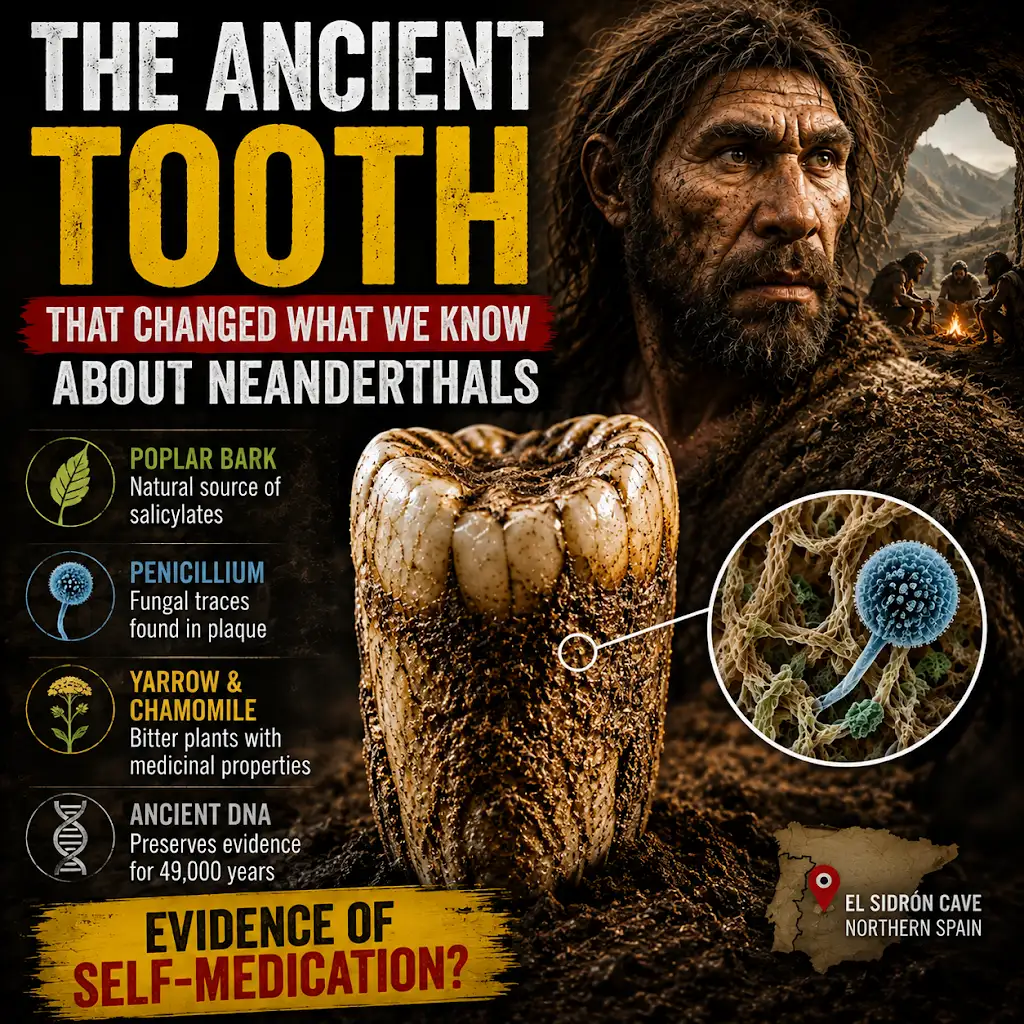
The Ancient Tooth That Changed What We Know About Neanderthals
FAQs
What are ancient medicinal plants?
Ancient medicinal plants are plants that have been used for their healing properties for centuries by various cultures around the world. These plants have been traditionally used to treat a wide range of ailments and health conditions.
What are some examples of ancient medicinal plants?
Some examples of ancient medicinal plants include aloe vera, turmeric, ginger, ginseng, and garlic. These plants have been used in traditional medicine systems such as Ayurveda, Traditional Chinese Medicine, and Native American medicine.
What are the benefits of using ancient medicinal plants?
Ancient medicinal plants are believed to have various health benefits, including anti-inflammatory, antioxidant, and immune-boosting properties. They are also used to treat conditions such as digestive issues, skin problems, and respiratory ailments.
How are ancient medicinal plants used?
Ancient medicinal plants can be used in various forms, including as teas, tinctures, powders, and topical ointments. They can also be incorporated into culinary dishes for their health-promoting properties.
Are there any potential risks or side effects associated with using ancient medicinal plants?
While ancient medicinal plants are generally considered safe when used appropriately, some plants may have potential risks or side effects, especially when used in large quantities or in combination with certain medications. It is important to consult with a healthcare professional before using any medicinal plants, especially if you have underlying health conditions or are pregnant or breastfeeding.