The sun, a molten orb, dipped towards the horizon, painting the sky in hues of fiery orange and rose. Below, the Mediterranean Sea, cradled by millennia of history, shimmered as if holding the secrets of ages within its sapphire depths. For centuries, this vast expanse of water has been a pulsating artery of civilization, a stage for empires, a cradle of ideas, and a conduit for trade and conflict. To explore the ancient Mediterranean is to embark on a journey through time, tracing the rise and fall of powers, the whispers of forgotten gods, and the enduring legacy of those who navigated its waters.
The Mediterranean’s allure as a maritime highway began long before written records. Early humans, drawn by the promise of sustenance and the allure of distant lands, began to venture out onto its waters. The earliest evidence of seafaring suggests a gradual, experimental approach, utilizing simple rafts and dugout canoes to hug coastlines and explore accessible islands. These pioneering voyages, fraught with peril and demanding incredible ingenuity, laid the foundation for the sophisticated maritime cultures that would later define the region.
The Rise of Coastal Communities and Island Hopping
The fertile coastal plains and the abundance of islands dotting the Mediterranean provided ideal conditions for the growth of early settlements. These communities, initially reliant on fishing and gathering, soon discovered the advantages of inter-island and coastal trade. Archaeological findings, such as obsidian tools traded across considerable distances from sources like Melos, attest to these early networks. The ability to move goods and people across water facilitated the exchange of knowledge, technologies, and cultural practices, fostering a unique Mediterranean identity even in these nascent stages.
The Minoan Thalassocracy: Masters of the Aegean
Perhaps the most significant early maritime power to emerge from the Mediterranean was the Minoan civilization of Crete. Flourishing from around 2700 BCE to 1450 BCE, the Minoans established a formidable naval presence, often referred to as a “thalassocracy” – a state whose power derives from its navy. Their impressive palaces, like Knossos, with their sophisticated plumbing and elaborate frescoes depicting maritime scenes, speak volumes about their connection to the sea.
The Power of the Minoan Fleet
The Minoans understood the strategic and economic importance of controlling sea lanes. Their fleet, likely comprised of oared galleys and sailing vessels, allowed them to project power, protect trade routes, and possibly even carry out raids on coastal settlements. The absence of significant fortifications in many Minoan sites suggests a reliance on their naval dominance for defense. Evidence from shipwrecks, such as the Uluburun wreck (though slightly later, it reflects Minoan influence), reveals the extensive reach of their trading networks, carrying goods like copper, tin, pottery, and even elephants from across the Eastern Mediterranean and beyond.
The Labyrinthine Influence: Trade and Cultural Exchange
The Minoans were not just warriors of the waves; they were also prodigious traders. They exchanged their exquisite pottery, metalwork, and agricultural products for raw materials like copper from Cyprus and tin from further afield, essential for bronze production. This economic prowess fostered extensive cultural exchange, with Minoan artistic styles and religious motifs influencing mainland Greece and the islands. Their eventual decline, possibly due to volcanic eruptions or mainland invasions, marked a pivotal moment, paving the way for new powers to emerge.
The Ancient Mediterranean Sea has long been a subject of fascination for historians and archaeologists alike, as it played a crucial role in the development of early civilizations. For those interested in exploring the connections between ancient maritime exploration and other regions, a related article on early explorers can be found at Explorers of Antarctica Before 1820. This article delves into the journeys of explorers who ventured into uncharted territories, highlighting the spirit of discovery that has characterized human history across various seas and continents.
The Classical Age: Empires, Colonization, and the Aegean as a Battleground
Following the decline of the Minoan civilization, the Mediterranean became a stage for the emergence and dominance of powerful city-states and empires. The Classical Age, roughly from the 5th to the 4th centuries BCE, witnessed an unprecedented surge in naval power, driven by both economic ambition and territorial expansion. The Aegean Sea, in particular, became a vital arena for political struggle and cultural innovation.
The Athenian Naval Hegemony: The Delian League and Athenian Democracy
Athens, a city-state historically not as reliant on the sea as some of its counterparts, rose to become the preeminent naval power of the Classical Greek world. Following the Persian Wars, the Athenians established the Delian League, ostensibly a defensive alliance of Greek city-states. However, Athens gradually transformed the League into its own maritime empire, using its considerable naval strength to enforce its will, extract tribute, and protect its vital trade routes.
The Trireme: The Backbone of Athenian Power
The development and mastery of the trireme, a powerful warship propelled by three banks of oars, was instrumental to Athenian success. This agile and fast vessel allowed the Athenians to dominate naval battles, most famously at Salamis, where they decisively defeated the Persian fleet. The trireme was not just a tool of war; it was also a symbol of Athenian power and their mastery of maritime technology.
The Peloponnesian War: A Clash of Giants
The growing power of Athens and its aggressive expansion inevitably led to conflict with Sparta, the dominant land power of Greece. The Peloponnesian War (431–404 BCE) was a protracted and devastating struggle that heavily involved naval strategies and blockades. While Sparta ultimately triumphed, largely due to Persian financial support for its navy, the war highlighted the crucial role of sea power in shaping the geopolitical landscape of the ancient Mediterranean.
The Phoenician Colonization: Navigators of the Western Mediterranean
While the Greeks were establishing their dominance in the East, the Phoenicians, a Semitic people from the Levant, were undertaking their own ambitious expansion across the Western Mediterranean. From their city-states like Tyre and Sidon, they established a vast network of trading posts and colonies, stretching from Cyprus and North Africa to the Iberian Peninsula.
Carthage: The Daughter City that Grew to Empire
The most significant Phoenician colony was Carthage, founded on the coast of modern-day Tunisia around the 9th century BCE. Over time, Carthage developed into a formidable independent power, its wealth and influence rivaling that of its parent cities. Its formidable navy, comprised of powerful quinqueremes and other war galleys, controlled vital trade routes in the Western Mediterranean, challenging Greek and later Roman dominance.
The Punic Wars: A Struggle for Supremacy
The inevitable clash between the expanding Roman Republic and the established Carthaginian empire culminated in a series of brutal conflicts known as the Punic Wars. These wars, fought primarily at sea and on land contested by naval forces, determined the future of the Western Mediterranean. Rome’s ultimate victory, culminating in the destruction of Carthage in 146 BCE, marked a turning point in Mediterranean history, paving the way for Roman hegemony.
The Roman Imperium: Unifying the Mediterranean World

The rise of Rome from a regional power to a vast empire fundamentally reshaped the Mediterranean. By conquering Carthage and gradually extending its influence across Greece, Egypt, and the Near East, Rome achieved what no prior power had: the effective unification of the entire Mediterranean basin under a single political and administrative entity.
Mare Nostrum: Rome’s “Our Sea”
The Romans famously referred to the Mediterranean as “Mare Nostrum,” meaning “Our Sea.” This epithet reflects their absolute control and dominance over its waters. Their navy, though initially developed out of necessity to combat Carthage, evolved into a sophisticated and powerful force capable of maintaining peace, projecting power, and facilitating the vast flow of commerce that sustained the empire.
Logistics and Supply Lines
The Roman navy was crucial for maintaining the empire’s vast logistical network. Grain from Egypt and North Africa, resources from Hispania and the Levant, and legions deployed to distant provinces all relied on the safe and efficient passage provided by Roman warships and merchant vessels. The navy played a vital role in suppressing piracy, which had long plagued Mediterranean trade, ensuring the smooth functioning of this complex economic system.
Naval Power and Conquest
Roman naval power was not just defensive; it was also instrumental in their conquests. Fleets were essential for troop transport, amphibious assaults, and the crucial task of blockading enemy ports. Campaigns against the pirates of Cilicia, the conquest of Egypt, and the expansion into the northern territories all involved significant naval operations, demonstrating the crucial synergy between land and sea power.
The Pax Romana: A Period of Unprecedented Maritime Stability
The long period of relative peace and stability under the Roman Empire, known as the Pax Romana (roughly 27 BCE to 180 CE), was a golden age for Mediterranean maritime activity. With piracy largely suppressed and political borders solidified, trade flourished on an unprecedented scale.
The Silk Road of the Seas
The Mediterranean became the western terminus of the Silk Road, connecting the riches of the East with the markets of Europe. Spices, silks, precious stones, and exotic goods flowed into Roman ports, while Roman manufactured goods, wine, and olive oil were exported. This vibrant exchange enriched the empire, fostering a cosmopolitan culture and intermingling of peoples and ideas.
Architectural Legacies and Maritime Engineering
The Romans were renowned for their engineering prowess, and this extended to their maritime infrastructure. They built impressive harbors, lighthouses, and aqueducts to support their coastal cities. Shipwrecks from this era reveal increasingly sophisticated shipbuilding techniques, with vessels capable of carrying larger cargoes and sailing more efficiently. These remains offer invaluable insights into the scale and nature of Roman maritime endeavors.
The Byzantine and Islamic Naval Powers: Shifting Dominance in the High Middle Ages
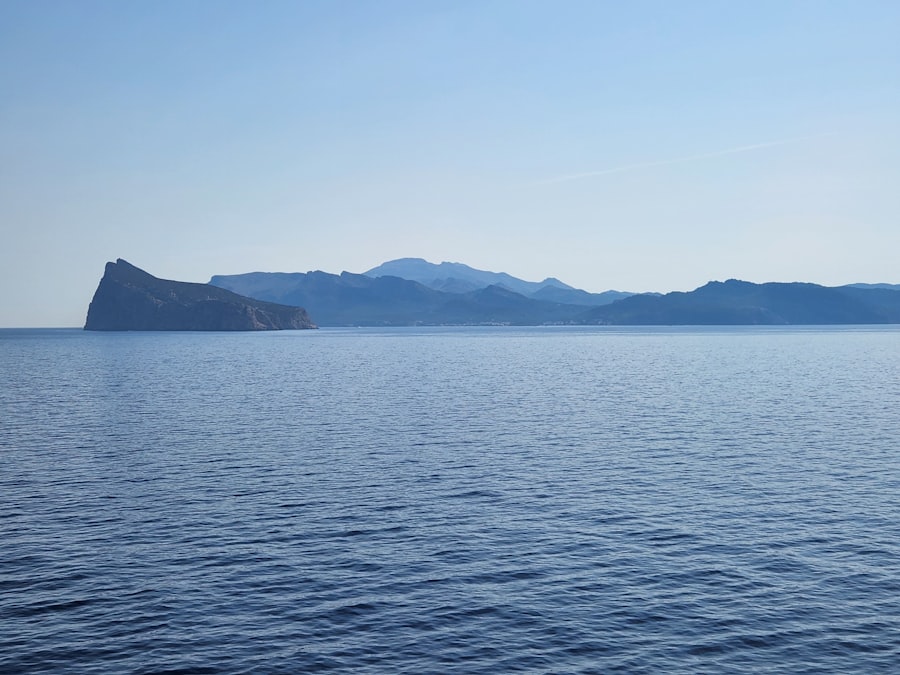
Following the decline and eventual fragmentation of the Western Roman Empire, the Mediterranean witnessed a significant shift in naval power. The Eastern Roman Empire, centered in Constantinople and later known as the Byzantine Empire, maintained a powerful navy for centuries, defending its vast territories and engaging in complex diplomatic and military maneuvers. The rise of Islam and the rapid expansion of Arab caliphates introduced a new and formidable maritime force to the region.
The Byzantine Navy: Guardians of the East
The Byzantine Empire, inheriting the Roman naval tradition, possessed a formidable fleet that played a crucial role in its longevity. For over a thousand years, the Byzantines defended their eastern and southern frontiers against numerous threats, including the expansion of Slavic peoples, the Normans, and, most significantly, the burgeoning Islamic fleets.
Greek Fire: The Secret Weapon
A key element of Byzantine naval superiority was their development and deployment of “Greek fire,” a mysterious incendiary weapon that could project flames across the water and was virtually inextinguishable. Its exact composition remains unknown, but its effectiveness in naval battles, particularly against Arab fleets attempting to besiege Constantinople, was legendary and undoubtedly contributed to the empire’s survival.
Trade and Diplomacy by Sea
Beyond warfare, the Byzantine navy facilitated the empire’s extensive trade networks, connecting it with the Black Sea, the Levant, and the Italian city-states. Diplomatic missions were also frequently conducted by sea, with Byzantine galleys sailing to distant courts to negotiate treaties and secure alliances.
The Rise of Islamic Naval Power: From Conquest to Commerce
The Arab conquests of the 7th and 8th centuries CE brought vast territories under Islamic rule, including the strategically important North African coast and the Levant. This naturally led to the development of significant naval capabilities, initially to support further conquests and then to secure trade routes and protect their expanding maritime interests.
The Umayyad and Abbasid Fleets
The Umayyad Caliphate, and later the Abbasid Caliphate, established considerable naval bases and built fleets that challenged Byzantine dominance in the Eastern Mediterranean. The conquest of Crete, Sicily, and Sardinia by Islamic forces demonstrated their growing maritime strength and their ability to project power across the sea.
Andalusian Maritime Networks
In the west, Al-Andalus (Muslim Spain) became a major center of Islamic naval activity. Andalusian fleets engaged in trade, piracy, and naval warfare, establishing a significant presence in the western Mediterranean. Their ships, often incorporating innovations learned from or developed alongside Byzantine and other regional shipbuilding traditions, were a formidable force. The constant rivalry and intermittent naval battles between Byzantine and Islamic fleets, as well as between various Islamic states, characterized much of the ensuing centuries.
The Ancient Mediterranean Sea has long been a subject of fascination for historians and archaeologists alike, as it played a crucial role in the development of early civilizations. Understanding the historical context of this region can also shed light on contemporary issues, such as water scarcity. For those interested in exploring the modern implications of water management, a related article discusses the challenges and solutions surrounding global water scarcity, which can be found here. This connection between ancient practices and current challenges highlights the importance of sustainable water use in both historical and modern contexts.
Legacy of the Ancient Mediterranean: Enduring Influences and Echoes in the Modern World
| Country | Coastline Length (km) | Maximum Depth (m) |
|---|---|---|
| Greece | 13,676 | 5,121 |
| Italy | 7,600 | 5,267 |
| Turkey | 7,200 | 2,200 |
| Spain | 4,964 | 3,363 |
The legacy of the ancient Mediterranean Sea is not confined to dusty ruins and academic texts. Its influence permeates every aspect of modern society, from our languages and legal systems to our artistic traditions and our understanding of the world. The maritime heritage of this ancient crucible continues to shape our present and future.
The Cradle of Civilizations and Ideas
The Mediterranean was the birthplace of some of the world’s most influential civilizations: the Egyptians, the Minoans, the Greeks, the Romans, and the Phoenicians, among others. These cultures developed advanced forms of governance, philosophy, science, and art, many of which were transmitted and transformed across the sea. Greek philosophy, Roman law, and the monotheistic religions that emerged from the region all spread via maritime routes, profoundly shaping Western civilization.
The Foundations of International Relations and Trade
The complex web of trade, diplomacy, and conflict that characterized the ancient Mediterranean laid the groundwork for modern international relations. The concept of empires vying for control of crucial sea lanes, the establishment of trade agreements, and the challenges of maintaining peace and security on a shared body of water are all themes that resonate to this day. The Mediterranean continues to be a vital transit point for global trade, a testament to its enduring strategic importance.
Artistic and Architectural Echoes
The art and architecture of the ancient Mediterranean continue to inspire. The majestic ruins of Roman aqueducts and temples, the intricate mosaics of Byzantine churches, and the elegant pottery of Minoan palaces are still admired and emulated. The maritime themes that featured so prominently in ancient art, from depictions of naval battles to scenes of daily life at sea, speak to the profound human connection with the ocean, a connection that continues to be explored and celebrated by artists today.
The ancient Mediterranean Sea, with its undulating currents and its vast, shimmering surface, remains a powerful symbol of human endeavor, cultural exchange, and the ceaseless ebb and flow of history. To explore its ancient past is to understand the deep roots of our present, recognizing that the whispers of forgotten sailors, the echoes of ancient navies, and the dreams of ancient mariners still resonate across its timeless waters.

When the Mediterranean Became a Desert | The Messinian Salinity Crisis Explained
FAQs
What is the Ancient Mediterranean Sea?
The Ancient Mediterranean Sea refers to the body of water located between the continents of Europe, Asia, and Africa. It was a crucial trade route and played a significant role in the development of ancient civilizations.
Which ancient civilizations were located around the Mediterranean Sea?
Several ancient civilizations were located around the Mediterranean Sea, including the Egyptians, Greeks, Phoenicians, Romans, and Carthaginians. These civilizations relied on the sea for trade, transportation, and communication.
What were the major trade routes in the Ancient Mediterranean Sea?
The Ancient Mediterranean Sea was a hub for trade, with major trade routes connecting the civilizations around the sea. These routes facilitated the exchange of goods such as olive oil, wine, grain, and pottery.
What were the key contributions of the Ancient Mediterranean Sea to civilization?
The Ancient Mediterranean Sea played a crucial role in the development of civilization by facilitating trade, cultural exchange, and the spread of ideas and technologies. It also influenced the development of maritime technology and navigation.
How did the Ancient Mediterranean Sea impact the modern world?
The legacy of the Ancient Mediterranean Sea continues to influence the modern world in various ways, including language, architecture, philosophy, and the legal system. The sea also continues to be a popular tourist destination, attracting visitors to its historical sites and scenic beauty.