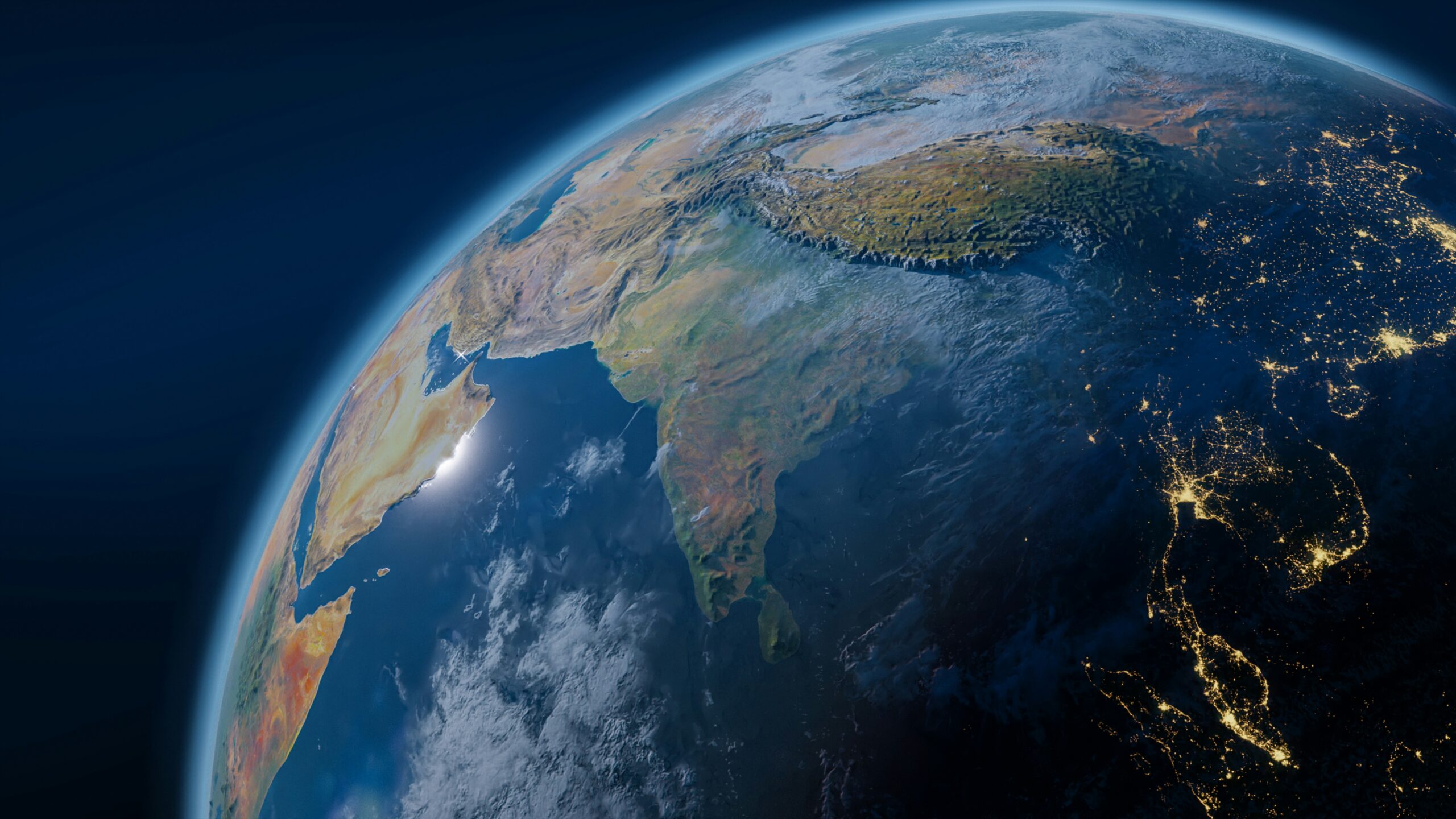
“Earth: A Fascinating Science” is a groundbreaking documentary series that embarks on an ambitious journey through the 4.5-billion-year history of our planet. Led by the esteemed broadcaster and naturalist Chris Packham, the series offers a captivating and scientifically rich exploration of Earth’s most pivotal moments, from its fiery birth to the intricate web of life that defines it today. Available on BBC iPlayer and PBS in the United States, this 58-minute series is more than just a collection of stunning visuals; it is a profound dive into the scientific forces that have shaped our world, providing new perspectives on our planet’s past, present, and future.
The documentary series tackles complex scientific concepts with clarity and compelling narrative, making it accessible to a wide audience while retaining a deep level of scientific integrity. It delves into periods of extreme upheaval, such as devastating asteroid bombardments that paved the way for life’s emergence, profound global temperature collapses that threatened all existence, and catastrophic extinction events that nearly wiped the slate clean. Through meticulous research and cutting-edge visual effects, viewers are transported to epochs long past, witnessing the raw power of geological forces and the fragile tenacity of life itself. The series stands as a testament to humanity’s enduring curiosity about its origins and the remarkable journey of the planet it calls home.
The Genesis of a World
The initial episodes of “Earth: A Fascinating Science” are dedicated to unraveling the very formation of our planet. Packham guides viewers through the chaotic, primordial era when Earth was a molten, volatile sphere, constantly bombarded by space debris. This period, though seemingly destructive, laid the crucial groundwork for the planet’s unique characteristics. The intense heat and volcanic activity, while harsh, were instrumental in creating the planet’s atmosphere and oceans, essential ingredients for life as we know it. The series doesn’t shy away from the sheer scale of these early events, using vivid imagery to convey the immense energies at play.
Celestial Sculptors
The program highlights the significant impact of celestial bodies in shaping Earth’s early environment. Asteroids and comets, far from being mere cosmic curiosities, were active agents of change. Their impacts not only delivered water and organic molecules to a nascent Earth but also triggered geological events that played a crucial role in the planet’s evolution. The documentary frames these collisions not just as destructive forces but as essential contributors to the planet’s habitability, a nuanced perspective that challenges common perceptions.
The Violent Cradle
Within this section, the series focuses on the intensely volcanic nature of early Earth. The constant eruption of volcanoes released gases that would eventually form the atmosphere and water vapor that condensed to form the first oceans. This fiery cauldron was a far cry from the verdant planet we inhabit today, yet it was precisely this volatile environment that created the conditions necessary for the eventual emergence of life. The visual representation of these processes is particularly striking, offering a glimpse into a world undergoing constant, dramatic transformation.
The Origins of Water
A key aspect explored is the origin of Earth’s water. While once debated, prevailing scientific theories, supported by evidence presented in the documentary, suggest that a significant portion of Earth’s water was delivered by icy comets and asteroids during the planet’s formative years. This revelation underscores the interconnectedness of Earth with the wider solar system, demonstrating how external influences played a vital role in creating the conditions for life.
In exploring the fascinating intersections of ancient civilizations and their relationship with Earth science, the documentary “The Lost Technology: Evidence of Ancient Purge” provides compelling insights into how early societies understood and interacted with their environment. This article delves into the advanced technologies and ecological practices of ancient cultures, shedding light on their sustainable methods and the lessons we can learn today. To read more about this intriguing topic, visit the article here: The Lost Technology: Evidence of Ancient Purge.
The Crucible of Life
One of the most compelling narratives within “Earth: A Fascinating Science” revolves around the planet’s earliest forms of life and the profound challenges they faced. The series meticulously details the periods when life hung precariously on the brink, illustrating the remarkable resilience and adaptability of biological organisms. This segment is crucial for understanding the long and arduous journey of evolution.
The Inferno: A World Rekindled
The episode titled “Inferno” delves into the colossal Permian-Triassic extinction event, also known as the Great Dying. This catastrophic period, occurring approximately 252 million years ago, saw the demise of an estimated 96% of all marine species and 70% of terrestrial vertebrate species. The documentary explores the prevailing scientific consensus that massive volcanic activity in Siberia, the Siberian Traps, triggered a runaway greenhouse effect, leading to widespread suffocation and ocean acidification. The visual reconstructions of this apocalyptic event are sobering yet essential for appreciating the fragility of existence.
The Great Dying’s Legacy
The “Inferno” episode doesn’t just recount the devastation; it also examines the long-term ramifications. The extinction event, while devastating, cleared the ecological slate, allowing for the rise of new life forms. It was this crucible that ultimately paved the way for the dinosaurs to dominate and eventually, for mammals to evolve. Packham’s narration effectively conveys the idea that extinction events, though tragic, are often precursors to new eras of biological diversity.
The Snowball Earth Phenomenon
Another significant period of planetary upheaval explored is the “Snowball Earth” hypothesis. This theory posits that Earth experienced at least two, and possibly more, severe global glaciations where much of the planet was covered in ice, even around the equator. The documentary examines the breakup of the supercontinent Rodinia and its potential role in triggering these dramatic climate shifts. The series highlights the scientific evidence, such as glacial deposits in equatorial regions, that supports this extreme cooling period, occurring around 800 million years ago.
Surviving the Freeze
The narrative then shifts to how life not only survived these frigid eras but also how the eventual melting of the ice caps may have played a role in triggering evolutionary explosions. The radical changes in Earth’s climate forced organisms to adapt in unprecedented ways, pushing the boundaries of biological possibility. The visual depictions of a planet encased in ice are awe-inspiring, emphasizing the extreme fluctuations Earth has endured.
The Green Revolution
The emergence and proliferation of plant life represent a pivotal turning point in Earth’s history, and “Earth: A Fascinating Science” dedicates a significant portion to this transformative era. The series illustrates how the evolution of photosynthesis and the spread of vegetation fundamentally altered the planet’s atmosphere, climate, and ultimately, the course of evolution.
Plants: Earth’s Architects
The “Green” episode vividly portrays how early plants, appearing perhaps around 500 million years ago, began to oxygenate the atmosphere. Their photosynthetic process consumed carbon dioxide and released oxygen, gradually transforming the planet’s composition. This gradual shift had profound consequences, not only making the atmosphere breathable for many subsequent life forms but also influencing global temperatures.
Altering the Air We Breathe
This section of the documentary emphasizes the slow but monumental change in atmospheric composition. Over millions of years, plants, in conjunction with geological processes, built up the oxygen levels we consider essential today. The series uses striking visuals to represent the gradual infusion of oxygen into the atmosphere, a silent revolution that supported the diversification of life.
The Rise of Forests and Their Impact
The advent of complex plant structures, such as trees and forests, further amplified these changes. The series details how these dense ecosystems not only continued to absorb CO2 but also influenced rainfall patterns, soil formation, and biodiversity. The visual journey from barren landscapes to lush, verdant forests is a testament to the power of life to reshape its environment. The documentary highlights how the very ground beneath our feet and the air we breathe are products of billions of years of botanical endeavor.
The Dynamic Atmosphere and Climate
The documentary series also dedicates considerable attention to the evolution of Earth’s atmosphere, its crucial role in regulating climate, and the delicate balance that sustains life. The formation and subsequent changes to our atmosphere are inextricably linked to geological events and biological processes.
Atmosphere: A Shield and a Greenhouse
The early episodes, particularly “Atmosphere,” explore the initial formation of Earth’s atmosphere from volcanic outgassing. Initially a toxic mix, it gradually transformed through geological and biological processes. The series explains how atmospheric gases, like carbon dioxide and methane, acted as a greenhouse, trapping heat and preventing Earth from freezing over entirely. However, it also illustrates how excessive accumulation of these gases could lead to runaway heating, a crucial insight into our current climate challenges.
The Thin Blue Line
Packham emphasizes the delicate nature of Earth’s atmosphere, portraying it as a thin, protective layer essential for life. The documentary meticulously explains how atmospheric composition has shifted over eons, influencing global temperatures and the evolution of life. This section serves as a crucial primer for understanding climate science and the impact of human activities.
Climate Cycles and Their Influence
The series comprehensively examines Earth’s long history of climate fluctuations. From the extreme cold of Snowball Earth to the sweltering heat of certain geological periods, Earth’s climate has been anything but static. The documentary explains how natural cycles, driven by factors such as volcanic activity, orbital variations, and atmospheric composition, have shaped these changes. This historical perspective provides vital context for contemporary discussions on climate change.
Understanding Past Extremes
By detailing past climate extremes, “Earth: A Fascinating Science” offers valuable lessons. It illustrates how life has adapted to, and been challenged by, significant climate shifts throughout history. This understanding is crucial for forecasting potential future scenarios and for appreciating the resilience of Earth’s systems. The documentary connects these ancient climatic events to modern scientific observations, drawing parallels between past transformations and present-day concerns.
In exploring the intricate dynamics of Earth’s systems, a fascinating article discusses the potential economic impacts of environmental changes, which can be found at this link. The documentary delves into how shifts in climate and natural resources can influence global markets, highlighting the interconnectedness of Earth science and economics. Understanding these relationships is crucial for preparing for future challenges that may arise from our changing planet.
Earth’s Ongoing Evolution and Future
The concluding segments of “Earth: A Fascinating Science” turn its gaze towards the ongoing evolution of our planet and the implications for the future. Drawing on recent scientific discoveries and ongoing research, the series connects the historical narrative to contemporary understanding.
A World in Constant Flux
The documentary underscores that Earth is not a static entity but a dynamic, ever-changing planet. The series touches upon recent scientific news, such as NASA’s findings about Earth’s magnetic symmetry, highlighting ongoing geological and atmospheric processes that continue to shape our world. This perspective reinforces the idea that our planet is a complex system with intricate feedbacks.
The Unseen Forces
This section delves into the less visible but fundamental forces at play, such as the planet’s magnetic field, its impact on cosmic radiation, and the complex interactions of tectonic plates. Packham explains how these forces, even if imperceptible to daily observation, are crucial for maintaining planetary stability and habitability.
Ancient Life and Modern Discoveries
The series also subtly aligns with recent scientific breakthroughs, such as the reawakening of ancient bacteria from permafrost. This phenomenon, while appearing novel, speaks to the deep history of life embedded within the Earth’s systems and its capacity for dormancy and revival. It highlights the interconnectedness of past and present life forms and the potential for scientific discovery in unexpected places.
Greenland’s Shifting Ice
Furthermore, the documentary’s themes resonate with contemporary observations of Greenland ice sheet meltwater events. By presenting the long-term geological and climatic context, the series helps viewers understand the significance of such events as indicators of ongoing planetary change. It frames these observations not as isolated incidents but as part of Earth’s continuous, dynamic evolution.
A Call to Awareness
While celebrating the planet’s resilience and the remarkable journey of life, “Earth: A Fascinating Science” implicitly serves as a call to awareness. By showcasing the profound transformations Earth has undergone, the series encourages a deeper appreciation for its delicate balance and the impact of human activities. It empowers viewers with scientific knowledge, fostering a greater understanding of our place within the grand tapestry of Earth’s history and our responsibility in safeguarding its future. The documentary, through its comprehensive yet accessible approach, leaves viewers with a profound sense of wonder and a renewed respect for the extraordinary planet we inhabit.

The Sahara Won’t Stay a Desert Forever
FAQs

What is Earth science?
Earth science is the study of the Earth and its processes, including geology, meteorology, oceanography, and environmental science. It encompasses the study of the Earth’s structure, composition, and history, as well as the interactions between the Earth’s various systems.
What is an Earth science documentary?
An Earth science documentary is a film or video production that explores and explains various aspects of Earth science. This may include topics such as the formation of the Earth, natural disasters, climate change, and the impact of human activity on the environment.
What are some common themes in Earth science documentaries?
Common themes in Earth science documentaries include the formation of the Earth, the processes that shape the planet’s surface, the impact of natural disasters such as earthquakes and hurricanes, the study of climate change, and the exploration of the Earth’s oceans and atmosphere.
How are Earth science documentaries produced?
Earth science documentaries are typically produced by a team of filmmakers, scientists, and researchers. The production process may involve extensive research, fieldwork, interviews with experts, and the use of advanced technology such as drones and satellite imagery to capture stunning visuals of the Earth’s landscapes and natural phenomena.
What are some popular Earth science documentaries?
Some popular Earth science documentaries include “Planet Earth” and “Blue Planet” by the BBC, “Chasing Ice” which focuses on climate change and melting glaciers, “An Inconvenient Truth” featuring Al Gore’s presentation on global warming, and “The Cove” which explores the impact of human activity on marine life.