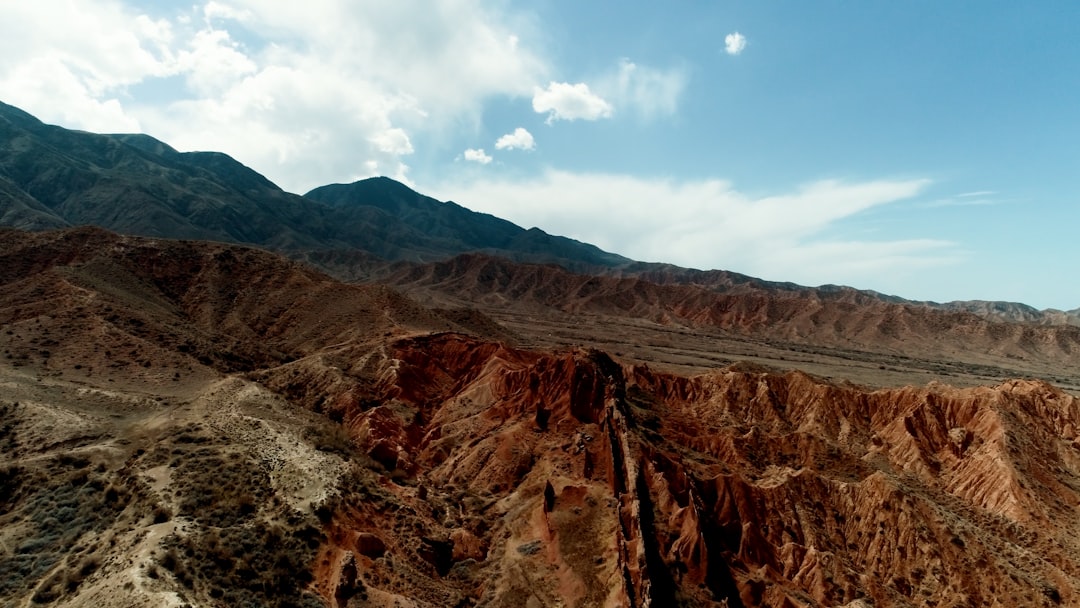
A modern geology documentary, aptly titled “Exploring Earth’s Wonders,” offers a breathtaking journey through the planet’s most awe-inspiring geological landscapes and phenomena. This ambitious production eschews the dry, academic tone often associated with scientific films, instead embracing a narrative that is both intellectually stimulating and visually opulent. It aims to demystify the intricate processes that have shaped Earth over billions of years, revealing the raw power and delicate balance that govern our dynamic planet. Through cutting-edge cinematography, in-depth scientific analysis, and compelling storytelling, the documentary invites viewers to witness firsthand the molten heart of volcanoes, the silent erosive force of glaciers, the colossal power of earthquakes, and the slow, inexorable march of continental drift. It’s a testament to human curiosity and our ongoing quest to understand the very ground beneath our feet.
The documentary dedicates a significant portion of its runtime to the visceral and often terrifying spectacle of volcanic activity. It begins by taking viewers deep into the Earth’s mantle, where immense heat and pressure continuously churn molten rock, the driving force behind all volcanism.
Understanding the Mechanics of Eruption
“Exploring Earth’s Wonders” meticulously breaks down the science behind volcanic eruptions, moving beyond the simple image of lava spewing from a cone. It illustrates how magma, a silicate-rich fluid, rises through the Earth’s crust.
Magma Formation and Ascent
The film showcases vibrant visualizers depicting the conditions necessary for magma to form, explaining the role of plate tectonics in creating pathways for this molten rock to ascend. Viewers witness animations of subduction zones where oceanic plates dive beneath continental plates, melting and feeding the magmatic reservoirs above. The documentary explains how dissolved gases within the magma, such as water vapor and carbon dioxide, play a crucial role in driving eruptions. As the magma rises and the pressure decreases, these gases expand, leading to explosive decompression.
Types of Volcanic Eruptions
The documentary distinguishes between effusive and explosive eruptions, showcasing diverse examples from around the globe. It contrasts the gentle, flowing lava of Kilauea in Hawaii, with its basaltic magma, to the devastating pyroclastic flows of Mount St. Helens, driven by more silica-rich, viscous magma. Advanced thermal imaging and high-speed cameras capture the raw energy of these events, from incandescent lava fountains to the terrifying velocity of volcanic ash plumes. The production team’s access to active volcanic sites, accompanied by expert commentary from volcanologists, lends an air of unparalleled authenticity to these segments.
Iconic Volcanoes and Their Stories
Beyond the scientific principles, the documentary tells the stories of specific volcanoes, highlighting their geological significance and their impact on human civilization.
Mount Vesuvius: A Timeless Warning
The segment on Mount Vesuvius is particularly poignant. It revisits the catastrophic eruption that buried Pompeii and Herculaneum, using a combination of CGI reconstructions and expert analysis to recreate the events of 79 AD. The film underscores how Vesuvius, a stratovolcano, poses a persistent threat to the densely populated region of Naples, explaining the geological surveillance systems in place to monitor its activity. The scientific understanding of Vesuvius’s history of eruptions informs modern preparedness strategies.
Iceland’s Geothermal Wonderland
Iceland, a land shaped by volcanic forces, serves as a prime example of how volcanism can also be a source of incredible natural beauty and geothermal energy. The documentary explores the Mid-Atlantic Ridge, where Iceland sits astride the divergent boundary between the North American and Eurasian plates.
The Mid-Atlantic Ridge Exposed
Viewers are treated to aerial shots of the rift valley, a dramatic scar across the landscape where the continents are slowly pulling apart. The film explains how this geological activity fuels Iceland’s numerous volcanoes and geysers. The constant volcanic activity on Iceland has also created a unique landscape, characterized by vast lava fields, black sand beaches, and dramatic basalt columns, such as those at Reynisfjara.
Harnessing Earth’s Heat
The documentary highlights Iceland’s pioneering use of geothermal energy, showcasing sprawling power plants that tap into the Earth’s internal heat. Scientists explain how this renewable energy source is generated and how it powers the nation, presenting a hopeful vision for sustainable energy solutions derived from geological processes.
For those interested in the fascinating developments in modern geology, a related article that delves into the mysteries of our planet’s past is available at this link: Antarctica: Pre-Ice Age Secrets. This article explores the geological history of Antarctica and reveals insights that could reshape our understanding of climate change and Earth’s geological processes.
The Sculpting Hand: Glaciers and the Power of Ice
From the fiery depths, “Exploring Earth’s Wonders” transitions to the frozen realms, examining the immense power of glaciers, the slow-moving rivers of ice that have sculpted much of our planet’s surface.
The Formation and Flow of Glaciers
The documentary meticulously explains the processes by which glaciers form and move, emphasizing their role as geological agents of erosion and deposition.
From Snowfall to Ice Mass
The film begins with the accumulation of snow in high-altitude or polar regions. It explains how successive layers of snow are compressed over time, transforming into firn and eventually dense glacial ice. Advanced time-lapse photography captures the subtle yet relentless accumulation of ice, demonstrating how thousands of years of snowfall are required to create a formidable glacier. The documentary uses detailed animations to illustrate the internal structure of glacial ice, highlighting the air bubbles trapped within, which serve as valuable archives of past atmospheric conditions.
The Dynamics of Glacial Movement
The documentary delves into the complex mechanics of glacial flow, explaining how gravity and the internal deformation of ice contribute to the glacier’s movement downhill. Two primary forms of movement are detailed: basal slip, where the glacier slides over its bed, often lubricated by meltwater, and internal deformation, where the ice crystals within the glacier deform and slide past each other. The film employs specialized sensors and markers placed on glaciers to demonstrate these movements in real time, revealing how even seemingly static ice can advance several meters per day.
Landscapes Carved by Ice
The impact of glaciers on the Earth’s surface is profound and visually stunning. The documentary showcases a range of glacial landforms, transforming viewers into witnesses of geological artistry.
The Majesty of Fjords and U-Shaped Valleys
The film takes viewers to Norway and New Zealand, where the dramatic fjords, deeply carved inlets of the sea, are presented as quintessential glacial features. Scientists explain how glaciers, with their immense weight and erosive power, gouged out these valleys during past ice ages, which were later flooded by the sea. Similarly, the characteristic U-shaped valleys, with their steep sides and flat bottoms, are showcased as unmistakable evidence of glacial sculpting, contrasting them with the V-shaped valleys carved by rivers.
Glacial Deposition: Moraines and Till Plains
The documentary also explores the depositional landforms created by glaciers. It illustrates the formation of moraines, ridges of rock and sediment pushed and carried by glaciers, and the vast till plains, areas covered by unsorted glacial sediment. The film uses drone footage to capture the sweeping expanse of these glacial remnants, highlighting their importance in shaping agricultural landscapes and influencing water resources. Examples such as the Great Lakes region of North America are presented as striking instances of glacial deposition on a colossal scale.
The Trembling Earth: Seismology and the Unseen Forces
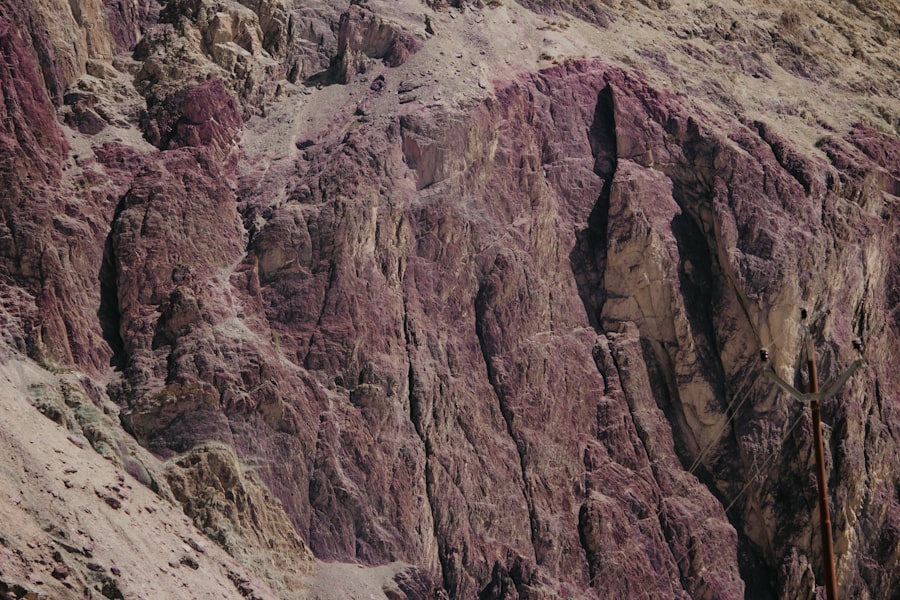
“Exploring Earth’s Wonders” then shifts its focus to the unpredictable and often devastating power of earthquakes, delving into the science of seismology and the intricate forces that cause the Earth’s crust to fracture.
In exploring the fascinating developments in modern geology, one might find it intriguing to consider how ancient civilizations interacted with their environment, as discussed in a related article that delves into the evidence of lost technologies. This article highlights the remarkable achievements of ancient societies and their understanding of geological processes, which can be further examined in detail here: lost technologies. Such insights not only enrich our understanding of the past but also inform our current geological practices.
Inside the Earthquake Machine
The documentary aims to demystify the process of earthquakes, presenting them not as random events but as predictable consequences of geological stresses.
Plate Tectonics and Fault Lines
The film begins by reinforcing the concept of plate tectonics, explaining how the Earth’s lithosphere is divided into large, moving plates. It illustrates how the boundaries of these plates are zones of intense geological activity, where stress builds up over time. The documentary focuses on fault lines, the fractures in the Earth’s crust where tectonic plates interact. Animated diagrams clearly show the different types of faults – normal, reverse, and strike-slip – and the types of plate movement associated with each.
The Release of Seismic Energy
The core of the earthquake explanation lies in the concept of elastic rebound. The documentary uses sophisticated animations to show how rocks, under immense stress, deform like a rubber band. When the stress exceeds the rock’s strength, it suddenly snaps, releasing stored energy in the form of seismic waves. Expert seismologists explain the hypocenter (the point of rupture) and the epicenter (the point on the Earth’s surface directly above the hypocenter). The film utilizes actual seismic data from past major earthquakes to visually represent the propagation of these waves.
Witnessing and Measuring Earthquakes
The documentary explores both the destructive potential of earthquakes and the scientific instruments and methods used to detect and study them.
The Devastation and Resilience
The film revisits historical earthquakes, such as the 1906 San Francisco earthquake or the 2010 Haiti earthquake, using a combination of archival footage, survivor testimonies, and geological analysis to illustrate the devastating impact on human infrastructure and lives. However, it also highlights the remarkable resilience of communities and the advancements in earthquake-resistant construction. The exploration of different geological settings, from soft sediments to solid bedrock, demonstrates how ground motion can be amplified, leading to varying levels of damage.
The Seismograph’s Vigil
“Exploring Earth’s Wonders” introduces viewers to the crucial role of seismographs, the instruments that detect and record seismic waves. The documentary showcases modern seismic networks, both on land and at sea, explaining how these instruments provide real-time data that is vital for earthquake monitoring and research. Scientists demonstrate how the different types of seismic waves – P-waves (primary, compressional) and S-waves (secondary, shear) – are detected and how their characteristics are used to determine the location and magnitude of an earthquake. The film also touches upon the development of early warning systems, which aim to provide precious seconds of notice before significant shaking arrives.
The Slow Dance: Continental Drift and Tectonic Evolution
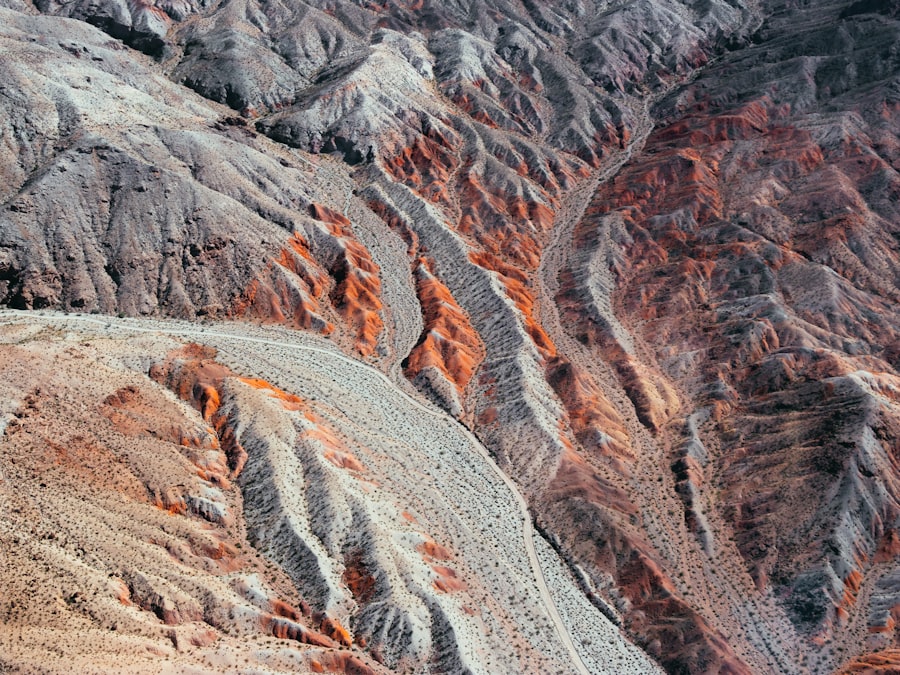
The documentary concludes with a grand sweeping narrative of continental drift, revealing Earth’s continents as not fixed entities but rather as participants in a slow, majestic dance that has unfolded over eons.
The Supercontinent Cycle
The film embarks on a journey through geological time, illustrating the concept of Pangaea and other supercontinents, and explaining the forces that drive their assembly and breakup.
Pangaea and Beyond
Using highly detailed CGI, “Exploring Earth’s Wonders” reconstructs the appearance and configuration of ancient supercontinents, most notably Pangaea. Geologists explain the evidence for these reconstructions, including the matching of rock formations, fossil distributions, and paleomagnetic data across continents that are now widely separated. The documentary traces the breakup of Pangaea and the subsequent drifting of continental fragments to their current positions, a process that continues to shape our planet’s geography.
The Driving Mechanism: Mantle Convection
The fundamental driver of continental drift, mantle convection, is explained in depth. The film visualizes the slow, but powerful, churning of the Earth’s mantle, where hotter, less dense material rises and cooler, denser material sinks. This convective motion exerts forces on the overlying tectonic plates, driving their movement. The documentary uses analogies and advanced visualizations to help viewers grasp the immense timescales and forces involved in this process.
The Continents Shaping and Being Shaped
The ongoing processes of plate tectonics continue to shape the continents, creating mountains, ocean basins, and other significant geological features.
Mountain Building: Orogeny’s Grandeur
The documentary explores the dramatic process of mountain building, or orogeny. It showcases examples of different types of mountain ranges, such as the Himalayas, formed by the collision of the Indian and Eurasian plates, and the Andes, a result of subduction. Scientists explain the folding and faulting of rock layers under immense compressional forces, creating the majestic peaks that define these regions. High-altitude cinematography captures the scale and grandeur of these mountain ranges.
The Creation and Destruction of Ocean Floor
Finally, the film examines the constant recycling of Earth’s crust through the processes of seafloor spreading at mid-ocean ridges and subduction at ocean trenches. The documentary vividly illustrates how new oceanic crust is generated at divergent plate boundaries, while older, denser oceanic crust is pulled back into the mantle at convergent boundaries. This continuous cycle, though operating over millions of years, is the engine that drives continental drift and shapes the planet’s surface. The visual narrative of seafloor spreading, with molten rock rising to form new crust, provides a powerful concluding image of Earth’s dynamic and ever-changing nature.
In conclusion, “Exploring Earth’s Wonders: A Modern Geology Documentary” is more than just a film; it is an immersive educational experience. It successfully bridges the gap between complex scientific concepts and accessible, captivating storytelling. By showcasing the breathtaking beauty and immense power of Earth’s geological processes, the documentary fosters a deeper appreciation for our planet and the forces that continue to shape its future. It encourages viewers to look at the landscape not just as a backdrop, but as a living, breathing testament to billions of years of dynamic geological history.

This Crater Was Supposed to Rewrite Human History… It Didn’t
FAQs
What is modern geology?
Modern geology is the scientific study of the Earth’s structure, composition, and processes, including the study of rocks, minerals, and the formation of landforms.
What does a modern geology documentary cover?
A modern geology documentary typically covers a wide range of topics related to the Earth’s geology, including plate tectonics, volcanoes, earthquakes, erosion, and the formation of mountains and other geological features.
What are the benefits of watching a modern geology documentary?
Watching a modern geology documentary can provide viewers with a better understanding of the Earth’s geological processes, as well as insight into the history and future of the planet. It can also inspire a greater appreciation for the natural world.
Where can I watch a modern geology documentary?
Modern geology documentaries can be found on streaming platforms, such as Netflix, Hulu, and Amazon Prime, as well as on educational websites and channels like PBS and the Discovery Channel.
Who are some notable modern geologists featured in documentaries?
Some notable modern geologists who have been featured in documentaries include Dr. Iain Stewart, Dr. Kate Ravilious, and Dr. Chris Jackson, among others. These experts provide valuable insights into the Earth’s geological processes and history.