
Beneath the colossal, ancient expanse of the Greenland ice sheet lies a frozen, silent world, a repository of both natural history and, surprisingly, human endeavor. While the sheer scale of the ice often dominates discussions about Greenland, a less visible but equally compelling story is unfolding deep within its frozen heart: the exploration of military engineering projects buried by time and ice. These clandestine undertakings, born out of Cold War anxieties and a strategic desire for dominance, represent a remarkable chapter in human ingenuity and ambition, now slowly being revealed by the inexorable creep of melting ice.
The most prominent and widely documented of these buried military endeavors is Project Iceworm, officially known as Camp Century. Established in 1959 by the United States Army, Camp Century was envisioned not as a mere research station, but as a groundbreaking, albeit ultimately impractical, demonstration of military capability. The project’s audacious goal was to construct a network of tunnels and facilities deep within the ice, capable of housing a substantial number of personnel, nuclear missile launch sites, and even a reactor, all hidden beneath hundreds of meters of solid ice. The idea was to create a mobile, stealthy, and resilient base that could operate with impunity, launching nuclear missiles at targets in the Soviet Union without fear of detection or pre-emption.
The Genesis of a Subterranean Dream
The rationale behind Project Iceworm was deeply rooted in the geopolitical tensions of the Cold War. The vast, seemingly inhospitable landscape of Greenland offered a unique strategic advantage. Its proximity to North America and its position between the US and the Soviet Union made it a critical frontier. The concept of placing mobile nuclear missile sites on ice, which could theoretically be moved to evade detection or attack, was a tantalizing prospect for military planners. The U.S. Army Corps of Engineers, tasked with bringing this vision to life, embarked on a monumental undertaking, carving out an artificial environment within the frozen mass.
Construction Under Extreme Conditions
The construction of Camp Century was an engineering feat of staggering proportions. Workers, often referred to as “ice miners,” utilized specialized equipment to excavate tunnels and chambers from the ice. This involved advanced techniques for ice boring and stabilization, as well as the development of prefabricated structures that could be assembled within the icy cavities. The sheer difficulty of operating in the extreme cold, with constant threats of ice shifts and structural integrity issues, tested the limits of human endurance and engineering expertise. Power was initially supplied by a small, portable nuclear reactor, the first ever deployed in the Arctic, further underscoring the project’s ambitious and technologically advanced nature. The base was designed to be a self-sustaining city, complete with living quarters, recreational facilities, laboratories, and, most critically, the infrastructure for housing and launching Nike Zeus intercontinental ballistic missiles.
The Unveiling and Eventual Abandonment
Despite the immense effort and innovation poured into Project Iceworm, its operational lifespan was relatively short. The primary challenges were the inherent instability of the ice and the environmental realities of Greenland. The ice sheet is not static; it flows and shifts, exerting immense pressure on any structures built within it. Over time, the tunnels began to buckle and deform, threatening the integrity of the base. Furthermore, the environmental impact of a nuclear reactor, even a small one, in such a pristine and sensitive environment became a growing concern. By the early 1960s, the project was deemed unsustainable, and Camp Century was officially decommissioned in 1966. The decision was made to abandon the facilities, leaving them to be gradually consumed and buried by the ever-thickening ice.
Recent advancements in military engineering have sparked interest in the potential implications of the Greenland ice sheet, particularly regarding its strategic importance and the challenges it presents. For a deeper understanding of how innovative technologies are being developed in extreme environments, you can explore the article on the Over-Teaching Machine, which discusses the intersection of education and engineering in military contexts. To read more about this fascinating topic, visit this article.
The Melting Ice Sheet: A Frozen Archive Revealed
The legacy of Project Iceworm and similar, albeit less prominent, military endeavors now rests beneath miles of ice. However, the accelerating pace of climate change is gradually bringing these forgotten sites back to the surface, or at least making them more accessible for study. As the Greenland ice sheet melts at an unprecedented rate, the frozen archive of Cold War military operations is slowly being unveiled, offering a unique glimpse into a bygone era of geopolitical tension and technological ambition.
Climate Change as an Unintended Archaeologist
The thawing of the ice sheet acts as an unintentional archaeologist, revealing the remnants of human activity that were once thought to be lost forever. Satellite imagery and airborne radar surveys are increasingly identifying anomalies and structures buried beneath the ice, sparking renewed interest in these clandestine sites. The melting process not only exposes what was once hidden but also presents new challenges and opportunities for researchers seeking to understand these historical artifacts before they are irrevocably altered or lost to the meltwater.
The Ethical and Environmental Considerations of Rediscovery
The rediscovery of these military sites brings with it a complex set of ethical and environmental considerations. The presence of potentially hazardous materials, including radioactive waste from the nuclear reactor at Camp Century, poses a significant risk to the fragile Arctic environment and the communities that rely on it. Efforts are underway to monitor and assess these risks, with international cooperation being crucial for the safe management of these buried legacies. The question of how to preserve or remediate these sites, while respecting their historical significance, remains a significant challenge for governments and scientific organizations.
Beyond Camp Century: Other Buried Secrets
While Project Iceworm is the most well-known, evidence suggests that other, less publicized military installations and activities may also be buried beneath the Greenland ice. These could range from radar stations and weather monitoring outposts to potentially even more ambitious, classified projects that remain unknown to the public. The sheer vastness of the Greenland ice sheet and the secrecy surrounding Cold War operations make it difficult to ascertain the full extent of military presence.
Whispers of Radar Networks and Listening Posts
The strategic importance of Greenland during the Cold War extended beyond missile sites. The U.S. Air Force, in particular, established a network of radar stations and listening posts across the Arctic to detect Soviet bomber and missile activity. Some of these facilities, built in remote and challenging locations, may have been subsequently abandoned and engulfed by the ice. The potential for these buried structures to contain historical data, equipment, and even environmental contaminants makes their exploration a matter of scientific and historical interest.
The Elusive Nature of Classified Operations
The nature of Cold War intelligence and military operations was, by definition, shrouded in secrecy. Therefore, it is entirely plausible that other, more clandestine projects were undertaken in Greenland that have never been officially acknowledged. These could have involved covert reconnaissance, advanced communication systems, or even experimental technologies that were later deemed too risky or impractical to maintain. The possibility of uncovering entirely new chapters of military history beneath the ice adds an element of mystery and intrigue to the ongoing exploration efforts.
The Scientific Imperative: What Can We Learn?
The exploration of these buried military sites is not solely an exercise in historical curiosity. These frozen remnants offer a unique opportunity for scientific research across various disciplines, from glaciology and environmental science to materials science and historical archaeology.
Insights into Ice Sheet Dynamics and Climate History
The tunnels and structures within the ice provide invaluable insights into the behavior of ice sheets over time. The way the ice has deformed and moved around these buried objects can help glaciologists refine their models of ice flow and predict future ice sheet behavior in a warming climate. Furthermore, the ice itself acts as a time capsule, preserving ancient atmospheric samples and other environmental markers that can shed light on past climate conditions. Analyzing ice cores drilled near these sites can offer a more detailed and localized understanding of Greenland’s climatic history.
The Study of Extreme Environment Engineering
The engineering solutions developed for Camp Century and other potential sites represent a significant body of knowledge in extreme environment construction. Studying the materials, construction techniques, and long-term performance of these buried structures can provide valuable lessons for future engineering projects in polar regions or other challenging environments. The resilience and eventual failure of these early attempts at sub-ice habitation offer a cautionary tale and a wealth of data for optimizing future designs.
Uncovering the Human Element of Cold War Operations
Beyond the technological and environmental aspects, these sites offer a tangible connection to the individuals who lived and worked in these isolated and demanding conditions. Artifacts, personal belongings, and structural remnants can provide insights into the daily lives, challenges, and psychological experiences of those who served in these remote military outposts during the Cold War. This human element adds a vital layer of understanding to the broader geopolitical narrative.
Recent advancements in military engineering have led to intriguing explorations beneath the Greenland ice sheet, revealing potential strategic advantages in understanding the region’s geological and environmental conditions. This research not only enhances our knowledge of ice dynamics but also raises questions about ancient civilizations that may have existed in these remote areas. For a fascinating look at ancient city ruins that could provide context to such explorations, you can read more in this article about exploring the forbidden room.
The Future of Exploration: Navigating a Frozen Frontier
| Metrics | Data |
|---|---|
| Ice Thickness | Measured in meters |
| Temperature | Recorded in Celsius |
| Pressure | Measured in Pascals |
| Ice Composition | Percentage of different elements |
| Engineering Challenges | Identified obstacles and solutions |
The exploration of military engineering beneath the Greenland ice sheet is an ongoing and evolving process. As technology advances and the ice continues to melt, new discoveries are likely to be made. The challenge lies in balancing the scientific and historical imperative with the need for environmental protection and responsible management of potentially hazardous sites.
Advancements in Remote Sensing and Sub-Ice Exploration Technology
The development of more sophisticated remote sensing technologies, including advanced ground-penetrating radar, airborne electromagnetics, and high-resolution satellite imagery, is crucial for identifying and mapping these buried sites with greater accuracy. Furthermore, the development of specialized sub-ice exploration vehicles and robotic systems will be essential for investigating these fragile environments without causing undue disturbance. These technologies will allow researchers to peer deeper into the ice and gather data from areas previously inaccessible.
International Cooperation and Policy Frameworks
Given the transboundary nature of the Greenland ice sheet and the potential international implications of discovering hazardous materials, international cooperation is paramount. Establishing clear policy frameworks and collaborative research initiatives will ensure that exploration efforts are conducted responsibly, ethically, and with a shared commitment to environmental stewardship. Agreements on data sharing, risk assessment, and remediation strategies will be vital for navigating the complex challenges ahead.
The Ongoing Dialogue: History, Environment, and the Future
The story of military engineering beneath the Greenland ice sheet is a potent reminder of humanity’s capacity for both extraordinary ambition and the unintended consequences of our actions. As the ice slowly relinquishes its grip, it offers a unique opportunity to learn from the past, understand the present challenges of a changing climate, and inform our approach to future endeavors in the fragile Arctic. The silent ghosts of the Cold War, now emerging from their icy slumber, compel us to engage in a vital dialogue about history, environment, and the enduring responsibility we hold for our planet.
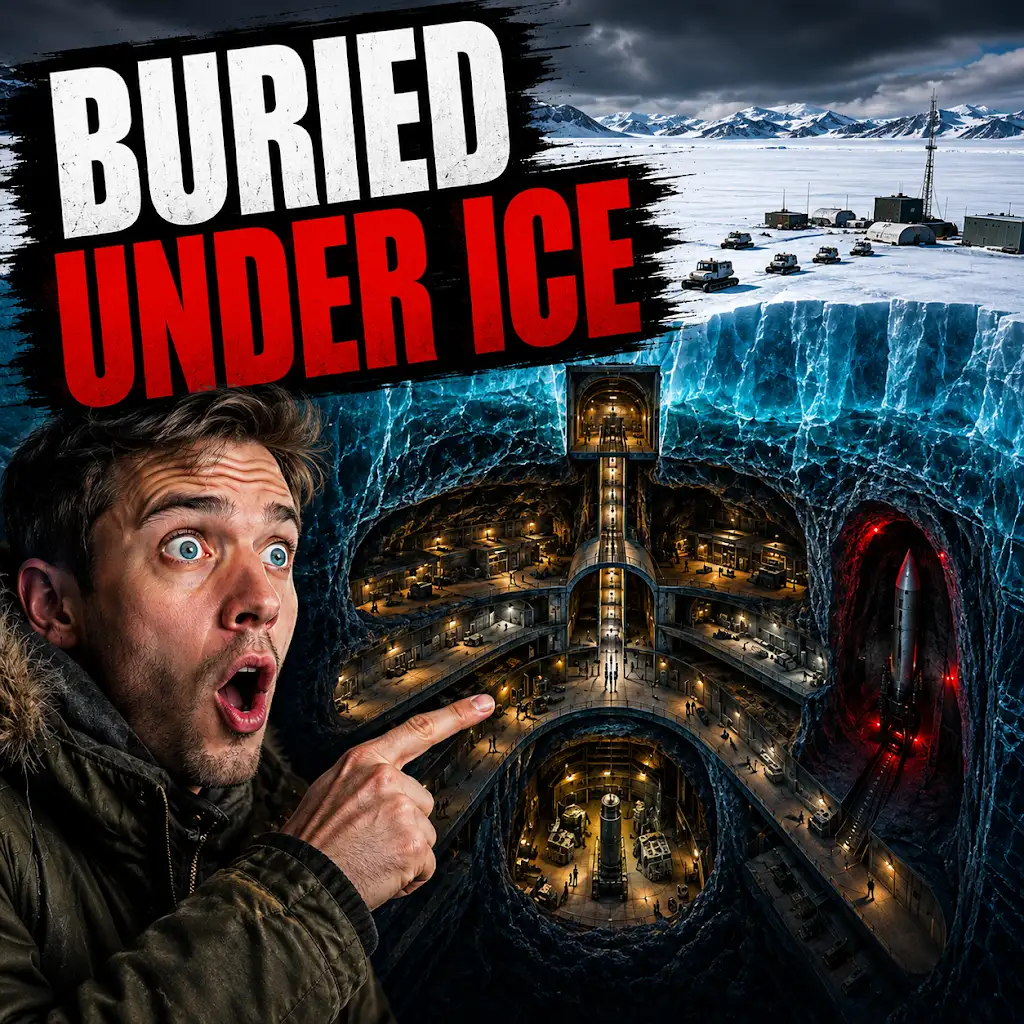
The U.S. Built a Nuclear City Under Greenland. The Ice Won.
FAQs
What is military engineering beneath the Greenland ice sheet?
Military engineering beneath the Greenland ice sheet refers to the construction and maintenance of military facilities and infrastructure beneath the thick ice sheet covering Greenland. This can include the construction of underground bases, tunnels, and other structures to support military operations in the region.
Why is military engineering beneath the Greenland ice sheet important?
Military engineering beneath the Greenland ice sheet is important for strategic military purposes, as it allows for the establishment of secure and hidden facilities in a strategically significant location. It also provides the capability to conduct military operations and surveillance in the Arctic region.
What are some challenges of military engineering beneath the Greenland ice sheet?
Some of the challenges of military engineering beneath the Greenland ice sheet include the extreme cold and harsh environmental conditions, the logistical difficulties of transporting materials and personnel to the remote location, and the technical challenges of constructing and maintaining infrastructure beneath the thick ice.
What are the potential environmental impacts of military engineering beneath the Greenland ice sheet?
The potential environmental impacts of military engineering beneath the Greenland ice sheet include disturbances to the local ecosystem, potential pollution from construction activities, and the risk of damaging the delicate balance of the ice sheet, which could contribute to sea level rise.
What are the international implications of military engineering beneath the Greenland ice sheet?
The construction of military infrastructure beneath the Greenland ice sheet has international implications, as it can affect geopolitical dynamics in the Arctic region and raise concerns among neighboring countries about military activities and potential territorial claims. It also adds to the broader discussion of military presence in the Arctic and its impact on international relations.