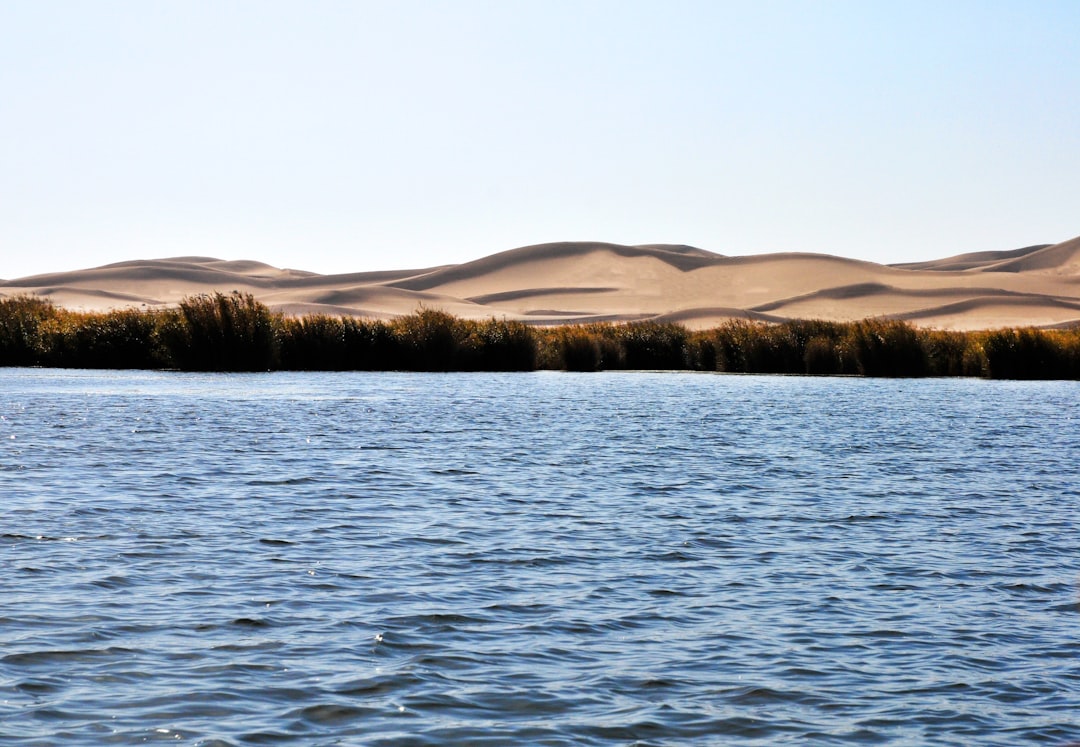
The Sahara Desert, a vast expanse of sand and rock, is often perceived as an unchanging and desolate landscape. Yet, beneath its arid surface, lie the remnants of a dramatically different past, a time when this now-parched land teemed with life, nourished by abundant waters. Exploring the ancient lakes of the Sahara is not merely an archaeological or geological endeavor; it is a journey into the heart of a dynamic Earth, a testament to the power of climate change, and a vital source of understanding for our present and future. Recent discoveries, fueled by advanced technology and rigorous scientific inquiry, are continuously reshaping our perception of this iconic desert, revealing a Sahara that was once a vibrant bluescape dotted with vast freshwater bodies.
The notion of a verdant Sahara is no longer a fringe theory confined to ancient texts or speculative imagination. It is now a scientifically validated reality, supported by an ever-growing body of evidence. For millennia, and at various points in Earth’s history, large bodies of water punctuated the landscape, transforming what is now the world’s largest hot desert into a fertile and habitable region. These ancient lakes, some of them truly colossal in scale, served as critical cradles for life, influencing ecosystems, shaping landscapes, and perhaps most significantly, playing a pivotal role in the migratory patterns of early humans. The rediscovery and ongoing study of these watery relics provide a crucial lens through which to understand past climate regimes and their profound impact on planetary habitability.
The Magnitude of Ancient Water Bodies
The sheer scale of these prehistoric lakes is often breathtaking. Imagine the Sahara not as a seamless canvas of sand, but as a mosaic of shimmering blues. This was the reality for vast stretches of time.
The Northern Darfur Mega-Lake: A Sudanic Spectacle
One of the most striking revelations in recent years comes from northwestern Sudan, in the Darfur region. Here, advanced space topographic data has unveiled the existence of an ancient mega-lake that once covered an astonishing ~30,750 square kilometers. This immense body of water is not a mere puddle; it is a testament to prolonged periods of significant rainfall and a clear indication that the climate in this part of Africa was once radically different. The identification of this mega-lake provides what is described as indisputable evidence of past rainy conditions, offering invaluable insights into the geological and climatic history of the region. Furthermore, the understanding of this ancient aquifer system offers a vital lifeline for current and future groundwater exploration, particularly crucial in a region struggling with resource scarcity and supporting displaced populations.
The Wadi Tushka Megalake: A Glimpse into Prehistory
Across the border in Egypt, the eastern Sahara harbors its own prehistoric giant. New analysis of NASA shuttle radar data has confirmed a vast prehistoric lake in the Wadi Tushka region, which, an astonishing 250,000 years ago, covered an area exceeding 42,000 square miles. This equates to a size comparable to some of the largest modern lakes, such as Lake Superior in North America. The implications of such a substantial lake are profound. It suggests a climate capable of sustaining such a vast water body for extended periods, and critically, it points towards the possibility of this region having served as a significant corridor for early human migration. The presence of such a large, ancient freshwater source would have made the area highly attractive to hominin populations, potentially shaping their dispersal routes across the continent and beyond.
Lake Megafezzan: A Libyan Glimmer
Libya, too, holds secrets of its watery past in the Megafezzan region. Evidence strongly suggests that approximately 200,000 years ago, a massive lake, comparable in size to the entire Czech Republic, dominated this area. While the vast majority of this ancient body of water has long since succumbed to the relentless forces of evaporation and aridification, its legacy endures. Remnants of this once-mighty lake are still visible today, manifesting as a series of around 20 smaller lakes scattered across the sprawling sand sea. These present-day oases serve as poignant reminders of the profound climatic shifts that have transformed this landscape.
The ancient lakes of the Sahara hold fascinating insights into the region’s climatic history and the evolution of its ecosystems. Researchers have uncovered evidence that these once-vibrant bodies of water supported diverse flora and fauna, significantly impacting human migration patterns in prehistoric times. For a deeper understanding of how environmental changes can influence human societies, you might find this article on the US government’s authority in declared disasters interesting. It explores the broader implications of environmental shifts and their effects on communities. You can read it here: The US Government’s Authority in Declared Disasters.
Modern Processes and Ancient Clues: Recharging the Sahara’s Hydrological Memory
While the focus is often on the distant past, the Sahara’s relationship with water is not entirely a relic of bygone eras. Unforeseen and powerful meteorological events can, in the present day, temporarily revive its hydrological memory. Understanding these modern phenomena provides critical insights into the mechanisms that might have sustained these ancient water bodies over longer geological timescales.
The September 2024 Cyclone Event: A Fleeting Resurgence
A remarkable event in September 2024 offered a vivid, real-time demonstration of the Sahara’s potential for transformation. A powerful cyclone swept across the region, temporarily breathing life back into its arid geography. What were once dry, desolate salt flats were suddenly transformed into shimmering, albeit temporary, lakes. This dramatic event served as a live case study for scientists, offering a unique opportunity to observe and analyze the dynamics of lake formation in the Sahara in the present day. It provided invaluable data for understanding the immediate impacts of such extreme weather events and, by extension, offered clues about the processes that might have operated on much grander scales in the past.
Mike Cohen’s Team (2025): Atlantic Influence on Modern Lakes
Recent research, led by Mike Cohen’s team in 2025, has brought clarity to the driving forces behind modern lake formation in the northwestern Sahara. Their study, focusing on Sebkha El-Melah in Algeria, suggests that rare, intense extratropical cyclones originating from the Atlantic Ocean, rather than equatorial sources, are the primary cause of these contemporary lake fillings. This finding challenges previous assumptions about the dominant moisture sources influencing the region and highlights the far-reaching impact of Atlantic weather systems on the Sahara’s hydrology. The long duration and intensity of these particular storms are identified as key factors in their ability to replenish these desert lakes.
Hydrology and Earth System Sciences Study: The Power of Atlantic Storms
Complementing Mike Cohen’s team’s findings, a recent study published in Hydrology and Earth System Sciences has further solidified the understanding of these powerful Atlantic storms. This comprehensive research, which combines climate science and meteorology, actively challenges prior beliefs about Sahara lake formation. It strongly asserts that only long-lasting and heavy Atlantic storms possess the capacity to trigger significant and sustained lake development in the Sahara. This conclusion emphasizes the critical role of specific, infrequent meteorological events in driving the region’s hydrological cycles, both presently and, likely, throughout its history.
The Green Arabia Connection: Human Migration and Ancient Waterways

The Sahara was not an isolated phenomenon of abundant water; similar conditions prevailed in neighboring regions, forming a larger, interconnected “Green Arabia” that profoundly influenced early human history and migration.
Paleolakes and Human Artifacts in the Arabian Nefud Desert
Recent satellite and topographic mapping efforts in the Arabian Nefud Desert have yielded astonishing results. The identification of 46 ancient lakes, alongside significant archaeological finds, has dramatically reshaped our understanding of human migration in this area, now referred to as “Green Arabia.” These ancient lakes contained human artifacts that date back an incredible span of time, from 1.8 million to 250,000 years ago. The presence of these lakes, acting as vital watering holes on the landscape, would have facilitated movement across the region for early hominin populations and anatomically modern humans alike. The sheer number of these paleo-lakes suggests a network of habitable zones that would have supported the dispersal and survival of early human communities.
Reshaping Understanding of Early Human Dispersal
The discovery of these numerous paleolakes and associated artifacts in Green Arabia is fundamentally altering how scientists view early human dispersal. It suggests that instead of the Sahara and Arabian Peninsula being impermeable barriers, they were once connected by a network of green corridors, rivers, and lakes. These water sources provided essential resources for survival, allowing populations to traverse vast distances and colonize new territories. This paradigm shift moves away from the idea of a single, monolithic Sahara pushing humans outwards to a more nuanced understanding of a dynamic, interconnected landscape that could both support and facilitate human movement.
The Tibesti Mountains: Persistent Oasis in a Changing Climate

While the vast basins of the Sahara once held immense lakes, smaller, more persistent freshwater bodies also existed, often tied to specific geographical features like mountain ranges.
Crater Lakes: Survival Against the Odds
The Tibesti Mountains, a volcanic massif in the central Sahara, harbor a unique hydrological secret. A 2025 study published in Nature Communications revealed that crater lakes within these mountains have maintained their existence for over 5,000 years, with their origins dating back approximately 9,500 years ago. The persistence of these lakes, sustained by what are described as unexpected rainfall patterns, is a remarkable testament to localized hydrological resilience. These findings suggest that even as larger regional climates shifted towards aridification, specific microclimates and geological formations could continue to support freshwater ecosystems over millennia.
Sustained by Unexpected Rainfall Patterns
The “unexpected rainfall patterns” mentioned in the Tibesti Mountains study are particularly intriguing. They suggest that localized atmospheric phenomena, perhaps influenced by orographic effects from the mountains themselves, or by specific atmospheric teleconnections, could have continued to deliver sufficient moisture to these high-altitude lakes. This highlights the complexity of regional climate dynamics and warns against assuming a uniform climatic transition across the entire Sahara. The survival of these crater lakes underscores the potential for pocketed refugia in even the most arid of environments.
The ancient lakes of the Sahara have long fascinated researchers due to their significant impact on the region’s climate and ecology. These prehistoric bodies of water provide crucial insights into how climate change has shaped the landscape over millennia. For those interested in exploring more about the implications of environmental changes, a related article discusses the evolving dynamics of global markets and technology, which can be found here. Understanding these connections can enhance our appreciation of how ancient environments continue to influence modern challenges.
The Future of Sahara Exploration: Lessons from Ancient Waters
| Lake Name | Location | Size | Age |
|---|---|---|---|
| Lake Chad | Chad, Cameroon, Niger, Nigeria | 1,350 square kilometers | 10,000 years |
| Lake Megachad | Chad | 360,000 square kilometers | Over 1 million years |
| Lake Fezzan | Libya | 5,000 square kilometers | Over 200,000 years |
The exploration of the Sahara’s ancient lakes is far from over. Each new discovery, powered by advanced geological, atmospheric, and satellite technologies, adds another layer to our understanding of this complex and dynamic region. These studies are not just academic pursuits; they hold profound implications for our present and future.
Understanding Climate Change Dynamics
The Sahara has experienced dramatic climatic oscillations throughout its history, transitioning from a verdant savanna to its current arid state and back again on multiple occasions. Studying the ancient lakes provides invaluable data for climate models, allowing scientists to better understand the Earth’s climate sensitivity, the feedback loops involved in aridification and re-greening, and the long-term predictability of climatic shifts. The lessons learned from these ancient water cycles can inform our understanding of current climate change and its potential future impacts on global ecosystems and human societies.
Implications for Groundwater Resources
As highlighted by the Northern Darfur mega-lake discovery, understanding ancient hydrological systems can directly inform the search for and sustainable management of modern groundwater resources. The fossil water trapped in ancient lakebeds and associated geological formations represents a significant, though often non-renewable, reservoir. Strategic exploration and responsible utilization of these resources could be crucial for water-scarce regions within and around the Sahara.
Rethinking Human History and Migration
The “Green Arabia” discoveries, in particular, are forcing a profound re-evaluation of early human history and migration routes. The existence of extensive networks of lakes and rivers would have provided habitable corridors, facilitating the spread of hominins across continents. Future research in this area is likely to uncover even more evidence of these ancient pathways, refining our timelines and understanding of human evolution and dispersal.
In conclusion, the Sahara Desert, often seen as a stark emblem of aridity, is in reality a land of profound hydrological whispers from a more verdant past. The ongoing exploration of its ancient lakes is a testament to scientific progress, revealing a dynamic Earth where climatic conditions have fluctuated dramatically. From the colossal mega-lakes of Sudan and Egypt to the persistent crater lakes of the Tibesti Mountains, these watery relics offer crucial insights into past climates, the forces that shape our planet, and the intricate story of human migration. As technology advances and scientific inquiry deepens, the Sahara continues to unveil its secrets, reminding us that even in the most desolate landscapes, the echoes of water and life persist, waiting to be heard.

The Sahara Won’t Stay a Desert Forever
FAQs
What are the ancient lakes of the Sahara?
The ancient lakes of the Sahara refer to the prehistoric lakes that existed in the Sahara Desert thousands of years ago. These lakes were formed during periods of increased rainfall and were an important source of water for the region’s flora and fauna.
How were the ancient lakes of the Sahara formed?
The ancient lakes of the Sahara were formed during periods of increased rainfall in the region. These periods of increased rainfall led to the accumulation of water in low-lying areas, creating large bodies of water that supported diverse ecosystems.
What evidence exists of the ancient lakes of the Sahara?
Evidence of the ancient lakes of the Sahara can be found in the form of fossilized remains of aquatic plants and animals, as well as sedimentary deposits that indicate the presence of large bodies of water. Additionally, satellite imagery and geological surveys have provided further evidence of the existence of these ancient lakes.
What impact did the ancient lakes of the Sahara have on the region?
The ancient lakes of the Sahara played a crucial role in supporting diverse ecosystems and providing water for the region’s flora and fauna. They also contributed to the development of human settlements in the area, as well as the migration patterns of early human populations.
What is the significance of studying the ancient lakes of the Sahara?
Studying the ancient lakes of the Sahara provides valuable insights into the region’s environmental history and the impact of climate change on the Sahara Desert. It also helps researchers better understand the dynamics of past ecosystems and the ways in which they have shaped the landscape and biodiversity of the region.