
A captivating documentary, “Exploring the Ancient Sahara: A History Documentary,” recently premiered, offering viewers an unparalleled journey into the heart of what is now the world’s largest hot desert. This ambitious production eschews the typical focus on the Sahara as a barren wasteland, instead delving deep into its rich and often surprising past, a past characterized by verdant landscapes, bustling civilizations, and crucial trade routes that shaped the course of human history. The documentary masterfully weaves together cutting-edge archaeological discoveries, expert interviews, and stunning visual recreations to paint a vivid portrait of a Sahara vastly different from the one we know today.
The film begins by challenging the ingrained image of the Sahara as an immutable, ancient desert. It poses a fundamental question: how did this colossal expanse of sand and rock come to be? The answer, as revealed by the documentary, lies in a dramatic climatic shift, a transformation that speaks volumes about the planet’s dynamic nature and the resilience of early human populations. This initial segment sets the stage for the subsequent exploration of the Sahara’s forgotten eras, laying the groundwork for understanding how life not only survived but thrived in this now-harsh environment.
The “Exploring the Ancient Sahara” documentary dedicates its opening sequences to the earliest chapters of human habitation, a period often shrouded in mystery and speculation. Through meticulous research and compelling visual storytelling, the film brings to life a prehistoric Sahara that was a cradle of human development and innovation. The narrative meticulously traces the arrival of early hominins and their subsequent adaptation to the prevailing environmental conditions.
The Greening of the Sahara: A Timeless Cycle
A significant portion of this section focuses on the Holocene Wet Period, a recurring epoch in Earth’s history where the Sahara experienced significant rainfall. This was not a gentle drizzle but a sustained period of abundance, transforming the landscape into what geologists and archaeologists refer to as the “Green Sahara.” The documentary utilizes sophisticated CGI to showcase this lost world, depicting vast savannahs teeming with wildlife, expansive lakes, and flowing rivers that carved through the landscape. This visual spectacle is not merely for aesthetic appeal; it serves to underscore the profound environmental changes that have shaped the region and the potential for future transformations. The film emphasizes that the Sahara, in its current state, is a relatively recent phenomenon, a stark contrast to its wetter, more hospitable past. This cyclical nature of the Sahara’s climate is presented as a crucial element in understanding human migration patterns and the development of early societies.
Early Human Ingenuity and Adaptation
The documentary highlights the remarkable ingenuity of early Saharan inhabitants. Evidence of hunter-gatherer societies is presented, showcasing their sophisticated tools crafted from stone and bone, perfectly adapted to their environment. The film explores how these early humans navigated the shifting landscapes, following migratory herds and harnessing the resources provided by the abundant water sources. The presence of rock art, meticulously documented and analyzed in the film, offers a unique window into their daily lives, their spiritual beliefs, and their understanding of the natural world. These ancient paintings, found in remote caves and rock shelters across the Sahara, are brought to life through high-definition footage, revealing intricate depictions of animals, humans, and abstract symbols that continue to intrigue researchers. The documentary emphasizes the spiritual connection these early peoples may have had with the land, a connection that often revolved around the life-giving water sources.
The Unveiling of Early Settlements
Perhaps one of the most groundbreaking aspects of this segment is the exploration of early settlements. Instead of nomadic lifestyles being the sole narrative, the documentary presents findings that suggest the existence of more sedentary communities during the wetter periods. Archaeologists unearthed evidence of rudimentary shelters, hearths, and midden sites, indicating prolonged periods of occupation in specific locations. This challenges the simplistic view of prehistoric life as solely nomadic and highlights the early development of communal living and resource management. The film carefully considers the debate surrounding the exact nature of these settlements, acknowledging the ongoing research and the complexities involved in interpreting ancient archaeological evidence.
The Sahara Desert, known for its vast and arid landscapes, has a rich history that is often overlooked. A fascinating article that delves into the ancient secrets of the Sahara and its civilizations can be found at this link: Forbidden Ancient Technology: Secrets Unearthed. This article explores the advanced technologies and knowledge that ancient cultures in the Sahara possessed, shedding light on how they adapted to one of the harshest environments on Earth. It complements any history documentary focused on the Sahara by providing deeper insights into the region’s past and its forgotten innovations.
The Rise of Civilizations: Beyond the Nile
Moving beyond the prehistoric era, “Exploring the Ancient Sahara” pivots to explore the emergence of more complex societies that flourished within and on the fringes of the Sahara, often independent of, or in dialogue with, the more widely known Egyptian civilization along the Nile. This section underscores the Sahara’s role not as a barrier but as a conduit for innovation and cultural exchange.
The Garamantes: Masters of the Desert
A significant focus is placed on the Garamantes, a remarkable civilization that thrived in what is now Libya. The documentary presents compelling evidence of their advanced hydraulic engineering, a feat of ingenuity that allowed them to cultivate crops and sustain large populations in an arid environment. Through detailed animations and archaeological footage, viewers witness the T-shaped underground irrigation systems (foggara) that channeled water from distant aquifers, a testament to their sophisticated understanding of hydrogeology. The film explores the Garamantes’ urban centers, their intricate trade networks that extended across the Sahara, and their unique social structure. The discovery of their elaborate tombs further reveals their societal organization and religious beliefs, painting a picture of a powerful and prosperous kingdom that existed, largely unknown, for centuries.
The Kingdom of Kush and Saharan Connections
While its heartland lay to the south of Egypt, the Kingdom of Kush, often overshadowed by its northern neighbor, is explored in its Saharan context. The documentary highlights the interactions and cultural exchanges between Kush and the peoples of the Sahara, particularly concerning trade routes. The film delves into the resources that traversed the Sahara from the south, including gold, ivory, and exotic animals that made their way to the Nile Valley and beyond. Conversely, it also examines what goods and ideas flowed from the north into the Saharan interior, demonstrating a constant ebb and flow of influence and commerce that belies the notion of isolated cultures. The documentary emphasizes that the Sahara was not a void but a dynamic region with its own centers of power and influence.
Early Pastoralism and the Transformation of Landscapes
The documentary also examines the crucial role of early pastoralism in shaping the Saharan environment and its societies. As the climate began to shift and the Green Sahara gradually receded, mobile herding communities developed highly adaptive strategies. The film explores how these pastoralists learned to manage their livestock in increasingly challenging conditions, relying on seasonal water sources and moving across vast distances. This transition from a more sedentary agricultural lifestyle to one of pastoralism is presented as a key evolutionary step that allowed human populations to persist in the Sahara. The documentary uses archaeological findings, such as evidence of animal corrals and specialized tools for animal husbandry, to illustrate this significant shift. The impact of these pastoralist communities on the landscape, through grazing and the intentional management of vegetation, is also a notable part of the discussion.
The Sands of Time: Trade and Transformation

The Saharan trade routes form the backbone of the middle period of the documentary, meticulously illustrating how this vast desert, often perceived as a barrier, actually served as a vital artery connecting different cultures and economies. The film emphasizes the sheer scale and complexity of these ancient mercantile networks.
The Trans-Saharan Trade: A Vein of Gold and Salt
A significant portion of this segment is dedicated to the famed trans-Saharan trade, a network of routes that facilitated the exchange of goods between North Africa and sub-Saharan Africa for millennia. The documentary vividly portrays the caravans, the camels, and the arduous journeys undertaken by merchants. The primary commodities are highlighted: gold from the south, which fueled economies and funded empires, and salt from the north, an essential commodity for both preservation and sustenance. The film explores the rise and fall of great trading empires such as the Ghana, Mali, and Songhai empires, whose wealth and influence were inextricably linked to their control over these lucrative trade routes. Through engaging reconstructions and expert commentary, viewers gain an appreciation for the logistical challenges, the dangers, and the immense profits associated with this ancient commerce. The documentary doesn’t shy away from the human cost of this trade, touching upon the complex dynamics of slavery and its role within these networks, albeit with a focus on the broader economic and cultural impacts.
The Impact of Camel Domestication
The introduction and widespread adoption of camel domestication are presented as a pivotal moment in the history of Saharan trade. The documentary explores how this hardy animal, perfectly adapted to arid conditions, revolutionized travel and commerce across the desert. The camel’s ability to go for long periods without water, carry heavy loads, and navigate the treacherous sand dunes enabled the establishment of more reliable and extensive trade routes. The film illustrates the technological advancements and the social structures that emerged around camel caravans, including specialized guides, water-finding techniques, and the development of oases as vital resting and refueling points. This segment offers a fascinating glimpse into the symbiotic relationship between humans, animals, and the desert environment that made trans-Saharan trade possible on such a grand scale.
The Spread of Ideas and Religions
Beyond tangible goods, the documentary emphasizes the crucial role of Saharan trade routes in the dissemination of ideas, technologies, and religions. The film details how Islam, originating in the Arabian Peninsula, gradually spread across North Africa and into sub-Saharan Africa, often facilitated by Muslim traders and scholars who traversed these ancient pathways. The documentary showcases the architectural remnants of mosques and Islamic scholarship in Saharan cities, demonstrating the profound cultural and religious metamorphosis that occurred over centuries. The transmission of knowledge, including advancements in mathematics, astronomy, and medicine, is also explored, revealing the Sahara as a nexus of intellectual exchange rather than a mere desert of isolation. The film presents a nuanced picture of cultural diffusion, where local traditions often blended with imported influences, creating unique and vibrant syncretic cultures.
Echoes of Empire: Nomads and Empires
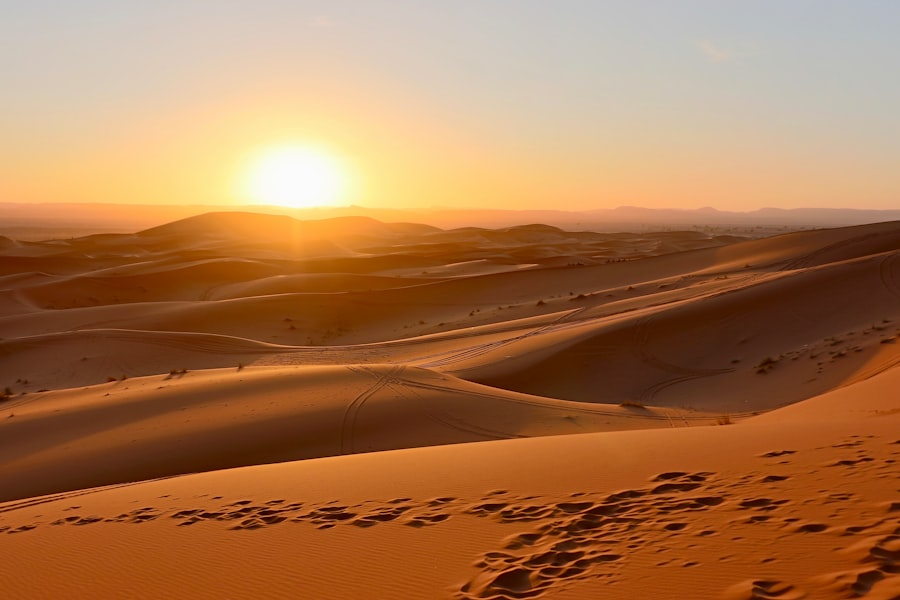
The Sahara has not only been a passage for trade but also a stage for the rise and fall of powerful empires, many of which were heavily influenced by nomadic groups who mastered the desert’s vast expanse. “Exploring the Ancient Sahara” delves into the dynamic interplay between settled civilizations and the nomadic peoples who shaped the region’s destiny.
The Nomadic Warriors of the Desert
The documentary sheds light on the formidable nomadic groups who called the Sahara their home. These were not simply wanderers but skilled warriors and astute strategists who developed a profound understanding of their environment. The film explores their unique combat tactics, honed by generations of experience navigating the desert, and their ability to strike with speed and surprise. The Tuareg, the “Blue Men of the Desert,” are given particular attention, with the documentary exploring their distinct culture, their mastery of the desert, and their historical role as protectors of trade routes and formidable raiders. The film utilizes historical accounts and archaeological evidence to reconstruct their way of life, their social hierarchies, and their enduring impact on the region. The complexity of their relationship with settled populations, often characterized by both conflict and cooperation, is meticulously explored.
The Rise and Fall of Empires Built on Saharan Power
The documentary details how control over Saharan trade routes and the exploitation of its resources directly fueled the rise of powerful empires. The Ghana, Mali, and Songhai empires, all situated at crucial junctures of these trade networks, are examined in depth. The film showcases their immense wealth, their sophisticated administration, and their cultural achievements, all made possible by the flow of gold and other commodities across the Sahara. The documentary investigates the military might of these empires, often bolstered by their control of cavalry and other desert-adapted military units. The eventual decline of these empires is also addressed, exploring factors such as internal strife, external pressures, and shifts in trade routes. The film highlights the cyclical nature of power in the region, where dominance was often tied to the ability to control and leverage the vastness of the Sahara.
The Legacy of Roman and Byzantine Influence
While often overlooked, the documentary also touches upon the Roman and Byzantine presence in North Africa and their indirect influence on the Saharan fringes. The film explores how these empires established outposts and engaged in trade with Saharan communities, seeking access to resources and maintaining control over key territories. The remnants of Roman infrastructure, such as fortifications and roads, are examined within the context of their interaction with the desert environment and its inhabitants. The documentary suggests that these interactions, however limited, contributed to the broader historical tapestry of the Sahara, laying some groundwork for later developments and exchanges. The film emphasizes the long reach of these ancient Mediterranean powers, even into the arid regions that bordered their domains.
The Sahara Desert, known for its vast and arid landscapes, has a rich history that is often overlooked. A fascinating article that delves into the ancient wisdom of weather patterns can provide valuable insights into how early civilizations adapted to the challenges of this harsh environment. By exploring the connections between climate and human survival, readers can gain a deeper appreciation for the resilience of those who lived in the Sahara. For more information on this topic, check out the article on ancient weather wisdom.
The Sahara’s Forgotten Cities and Lost Civilizations
| Metrics | Data |
|---|---|
| Documentary Title | History Documentary about the Sahara |
| Release Year | 2021 |
| Duration | 90 minutes |
| Director | [Director’s Name] |
| Production Company | [Production Company Name] |
| Narrator | [Narrator’s Name] |
A captivating aspect of “Exploring the Ancient Sahara” is its exploration of the numerous archaeological sites that dot the desert, remnants of once-thriving cities and civilizations that have been swallowed by the sands of time. This section invites viewers to imagine the vibrant life that once existed in these now-silent landscapes.
Timbuktu: A Jewel of Learning and Trade
The documentary dedicates significant attention to Timbuktu, a city that, for centuries, stood as a beacon of learning and a vital commercial hub in West Africa. The film showcases Timbuktu’s golden age, detailing its renowned Sankore Madrasah, a center of Islamic scholarship that attracted scholars from across the Muslim world. High-definition footage of the ancient manuscripts housed in Timbuktu’s libraries reveals the depth of knowledge and intellectual life that flourished there. The documentary explores how Timbuktu’s strategic location at the confluence of the Niger River and Saharan trade routes contributed to its prosperity, making it a vital meeting point for traders, scholars, and pilgrims. The film also addresses the city’s later challenges and its enduring cultural significance.
Leptis Magna and the Roman Legacy in the Desert
The documentary also revisits the Roman presence, focusing on sites like Leptis Magna, a strikingly well-preserved Roman city on the Libyan coast, which served as a gateway to the Saharan interior. While not strictly in the desert, its economic and cultural connections to the Saharan trade routes are emphasized. The film meticulously documents its magnificent ruins, highlighting the architectural prowess of the Romans and their ability to establish sophisticated urban centers even in the challenging North African climate. The documentary explores how Leptis Magna’s prosperity was intrinsically linked to the commodities that flowed from the Sahara, and how its eventual decline mirrored the shifting patterns of trade and power in the region. The film uses visual reconstructions and expert analysis to bring the city’s vibrant past to life, showcasing its theaters, baths, and forums as they once were.
The Mystery of Zerzura: A Legendary Oasis
“Exploring the Ancient Sahara” delves into the tantalizing legend of Zerzura, the mythical “Oasis of Little Birds,” a whispered paradise lost somewhere within the vastness of the desert. The documentary explores the historical and mythological roots of this legend, examining accounts from ancient texts and traveler tales. While acknowledging its likely mythical status, the film uses the legend of Zerzura as a springboard to discuss the real oases that were crucial to survival and the development of settlements in the Sahara. The documentary highlights the importance of these life-giving points of water, acting as vital waystations for caravans and supporting small but resilient communities. The exploration of Zerzura serves as a poignant reminder of the enduring allure of the unknown and the human fascination with finding hidden havens in inhospitable environments.
The Sahara Today: Echoes of the Past and Future Challenges
The concluding segment of “Exploring the Ancient Sahara: A History Documentary” brings viewers to the present day, examining the enduring legacy of the past while confronting the contemporary challenges facing this vast and complex region. The film emphasizes that the history of the Sahara is not merely a collection of ancient tales but a living narrative that continues to shape its future.
The Scars of Colonialism and Modern Conflicts
The documentary does not shy away from discussing the impact of colonialism and the subsequent conflicts that have plagued parts of the Sahara. It explores how colonial powers redrew boundaries and exploited resources, often disrupting established trade routes and social structures. The film touches upon the ongoing political instability and the rise of extremist groups in certain Saharan regions, examining how these modern conflicts have roots in historical grievances and the ongoing struggle for resources. The documentary presents a nuanced perspective, avoiding simplistic narratives and acknowledging the complex interplay of factors that contribute to the region’s challenges. The economic disparities and the marginalization of certain communities are also addressed, highlighting the long-term consequences of historical exploitation.
Environmental Challenges: Desertification and Climate Change
With the world grappling with climate change, the documentary brings the focus back to the Sahara’s environment. It explores the ongoing process of desertification, examining how human activities and climatic shifts are exacerbating the expansion of desert conditions. The film highlights the efforts of scientists and local communities to combat desertification through reforestation, sustainable land management practices, and the development of drought-resistant agriculture. The documentary presents a sense of urgency, underscoring the global implications of desertification and the need for international cooperation. The film also explores how traditional knowledge and practices, honed over centuries of living in an arid environment, can offer valuable insights into sustainable solutions for the future.
The Enduring Spirit of Saharan Peoples
Despite the immense challenges, the “Exploring the Ancient Sahara” documentary concludes on a note of resilience and hope, celebrating the enduring spirit of the Saharan peoples. The film showcases the vibrant cultures that continue to thrive in the region, from the nomadic traditions that persist to the urban centers that are embracing modernization. The documentary highlights initiatives aimed at preserving cultural heritage, promoting education, and fostering economic development. It underscores the importance of understanding and appreciating the rich history of the Sahara, recognizing its profound contributions to human civilization, and supporting the ongoing efforts to build a more sustainable and prosperous future for its inhabitants. The film leaves the viewer with a profound appreciation for the Sahara not as an empty void, but as a landscape imbued with centuries of human endeavor, innovation, and enduring spirit.

The Ancient World Buried Beneath the Sahara
FAQs
What is the Sahara desert?
The Sahara desert is the largest hot desert in the world, covering an area of approximately 3.6 million square miles across North Africa. It is known for its vast sand dunes, rocky plateaus, and extreme temperatures.
What is the history of the Sahara desert?
The Sahara desert has a rich history dating back thousands of years. It was once a fertile region with rivers, lakes, and abundant wildlife. Over time, the desertification process transformed the landscape into the arid desert we see today.
What can viewers expect to learn from a history documentary about the Sahara?
A history documentary about the Sahara will explore the geological, ecological, and cultural evolution of the desert. Viewers can expect to learn about ancient civilizations, trade routes, climate changes, and the impact of human activity on the region.
Who are some key figures or civilizations associated with the Sahara desert?
The Sahara desert has been home to various civilizations and cultures, including the ancient Egyptians, Berbers, Tuareg, and other nomadic tribes. Key figures such as explorers, traders, and scholars have also left their mark on the history of the Sahara.
Why is the Sahara desert an important area of study for historians and scientists?
The Sahara desert offers valuable insights into human adaptation, environmental change, and the interconnectedness of different regions and cultures. Studying the history of the Sahara can provide a deeper understanding of global history, climate patterns, and the resilience of indigenous peoples.