
The Earth’s climate is a dynamic system, constantly in flux. While the present era is characterized by unprecedented anthropogenic warming, the planet has experienced dramatic climate shifts throughout its history. Among these, the period known as the Holocene Climate Optimum, or Holocene Thermal Maximum, has long captivated scientists. For decades, it was envisioned as a period of synchronous, global warmth that graced the Earth roughly between 11,700 and 4,200 years ago, a balmy interlude between the last ice age and our current, rapidly warming epoch. However, recent groundbreaking research is rewriting this narrative, revealing a far more intricate and regionally diverse climate history, pushing the boundaries of our understanding of this intriguing climatic phase.
The concept of a “Holocene Climate Optimum” emerged from early paleoclimate reconstructions, which suggested a period when global temperatures reached a peak, fostering flourishing environments and perhaps even aiding human development. This widely accepted view painted a picture of a uniformly warmer planet, a golden age of climate stability. This simplified model served as a crucial benchmark for understanding natural climate variability and provided a backdrop against which current warming trends could be assessed. However, the increasing sophistication of scientific methods and the accumulation of more detailed proxy data have begun to challenge this established paradigm, revealing a climate system far more complex and geographically nuanced than initially conceived. The notion of a single, universally warm period is giving way to an understanding of a mosaic of regional climate optima, each with its own unique timing and intensity.
The Long-Held View: A Synchronous Warm Epoch
For much of the 20th and early 21st centuries, the Holocene Climate Optimum was largely understood as a period when Earth’s average temperature was higher than at any other time during the Holocene epoch. Paleoclimate records, meticulously pieced together from ice cores, ocean sediments, tree rings, and fossil pollen, seemed to corroborate this idea. Studies focused on reconstructions of Northern Hemisphere temperatures, which indeed showed a general warming trend peaking somewhere around 6,000 to 9,000 years ago. This warm period was often linked to increased solar insolation due to subtle variations in Earth’s orbit (Milankovitch cycles), which at the time were thought to drive a global temperature rise. The prevailing narrative was one of a relatively stable, warm climate that allowed for the development of early human societies and the expansion of agriculture. This simplified, yet compelling, story provided a common reference point for countless scientific discussions and public outreach efforts.
The Dawn of a New Understanding: Spatial Variability Takes Center Stage
The most significant recent development in our understanding of the Holocene Climate Optimum comes from a landmark 2024 study published in the prestigious journal Nature, led by Olivier Cartapanis and colleagues. This research, employing sophisticated reanalysis of existing paleoclimate data and novel analytical approaches, has effectively debunked the long-held paradigm of a globally synchronous warm period. The study’s central finding is that the “optimum” was, in fact, spatially variable, occurring at different times across different regions and different components of the Earth system, such as land versus ocean. This revelation is profound, signifying a major shift in how scientists interpret past climate variations. It implies that inferring global climate solely from regional data, especially from the Northern Hemisphere landmasses, can be misleading. The Earth’s climate during the Holocene Optimum was not a single, even warmth but rather a complex tapestry of regional climatic regimes, each with its own temporal rhythm.
Unraveling Regional Timing Differences: A Patchwork of Warmth
The Nature study and other concurrent research have illuminated striking regional differences in the timing of Holocene warmth. While it was often assumed that the peak warmth coincided across the globe, these new findings reveal a more complex picture. For instance, while the warmest temperatures in regions like Western Europe and North America appear to have occurred between approximately 4,000 and 8,000 years ago, the surface ocean at mid-to-high latitudes actually began a cooling trend around 10,000 years ago. This cooling trend in the oceans continued for a significant period, contrasting sharply with the perceived land-based warming. Meanwhile, tropical oceans appear to have remained relatively stable throughout much of the Holocene. This divergence between land and ocean temperatures, and between different oceanic regions, underscores the non-uniform nature of the Holocene Climate Optimum. It suggests that the drivers of climate change at that time were acting in different ways and with different intensities across the planet.
The Holocene Climate Optimum, a period characterized by warmer temperatures and increased vegetation, has significant implications for understanding current climate trends. For a deeper exploration of historical climate patterns and their relevance to today’s climate crisis, you can read the article titled “Learning from History: Historical Parallels in the Climate Crisis” available at this link. This article discusses how past climate events can inform our responses to contemporary environmental challenges.
Modern Temperatures: A Higher Bar for Holocene Warmth
A crucial aspect of the revised understanding of the Holocene Climate Optimum is its comparison with present-day temperatures. For a long time, the Holocene Optimum was considered the warmest period of the past 10,000 years. However, recent research has firmly established that this is no longer the case.
The Rutgers University Confirmation: Today’s Warmth Prevails
A significant contribution to this revised understanding comes from research led by Rutgers University, also published in 2024. This comprehensive study confirmed that current annual global temperatures are, in fact, the warmest of the past 10,000 years. This finding directly challenges the long-held notion that the Holocene Optimum was unequivocally warmer than today. The research meticulously analyzed global temperature data, reinforcing the view that the 20th and 21st centuries have surpassed any natural warmth experienced during the Holocene.
Lingering Glacial Effects: A Colder Beginning to the Holocene
The Rutgers study also offered insight into why the early Holocene might not have been as warm as previously thought. It found that the first half of the Holocene was actually colder than industrial times due to the lingering cooling effects from the massive ice sheets that covered large parts of North America and Eurasia during the last glacial period. These ice sheets, even as they melted, continued to influence global climate by reflecting solar radiation and altering ocean currents. Their gradual disappearance meant that the Earth was slowly recovering from a protracted period of cold, and the peak warmth only emerged later in the Holocene, and even then, not globally synchronized. This explains why earlier reconstructions, often heavily reliant on Northern Hemisphere land data, might have overestimated the overall warmth of the early Holocene, while underestimating the significance of later warming trends that eventually led to the current situation.
Summer vs. Annual Warming: A Nuance in the Optimum

A critical distinction that has emerged in the recent scientific discourse is the difference between summer warmth and annual global mean temperature when discussing the Holocene Climate Optimum. It is important to differentiate these two metrics, as they can paint different pictures of climatic conditions.
Extratropical Summer Warming: A Seasonal Peak
Peer-reviewed analyses have indicated that while the Holocene Optimum was indeed warmer than today specifically during summer in the Northern Hemisphere’s extratropics (regions far from the equator), this warmth was largely driven by astronomical factors. Specifically, variations in Earth’s axial tilt and orbital path (Milankovitch cycles) resulted in intensified summer solar insolation in these regions during certain periods of the Holocene. This led to significantly warmer summers than we experience today, even if the overall annual temperature was not as high. This highlights how regional and seasonal variations can significantly influence our perception of past climate.
Annual Global Mean: A Different Story
However, when considering the annual global mean warmth, the picture shifts. These same analyses suggest that the annual global mean temperature during the Holocene optimum was likely similar to pre-20th century levels and, crucially, lower than the late 20th-century global average. This observation further reinforces the Rutgers University findings that current global temperatures have surpassed the warmth of the Holocene Optimum. Therefore, while certain regions may have enjoyed hotter summers thousands of years ago due to orbital influences, the Earth as a whole did not experience the sustained, planet-wide warming that is a hallmark of the modern era. This distinction is vital for accurate comparisons and for understanding the unique nature of current climate change.
Prolonged Cooling Events: A Challenge to Steady Warming
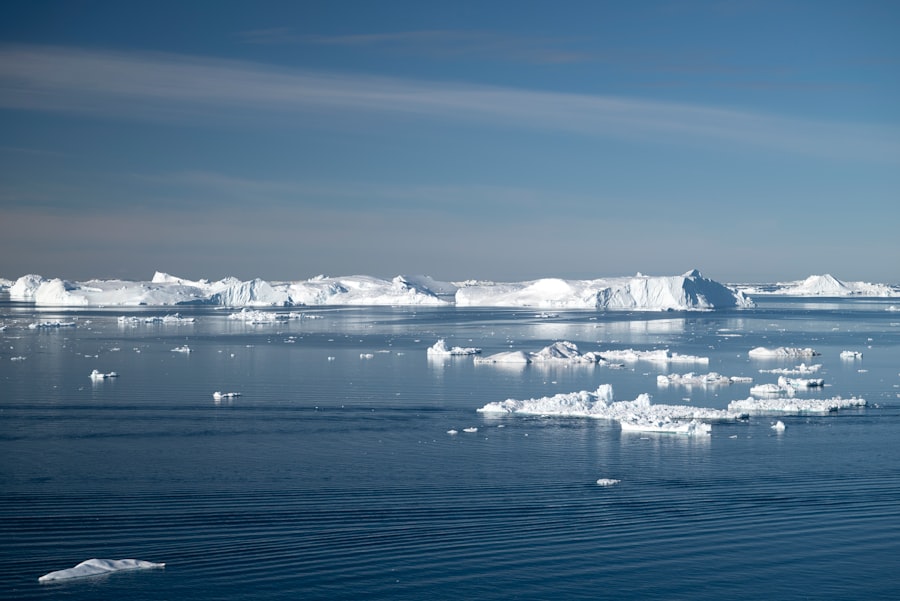
The traditional view of the Holocene Climate Optimum often implied a relatively steady, gradual warming trend leading up to its peak. However, new climate modeling and paleoclimate reconstructions are revealing a more turbulent past, characterized by significant and prolonged cooling events.
Extreme Dips in Temperature: The Unseen Fluctuations
Recent climate modeling efforts have suggested that the mid-to-late Holocene was not a period of consistent warmth but rather experienced several significant, extreme cooling dips. These dips were not minor fluctuations but substantial drops in temperature that occurred over extended periods. Some of these cooling events are estimated to have been three times larger in magnitude than cooling events observed in the last 2,000 years, a period that includes well-documented events like the Little Ice Age and the Medieval Warm Period. These findings challenge the simplified narrative of a smooth, unidirectional warming trend.
A More Dynamic Holocene: Rethinking Climate Stability
The existence of these pronounced cooling events suggests a more dynamic and potentially less stable Holocene climate than previously assumed. These cooling phases would have had significant impacts on ecosystems and human societies, potentially leading to periods of hardship and migration. The fact that these events were more severe than recent cooling periods emphasizes the complex interplay of natural climate drivers and the non-linear nature of Earth’s climate system. This revised understanding calls for a more nuanced approach to paleoclimate reconstructions, acknowledging that periods of warmth were interspersed with significant intervals of cooling, creating a far more eventful Holocene than was once believed.
The Holocene climate optimum, a period characterized by warmer temperatures and increased vegetation, has significant implications for understanding ancient human societies. Research suggests that these favorable climatic conditions may have facilitated the development of advanced civilizations, as evidenced by archaeological findings. For a deeper exploration of this topic, you can read more about the connections between climate and civilization in the article on uncovering evidence of ancient advanced civilizations here. This relationship highlights the intricate ways in which environmental factors can shape human history.
The AGC Civilization Link: Warmth and Human Flourishing
| Metrics | Data |
|---|---|
| Temperature | Warmer than present day by 1-2°C |
| Sea Level | 4-6 meters higher than present day |
| Glacial Retreat | Extensive retreat of glaciers |
| Vegetation | Expansion of forests and grasslands |
Despite the recent revisions emphasizing the regional variability and the fact that modern temperatures are higher, the Holocene Climate Optimum remains a period of significant interest for its potential influence on the development of human civilization.
Peak Warmth and the Rise of Agriculture
Certain interpretations of the Holocene Climate Optimum highlight a compelling correlation between the peak warmth of this period and the development of modern agrarian civilizations. This is particularly evident in the Northern Hemisphere, where temperatures during the Holocene Optimum are estimated to have been significantly warmer, perhaps as much as 4°C warmer than during the subsequent Little Ice Age. This enhanced warmth, coupled with increased rainfall in many regions, created more favorable conditions for agriculture. It allowed for the cultivation of crops in previously unsuitable areas and supported the growth of more robust harvests, leading to surplus food production and population growth.
A More Hospitable Earth: Laying the Groundwork for Societies
The more stable and predictable climate of the Holocene Optimum, at least in many favorable regions, provided a relatively hospitable environment that allowed early human societies to transition from nomadic hunter-gatherer lifestyles to settled agrarian communities. The optimization of temperature and precipitation regimes, even with its regional variations and cooling dips, likely played a crucial role in the development of complex societies, the establishment of permanent settlements, and the eventual rise of early urban centers. While current global temperatures are higher, the Holocene Optimum represents a period where natural conditions were more conducive to the flourishing of human civilization before the advent of industrialization. Understanding this interplay between climate and civilization remains a vital area of research.

The Sahara Won’t Stay a Desert Forever
FAQs
What is the Holocene climate optimum?
The Holocene climate optimum was a warm period that occurred approximately 5,000 to 9,000 years ago during the Holocene epoch. It was characterized by higher temperatures and relatively stable climate conditions.
How did the Holocene climate optimum impact the Earth?
During the Holocene climate optimum, global temperatures were warmer than they are today, leading to changes in sea levels, vegetation patterns, and the distribution of plant and animal species. It also had significant impacts on human societies, influencing agriculture, settlement patterns, and cultural development.
What were the causes of the Holocene climate optimum?
The Holocene climate optimum was primarily driven by natural factors such as changes in Earth’s orbit, solar radiation, and greenhouse gas concentrations. These factors contributed to the overall warming of the planet during this period.
How does the Holocene climate optimum compare to current climate conditions?
The Holocene climate optimum was warmer than the present-day climate, with higher global temperatures and different climate patterns. However, it is important to note that current human-induced climate change is leading to rapid and unprecedented warming, which poses significant challenges for the planet.
What can we learn from the Holocene climate optimum?
Studying the Holocene climate optimum can provide valuable insights into the natural variability of Earth’s climate and the potential impacts of future climate change. It also highlights the complex interactions between natural and human-induced factors in shaping the planet’s climate.