
The icy grip of the Arctic has long held its secrets close, and few mysteries have endured as long or captured the human imagination quite like the fate of HMS Erebus and HMS Terror. For nearly two centuries, the disappearance of Sir John Franklin’s expedition in 1845, and the subsequent, fruitless searches, left a void filled with speculation, tragedy, and an enduring quest for answers. This article delves into the compelling narrative of these two legendary ships, their ill-fated voyage, and the groundbreaking discoveries that finally began to unravel their final moments.
Sir John Franklin, a seasoned Arctic explorer with a distinguished naval career, was tasked with a mission of paramount importance: to discover the Northwest Passage, a legendary sea route that promised to revolutionize global trade by connecting the Atlantic and Pacific Oceans. The expedition, launched in 1845, was a testament to British naval prowess and ambition. It comprised two state-of-the-art vessels, HMS Erebus and HMS Terror, which were heavily provisioned and equipped for the harsh realities of polar exploration.
A Fleet Prepared for the Unseen
HMS Erebus and HMS Terror were not ordinary ships; they were purpose-built for Arctic service and significantly modified for the expedition. Both vessels were reinforced with iron plating to withstand the crushing pressure of sea ice. They were also equipped with steam engines, a relatively new technology at the time, which provided a crucial advantage in navigating through treacherous ice floes. The expedition carried an extensive supply of provisions, including canned goods, which were believed to be a revolutionary innovation for long-term voyages, though the true dangers of botulism from improperly canned food would later become tragically apparent.
The Men of the Erebus and Terror
The crew of the expedition numbered 129 officers and men, hand-picked for their experience and resilience. Sir John Franklin, at 59 years old, brought his considerable experience to the helm, alongside Captain Francis Crozier of HMS Terror, a veteran of several Arctic voyages. The collective knowledge and fortitude of these men were expected to overcome the formidable challenges of the Arctic environment. Their departure from Greenhithe, England, on May 19, 1845, was met with public optimism and widespread anticipation of their triumphant return, laden with tales of discovery and the confirmation of the elusive Northwest Passage.
The Hope and the Haunting Silence
The initial stages of the expedition were marked by success. The ships were sighted by a whaling vessel in Baffin Bay in July 1845, and this was the last confirmed sighting of Franklin and his crew. As weeks turned into months, and then years, a growing unease settled over Britain. Despite numerous search expeditions launched by the Royal Navy and private individuals, no definitive trace of the ships or their crew was found. The silence from the Arctic was deafening, and the mystery of HMS Erebus and HMS Terror began to deepen, fueling countless theories and anxieties.
The tragic fate of HMS Erebus and HMS Terror has captivated historians and adventurers alike, shedding light on the challenges faced during the ill-fated Franklin Expedition. For those interested in the broader implications of exploration and the role of technology in modern endeavors, a related article discusses the advancements in autonomous systems for space defense. You can read more about this fascinating topic in the article titled “AIS Role in Autonomous Space Defense” available at this link.
The Long Shadow of Disappearance and Desperate Searches
The failure of HMS Erebus and HMS Terror to return from their ambitious voyage ignited one of the greatest maritime mysteries of the 19th century. The Royal Navy, along with the British public, mounted an unprecedented series of rescue and search expeditions, each fueled by a desperate hope to find survivors and understand the fate of Franklin’s men. These searches, while ultimately unsuccessful in their immediate goal, inadvertently provided invaluable knowledge about the Arctic and its geography, pushing the boundaries of exploration and endurance.
The Lady’s Pledges: Lady Franklin’s Unwavering Resolve
Perhaps the most persistent and dedicated searcher was Lady Jane Franklin, Sir John’s wife. Unwilling to accept the official pronouncements of doom, she devoted her fortune and considerable energy to organizing and funding multiple expeditions to find her husband. Her unwavering commitment, often in the face of government indifference, spurred on explorers and kept the hope for answers alive for decades. Her efforts were instrumental in pushing the search into ever more remote and challenging regions of the Arctic.
The Whaleships and the Whispers of the Inuit
Early search efforts often relied on the assistance of Arctic whalers who frequented the region. These seasoned mariners, familiar with the Arctic’s unpredictable nature, provided crucial intelligence, though often in the form of fragmented accounts and local legends. The Inuit people, the indigenous inhabitants of the Arctic, possessed an intimate knowledge of the land and its dangers. Their stories, though often initially dismissed or misunderstood by European explorers, contained the seeds of truth that would eventually help piece together the tragedy. These oral traditions spoke of starving men, abandoned ships, and a desperate struggle for survival.
The Geographical Discoveries Born from Despair
The very act of searching for Franklin led to significant geographical discoveries. Explorers like Robert McClure, in his arduous journey aboard HMS Investigator, became the first to circumnavigate North America, albeit by abandoning his ship. Edward Augustus Inglefield, on a Royal Navy relief expedition, sailed through Smith Sound, an area that would later prove crucial in understanding Franklin’s route. These expeditions, though born from a somber purpose, expanded the known map of the Arctic, inadvertently charting the very waters where Erebus and Terror were lost.
The Gradual Unveiling of a Grim Reality
As the years passed and more evidence emerged – discarded supplies, skeletal remains, and Inuit testimonies – the grim reality of the expedition’s fate began to solidify. The narrative shifted from a hope for rescue to an investigation of a profound tragedy. The question no longer was “Where are they?” but rather, “What happened to them?” The vastness of the Arctic, the unforgiving environment, and the potential impact of the expedition’s own provisions all became subjects of intense scrutiny and speculation.
Whispers from the Ice: Early Clues and Lingering Questions
For over 150 years, the definitive location and final resting place of HMS Erebus and HMS Terror remained elusive. However, scattered clues, painstakingly gathered and analyzed, offered tantalizing glimpses into the unfolding tragedy. These early discoveries, often found by Inuit hunters or successive search parties, painted a picture of a crew trapped, starving, and ultimately succumbing to the unforgiving Arctic environment.
The Discovery of the First Artifacts
The first significant physical evidence of the expedition’s fate emerged in 1854. John Rae, a Scottish explorer and surgeon, encountered Inuit who reported seeing a group of starving white men walking south on the mainland of King William Island. They also led Rae to a burial site and to a collection of artifacts, including silverware engraved with the names of Franklin and other officers. This discovery provided the first tangible proof of the expedition’s demise and a grim confirmation of the Inuit testimonies.
The Relics of King William Island
Subsequent expeditions, particularly those led by Leopold McClintock in 1859, focused on King William Island. McClintock’s expedition discovered a small, abandoned boat containing skeletons and personal effects, including a message in a bottle left by the crew. This message, dated April 25, 1848, revealed that the ships were trapped in ice near Beechey Island and that the surviving crew had abandoned them, attempting to march south. The message also bore the grim annotation that Sir John Franklin had died on June 11, 1847.
The Cannibalism Controversy
One of the most disturbing revelations to emerge from the scattered human remains found on King William Island was evidence of cannibalism. Forensic analysis of the bones revealed cut marks and signs of fracture consistent with flesh being removed and marrow extracted. This grim discovery fueled intense debate and speculation, highlighting the extreme desperation to which the crew must have been driven by starvation. The implications of this finding profoundly shaped the understanding of the expedition’s final days.
The Unseen Dangers of the Provisions
The question of what contributed to the expedition’s downfall also turned to their provisions. The canned food, lauded as a modern marvel, was later found to have been inadequately sealed, leading to botulism – a potentially fatal foodborne illness. The lead solder used in the cans, common at the time, may have also leached into the food, contributing to lead poisoning. While not the sole cause, these dietary factors likely exacerbated the crew’s weakened state and contributed to their eventual demise.
The Breakthrough: Locating the Lost Ships
For over a century and a half, the story of HMS Erebus and HMS Terror was pieced together through scattered artifacts and the accounts of survivors of the Arctic’s embrace. The ultimate question, the location of the ships themselves, remained a tantalizing enigma. It wasn’t until the early 21st century that technological advancements and dedicated research efforts would finally bring this part of the mystery to light, offering a profound and deeply emotional conclusion to a long-held quest.
The Arctic Research Foundation’s Dedicated Quest
The Parks Canada Underwater Archaeology Team, in partnership with the Arctic Research Foundation (ARF), embarked on a multi-year project with the singular goal of locating the wrecks of HMS Erebus and HMS Terror. Armed with advanced sonar technology, remotely operated vehicles (ROVs), and an unwavering commitment, their efforts were a testament to modern exploration. The ARF’s icebreaker, the R/V Martin Bergmann, played a crucial role, serving as a mobile base for the extensive search operations.
The Discovery of HMS Erebus
On September 1, 2014, the search yielded its first monumental success. Sonar detected the outline of a shipwreck on the seabed in the shallows of Wilmot and Crampton Bay, off the coast of King William Island. Subsequent ROV dives confirmed the astonishing discovery: the remarkably preserved wreck of HMS Erebus. The discovery sent shockwaves of excitement and relief around the world, finally providing a physical anchor to the tragic narrative.
The Unveiling of HMS Terror
The discovery of Erebus only fueled the determination to find its sister ship. The search continued in subsequent years, with the area around King William Island and the surrounding waters remaining the focus. Then, on September 3, 2016, another incredible breakthrough occurred. Aboard the R/V Martin Bergmann, a sonar anomaly was identified in the waters of Terror Bay. ROV footage soon confirmed the find: the remarkably intact wreck of HMS Terror, resting on the seabed in approximately 70 feet of water.
A Testament to Preservation in the Cold Depths
The condition of both wrecks was nothing short of astonishing, a testament to the extreme cold and low oxygen environment of the Arctic seabed. Artifacts were found still in place, including cannons, navigational instruments, and even personal belongings. The preservation of these ships offered an unprecedented opportunity to study the vessels themselves and the lives of the men who sailed them, providing a direct link to the past that had been lost to the ice for so long.
The tragic fate of HMS Erebus and HMS Terror, which became trapped in the Arctic ice during Sir John Franklin’s ill-fated expedition, continues to captivate historians and adventurers alike. Their story intertwines with themes of exploration and the quest for knowledge, much like the insights shared in a recent article that discusses how ancient elites wielded power and control over information. For a deeper understanding of how knowledge has shaped societies throughout history, you can read more in this intriguing piece on power and knowledge.
Echoes from the Deep: What the Wrecks Reveal
| Ship | HMS Erebus | HMS Terror |
|---|---|---|
| Builder | Hebburn, England | Greenwich, England |
| Launched | 1826 | 1813 |
| Discovered | 2014 | 2016 |
| Final Fate | Lost in Arctic | Lost in Arctic |
The discovery of HMS Erebus and HMS Terror in the frigid depths of the Arctic has provided an unparalleled window into the final days of Franklin’s ill-fated expedition. Through meticulous underwater archaeological work, scientists and historians are now able to directly examine the ships and their contents, offering crucial insights that were previously only gleaned from fragmented accounts and archaeological finds on land.
The Underwater Museum of a Lost World
The wrecks of Erebus and Terror have been described as underwater museums, offering an intimate glimpse into the operational and daily life aboard the ships. ROV footage has revealed remarkably preserved artifacts, from stacks of dishes in the galley to officers’ cabins with their furnishings largely intact. The careful documentation and retrieval of these items are contributing to a more nuanced understanding of the expedition’s challenges and the lives of its crew.
The Final Moments from a Ship’s Perspective
The placement and condition of the wrecks offer clues about their final moments. HMS Terror, in particular, appears to have been deliberately anchored, suggesting a final, desperate attempt to survive the winter or a conscious decision to await rescue. The positioning of the ships relative to the ice also provides data for reconstructing the sequence of events that led to their entrapment. Analysis of the ship’s structure can reveal how they were affected by the ice, offering insights into the forces that ultimately sealed their fate.
The Silent Voices of the Crew
While the wrecks themselves speak volumes, the ongoing analysis of any remaining human remains, though ethically sensitive, can provide further crucial information. DNA analysis can help identify individuals, and the study of skeletal remains can reveal details about their health, diet, and the physical toll of their ordeal. This scientific exploration, conducted with the utmost respect for the deceased, aims to give a voice to the silent crew members of Erebus and Terror.
A New Chapter in Arctic Exploration History
The discovery of the wrecks has not only solved a centuries-old mystery but has also opened a new chapter in Arctic archaeology and maritime history. The ongoing research and preservation efforts are a testament to human ingenuity and the enduring desire to understand our past. The stories of HMS Erebus and HMS Terror, once shrouded in speculation and tragedy, are now being brought to light, offering a powerful and poignant reminder of the human cost of exploration and the indomitable spirit of those who dared to venture into the unknown. The legacy of these lost ships is no longer one of mystery, but of discovery and a profound connection to a significant chapter in the history of exploration.
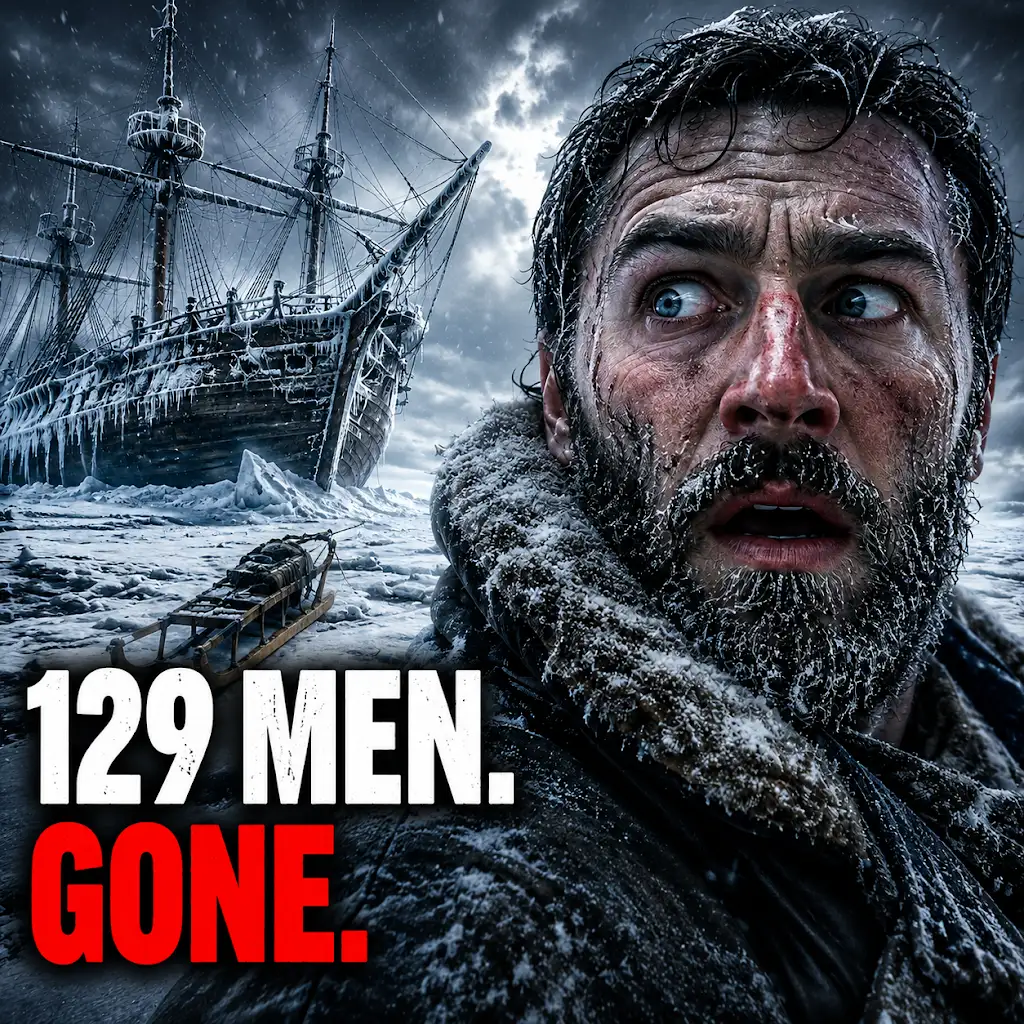
129 Men Vanished in the Arctic. Then We Found Their Ships.
FAQs
1. What were HMS Erebus and HMS Terror?
HMS Erebus and HMS Terror were two Royal Navy ships that were used in the 19th century for exploration, including the ill-fated Franklin Expedition to the Arctic.
2. What was the Franklin Expedition?
The Franklin Expedition was a British voyage of Arctic exploration led by Captain Sir John Franklin in 1845. The goal was to navigate the Northwest Passage, but the expedition ended in tragedy with the loss of all crew members.
3. What happened to HMS Erebus and HMS Terror?
After becoming trapped in ice during the Franklin Expedition, both ships were abandoned in 1848. The exact fate of the crew and the ships remained a mystery for over 150 years.
4. How were the wrecks of HMS Erebus and HMS Terror discovered?
The wreck of HMS Erebus was discovered in 2014, and the wreck of HMS Terror was found in 2016. Both discoveries were made by the Canadian government’s Arctic Research Foundation, using modern technology and historical records.
5. What is the significance of the discovery of the wrecks?
The discovery of the wrecks of HMS Erebus and HMS Terror has provided valuable insights into the Franklin Expedition and the challenges faced by explorers in the Arctic. It has also shed light on the historical and cultural significance of the expedition.