
The world, as perceived by the ancient Greeks, was a tapestry woven with threads of mythology, philosophy, and an burgeoning scientific curiosity. While modern eyes readily turn to advanced optical instruments for detailed observation, the ancient Greeks, in their own ingenious ways, sought to enhance their vision, to peer closer into the intricacies of the natural world. Their tools, though perhaps rudimentary by contemporary standards, were nonetheless profound in their ability to shift perspectives and ignite further inquiry. To explore the world through ancient Greek magnifiers is to embark on a journey into the very beginnings of visual exploration, a testament to human ingenuity and the persistent desire to understand the unseen. These early attempts at magnification, often discovered through practical application or serendipitous observation, laid foundational stones for the optical science that would develop centuries later. The story of ancient Greek magnifiers is not solely about the objects themselves, but about the intellectual and cultural milieu in which they emerged, a fertile ground for questioning, experimenting, and ultimately, seeing differently.
Lenses in the Ancient Mediterranean
The concept of magnifying light, of bending its rays to create a larger image, was not a sudden revelation but a gradual understanding that emerged from observations of natural phenomena and practical experimentation with materials. The very notion of shaping transparent materials to alter the path of light suggests a sophisticated level of observation, even if the theoretical underpinnings were not fully articulated.
The Properties of Curved Surfaces
The fundamental principle behind magnification lies in the behavior of light as it passes through curved surfaces. When light rays encounter a convex surface – one that bulges outwards – they converge. This convergence is what allows for the enlargement of an image. Ancient artisans, particularly those working with glass or polished gemstones, would have inevitably encountered this phenomenon. While their primary motivations might have been aesthetic or utilitarian, the optical properties of their creations were likely observed, even if not systematically studied. Imagine a craftsman polishing a piece of clear quartz or a particularly clear sapphire. If the curvature was just right, and the object viewed was sufficiently close, a magnified image might have been noticeable. This is not to suggest they were deliberately designing lenses for magnification, but rather that the accidental discovery of such properties was a natural byproduct of their work. The inherent transparency and refractive qualities of materials like rock crystal (quartz) and various precious stones would have been well-known. Their ability to transmit light was essential for jewelry and other decorative items. The further step of realizing that specific shapes could manipulate this light for a different purpose – to see things larger – is a crucial development.
Early Evidence and Interpretation
The surviving evidence for the use of magnifying lenses in ancient Greece is, admittedly, scarce and often subject to interpretation. Unlike the detailed treatises on geometry or astronomy, there are no surviving scrolls explicitly dedicated to the manufacture or application of magnifying lenses for scientific observation. However, archaeological finds and allusions in ancient texts provide tantalizing clues. The most prominent example often cited is the Nimrud lens, a piece of polished rock crystal discovered in Assyria, dating back to around 750 BCE. While not strictly Greek, its discovery in the broader Mesopotamian region, which had trade and cultural links with the Greek world, suggests a wider awareness of such optical properties. This lens, shaped like a plano-convex disc, exhibits characteristics that would allow for some degree of magnification. Its purpose remains debated – some suggest it was used as a burning glass to start fires with sunlight, a practical application of concentrated light, while others argue for its potential use in magnifying objects for detailed work, such as inscribing or repairing. The very existence of such a finely crafted object, capable of manipulating light, points towards an understanding of its optical capabilities.
Even within the Greek world, textual evidence, though indirect, hints at an awareness of magnification. The philosopher Democritus (c. 460 – c. 370 BCE), a proponent of atomism, is sometimes credited with suggesting that light enters the eye in the form of particles. While this doesn’t directly refer to lenses, it reflects a thinking about how vision works and the nature of light itself. More provocatively, some scholars have interpreted certain passages in ancient texts as alluding to the use of transparent objects to enlarge the appearance of things. These interpretations are often debated, as the language can be metaphorical or ambiguous. Nevertheless, the possibility that early Greek thinkers or artisans encountered and utilized the magnifying properties of curved transparent materials cannot be entirely dismissed. The challenges in definitively proving their use lie in the ephemeral nature of such objects and the lack of explicit documentation.
Ancient Greek magnifiers, often made from polished crystal or glass, played a significant role in the development of early optical science. These fascinating tools not only aided in magnifying small objects but also contributed to the understanding of light and vision in ancient times. For a deeper exploration of how ancient civilizations interacted with the natural world, you can read the article on geomorphology, which discusses the intricate relationships between geological processes and human history. Check it out here: Unraveling the Mysteries of Geomorphology.
Practical Applications and Intellectual Inquiry
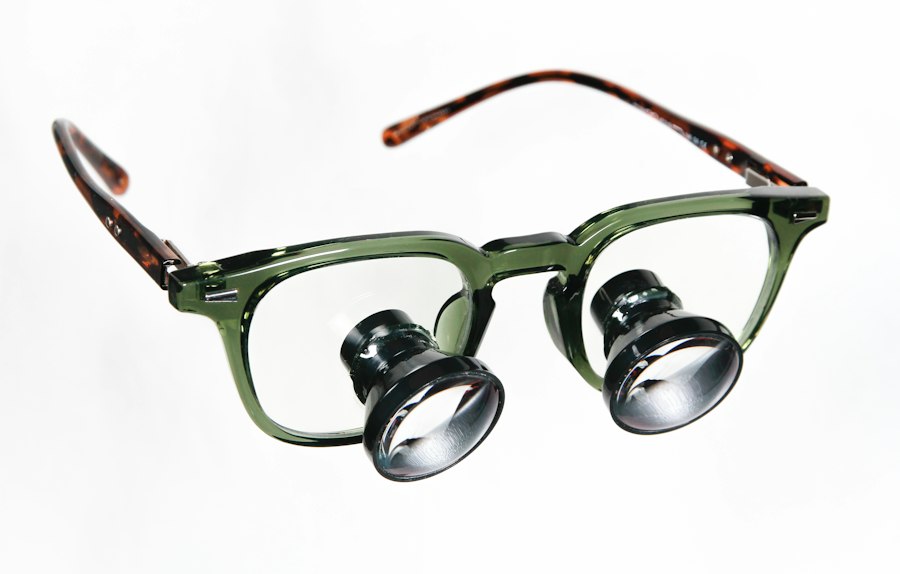
The development and use of even rudimentary magnifying tools, whether intentional or accidental, would have had significant implications for various aspects of ancient Greek life, from the practicalities of craftsmanship to the burgeoning fields of philosophy and early science. The ability to see detail more clearly could unlock new insights and efficiencies.
The Artisan’s Eye
For ancient Greek artisans, precision and detail were paramount. Whether crafting intricate jewelry, carving delicate sculptures, or inscribing fine lettering on pottery or metal, the ability to discern fine features would have been invaluable. It is highly plausible that polished gemstones, used in jewelry, or clear pieces of rock crystal, which were readily available, were employed as de facto magnifiers. A jeweler might have held a polished garnet or a carefully shaped piece of quartz to examine the minute details of a setting or to ensure the perfect alignment of tiny precious stones. Similarly, a scribe or an engraver might have found that a smoothly curved, transparent object helped them to accurately reproduce fine lines or to identify flaws in their work. The process of creating these objects, involving grinding and polishing, would have naturally led to the creation of convex surfaces. The knowledge of which shapes were best for this purpose might have been passed down through generations of artisans, a practical, empirical understanding rather than a theoretical one. This practical application would have been driven by the need for improved accuracy and quality in their creations. The ability to see clearly would have directly translated into better craftsmanship and, therefore, a more valued product.
Early Scientific Observation
The ancient Greeks were not only philosophers but also keen observers of the natural world. Their understanding of astronomy, mathematics, and early biology was built upon careful observation. While the evidence for widespread use of magnifiers in formal scientific inquiry is limited, it is conceivable that individuals with a scientific bent might have utilized such tools for specific investigations. For instance, observing insects, plants, or geological formations could have been enhanced by even a simple lens. The detailed descriptions of flora and fauna found in the writings of Aristotle (384–322 BCE) and his students, for example, suggest a level of observational detail that could have been facilitated by some form of magnification, however basic. While Aristotle himself does not explicitly mention magnifying lenses in his surviving works, his emphasis on empirical observation and detailed description aligns with the potential benefits that such tools could provide. The development of early anatomical studies, for example, would have been greatly aided by the ability to see finer structures. The pursuit of knowledge in fields like botany and zoology, which involved meticulous cataloging and description, would have naturally benefited from any enhancement of visual acuity.
The Materials of Magnification

The ancient world, while lacking the sophisticated manufacturing techniques of today, possessed a range of transparent materials that, when shaped correctly, could perform the function of a magnifier. The selection and manipulation of these materials were crucial to the success of any such optical endeavor.
Rock Crystal and Gemstones
Rock crystal, a transparent form of quartz, was undoubtedly one of the primary materials available to the ancient Greeks for crafting lenses. Its clarity, hardness, and widespread availability made it an ideal candidate. Artisans would have painstakingly ground and polished pieces of rock crystal, likely starting with naturally occurring clear fragments and then shaping them to achieve the desired curvature. The smoother and more perfectly formed the surface, the more effective the magnification would have been. Beyond rock crystal, various gemstones also possess the necessary transparency. Polished spheres or carefully cut facets of materials like sapphire, beryl (which includes emerald and aquamarine), and even clear amber, could have served as rudimentary magnifiers. These were often used in jewelry, meaning they were already being shaped and polished to a high degree of optical quality for aesthetic purposes. The transition from a decorative gem to an optical tool might have been a subtle one, driven by practical need or accidental discovery. The inherent beauty of these materials would have ensured their widespread use, and thus their potential for optical experimentation.
The Art of Polishing and Shaping
The effectiveness of any magnifying tool made from these materials would have depended heavily on the skill of the craftsman in shaping and polishing. Grinding stones, abrasives like sand and emery, and polishing cloths would have been employed to achieve smooth, curved surfaces. The ideal lens shape for magnification is convex. Achieving a consistent and accurate curvature would have been a challenging but not impossible feat for skilled artisans. The process would have been largely empirical; craftsmen would have learned through trial and error which shapes produced the most desirable results. There would have been no formal optics textbooks to guide them, but rather a tradition of practical knowledge passed down through apprenticeships. The ability to create a spherical or parabolic curve with enough precision to produce a clear, magnified image would have represented a significant achievement in ancient craftsmanship. The more precise the shaping, the less distortion would be present in the magnified image, allowing for clearer observation.
Theoretical Underpinnings and Intellectual Frameworks
While direct evidence of ancient Greek optical theory is scarce, the intellectual environment of the time was ripe for questioning the nature of vision and light. Philosophers were deeply engaged in understanding the world through rational inquiry, and this quest naturally extended to the mechanisms of perception.
Early Philosophical Inquiries into Vision
The ancient Greeks grappled with fundamental questions about how humans perceive the world. Philosophers like Plato (c. 428–348 BCE) and his student Aristotle proposed various theories of vision. Plato, in his theory of “emanation,” suggested that vision occurs when fiery particles emanate from the eyes and meet similar particles emanating from objects. Aristotle, on the other hand, proposed that vision involves a medium (like air or water) that is activated by light and then transmits an impression to the eye. While these theories did not directly involve lenses in their current understanding, they demonstrate a profound intellectual engagement with the process of seeing. The very act of theorizing about vision implies a desire to understand its underlying principles. This intellectual curiosity, even if not directly tied to the creation of magnifying devices, created an environment where the optical properties of materials might have been explored or at least recognized. The exploration of how light interacts with different substances was a natural extension of their philosophical investigations.
The Absence of a Formal Optical Science
It is important to acknowledge that ancient Greece did not possess a formal science of optics in the way we understand it today. There were no systematic studies of refraction, focal lengths, or image formation that would lead to the predictable design of sophisticated optical instruments. The works of Euclid (c. 325–265 BCE) in geometry, for example, dealt with rays of light as straight lines, crucial for understanding perspective and optics, but did not delve into the complexities of how curved surfaces manipulate these rays to create magnification. The development of a robust optical theory, which would later be significantly advanced by scientists like Ibn al-Haytham (Alhazen) in the Islamic Golden Age and later by Johannes Kepler, was still centuries away. Therefore, any use of magnifying objects by the Greeks was likely based on empirical observation and practical experience rather than a deep theoretical understanding of optics. They could manipulate materials to produce an effect, but the underlying scientific principles were not yet fully articulated or widely understood. This distinction is crucial in understanding the scope and limitations of their optical achievements.
Ancient Greek magnifiers, often crafted from polished crystal or glass, played a significant role in enhancing the study of astronomy and natural sciences in their time. These early optical devices allowed scholars to observe celestial bodies and intricate details of the natural world more closely, paving the way for advancements in various fields. For those interested in the evolution of scientific tools and their impact on exploration, a fascinating read can be found in this article about modern strategies in space exploration, which highlights how ancient innovations continue to influence contemporary scientific endeavors. You can explore this connection further by visiting this article.
Legacy and Evolution of Optical Tools
| Metric | Value | Notes |
|---|---|---|
| Time Period | 5th – 4th Century BCE | Approximate era when magnifying lenses were first conceptualized |
| Material | Glass, Crystal | Magnifiers were made from polished glass or crystal spheres |
| Magnification Power | Up to 3x | Estimated magnification based on lens curvature and size |
| Primary Use | Reading and Fire Starting | Used to enlarge text and focus sunlight to ignite fires |
| Notable Figures | Aristotle, Seneca | Referenced the use of lenses and magnification in their writings |
| Lens Shape | Convex | Convex lenses were used to magnify objects |
The contributions of the ancient Greeks, however indirect or unacknowledged in formal optical theory, were nonetheless significant. Their early encounters with magnifying principles and their practical applications laid the groundwork for future advancements, subtly influencing the trajectory of optical science and instrumentation.
The Seeds of Future Discovery
While the ancient Greeks may not have developed the sophisticated optical theories that would emerge later, their empirical observations and practical applications of curved transparent materials planted seeds that would eventually blossom into advanced optical science. The very existence of objects like the Nimrud lens, and the plausible use of polished gemstones or rock crystal by Greek artisans, suggests an awareness of magnification’s potential. This awareness, even if passed down through practical traditions rather than formal study, contributed to a broader understanding of how light could be manipulated. The Roman scholar Pliny the Elder, writing in the 1st century CE, mentions the use of emeralds by Emperor Nero to watch gladiatorial contests, suggesting a continued awareness and use of lenses for visual enhancement, albeit perhaps for amusement rather than scientific study. This demonstrates a continuity of understanding and application, bridging the gap between the Greek and Roman worlds.
The Long Road to Modern Optics
The journey from ancient Greek magnifiers to the telescopes and microscopes of today was a long and complex one, involving contributions from numerous cultures and brilliant minds across centuries. The Renaissance saw a renewed interest in classical learning, which likely included a rediscovery and re-evaluation of early optical ideas. The invention of the compound microscope and the telescope in the late 16th and early 17th centuries, credited to figures like Hans Janssen, Zacharias Janssen, and Hans Lippershey (for the telescope) and further developed by Galileo Galilei, marked a significant leap forward. This era also saw the development of crucial optical theories by scholars like Johannes Kepler, who provided a scientific explanation for how lenses form images. The meticulous work of Isaac Newton with prisms and light further advanced the understanding of optics. The legacy of the ancient Greeks lies not in providing definitive answers, but in posing questions and, through their practical ingenuity, demonstrating that the world could be seen in new and different ways, inspiring generations to come to look closer, to experiment further, and to ultimately unravel the intricate workings of light and vision. Their early explorations, however modest, were a vital first step in humanity’s ongoing quest to comprehend the universe through the power of enhanced sight.

Did This Ancient Crystal Help People See?
FAQs
What are ancient Greek magnifiers?
Ancient Greek magnifiers were optical devices used by the ancient Greeks to magnify objects and texts for better visibility.
How did ancient Greek magnifiers work?
Ancient Greek magnifiers were typically made of glass or crystal and had a convex shape that helped in magnifying objects when held at a certain distance.
What were ancient Greek magnifiers used for?
Ancient Greek magnifiers were primarily used for reading small texts, examining intricate details in objects, and for scientific observations.
Were ancient Greek magnifiers widely used in ancient Greece?
Yes, ancient Greek magnifiers were commonly used by scholars, scientists, and individuals who needed assistance in reading or examining small objects.
What is the significance of ancient Greek magnifiers in history?
Ancient Greek magnifiers played a crucial role in advancing knowledge and understanding in various fields such as astronomy, mathematics, and literature during ancient times.