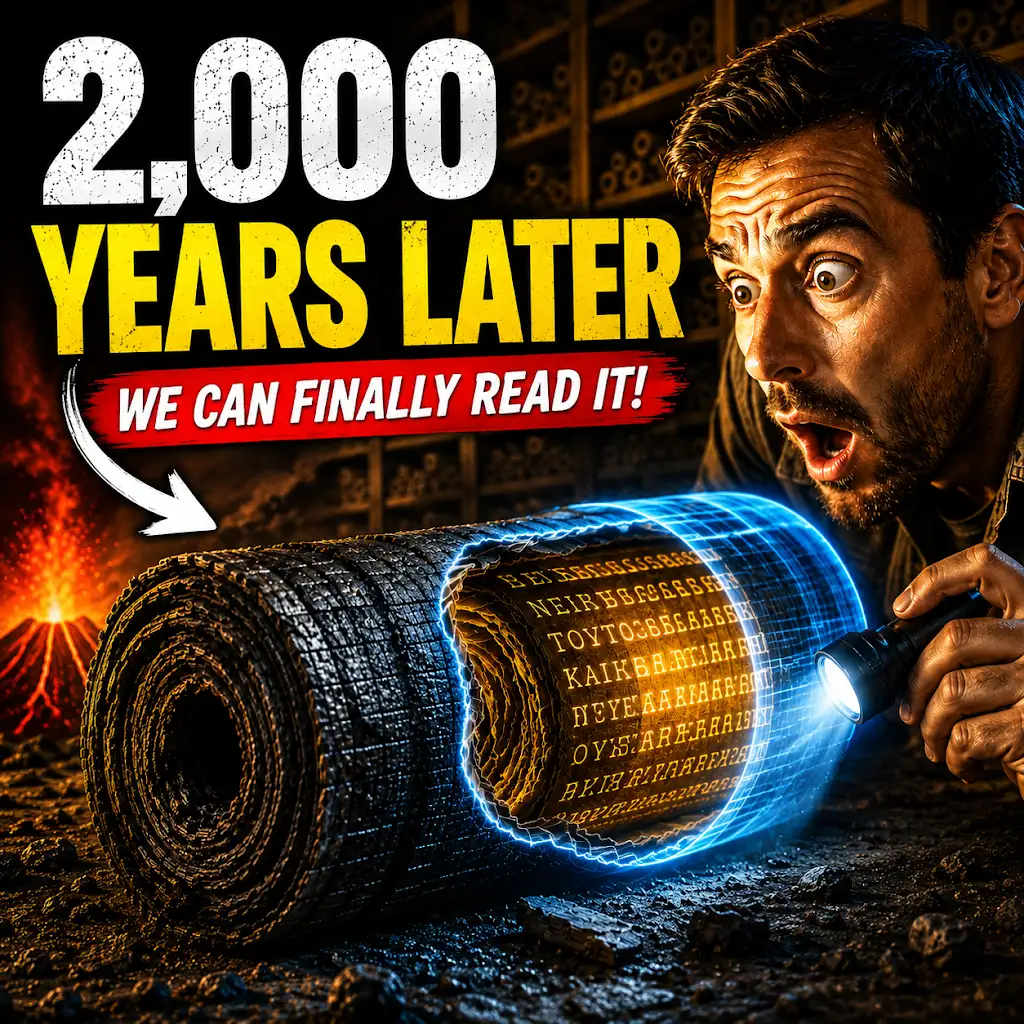
The hushed reverence that typically surrounds ancient artifacts took on a new, digital sheen with the groundbreaking unveiling of the first fully digitally unrolled Herculaneum scroll. For centuries, the charred remnants of papyrus, unearthed from the ashes of Mount Vesuvius’s devastating eruption, have held their secrets tightly, their fragile forms resisting the very act of historical inquiry. Yet, a remarkable confluence of advanced imaging technology, sophisticated algorithms, and dedicated scholarly pursuit has finally cracked open one of these enigmatic time capsules, offering an unprecedented glimpse into the intellectual life of the Roman world. This monumental achievement, a testament to human ingenuity and perseverance, marks a pivotal moment in our ability to access and understand the lost knowledge of antiquity.
For nearly three centuries, the Villa of the Papyri in Herculaneum has been a treasure trove of ancient literature, preserving a unique collection of scrolls that miraculously survived the pyroclastic flows of 79 AD. Unlike the more famously preserved frescoes and mosaics, these papyri were not merely carbonized; they were subjected to intense heat, rendering them brittle and fused into solid blocks. The mere attempt to physically unroll them proved a perilous undertaking, often resulting in irreparable damage and the loss of precious text.
The Vesuvius Cataclysm and its Preservation Paradox
The eruption of Mount Vesuvius was a catastrophic event that buried entire cities, including Herculaneum and Pompeii, under layers of volcanic ash and pumice. While the immediate impact was devastating, the unique nature of the volcanic deposits ironically created a remarkably effective preservation environment for organic materials. The thick blanket of ash sealed the sites from air and moisture, halting the natural processes of decay. This paradox, where destruction led to preservation, has made Herculaneum a particularly rich archaeological site.
The Fragile Legacy: The Herculaneum Papyri
The scrolls found at the Villa of the Papyri are distinct from those found elsewhere. They are not simply baked by heat, but rather carbonized into a solid mass, making them incredibly fragile. For centuries, scholars and excavators grappled with the challenge of deciphering these texts. The inherent brittleness of the papyrus meant that any attempt to unroll them often crumbled the material into dust, taking with it the knowledge it contained. This fragility presented a significant barrier to accessing the wealth of information these scrolls held.
Early Attempts at Unrolling: A Delicate Dance with Destruction
From the earliest excavations in the 18th century, the desire to read the contents of these burnt scrolls was immense. However, the methods employed were rudimentary and often destructive. Early attempts involved painstakingly trying to separate the fused layers with needles and scalpels, a process that, while sometimes yielding fragments of text, more often than not led to the disintegration of the papyrus. This era was characterized by a heroic but often futile struggle against the ravability of the material.
The Dawn of Digital Revelation: Innovations in Imaging
The turning point in the quest to decipher the Herculaneum scrolls arrived with the advent of advanced imaging technologies. Recognizing the limitations of physical intervention, researchers began to explore non-invasive methods that could penetrate the carbonized layers and reveal the faint traces of ink beneath. This shift marked a paradigm change, moving from a destructive approach to one of digital resurrection.
X-ray and Infrared Spectroscopy: Peering Through the Carbon
Initial forays into digital analysis involved techniques such as X-ray and infrared spectroscopy. These methods offered the potential to detect variations in density and chemical composition within the papyrus. While these early applications provided some insights, they often struggled to achieve the resolution necessary to clearly distinguish individual letters, especially on the deeply charred and compressed scrolls.
Synchrotron X-ray Micro-CT: A Quantum Leap in Resolution
The real breakthrough came with the application of synchrotron X-ray micro-computed tomography (micro-CT). This powerful technique, utilizing highly intense and focused X-ray beams generated at a synchrotron facility, allowed for unprecedented resolution in imaging the internal structure of the scrolls. By scanning the scroll from multiple angles and reconstructing the data, a detailed three-dimensional model could be generated.
The Power of Synchrotron Radiation
Synchrotron radiation is a form of electromagnetic radiation produced when charged particles, such as electrons, are accelerated to near the speed of light in a circular path by magnetic fields. This intensely bright and highly tunable radiation possesses properties that make it ideal for advanced imaging, allowing scientists to probe matter at atomic and molecular levels.
Reconstructing the Scroll in 3D
The micro-CT scanning process essentially creates a series of cross-sections of the scroll. Sophisticated algorithms then process this data to build a virtual, three-dimensional representation of the entire object. This allows researchers to virtually “slice” through the scroll at any desired angle, revealing the layered structure of the papyrus and any ink impressions within.
Computational Linguistics and Machine Learning: The Key to Decipherment
Even with incredibly detailed 3D images, the faintness and often incomplete nature of the text presented a significant challenge for human readability. This is where the power of computational linguistics and machine learning came to the fore. Algorithms were developed to analyze the patterns of ink, identify individual letters, and even predict missing characters based on linguistic models of ancient Greek and Latin.
Training the Algorithms: A Data-Driven Approach
Machine learning algorithms require vast amounts of data to learn and improve. In this case, researchers trained the algorithms by feeding them known examples of ancient Greek and Latin texts, as well as images of previously deciphered, albeit often damaged, Herculaneum scrolls. This allowed the AI to develop a sophisticated understanding of letter forms, ligatures, and writing styles.
Recognizing Faint Ink Traces
The ink used in ancient times, often made from soot and binder, created subtle variations in density and chemical composition compared to the carbonized papyrus. The advanced imaging techniques could detect these subtle differences, and the AI was then tasked with recognizing these faint traces as letters and words within the 3D reconstructed scroll.
The First Digitally Unrolled Scroll: A Monumental Revelation
The culmination of these technological and intellectual efforts was the successful digital unrolling and partial decipherment of a specific Herculaneum scroll. This particular scroll, bearing the acquisition number PSI 137.4, had long been one of the most promising but stubbornly resistant to physical unrolling. Its digital resurrection has not only provided scholars with new primary source material but has also validated the potential of this groundbreaking methodology.
PSI 137.4: A Scroll of Philosophical Significance
The scroll in question, PSI 137.4, has been identified as a work by the Epicurean philosopher Philodemus. Philodemus was a prolific writer and a significant figure in the Epicurean school during the 1st century BCE. His works, scattered across various papyri from Herculaneum, offer invaluable insights into Epicurean philosophy, ethics, poetry, and literary criticism.
Philodemus and the Epicurean Tradition
Epicureanism, founded by Epicurus of Samos, was a Hellenistic school of philosophy that emphasized the pursuit of pleasure as the highest good, but defined pleasure as the absence of pain and the attainment of tranquility. Philodemus, as a later proponent of this school, played a crucial role in preserving and developing Epicurean thought, particularly in the Roman context. His writings often engaged with contemporary philosophical debates and offered practical advice for living a virtuous and happy life.
The Content of PSI 137.4: A Glimpse into Ancient Thought
While the full extent of PSI 137.4 is still being uncovered, initial decipherments suggest it delves into philosophical arguments related to ethics, the nature of good, and the pursuit of happiness. The ability to read these passages directly, without the mediation of centuries of interpretation or the loss of material, is a profound advancement for historians and philosophers alike.
The Digital Unrolling Process: A Step-by-Step Triumph
The digital unrolling of PSI 137.4 was not a single event but a meticulous, iterative process. It involved a complex interplay of data acquisition, image processing, and AI analysis, each stage building upon the previous one to gradually reveal the text.
Acquiring the Scans: Capturing the Scroll’s Essence
The first step involved capturing high-resolution synchrotron X-ray micro-CT scans of the scroll. This was a technically demanding process, requiring careful handling of the fragile artifact and precise alignment within the scanning apparatus. The resulting data comprised a massive dataset of voxel information, representing the density of the material at each point in the 3D space.
Virtual Segmentation and Layer Separation
Once the 3D volume was acquired, computational techniques were employed to virtually segment and separate the individual layers of the papyrus. This was akin to digitally peeling back the layers of the scroll, a task that would be impossible to achieve physically without destruction. Sophisticated algorithms identified the subtle differences in density and structure that delineated each papyrus sheet.
Text Extraction and Enhancement
With the virtual layers separated, the next stage focused on extracting the textual information. Image enhancement algorithms were used to increase the contrast and clarity of the faint ink traces. This was followed by the application of machine learning models trained to identify and transcribe the Greek letters.
AI-Assisted Decipherment: Filling the Gaps
The AI played a crucial role in deciphering the text, particularly in instances where the ink was faint, smudged, or missing. By analyzing the context of surrounding letters and words, and by drawing on its knowledge of ancient Greek grammar and vocabulary, the AI could intelligently predict and fill in missing characters, thereby reconstructing coherent sentences and passages.
The Impact on Scholarship and Historical Understanding
The successful digital unrolling of PSI 137.4 is more than just a technological marvel; it represents a paradigm shift in how we can access and interpret the past. It opens up new avenues for research and promises to rewrite aspects of our understanding of ancient history, philosophy, and literature.
Access to Previously Unreadable Texts
The most immediate impact is the ability to access a wealth of previously unreadable texts. Hundreds of other burnt scrolls from Herculaneum, currently housed in various institutions, are now candidates for this digital resurrection. Each successfully unrolled scroll represents a new primary source, a direct voice from antiquity waiting to be heard.
A Deeper Understanding of Philodemus and Epicureanism
The decipherment of PSI 137.4 and other works by Philodemus will undoubtedly lead to a more nuanced and comprehensive understanding of his philosophy and the broader Epicurean tradition. Scholars can now analyze his arguments in their original context, free from the limitations imposed by fragmented or lost texts. This can shed new light on the development of Hellenistic philosophy and its influence on Roman thought.
Rethinking Literary and Cultural History
Beyond philosophy, the unrolling of these scrolls has the potential to illuminate various aspects of ancient literary and cultural history. Philodemus was also a critic and poet, and his writings may contain valuable information about lost literary works, ancient literary tastes, and the intellectual landscape of the Roman elite. This can lead to a reevaluation of existing knowledge and the discovery of entirely new chapters in our understanding of the past.
The Future of Digital Archaeology and Beyond
The success of the Herculaneum scroll project has far-reaching implications, extending beyond the realm of ancient manuscripts. It showcases the transformative power of digital technologies in fields that were once considered impenetrable to modern methods.
Expanding the Digital Toolkit for Artifacts
The techniques developed for unrolling these scrolls can be adapted and applied to a wide range of fragile and damaged artifacts. From ancient textiles and manuscripts to delicate archaeological finds, digital imaging and computational analysis offer new ways to preserve, study, and understand objects that were previously at risk of complete loss.
Preserving and Accessing Endangered Heritage
In a world facing growing challenges to cultural heritage, from conflict to climate change, the development of digital preservation and access tools is paramount. The methods employed for the Herculaneum scrolls demonstrate a powerful model for safeguarding and making accessible vulnerable heritage sites and artifacts for future generations.
Collaboration Between Disciplines: A Blueprint for Success
The Herculaneum scroll project stands as a shining example of interdisciplinary collaboration. It brought together archaeologists, physicists, computer scientists, linguists, and historians, each contributing their unique expertise. This collaborative model is essential for tackling complex research questions and pushing the boundaries of human knowledge. The success of this project serves as a blueprint for future endeavors that require a multidisciplinary approach.