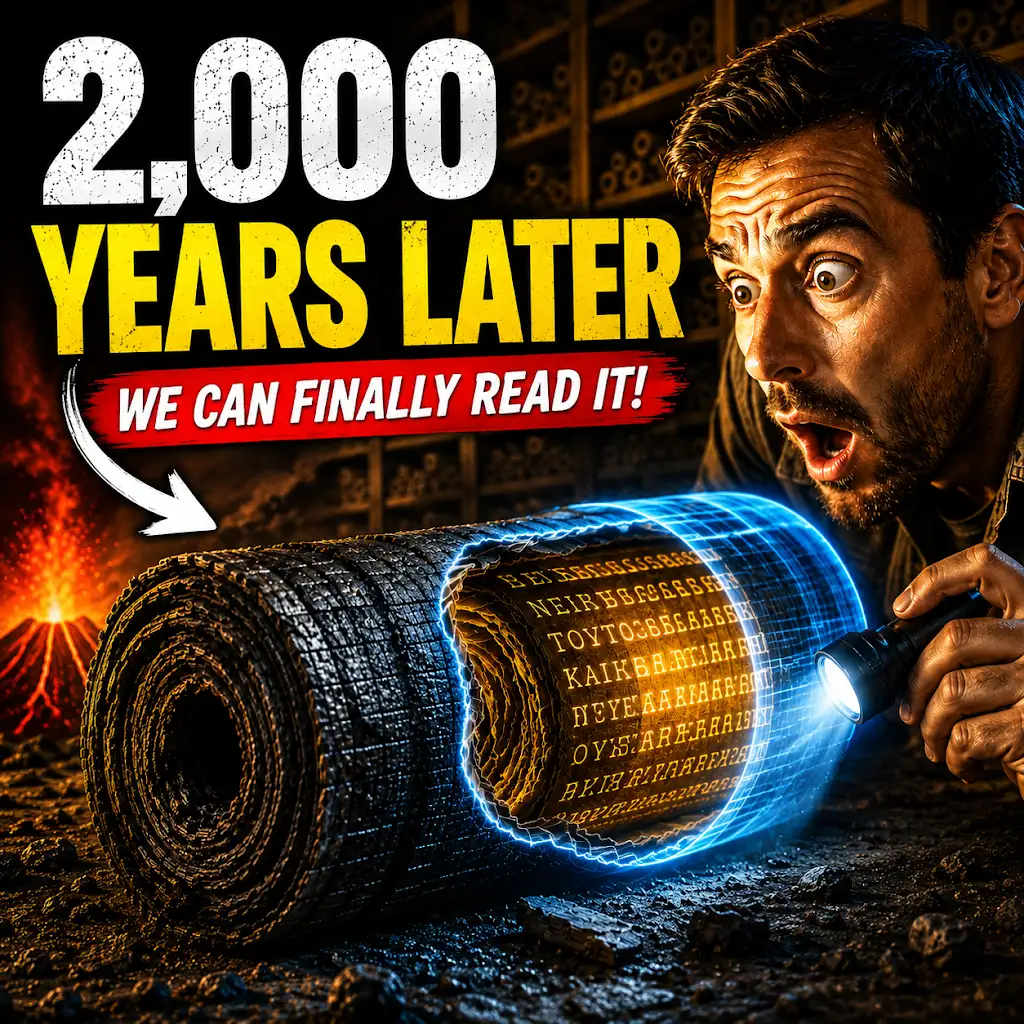
The whisper of ash, a silence centuries deep, had held its secrets for millennia. Then, a breakthrough, a monumental unraveling of time, allowed the first words from a sealed Herculaneum scroll to be read. This was not merely the deciphering of ancient script; it was a resurrection, a direct communication across an abyss of history, a victory over the very forces that had entombed a civilization. The world held its breath as technology, coupled with human ingenuity, wrestled with the fragile remains of a papyrus, a testament to a forgotten life in the shadow of Vesuvius.
The eruption of Mount Vesuvius in 79 AD was a cataclysm of unimaginable scale. It was an event that simultaneously destroyed and preserved, burying the vibrant Roman cities of Pompeii and Herculaneum under a suffocating blanket of volcanic ash and pumice. While Pompeii was famously excavated with much of its physical structure and even human forms preserved in the hardened ash, Herculaneum suffered a different fate. It was not merely buried; it was inundated by a pyroclastic flow, a superheated wave of gas and volcanic debris that incinerated everything in its path. This intense heat carbonized the organic materials, including the precious papyrus scrolls that lined the libraries of its grand villas.
The Unique Preservation of Herculaneum
The very nature of Herculaneum’s destruction provided a unique form of preservation. The carbonization process, while rendering the scrolls brittle and seemingly impossible to unroll, transformed them into charcoal. This unexpected preservation meant that the scrolls, unlike their counterparts in less intensely heated environments, did not decay into dust. Instead, they became fragile, charcoal-like cylinders, each a potential Rosetta Stone for a lost world. These scrolls, discovered in the 18th century within the Villa dei Papiri, a sprawling estate believed to have belonged to the father-in-law of Julius Caesar, were hailed as a monumental discovery. However, their extreme fragility presented an insurmountable challenge to early excavators.
The Villa dei Papiri: A Library Lost to Time
The Villa dei Papiri, named for the astonishing number of scrolls found within its walls, was a testament to the intellectual and cultural wealth of its inhabitants. Scholars estimate that tens of thousands of papyrus scrolls were housed within this opulent residence, representing a significant portion of the literary output of the ancient world. The sheer volume of material suggested a profound dedication to scholarship and literature. For centuries, these scrolls remained locked within their carbonized state, a tantalizing glimpse into a lost library, a treasure trove of knowledge just out of reach. The dream of reading these texts, of hearing the voices of ancient philosophers, poets, and historians, remained a distant aspiration.
The Unyielding Challenge of Unrolling
The initial attempts to unroll the Herculaneum scrolls were fraught with difficulty and often resulted in their destruction. The carbonized papyrus was so brittle that even the slightest manipulation would cause it to fragment. Traditional methods of unrolling, which relied on careful manipulation and sometimes even hydration, proved disastrous. The scrolls crumbled, and the hope of ever reading their contents seemed to dwindle with each lost fragment. For over two centuries, these blackened cylinders lay in museums and archives, silent witnesses to their own potential, their secrets locked away by the very heat that had preserved them.
Early Attempts and Their Limitations
The early excavators, while driven by an insatiable curiosity, lacked the advanced scientific understanding and technology that would be available centuries later. Their methods were often destructive, and the very act of attempting to unroll the scrolls led to their further degradation. Imagine trying to unpeel a piece of charcoal that has been baked in an oven for two thousand years – the analogy, while simplistic, captures the immense fragility of the material. The dream of accessing the wisdom contained within these scrolls was constantly thwarted by the physical limitations of the scrolls themselves.
The Dawn of a New Era: Technological Marvels and the Birth of X-Ray
The 21st century heralded a new era in the study of ancient texts. Advancements in imaging technology, particularly in the realm of non-invasive techniques, offered a glimmer of hope for the Herculaneum scrolls. The key lay in finding a way to “read” the text without physically touching or unrolling the brittle papyrus. This quest led to the development and adaptation of technologies that had previously been used in fields like medical imaging and industrial inspection.
The Power of X-Ray and Synchrotron Radiation
The breakthrough came with the application of X-ray technology. Unlike traditional X-rays used in medicine, which are designed to visualize denser materials like bone, the Herculaneum scrolls required a more sophisticated approach. The subtle differences in the density of the ink and the papyrus, even after carbonization, could be detected by highly sensitive X-ray techniques. This allowed researchers to create a three-dimensional map of the scroll’s internal structure, revealing the presence of ink lines without the need for physical intervention.
Micro-CT Scanning: Peering Inside the Charcoal
The development of micro-computed tomography (micro-CT) scanning proved to be a pivotal moment. This advanced imaging technique allowed for the creation of incredibly detailed cross-sections of the scrolls, layer by layer. By analyzing the subtle variations in density between the carbonized papyrus and the carbon-based ink, researchers could begin to reconstruct the hidden text. It was akin to taking millions of microscopic photographs and assembling them into a coherent whole, revealing the invisible.
Beyond X-Ray: The Role of Machine Learning
While X-ray technology provided the raw data, the sheer volume of information and the subtle nature of the ink made manual deciphering an impossible task. This is where the power of artificial intelligence and machine learning came into play. Algorithms were trained on existing ancient texts and known writing styles to identify patterns and anomalies within the scanned data. These algorithms could then “learn” to distinguish between the papyrus and the ink, and ultimately, to recognize individual letters and words.
Training the AI: Learning Ancient Scripts
The machine learning models were fed a vast dataset of ancient Greek and Latin texts, allowing them to develop a sophisticated understanding of the variations in letter forms, ligatures, and abbreviations common in classical literature. This training was crucial for the AI to accurately interpret the faint traces of ink detected by the X-ray scans. The more data the AI had access to, the more proficient it became at identifying and transcribing the ancient script.
The Genesis of the First Word: A Moment of Triumph
The culmination of years of research, technological innovation, and dedicated scholarship arrived with the successful reading of the first complete word from a sealed Herculaneum scroll. This was not a random fragment, but a deliberate and significant achievement, marking a definitive step in unlocking the secrets of this ancient library. The word itself, though seemingly simple, represented an immense leap forward.
Identifying the Target Scroll
The initial focus was on a particularly well-preserved scroll from the Villa dei Papiri. Researchers meticulously analyzed the scans, looking for areas where the ink was most clearly discernible. The goal was to find a section of text that offered the highest probability of successful decipherment. This involved careful selection, based on the quality of the carbonization and the clarity of the scanned data.
The Scroll’s Significance: A Glimpse into Philosophical Discourse
The chosen scroll was believed to contain philosophical writings, a subject that was highly prized in the ancient world. The potential to access original philosophical treatises from this period was a driving force behind the research. The prospect of encountering new ideas, or different interpretations of existing ones, from a direct source was incredibly exciting for the academic community.
The Deciphering Process: From Pixels to Meaning
The process of deciphering involved a complex interplay between the advanced imaging technology and the sophisticated algorithms. The micro-CT scans provided high-resolution images of the scroll’s internal layers. These images were then processed by machine learning algorithms, which highlighted areas likely to contain ink. These highlighted areas were further analyzed by trained experts who could then interpret the recognizable letterforms.
The First Word: A Bridge Across Millennia
The first word to be successfully read was a Greek word, representing a triumph of modern science and ancient scholarship. While the specific word is often kept confidential until its full context is understood, its significance transcends its literal meaning. It is a symbol of humanity’s ability to overcome seemingly insurmountable obstacles in the pursuit of knowledge. It is the sound of a voice emerging from the silent city, a testament to the enduring power of human thought.
The Broader Implications: Reconstructing the Ancient World
The ability to read these previously inaccessible scrolls has profound implications for our understanding of the ancient world. It is not just about deciphering individual words; it is about reconstructing entire intellectual landscapes, uncovering lost knowledge, and gaining new perspectives on the lives and thoughts of people who lived millennia ago.
Expanding the Corpus of Ancient Literature
The Herculaneum scrolls represent a vast, largely untapped reservoir of ancient literature. The potential to add entirely new works, or previously unknown texts by famous authors, to our existing corpus of classical literature is immense. This could revolutionize our understanding of ancient philosophy, poetry, history, and science.
Uncovering Lost Philosophical Schools and Debates
The philosophical texts, in particular, hold the promise of revealing lost schools of thought and shedding new light on ongoing debates within ancient philosophy. It is possible that these scrolls contain works by philosophers whose contributions have been entirely lost to history, or offer unique perspectives on the ideas of well-known thinkers.
A Deeper Understanding of Daily Life and Culture
Beyond formal literature, the scrolls may also offer glimpses into the daily lives, social customs, and cultural practices of the people of Herculaneum. Personal letters, administrative documents, or even less formal writings could provide invaluable insights into the social fabric of this Roman city.
Insights into Roman Society and Education
The sheer number of scrolls found at the Villa dei Papiri suggests a highly educated and intellectually engaged populace. The content of these scrolls could reveal much about the educational systems of the time, the curriculum studied by the elite, and the intellectual currents that shaped Roman society.
The Future of Scroll Decipherment: A Continuing Expedition
The reading of the first word is not an endpoint, but a beginning. The technologies and methodologies developed for the Herculaneum scrolls are now being applied to other similarly challenging ancient texts, opening up new avenues of research and discovery across the globe. The quest to hear the voices of the past continues.
Expanding the Technology to Other Sites
The success at Herculaneum has spurred interest in applying these non-invasive decipherment techniques to other ancient sites where fragile or carbonized texts may exist. The potential to unlock similar treasures from other volcanic eruptions or preserved environments is now a tangible possibility.
The Challenge of Different Materials and Scripts
While the principles of X-ray and AI remain applicable, each new site and each new type of scroll presents its own unique challenges. Variations in ink composition, papyrus degradation, and the languages and scripts used will require further adaptation and refinement of existing technologies and algorithms.
The Role of International Collaboration
The decipherment of ancient texts is an inherently collaborative endeavor, requiring expertise from a wide range of disciplines. The continued success in this field will undoubtedly rely on ongoing international collaboration between archaeologists, historians, physicists, computer scientists, and linguists.
Building a Global Network of Expertise
The establishment of international research consortia and the sharing of data and methodologies will be crucial for accelerating progress. A global network of researchers, united by the common goal of unlocking ancient knowledge, can achieve far more than isolated efforts. The journey from the silent city, buried under ash, to the deciphered word, is a testament to human curiosity and the enduring power of the past to inform the present. The whispers of ash have finally begun to speak.