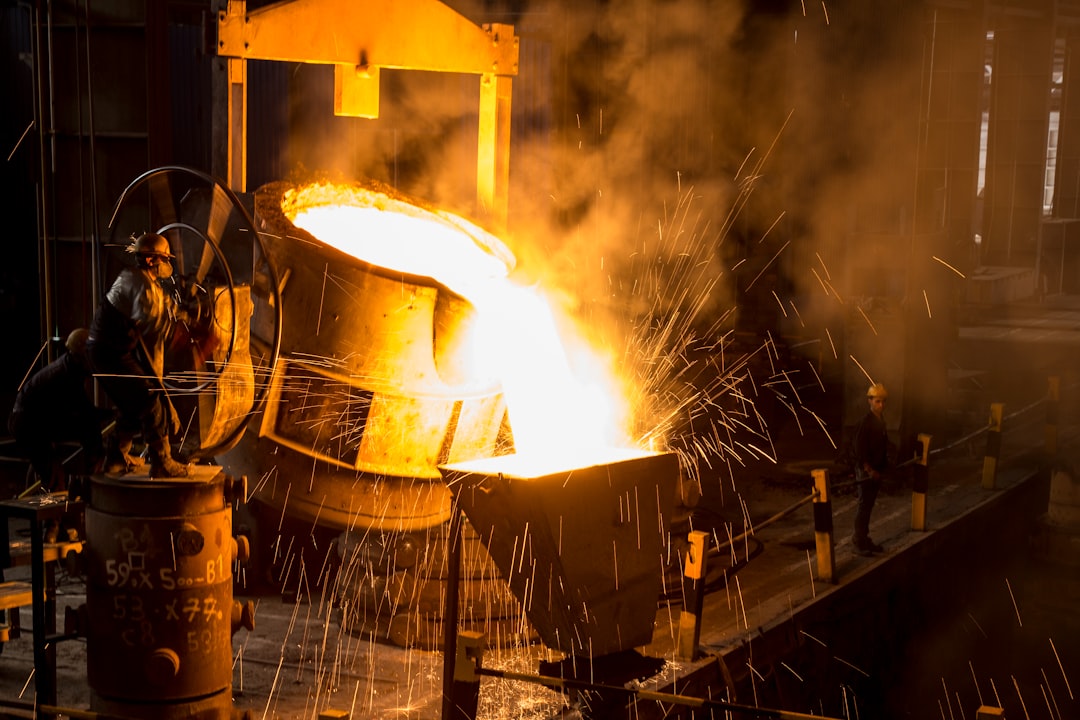
Forging History: Ancient Metallurgy Documentary Explores Humanity’s Fiery Past
The flickering light of ancient furnaces, the clang of hammer on anvil, the hiss of quenching metal – these are the visceral sensations evoked by the groundbreaking documentary, “Forging History: Ancient Metallurgy.” This compelling production delves deep into the transformative power of metalworking, tracing the arc of human civilization from its earliest encounters with ore to the sophisticated techniques that shaped empires. Through stunning visuals, expert interviews, and immersive reenactments, the documentary paints a vivid portrait of the ingenuity and perseverance that characterized humanity’s fiery past, revealing how the mastery of metal fundamentally altered our relationship with the world and with each other.
The documentary opens by grounding the viewer in the pre-metallic world, highlighting the limitations of stone and bone as primary tools and weapons. The earliest humans, depicted through evocative CGI and archaeological evidence, relied on readily available materials, their progress measured in incremental improvements to chipped flint and sharpened bone. “Forging History” masterfully illustrates the sheer difficulty of early toolmaking, the laborious process of shaping stone to achieve even rudimentary functionality. This section sets the stage for the profound revolution that was about to unfold, a revolution born not of chance, but of observation and persistent experimentation.
The Accidental Discovery: A Glow in the Embers
The film postulates, based on prevailing archaeological theories, that the initial discovery of metal was likely serendipitous. Imagine a primitive camp, a fire burning brightly, and amongst the glowing embers, a strange, lustrous object begins to form. This is the narrative “Forging History” embraces, presenting the idea that early humans, perhaps seeking higher temperatures for their fires or drawn by the glint of unusual rocks, stumbled upon the secret of smelting. The documentary doesn’t shy away from the speculative nature of this discovery, acknowledging the lack of definitive proof but presenting the most plausible scenarios grounded in scientific understanding. The sheer rarity of native copper discoveries in pre-historic times, and the subsequent understanding that certain rocks could yield this malleable substance under intense heat, are emphasized.
Early Metallurgy: Copper and the Dawn of a New Era
The first metal to be truly tamed, the documentary asserts, was copper. Archeologists featured in the film describe the laborious process of extracting copper from its ore, often through rudimentary open-pit mining and subsequent heating. The reenactments are crucial here, showcasing the primitive furnaces, often little more than pits lined with clay, fueled by charcoal and fanned by human breath or rudimentary bellows. The visual contrast between the dull, lifeless ore and the gleaming, workable copper is striking. The documentary explains how early metallurgists learned to shape this metal, initially through cold hammering, a process that hardened the copper but limited its form.
The Art of Annealing: Softening the Metal for Creation
A significant breakthrough discussed is the discovery of annealing. “Forging History” explains how metallurgists learned that by heating copper and then allowing it to cool slowly, they could reverse the hardening process and make it more pliable. This seemingly simple technique opened up a universe of possibilities. Suddenly, more complex shapes could be achieved, delicate ornaments could be crafted, and tools could be fashioned with greater precision. The documentary dedicates time to showcasing the painstaking nature of this process, the careful control of heat and cooling that was essential for success, highlighting the intuitive understanding and deep observational skills of these early artisans.
In exploring the fascinating world of ancient metallurgy, one can gain deeper insights into the technological advancements of past civilizations. A related article that delves into historical discoveries is titled “Uncovering the Map That Rewrites History.” This piece discusses how archaeological findings can reshape our understanding of ancient societies and their innovations, including metallurgy. For more information, you can read the article here: Uncovering the Map That Rewrites History.
The Bronze Age: A Revolution Forged in Fire and Alloy
The documentary elegantly transitions to the Bronze Age, a period often heralded as one of the most significant technological leaps in human history. This section meticulously details how the discovery of bronze, an alloy of copper and tin, revolutionized warfare, agriculture, and craftsmanship. The inherent superiority of bronze over copper in terms of hardness, durability, and ability to hold a sharp edge is a central theme, vividly illustrated through comparisons of weaponry and tools.
The Mystery of Tin: A Search for a Scarce Element
One of the most compelling narratives within the Bronze Age segment is the quest for tin. “Forging History” highlights tin’s relative scarcity compared to copper, and the vast distances over which it was sometimes traded. This scarcity, the documentary argues, was a driving force behind the development of extensive trade networks and the rise of powerful Bronze Age civilizations. The film explores the challenges of identifying and extracting tin ore, and the development of sophisticated methods for its purification and alloying. Expert interviews with archaeologists and metallurgists discuss the complex supply chains that emerged, linking disparate communities through the pursuit of this vital component.
The fascinating world of ancient metallurgy reveals not only the technical skills of early civilizations but also their profound understanding of materials and their properties. For those interested in exploring this topic further, a related article discusses the intriguing connections between ancient science and modern discoveries. You can read more about it in this insightful piece on suppressed ancient science, which uncovers evidence that challenges our understanding of historical technological advancements.
The Perfect Alloy: Understanding Proportions for Strength
The documentary delves into the scientific understanding, albeit empirical, behind bronze production. It explains how ancient metallurgists discovered the optimal proportions of copper and tin to create the strongest and most workable alloy. The process of smelting copper and tin together, carefully controlling the temperature and preventing oxidation, is shown through detailed reenactments. The film emphasizes the trial-and-error nature of this discovery, the repeated experiments that led to the creation of this superior material. The visual storytelling here is key, showing the transformation of separate metals into a homogeneous, powerful alloy.
The Impact on Warfare and Society: The Edge of Dominance
The introduction of bronze weaponry, from spearheads and swords to shields, fundamentally changed the nature of conflict. “Forging History” vividly portrays this transformation. Through carefully staged combat scenes and expert analysis, viewers witness the devastating effectiveness of bronze against stone and bone. The documentary argues that the control of bronze production and its dissemination were significant factors in the rise and fall of ancient empires. The film also explores the social implications, such as the emergence of a warrior class and the increased capacity for organized warfare and territorial expansion. The visual contrast between early bronze artifacts and their later, more sophisticated iterations underscores the evolution of craftsmanship and design.
Bronze Tools and the Agricultural Revolution: Feeding the World
Beyond warfare, the documentary highlights the equally profound impact of bronze on agriculture. Bronze plows, sickles, and axes allowed for more efficient land cultivation, leading to increased food production and supporting larger, more urbanized populations. The film illustrates how these tools, sharper and more durable than their predecessors, enabled farmers to clear more land, harvest crops more effectively, and store surplus food. This, in turn, fueled population growth and the development of more complex societies. The careful craftsmanship evident in these agricultural tools is also showcased, demonstrating that function and form were not mutually exclusive.
The Iron Age: A New Dawn for a Humble Metal

The narrative then shifts to the Iron Age, a period marked by the widespread adoption of iron as the primary metal for tools and weapons. “Forging History” presents iron as a more accessible, though initially more challenging, metal to work with. This section explores the difficulties encountered by early iron metallurgists and the innovative solutions they devised.
The Challenge of Iron: Higher Temperatures, Greater Complexity
The documentary meticulously explains why iron proved more difficult to work with than bronze. Iron has a much higher melting point than copper, requiring significantly hotter furnaces and more advanced bellows for smelting. The film depicts the development of these more sophisticated furnaces, often built into hillsides or constructed with intricate clay linings, and the use of more efficient bellows, sometimes powered by water or even early mechanical devices. The visual emphasis on the intense heat and the arduous labor involved underscores the dedication and ingenuity required for iron production.
Bloomery Furnaces and Direct Reduction: Iron Straight from the Ore
A significant focus is placed on the bloomery process, the dominant method for producing iron in the Iron Age. “Forging History” explains how this process, unlike bronze smelting, did not aim to melt the iron completely but rather to reduce the iron ore directly into a spongy mass known as a bloom. The film’s reenactments vividly illustrate workers continually adding ore and charcoal to the bloomery, then laboriously stirring and working the hot mass with hammers to consolidate it and expel slag. The visual representation of this painstaking, iterative process highlights the mastery required to achieve even passable iron.
The Art of Forging and Quenching: Shaping and Tempering Iron
Once a bloom was produced, the real work of shaping began. The documentary emphasizes the skill of blacksmiths in iteratively heating, hammering, and quenching iron to achieve the desired forms. The process of forging, hammering hot metal into shape, is shown with incredible detail, highlighting the precision required to create sharp blades, sturdy tools, and intricate decorative elements. The crucial step of quenching – rapidly cooling the heated metal in water or oil – is also explained, demonstrating how this process dramatically increased the hardness and durability of iron. The film contrasts the malleability and ease of working with bronze with the raw power and demanding nature of iron forging.
The Democratization of Metal: Iron’s Wide-Reaching Impact
The Iron Age is characterized by the widespread accessibility of iron, a consequence of its greater abundance compared to tin. “Forging History” argues that this accessibility led to a “democratization” of metal, making it available to a broader segment of society. This translated into more widespread use of iron tools in agriculture, enabling even small farmers to work their land more effectively. It also led to the wider availability of iron weapons, shifting the balance of power and contributing to both larger-scale conflicts and the potential for greater individual self-defense. The film explores how Iron Age societies could support larger populations and embark on more ambitious construction projects due to the increased availability of iron.
The Legacy of the Forge: Metallurgy’s Enduring Influence
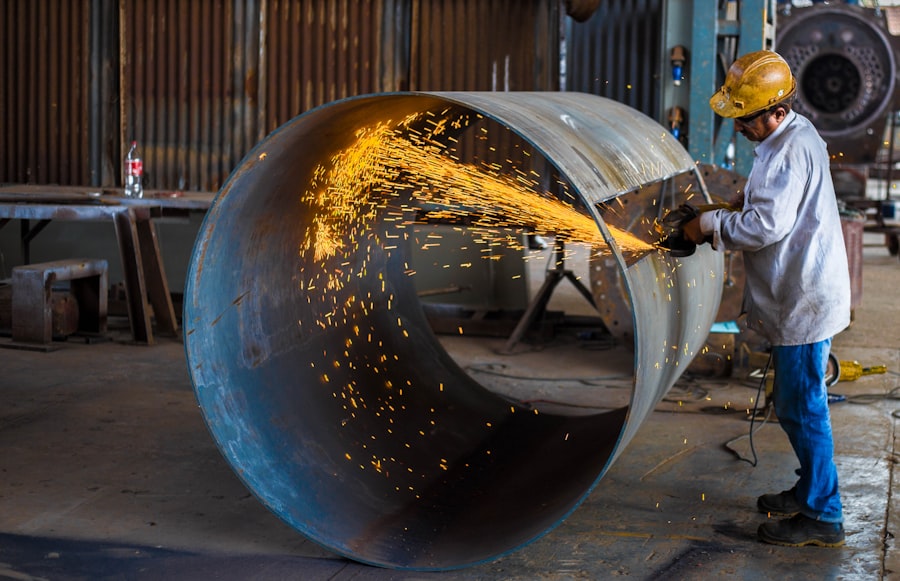
The documentary concludes by reflecting on the profound and enduring legacy of ancient metallurgy. It argues that the skills and knowledge developed by early metallurgists laid the groundwork for all subsequent technological advancements. The principles of alloying, heat treatment, and efficient extraction, honed over millennia, are still relevant today, albeit on a far more sophisticated scale.
From Ancient Artisans to Modern Engineers: A Continuous Evolution
“Forging History” draws a clear line from the ancient blacksmith meticulously shaping a bronze sword to the modern engineer designing a complex alloy for an aircraft. The documentary underscores the unbroken chain of innovation, emphasizing that the fundamental desire to transform raw materials into useful objects remains a constant force in human progress. Expert commentaries highlight how early metallurgical discoveries informed the development of ceramics, glassmaking, and eventually, the complex chemical processes that underpin modern industrialization.
The Social and Economic Fabric Woven in Metal
The film emphasizes how metalworking was not merely a technological pursuit but an integral part of the social and economic fabric of ancient societies. The documentary examines the role of the smith as a respected artisan, a person of skill and status within their community. Trade in metals and finished metal goods played a crucial role in the development of economies, facilitating the exchange of goods and ideas between different cultures. The visual storytelling here often connects the use of metal to societal structures, showing how metal objects were used in ceremony, as symbols of wealth and power, and as markers of social standing.
Echoes in Our Modern World: The Unseen Foundation of Progress
In its concluding moments, “Forging History” invites viewers to look around their modern world and recognize the pervasive influence of ancient metallurgy. From the steel frames of skyscrapers to the intricate circuitry of electronics, the fundamental principles of metal manipulation, born in the fires of antiquity, continue to shape our lives. The documentary’s power lies in its ability to connect the viewer to this deep, almost forgotten history, revealing how the fiery transformation of metals laid the bedrock of human civilization and continues to propel us forward. The film leaves a lasting impression, a testament to the enduring power of human ingenuity and the transformative force of the forge.

The Greatest Technology Humanity Ever Lost
FAQs
What is ancient metallurgy?
Ancient metallurgy refers to the study of metalworking and the production of metal objects in ancient times. It involves understanding the techniques and processes used by ancient civilizations to extract, refine, and shape metals for various purposes.
What is a documentary on ancient metallurgy?
A documentary on ancient metallurgy is a film or video presentation that explores the history, techniques, and significance of metalworking in ancient civilizations. It may feature archaeological discoveries, expert interviews, and demonstrations of ancient metalworking processes.
What can viewers expect to learn from an ancient metallurgy documentary?
Viewers can expect to learn about the development of metalworking technologies, the cultural and economic impact of metallurgy in ancient societies, and the role of metals in shaping human history. They may also gain insights into the craftsmanship and ingenuity of ancient metalworkers.
Where can one find ancient metallurgy documentaries?
Ancient metallurgy documentaries can be found on streaming platforms, educational websites, and through historical and archaeological organizations. They may also be available for purchase or rental through online retailers and specialty documentary distributors.
Why is it important to study ancient metallurgy?
Studying ancient metallurgy is important for understanding the technological advancements and cultural achievements of past civilizations. It provides insights into the development of metalworking techniques, the use of metals in ancient societies, and the impact of metallurgy on human progress.