The sands of Arabia, often perceived as a vast and largely empty expanse, conceal a rich and complex past. Beyond the familiar narratives of later Islamic empires and burgeoning modern economies, lies a forgotten history teeming with ancient civilizations, vibrant trade networks, and sophisticated societies that shaped the very arteries of global commerce and cultural exchange. For millennia, the Arabian Peninsula served not as a barrier, but as a crucial bridge, connecting distant lands and fostering innovations that rippled across continents. Unearthing these forgotten chapters reveals a far more dynamic and interconnected Arabia than is commonly understood, a land that played an indispensable role in the development of human civilization.
Echoes from the Dawn of Civilization: Early Arabian Settlements
The earliest chapters of Arabian history are etched in the very earth, revealed through meticulous archaeological excavation. These findings challenge the notion of Arabia as a barren wasteland from its inception, instead pointing to periods of greater fertility and the emergence of surprisingly advanced early human settlements. The sheer age of some of these sites speaks volumes about the enduring human presence and adaptation in this challenging environment.
Traces of Prehistoric Life: Nomadic Roots and Oasis Settlements
Long before the grand empires and bustling trade cities, nomadic peoples traversed the Arabian landscape, their lives dictated by the availability of water and pasture. Evidence of their presence, though often ephemeral, can be found in scattered lithic tools and rock art. These early inhabitants possessed an intimate knowledge of their environment, a survival honed over countless generations. As the climate shifted, or perhaps through increasing social organization, some of these nomadic groups began to establish more permanent settlements, often clustered around vital oases. These oases, far from being mere watering holes, became centers of nascent agriculture and community life. Discoveries at sites like the Thaniyat al-Ghadir in Saudi Arabia have revealed evidence of early farming practices, indicating a transition from purely nomadic lifestyles to more settled existence. The development of rudimentary irrigation techniques, even if simple, would have been a significant technological leap, allowing for a more stable food supply and the growth of larger communities.
The Enigmatic Dilmun Civilization: A Gateway to Ancient Mesopotamia
Perhaps the most significant early civilization to emerge in the Arabian sphere of influence was Dilmun. While its core territory is generally believed to have been in modern-day Bahrain and parts of eastern Saudi Arabia and Qatar, its reach and impact extended far beyond its geographical boundaries. Dilmun flourished from the late 4th millennium BCE, becoming a vital intermediary in the vast trade networks connecting Mesopotamia to the Indus Valley. Its strategic location on the Persian Gulf made it an indispensable port and a hub for the exchange of precious commodities.
The archaeological evidence from Dilmun is compelling. Excavations have unearthed large burial mounds, monumental temples, and sophisticated urban planning. The presence of Mesopotamian seals and artifacts within Dilmunite sites, and vice versa, underscores the deep and sustained commercial and cultural connections. Dilmun was renowned for its control over the copper trade, sourcing it from Oman and transshipping it to Mesopotamia, where it was a vital metal for toolmaking and weaponry. Furthermore, it is believed to have been a source of pearls, highly prized by ancient civilizations. The economic prosperity of Dilmun was intrinsically linked to its role as a trading emporium, a testament to the region’s early engagement with global commerce. Its decline, like that of many ancient civilizations, remains a subject of scholarly debate, but its legacy as a foundational trading power is undeniable.
The forgotten history of Arabia is a fascinating topic that sheds light on the rich cultural and economic heritage of the region. For those interested in understanding how historical events have shaped modern financial strategies, an insightful article can be found at Strategies for Safeguarding Wealth Against Hyperinflation. This piece explores how historical economic practices can inform contemporary approaches to wealth management, making connections that highlight the importance of learning from the past.
The Golden Age of Arabian Trade: Routes that Shaped the World

The true historical significance of Arabia in the ancient world lies in its unparalleled position as a crossroads of trade. From the spice routes of the south to the caravan trails traversing the interior, Arabia was a vital conduit for goods and ideas that fueled the economies and cultures of civilizations stretching from the Mediterranean to the Indian Ocean. These trade routes were not mere pathways; they were arteries of innovation, wealth, and cultural diffusion.
The Incense Trails: Aromatic Wealth and Imperial Ambitions
The southern regions of Arabia, particularly Yemen, were the undisputed origin of the world’s most prized aromatics: frankincense and myrrh. For millennia, these resins were in immense demand across the ancient world, used in religious ceremonies, perfumery, medicine, and even as embalming agents. The Incense Route, a network of caravan trails, stretched from southern Arabia northwards through the Hejaz, eventually reaching ports on the Mediterranean and beyond. This route was the lifeblood of ancient empires, providing them with a crucial source of luxury goods and religious ritual items.
The economic power generated by the incense trade led to the rise of sophisticated Arabian kingdoms, most notably the Sabaeans, Qataban, and Himyar. These kingdoms controlled the production and distribution of incense, accumulating vast wealth and exerting considerable political influence. Their cities, such as Marib with its impressive dam, stand as testaments to their organizational capabilities and engineering prowess. The wealth derived from this trade also fueled interactions with distant powers, including the Roman Empire, which was a major consumer of Arabian incense. Embassy exchanges and military encounters between Roman and Arabian forces often revolved around the control and taxation of these lucrative trade routes. The very existence of these powerful kingdoms, built on the back of this unique commodity, highlights Arabia’s crucial role in the global economy of antiquity.
Desert Caravans: Linking the Mediterranean, Mesopotamia, and Beyond
Beyond the specific incense routes, a more diffuse but equally important network of caravan trails crisscrossed the Arabian Peninsula, connecting it to major centers of civilization. These were the arteries that carried a diverse array of goods, including spices from the East, textiles from Mesopotamia, grains from Egypt, and precious metals from various mines. The Nabataeans, with their magnificent capital city of Petra, are perhaps the most famous example of a people who mastered desert caravan trade. They controlled vital water sources and established a secure network of routes, levying tolls and providing essential services to merchants.
The Nabataeans were not merely traders; they were skilled engineers and administrators, creating a thriving kingdom on the fringes of the Roman Empire. Petra, carved into the sandstone cliffs, served as a testament to their wealth and their ability to thrive in a seemingly inhospitable environment. Their influence extended to cities like Hegra (modern Mada’in Salih) in present-day Saudi Arabia, further solidifying their dominance over key trade arteries. The success of the Nabataeans, and other similar groups, demonstrates the vital role of Arabia as a transit zone, facilitating the movement of goods and ideas between vastly different cultures. These caravan routes were the highways of the ancient world, and Arabia was their central nexus.
Cities of Commerce and Culture: Unveiling Arabian Urban Centers

The prosperity generated by ancient trade fostered the growth of remarkable urban centers across Arabia. These were not merely stopping points for caravans but vibrant metropolises that became centers of culture, learning, and religious expression. Their architecture, urban planning, and the artifacts unearthed within them paint a vivid picture of sophisticated societies with complex social structures and a deep engagement with the wider world.
Petra and Hegra: Fortresses of Trade and Rock-Cut Wonders
The Nabataean cities of Petra and Hegra are iconic examples of Arabian urbanism. Petra, with its breathtaking Treasury (Al-Khazneh) and Monastery (Ad-Deir), carved directly into rose-red cliffs, is a UNESCO World Heritage site that continues to awe visitors. Its strategic location at the intersection of several trade routes allowed the Nabataeans to control the flow of goods and to tax merchants passing through. The city was ingeniously designed with advanced water management systems, including dams and cisterns, to sustain its population in an arid region.
Hegra, also known as Mada’in Salih, served as the southern outpost of the Nabataean kingdom. Its imposing monumental tombs, carved into sandstone outcrops, echo the architectural style of Petra and stand as a powerful reminder of the Nabataeans’ wealth and artistic prowess. The inscriptions found at these sites provide valuable insights into their language, religion, and social customs. These cities were more than just commercial hubs; they were cultural melting pots, influenced by the diverse peoples and goods that passed through them. Their very existence is a testament to the economic dynamism that Arabian trade fostered and the ability of its inhabitants to create enduring urban legacies.
Marib and the Sabaean Kingdoms: Engineering Marvels and Ancient Governance
In the southern reaches of Arabia, the Sabaean kingdoms, centered around the magnificent city of Marib, represent another pinnacle of ancient Arabian urban achievement. Marib was renowned for its colossal dam, an engineering marvel of its time. This dam, constructed and maintained over centuries, controlled the flow of water from seasonal wadis, irrigating vast agricultural lands and supporting a flourishing population. The dam’s sophisticated sluice gates and distribution channels were a testament to the Sabaeans’ advanced understanding of hydraulic engineering.
The Sabaean civilization, and others in the region like the Qataban and Awsan, were not merely agriculturalists; they were also patrons of trade and learning. Their cities were centers of religious activity, with grand temples dedicated to their pantheon of deities. Inscriptions from Marib, such as the Musnad script, reveal a complex written language and provide invaluable historical records of their governance, religious practices, and interactions with other powers. The wealth generated by the incense trade allowed these kingdoms to develop elaborate irrigation systems, support a literate elite, and engage in diplomatic relations with distant empires. The ruins of Marib, though partially lost to sand, still whisper tales of a sophisticated and prosperous past, built upon ingenuity and control of vital resources.
Cultural Exchange and Intellectual Currents: Arabia’s Unsung Contributions
The role of Arabia as a conduit for trade was inextricably linked to its function as a channel for cultural and intellectual exchange. As merchants, travelers, and armies traversed the peninsula, they carried with them not only goods but also ideas, beliefs, technologies, and artistic styles. Arabia, in turn, absorbed these influences and contributed its own unique perspectives to the global tapestry of human knowledge.
The Transmission of Knowledge and Technologies
The ancient trade routes were not just for physical commodities; they were also pathways for intangible assets like knowledge and technology. As Mesopotamians traded with the Indus Valley, and as Greeks and Romans interacted with Arab traders, advancements in fields such as astronomy, mathematics, medicine, and metallurgy were shared and adapted. For instance, the sophisticated irrigation techniques developed in southern Arabia likely influenced agricultural practices in neighboring regions. Similarly, navigational knowledge, honed by centuries of seafaring and desert travel, was invaluable for maritime trade across the Indian Ocean.
The exchange of artistic motifs and architectural styles is also evident. The influences of Hellenistic art can be seen in some of the decorative elements found in Nabataean tombs, while Mesopotamian architectural principles might have found their way into early Arabian building traditions. The development of alphabetic scripts, though originating elsewhere, was adapted and evolved in Arabia, becoming the foundation for later Semitic languages, including Arabic. This continuous flow of ideas and innovations demonstrates that Arabia was not an isolated region but an active participant in the intellectual currents of the ancient world.
Religious and Philosophical Crossroads: Seeds of Diversity
Arabia’s position at the crossroads of empires and trade routes also made it a fertile ground for religious and philosophical exchange. While the later rise of Islam would profoundly reshape the region, even in pre-Islamic times, Arabia was home to a diverse array of religious beliefs and practices. These included indigenous polytheistic traditions, as well as the presence of Jewish communities and early Christian sects.
The constant movement of people facilitated the spread of these religious ideas. Trade routes provided avenues for missionaries and pilgrims to travel, and for merchants to carry sacred texts and doctrines. This interaction between different faiths likely fostered a degree of syncretism and tolerance in certain periods, as communities adapted and integrated elements from neighboring belief systems. Furthermore, the philosophical inquiries that were prevalent in the Hellenistic and Mesopotamian worlds found their way into the intellectual discourse of Arabian scholars and thinkers. While much of this early philosophical exploration may not have been widely documented in surviving texts, it formed a crucial precursor to the later intellectual flowering of the Islamic Golden Age, which itself was built upon foundations laid by centuries of cultural and intellectual exchange in the Arabian Peninsula.
The forgotten history of Arabia is rich with tales of ancient civilizations that thrived in harsh environments, showcasing their remarkable resilience and ingenuity. One fascinating aspect of this history is how these societies adapted to extreme conditions, a topic explored in depth in a related article that discusses the techniques used by ancient civilizations to survive droughts. You can read more about these survival strategies in this insightful piece on surviving drought, which sheds light on the innovative methods that enabled them to flourish despite the challenges posed by their surroundings.
The Enduring Legacy: Arabia’s Unseen Impact on the Modern World
| Aspect | Description | Time Period | Significance |
|---|---|---|---|
| Dilmun Civilization | Ancient trading civilization located in Eastern Arabia, known for its role in trade between Mesopotamia and the Indus Valley. | 3rd millennium BCE | Early example of complex trade networks and urban development in Arabia. |
| Thamudic Inscriptions | Ancient rock inscriptions found across northern Arabia, representing one of the earliest forms of written language in the region. | 1st millennium BCE | Provides insight into pre-Islamic Arabian culture and language. |
| Kingdom of Saba (Sheba) | Ancient kingdom in southern Arabia, famous for its wealth and the legendary Queen of Sheba. | 8th century BCE – 3rd century CE | Important for understanding trade, culture, and political structures in ancient Arabia. |
| Incense Route | Trade route used for transporting frankincense and myrrh from southern Arabia to the Mediterranean. | 2nd millennium BCE – 2nd century CE | Crucial for economic and cultural exchanges between Arabia and other ancient civilizations. |
| Pre-Islamic Poetry | Oral tradition of poetry that reflects the social, political, and cultural life of Arabian tribes before Islam. | 6th century CE | Valuable source for understanding Arabian values, history, and language. |
The forgotten history of Arabia is not merely a collection of dusty archaeological finds and faded inscriptions. It is a narrative that profoundly shaped the trajectory of human civilization, leaving an indelible mark on the global economy, cultural landscapes, and the very foundations of communication and interconnectedness. The understanding of these ancient civilizations and trade routes reveals a dynamic and influential Arabia that continues to resonate in the modern world.
Foundations of Global Commerce: From Incense to Modern Trade
The principles of trade and commerce that were honed in ancient Arabia continue to inform global economic practices today. The sophisticated systems of taxation, caravan organization, and port management developed by civilizations like the Nabataeans and the Sabaeans laid early groundwork for international trade. The very concept of luxury goods driving economic growth, exemplified by the ancient demand for incense, is a principle still at play in contemporary global markets. Moreover, the geographical advantage of the Arabian Peninsula, strategically positioned between Africa, Asia, and Europe, continues to be recognized in the modern era, with its importance as a transit hub for goods and energy.
The legacy of Arabia as a facilitator of long-distance trade is not confined to the past. The historical understanding of these ancient networks provides context for the continued importance of the region in global supply chains. The entrepreneurial spirit and adaptability of its ancient peoples, who thrived in challenging environments by mastering trade and logistics, are qualities that continue to be associated with the economic dynamism of modern Arabia.
Cultural Diffusion and the Roots of Interconnectedness
The cultural diffusion that occurred along ancient Arabian trade routes serves as an early model for globalization. The exchange of ideas, technologies, and artistic expressions fostered a degree of interconnectedness between diverse civilizations. This historical precedent demonstrates that the movement of people and goods has always been a powerful engine for cultural evolution and the cross-pollination of knowledge.
The stories and traditions that emerged from these interactions, though often overlooked, contributed to the rich tapestry of human heritage. The development of scripts, the spread of religious ideas, and the adaptation of artistic styles all highlight the profound impact of these early networks. The forgotten history of Arabia reminds us that the world has always been more interconnected than we often perceive, and that the foundations of our modern globalized society were laid, in no small part, by the ancient civilizations and trade routes of this remarkable peninsula. Understanding this past is not just an academic exercise; it is a vital step in comprehending the deep historical roots of our interconnected world and the enduring influence of a region too long perceived as a silent desert.
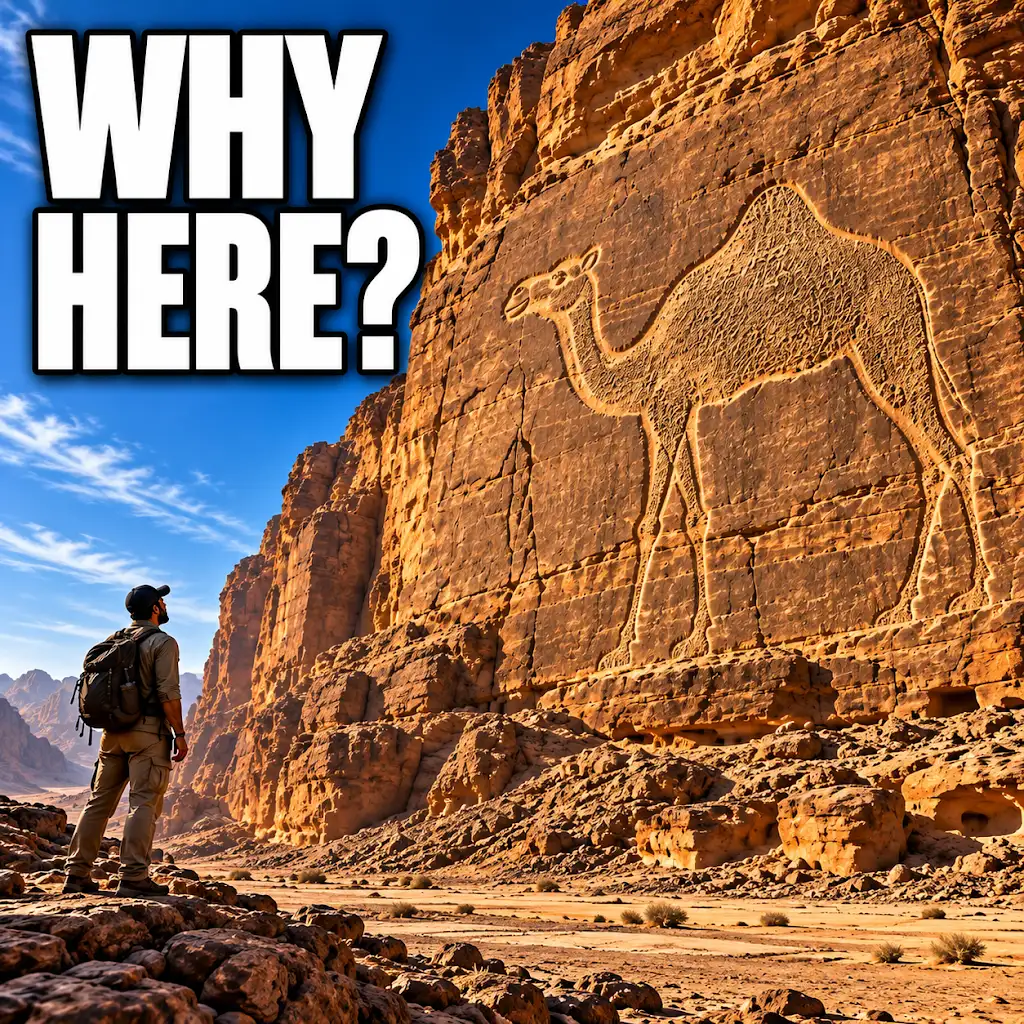
Why Were Giant Camels Carved Above the Desert?
FAQs
1. What is the forgotten history of Arabia?
The forgotten history of Arabia refers to the lesser-known events, civilizations, and cultures that have existed in the Arabian Peninsula throughout history but are often overlooked or not widely recognized.
2. What are some key historical events that are part of the forgotten history of Arabia?
Some key historical events that are part of the forgotten history of Arabia include the ancient civilizations of Dilmun and Magan, the Nabatean Kingdom, the Himyarite Kingdom, and the pre-Islamic cultures of the region.
3. Why is the history of Arabia often overlooked in mainstream narratives?
The history of Arabia is often overlooked in mainstream narratives due to a variety of factors, including Eurocentrism in historical studies, the focus on more well-known civilizations in other regions, and the limited availability of historical records from the Arabian Peninsula.
4. How can we learn more about the forgotten history of Arabia?
We can learn more about the forgotten history of Arabia through archaeological discoveries, research studies, academic publications, and exhibitions that focus on the lesser-known aspects of the region’s history.
5. Why is it important to uncover and preserve the forgotten history of Arabia?
It is important to uncover and preserve the forgotten history of Arabia to gain a more comprehensive understanding of the region’s rich cultural heritage, to challenge existing historical narratives, and to ensure that the contributions of Arabian civilizations are recognized and celebrated.