
The frigid, unforgiving waters of the Arctic have long guarded their secrets, a silent testament to the perilous voyages undertaken by explorers of yesteryear. For over a century, one of history’s most enduring mysteries has been the fate of Sir John Franklin’s lost expedition, a naval endeavor that set sail in 1845 with the ambitious goal of charting the fabled Northwest Passage. Now, after decades of tireless searching and tantalizing whispers, a monumental discovery has finally brought closure to this enduring enigma. The wreckage of Sir John Franklin’s ships, HMS Erebus and HMS Terror, have been found, marking a historic triumph in maritime archaeology and unlocking a treasure trove of historical insights.
The disappearance of Franklin’s expedition cast a long shadow over Victorian Britain and the world of exploration. Sir John Franklin, a seasoned Arctic navigator, led a well-equipped expedition comprising two ships, HMS Erebus and HMS Terror, with a crew of 129 men. Their mission was clear: to navigate the notoriously treacherous Northwest Passage, a sea route connecting the Atlantic and Pacific Oceans through the Arctic Ocean. This passage held immense strategic and economic importance, promising a shorter trade route between Europe and Asia. However, the Arctic’s unforgiving nature, characterized by its vast ice fields, brutal storms, and disorienting landscapes, proved to be a formidable adversary.
A Nation Holds its Breath
The initial departure of the expedition in May 1845 was met with public fanfare and optimistic expectations. However, as months turned into years with no word from the ships, a growing unease permeated British society. The Royal Navy, accustomed to maintaining contact with its vessels, began to mobilize search parties. These early efforts, while valiant, were hampered by the sheer scale of the Arctic and the limited technological capabilities of the era.
Theories and Speculations Abound
Over the ensuing decades, a complex tapestry of theories and speculations emerged regarding the expedition’s fate. Indigenous accounts, often dismissed or misinterpreted by early search parties, hinted at desperate circumstances and starvation. Relics found on the shores of King William Island – discarded cans, fragments of clothing, and even human remains – painted a grim picture of survival against impossible odds. These scattered clues fueled intense debate among historians, naval experts, and the public alike.
The Role of Indigenous Knowledge
Crucial to understanding the expedition’s demise were the oral traditions and eyewitness accounts of the Inuit people who inhabited the Arctic. These indigenous communities possessed an intimate knowledge of the land and sea, and their testimonies, though often fragmented and collected under challenging circumstances, provided vital clues. Early attempts to gather this information were often marred by cultural misunderstandings and a lack of trust. However, as the search persisted, the significance of their narratives became increasingly apparent, hinting at the ships being trapped in ice and the crew ultimately abandoning them to their fate.
The Scientific and Naval Perspective
From a scientific and naval perspective, the mystery presented a compelling case study in the limitations of 19th-century Arctic exploration. The expedition’s provisions, particularly its canned food, were later found to be a potential source of lead poisoning, a factor that may have contributed to the crew’s deteriorating health and decision-making. The ships themselves, while robust, were vulnerable to the crushing power of Arctic ice.
The recent discovery of the Franklin Expedition ships has sparked renewed interest in historical maritime exploration, particularly in relation to the advancements in cartography during that era. An insightful article that delves into the intricacies of mapping the world during the time of the Ottoman Empire is available at this link: Piri Reis and Ottoman Cartography: Mapping the World. This piece highlights the significance of maps in navigation and exploration, providing a broader context for understanding the challenges faced by explorers like Sir John Franklin.
The Modern Quest for the Lost Fleet
The enduring allure of the Franklin Expedition ensured that the search for its lost ships never truly ceased. While the 19th and 20th centuries saw numerous expeditions, both official and private, the vastness and hostility of the Arctic remained a formidable barrier. However, advancements in technology, coupled with a renewed commitment from various organizations, reignited the quest in the 21st century.
The Role of Technology
Modern underwater exploration technologies have been instrumental in the recent discoveries. High-resolution sonar, remotely operated vehicles (ROVs), and advanced imaging systems have allowed researchers to peer into depths previously inaccessible. These tools have revolutionized the process of searching for shipwrecks, enabling more targeted and efficient investigations.
The Parks Canada Initiative
A pivotal force in the modern search has been Parks Canada, a government agency dedicated to preserving Canada’s natural and historic heritage. Recognizing the immense historical significance of the Franklin Expedition, Parks Canada launched an ambitious multi-year initiative to locate the lost ships. This endeavor brought together a multidisciplinary team of historians, archaeologists, marine scientists, and experienced Arctic navigators.
Strategic Search Areas
Based on historical records, Inuit testimony, and scientific modeling, Parks Canada and its partners identified several key areas where the ships were most likely to be found. These areas were meticulously mapped and surveyed, utilizing the latest technological advancements to overcome the challenges of ice, depth, and visibility.
International Collaboration
The search for the Franklin Expedition was not confined to Canadian waters. International collaboration played a vital role, with support and expertise coming from institutions and individuals across the globe. This collaborative spirit underscores the universal fascination with the expedition and the shared desire to uncover its secrets.
The Moment of Discovery: HMS Erebus and HMS Terror Revealed
The breakthrough in the search for the Franklin Expedition came in 2014, a year that will forever be etched in the annals of maritime history. A collaborative effort, spearheaded by Parks Canada and involving a consortium of partners, led to the discovery of one of the lost ships. This monumental find was followed by the equally significant discovery of the second vessel just three years later.
HMS Erebus Surfaces
In September 2014, during an aerial survey conducted by the Canadian Hydrographic Service, a distinct anomaly was detected on the seabed in the frigid waters of the Queen Maud Gulf. This anomaly was subsequently investigated by an ROV, which revealed the unmistakable outline of a 19th-century warship. Further examination confirmed it to be HMS Erebus, one of the two vessels of Sir John Franklin’s ill-fated expedition. The discovery sent shockwaves of excitement through the scientific community and captured the world’s attention.
The Underwater Archeological Site
The site of HMS Erebus became a meticulously managed underwater archaeological site. Researchers employed a combination of ROVs and specialized diving teams to document the wreck and its surroundings. The pristine condition of the ship, preserved by the cold Arctic waters, offered an unprecedented glimpse into the past. Artifacts, from cannons and scientific instruments to personal effects, were carefully cataloged and brought to the surface for preservation and study.
Initial Interpretations
The initial findings from HMS Erebus offered valuable insights into the final moments of the expedition. The ship’s position and orientation suggested it had been deliberately or accidentally grounded. The presence of certain artifacts provided clues about the crew’s actions and their attempts to survive after the ship became ice-bound.
The Unveiling of HMS Terror
The quest for the second ship, HMS Terror, continued with renewed vigor following the discovery of its sister vessel. In September 2016, a crucial breakthrough occurred when an Inuit hunter, responding to a call for information, shared knowledge of a wreck located in the waters of Terror Bay, on the southern coast of King William Island. This information proved to be invaluable.
The Discovery in Terror Bay
Acting on this vital tip, a Parks Canada expedition deployed an ROV to investigate the suspected wreck site. To the immense elation of the search team, the ROV confirmed the presence of HMS Terror, remarkably well-preserved and resting on the seabed. The discovery of HMS Terror, named after its formidable nature, in a bay bearing its name, felt almost poetic, bringing the long search full circle.
A Remarkable State of Preservation
Like HMS Erebus, HMS Terror was found in an astonishing state of preservation. The cold, dark depths of the Arctic had acted as a natural time capsule, safeguarding the ship and its contents from the ravages of time and decay. The ship’s structure remained largely intact, offering a clear understanding of its design and construction.
Unlocking the Secrets of the Expedition
The discovery of both HMS Erebus and HMS Terror is far more than just the finding of two shipwrecks. It represents a monumental leap in our understanding of a significant historical event, offering tangible evidence to corroborate and challenge existing theories. The artifacts recovered and the detailed examination of the wrecks are providing invaluable data for researchers.
Artifacts and Their Stories
Thousands of artifacts have been recovered from the wreck sites, each telling a fragment of the expedition’s tragic story. From perfectly preserved cannons and navigational instruments to personal items like wooden bowls, buttons, and even a boot, these objects offer a tangible connection to the men who sailed on these ships. The detailed condition of many of these items allows for analysis of their use, wear, and the circumstances under which they were left.
The Significance of Food Stores
The condition of the food stores on both ships has been of particular interest to researchers. Analysis of the canned provisions has provided further evidence and detailed insight into the potential presence of lead contamination, which could have significantly impacted the crew’s health and mental state. Understanding the diet and the quality of provisions is crucial to piecing together the physical decline of the crew.
Personal Belongings and Social History
The recovery of personal belongings, such as well-preserved diaries, letters (though many are fragile and require careful conservation), and everyday items, provides a unique window into the social history of the expedition. These items can reveal the daily lives of the sailors, their hopes, fears, and their interactions with each other. They offer a more intimate and human perspective on this epic and ultimately doomed voyage.
The Ships Themselves as Historical Archives
The wrecks of HMS Erebus and HMS Terror are, in themselves, immense historical archives. Their structural integrity, the placement of objects within them, and the nature of their grounding all provide crucial information about the final days and weeks of the expedition. Detailed mapping and 3D modeling of the wrecks are creating comprehensive digital records for future study.
Understanding the Ice and the Environment
The way the ships were trapped by the ice and the subsequent efforts to free them or abandon them have been meticulously studied. The state of the hull, the presence of ice damage, and the evidence of attempts to navigate through treacherous floes offer invaluable data on the environmental conditions encountered and the crew’s response to them. This provides a powerful case study for Arctic navigation and survival in extreme conditions.
The Final Abandonment
Evidence gathered from the wrecks and surrounding areas, including the discovery of Inuit campsites and human remains, strongly suggests that the crews of both HMS Erebus and HMS Terror eventually abandoned the ships. The artifacts and their distribution at the wreck sites help researchers reconstruct the sequence of events leading to this desperate decision and the harrowing overland journey that followed.
The recent discovery of the Franklin Expedition ships has sparked renewed interest in historical maritime explorations and their implications for modern navigation. As researchers delve into the mysteries surrounding these lost vessels, parallels can be drawn to contemporary challenges in logistics and exploration, particularly in the realm of space. An insightful article discusses the militarization of deep space logistics and the lessons we can learn from past expeditions. You can read more about this fascinating topic in the article here.
The Legacy of Discovery and Future Research
| Ship Name | Year Found | Location |
|---|---|---|
| HMS Erebus | 2014 | Queen Maud Gulf, Canada |
| HMS Terror | 2016 | Terror Bay, Canada |
The discovery of Franklin’s lost ships is not an endpoint but rather a beginning. It opens up a new era of research, promising to deepen our understanding of Arctic exploration, maritime history, and the human capacity for resilience and tragedy. The ongoing work at the wreck sites and the analysis of the recovered artifacts will continue for years to come.
Ongoing Excavation and Conservation
The process of excavating and conserving the artifacts from the deep Arctic waters is a complex and ongoing endeavor. Each item requires meticulous care to prevent degradation once removed from its preserved environment. Researchers are employing cutting-edge conservation techniques to ensure the longevity of these precious historical relics.
Advanced Scientific Analysis
Future research will undoubtedly involve advanced scientific analysis of the recovered materials. DNA analysis of human remains could provide further insights into the crew’s origins and their health. Isotope analysis of artifacts and bones might reveal details about their diet and migration patterns. The study of materials used in the ships’ construction could offer clues about their resilience and vulnerabilities.
Reinterpreting Historical Narratives
The findings from the wrecks will inevitably lead to a re-evaluation of existing historical narratives surrounding the Franklin Expedition. The tangible evidence recovered will help to settle long-standing debates and provide a more nuanced and accurate account of the events. The role of the Inuit, their knowledge, and their interactions with the expedition’s survivors will likely receive further scholarly attention, correcting historical biases.
The Northwest Passage Today
The original goal of the Franklin Expedition – to chart the Northwest Passage – remains relevant today. While modern ships and technology can navigate these waters with greater ease, the challenges presented by climate change and the region’s remoteness continue to make it a significant maritime route. The story of Franklin’s failed attempt serves as a powerful reminder of the enduring power and danger of the Arctic.
A Tribute to Lost Souls and Enduring Spirit
Ultimately, the discovery of HMS Erebus and HMS Terror is a profound tribute to the lost souls of Sir John Franklin’s expedition. It provides a sense of closure for their descendants and for a nation that has pondered their fate for generations. The arduous journey of these ships, their tragic end, and the eventual uncovering of their resting places stand as a testament to the enduring spirit of human exploration, the unforgiving power of nature, and the enduring allure of the unknown. The silence of the Arctic has finally yielded its secrets, allowing the story of Franklin and his men to be told with a clarity and richness previously unimaginable.
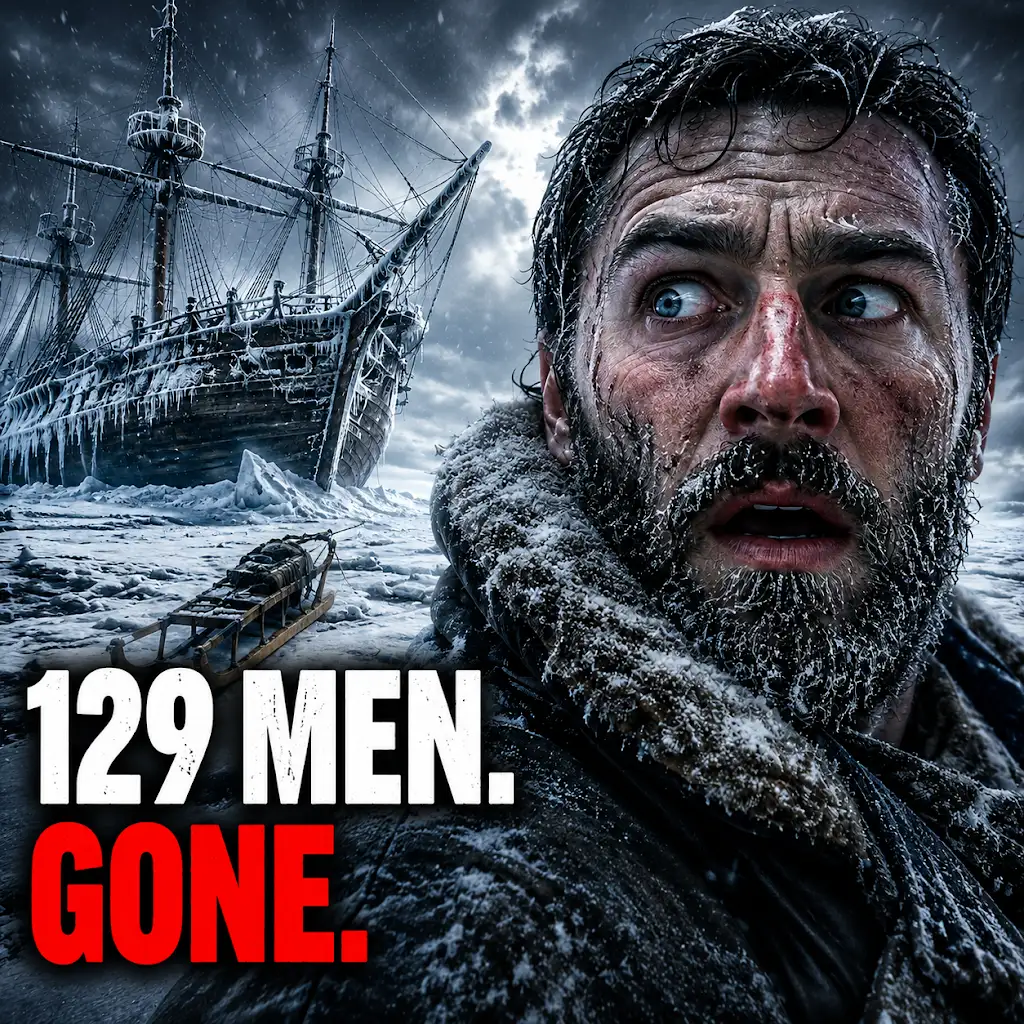
129 Men Vanished in the Arctic. Then We Found Their Ships.
FAQs
What is the Franklin Expedition?
The Franklin Expedition was a British voyage led by Captain Sir John Franklin in 1845 to find the Northwest Passage. The expedition’s two ships, HMS Erebus and HMS Terror, disappeared in the Arctic and were lost for over 150 years.
What happened to the Franklin Expedition ships?
The fate of the Franklin Expedition ships remained a mystery until 2014, when the wreck of HMS Erebus was discovered in the Queen Maud Gulf off the coast of Nunavut, Canada. In 2016, the wreck of HMS Terror was also found in the Arctic waters.
How were the Franklin Expedition ships found?
The discovery of the Franklin Expedition ships was made possible through a combination of Inuit oral history, historical records, and modern technology such as sonar and underwater drones. The search efforts were led by Parks Canada in collaboration with Inuit communities and other partners.
What significance do the discoveries of the Franklin Expedition ships hold?
The discovery of the Franklin Expedition ships has provided valuable insights into the fate of the expedition and the challenges faced by the crew in the Arctic. It has also shed light on the historical significance of the Northwest Passage and the exploration of the Arctic.
What are the next steps following the discovery of the Franklin Expedition ships?
Following the discovery of the Franklin Expedition ships, ongoing research and preservation efforts are being carried out to study the wrecks and their contents. The findings are contributing to our understanding of the expedition and its impact on Arctic exploration.