
Unpacking Your French Canadian Heritage: What Your DNA Might Tell You
So, you’re curious about your French Canadian DNA? It’s a fascinating rabbit hole to go down, and the short answer is: yes, your genetics likely reflect a significant heritage from early French colonists who settled in North America, particularly in Quebec and surrounding regions. But it’s more than just a simple “French” label. The unique history of this population has led to some interesting genetic patterns, shaped by factors like isolation and founder effects. Understanding these nuances can give you a richer picture of your ancestral journey.
Recent studies on French Canadian DNA have revealed fascinating insights into genetic drift and its implications for understanding the population’s ancestry. This phenomenon highlights how isolated communities can develop unique genetic traits over generations. For a deeper exploration of how ancient civilizations may have influenced modern populations, you can read the article on uncovering evidence of ancient advanced civilizations at this link.
The Roots of French Canadian Ancestry: A Journey Across the Atlantic
The story of French Canadian DNA begins not with a single migration, but a series of waves and a distinct historical trajectory. Unlike other colonial populations, the French presence in North America was characterized by a deliberate attempt to establish a new “France” in the New World, leading to a more concentrated and enduring settlement pattern.
Early Settlers and Their Origins
The initial French settlers who arrived in the 17th and 18th centuries were not a random cross-section of French society. They primarily hailed from specific regions of France, including Normandy, Brittany, Poitou, Saintonge, and Aunis. This wasn’t an accident; many were recruited or encouraged to settle in New France for economic, religious, or strategic reasons. They were often farmers, artisans, and tradespeople, bringing their skills and their regional genetic makeup with them. The “Filles du Roi,” young women sent by the French crown to marry the colonists and help populate the colony, also played a crucial role in shaping the genetic landscape. Their origins, while diverse, were predominantly from these western and northwestern regions of France.
The Quebecois Founder Effect: A Genetic Bottleneck
One of the most significant factors influencing French Canadian DNA is what geneticists call the “founder effect.” Imagine a new island forming, and only a handful of birds flying over to inhabit it. The genetic diversity of the entire bird population on that island will be limited by the genes present in those original few birds. This is essentially what happened in New France. The initial population of settlers was relatively small, and over generations, their descendants became the primary ancestors of what is now French Canadian, Acadian, and Métis populations. This means that certain genetic traits, both common and rare, became more prevalent in this population than they might be in modern France or other populations with more diverse founding groups.
Geographic Isolation and Gene Flow
For much of their history, French Canadian communities, particularly in Quebec, were relatively isolated. The vast distances and the dominance of English-speaking populations in surrounding areas meant that gene flow into these communities was limited. While there was some intermingling with Indigenous populations, leading to a significant Métis heritage for many, and later with British settlers, the core genetic signature remained strongly rooted in the original French stock. This isolation allowed the genetic patterns established by the founders to persist and even become more pronounced over time.
Navigating the Genetic Landscape: Key Ancestral Components
When you look at your DNA results, you’ll likely see a complex tapestry of ancestral components. For someone with French Canadian heritage, several key areas often stand out, reflecting the unique history of this population.
The Dominance of “French” or “Gallo-Roman” Ancestry
The most prominent finding for many with French Canadian roots will be a significant percentage attributed to “French,” “Gallo-Roman,” or similar regional European categories. This is the direct legacy of those early colonists. However, it’s worth noting that these broad categories in genetic testing often lump together various Western European populations. For French Canadians, this primarily points back to those specific regions of France, but it’s a good starting point to understand the overall picture.
The French Canadian Specificity: Beyond Broad European Categories
What makes French Canadian DNA distinct isn’t just a high percentage of “French” ancestry, but the pattern within that ancestry. Genetic testing companies are getting better at identifying more specific regional European populations. For French Canadians, this might manifest as a stronger than average signal from regions like Normandy, Brittany, or the Loire Valley. Some tests might even start to differentiate these early settlement areas. This specificity is a testament to the founder effect and the relatively closed breeding within the early colonial population.
The Influence of Other European Migrations
While the French are the bedrock, other European groups also contributed to the French Canadian genetic makeup over centuries. Irish and Scottish immigrants, particularly in the 19th and early 20th centuries, settled in Quebec and other French Canadian communities, adding their genetic threads. British military personnel and administrators also had an impact. If your family history has strong ties to these groups, you’ll likely see corresponding percentages in your DNA results.
Indigenous Ancestry: A Vital and Often Overlooked Connection
A significant and often underappreciated aspect of French Canadian DNA is the contribution from Indigenous peoples of North America. French settlers, particularly early coureurs des bois and voyageurs, frequently formed unions with First Nations women. This intermarriage was crucial for survival, trade, and cultural exchange in the early days of New France. As a result, many people with French Canadian heritage carry Indigenous DNA. Genetic testing can often detect this, appearing as Native American or Indigenous ancestry. It’s a powerful reminder of the complex and interwoven history of settlement in Canada.
Less Common but Possible Contributions
Depending on your family’s migration patterns and specific history, you might also see smaller percentages from other European countries. This could include Scandinavian (due to Viking influence in Normandy), German, or Dutch ancestry, especially if your ancestors moved through or settled in areas with these populations before or after arriving in North America.
Beyond the Percentage: Understanding Genetic Drift and Allele Frequencies
Genetic testing offers percentages, but it’s the underlying genetic variations – the alleles – that tell a deeper story. For French Canadians, specific allele frequencies have been shaped by genetic drift.
What is Genetic Drift?
Genetic drift is a phenomenon where random chance causes the frequency of certain genes (alleles) in a population to change over time. Think of it like randomly picking marbles from a bag. If you only pick a few marbles, the colors you get might not accurately represent the full mix in the bag. In small, isolated populations like early New France, random events can have a much larger impact on the gene pool than in large, widely connected populations.
How Drift Shaped French Canadian Genes
Because the founding population of New France was relatively small and experienced periods of isolation, genetic drift played a significant role. Certain genetic variations that were present in the founders, whether common or rare, might have become disproportionately common in the descendants simply due to chance. Conversely, other variations might have become less common or even disappeared. This is why French Canadians as a group can exhibit unique allele frequencies for certain genes compared to the general population of France or other European groups.
Examples of Drift in Action: Rare Diseases and Genetic Markers
One of the most well-documented consequences of genetic drift in French Canadian populations is the higher prevalence of certain rare genetic disorders. Conditions like Tay-Sachs disease (though also found in Ashkenazi Jewish populations), Gaucher disease, and certain forms of cystic fibrosis have been observed at higher rates in individuals of French Canadian descent. This is not because these genes are inherently “French,” but because they were present in the founding population and, due to drift and subsequent isolation, became more common in their descendants. Identifying these specific allele frequencies allows researchers to better understand population history and can have implications for genetic counseling and disease research.
Recent studies on French Canadian DNA have shed light on the concept of genetic drift, revealing how historical events and population isolation have influenced the genetic makeup of this community. For a deeper understanding of how genetics can shape cultural identity, you might find it interesting to explore the article on shifting space geopolitics, which discusses how various factors influence societal evolution. You can read more about it in this related article.
Exploring Your Personal Genetic Story: Practical Steps and Considerations
| Metric | Description | Value / Observation | Source / Study |
|---|---|---|---|
| Founder Effect | Initial small population size leading to limited genetic variation | High impact due to settlement by a few hundred French settlers in 17th century | Laberge et al., 2005 |
| Genetic Drift Rate | Change in allele frequencies due to random sampling in small populations | Elevated compared to larger populations, contributing to unique allele frequencies | Roy-Gagnon et al., 2011 |
| Effective Population Size (Ne) | Number of individuals contributing genes to the next generation | Estimated between 300-500 during early colonization | Laberge et al., 2005 |
| Allele Frequency Divergence | Difference in allele frequencies compared to original French population | Significant divergence observed in several loci, including disease-related genes | Roy-Gagnon et al., 2011 |
| Genetic Homogeneity | Degree of genetic similarity within the French Canadian population | Higher homogeneity due to genetic drift and founder effect | Laberge et al., 2005 |
| Impact on Disease Prevalence | Increased frequency of certain genetic disorders due to drift | Higher incidence of Tay-Sachs, cystic fibrosis, and other founder mutations | Laberge et al., 2005; Roy-Gagnon et al., 2011 |
If you’re looking to delve into your French Canadian DNA, genetic testing is the primary tool, but it’s important to approach it with the right mindset and understanding.
Choosing a Genetic Testing Company
Several reputable direct-to-consumer genetic testing companies can provide insights into your ancestry. Companies like AncestryDNA, 23andMe, and MyHeritage are popular choices. They compare your DNA to extensive reference databases of people from various regions and populations worldwide. When selecting a company, consider their database size, the granularity of their regional breakdowns, and any additional features like health reports or family tree building tools.
Interpreting Your DNA Results: What to Look For
Once you receive your results, you’ll get an estimated breakdown of your ancestral percentages. For French Canadian heritage, pay attention to:
- High percentages of Western European categories: Look for “French,” “Gallo-Roman,” or regional French categories.
- Specific regional markers: Some companies are getting better at identifying specific French regions (e.g., Normandy, Brittany).
- “French Canadian” specific regions: A few companies are beginning to offer more specific “French Canadian” or “Quebecois” ethnicity estimates, which can be very telling.
- Indigenous American or Native American results: Don’t be surprised to see this, and research the specific tribes if possible, as this can be a significant part of your heritage.
- Other European percentages: Note any smaller percentages from Ireland, Scotland, Britain, or other parts of Europe, as these can indicate historical migration patterns.
Connecting DNA with Family History Research
DNA results are a powerful starting point, but they are most meaningful when combined with traditional genealogical research.
- Build your family tree: Use your DNA matches to identify new ancestors and verify existing research.
- Cross-reference: Compare your DNA ethnicity estimates with historical records like immigration documents, census data, and vital records. If your DNA suggests a strong Normandy connection, look for ancestors who emigrated from that region.
- Investigate paper trails: If your DNA shows a significant Indigenous component, delve into historical records, oral histories, and Métis registries to uncover those connections.
Understanding Limitations and Nuances
It’s crucial to remember that DNA ethnicity estimates are not an exact science.
- Reference populations change: Databases are constantly updated, so your ethnicity estimates can sometimes shift slightly over time as companies refine their algorithms and expand their reference groups.
- Broad categories: Many broad categories are generalizations. “French” can encompass a wide genetic landscape.
- The “noise” factor: Small percentages might be due to the limits of the testing or very distant ancestral connections. Focus on the larger, consistent percentages.
- Adoption and unknown parentage: If you are adopted or have questions about your parentage, DNA testing can be particularly revelatory, but also emotionally complex.
The Enduring Legacy: French Canadian Culture and Genetics
The genetic threads of French Canadian heritage are woven into a rich cultural tapestry that continues to thrive. While genetics tells us about our ancestral origins, culture tells us about how those ancestors lived, their traditions, and their enduring impact.
Cultural Markers and Shared Identity
The strong sense of French Canadian identity, particularly in Quebec, is intertwined with shared historical experiences, language, religion, and traditions. These cultural markers often reinforce the sense of kinship felt by those with French Canadian roots, regardless of their exact genetic percentages. The French language itself is a powerful unifying element, carrying with it centuries of history and cultural evolution. Festivals, cuisine, music, and literature all contribute to this distinct cultural landscape.
Modern Migration and Genetic Blending
Today, French Canadians are no longer as geographically isolated. Migration within Canada and to other countries means that the genetic landscape is continually evolving. While the core French Canadian genetic signature remains identifiable, it is increasingly blending with other populations. This modern migration can lead to new and interesting ancestral combinations for future generations.
Preserving Heritage in a Globalized World
In our increasingly globalized world, there’s a growing interest in understanding and preserving unique cultural and genetic heritages. For those with French Canadian ancestry, this can mean reconnecting with historical regions, learning the French language, or simply understanding the unique journey of their ancestors. Genetic testing offers one lens through which to explore this heritage, providing a tangible link to the past and a deeper appreciation for the complex story of how populations form and evolve. It’s a journey of discovery that connects us not just to far-off ancestors, but also to the vibrant, living culture that continues to define French Canadian identity today.
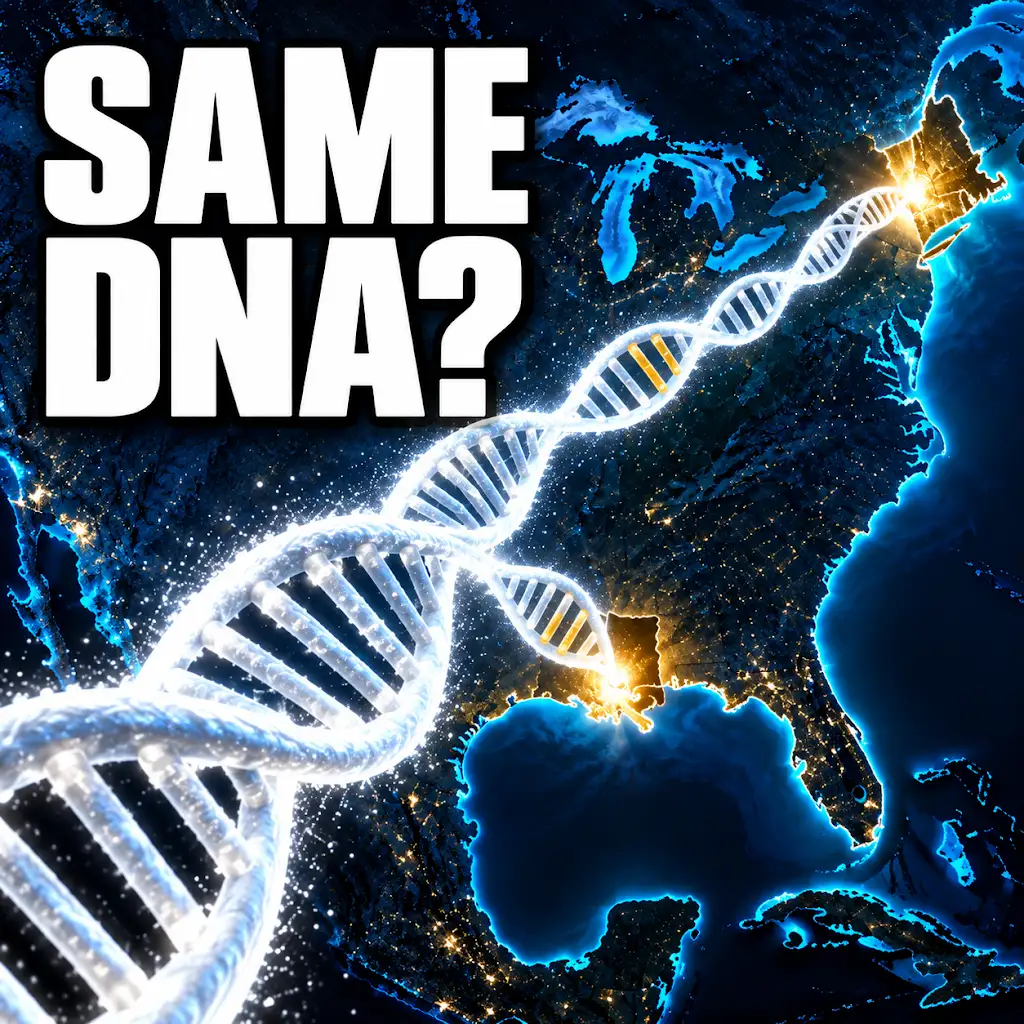
Cajun or French Canadian? The DNA Looked the Same—Until Researchers Looked Closer
FAQs
What is genetic drift?
Genetic drift is the random change in the frequency of alleles in a population over time, due to chance events.
How does genetic drift affect the French Canadian population?
Genetic drift can lead to changes in the genetic makeup of the French Canadian population over generations, resulting in unique genetic variations.
What factors can contribute to genetic drift in the French Canadian population?
Factors such as population size, migration patterns, and founder effects can contribute to genetic drift in the French Canadian population.
How does genetic drift differ from natural selection?
Genetic drift is a random process that can lead to changes in allele frequencies, while natural selection is a non-random process that results in the adaptation of populations to their environment.
Can genetic drift lead to the emergence of genetic disorders in the French Canadian population?
Genetic drift can potentially increase the frequency of certain alleles associated with genetic disorders in the French Canadian population, especially if the population is isolated and experiences genetic bottlenecks.