The global landscape is in a perpetual state of flux, a testament to the ever-present forces of geopolitical instability and the dynamic realignments of world powers. For decades, a unipolar or at least a predominantly unipolar order, shaped by the dominance of a single superpower, offered a semblance of predictable international relations. This era, however, is demonstrably giving way to a more complex and multipolar configuration, characterized by heightened competition, emergent regional powers, and a persistent undercurrent of uncertainty. Understanding the drivers and consequences of this profound shift is paramount for navigating the challenges and opportunities of the 21st century.
The post-Cold War era witnessed the ascendancy of the United States as the preeminent global power. Its economic, military, and cultural influence exerted a significant, albeit not absolute, gravitational pull on international affairs. Diplomatic endeavors, security architectures, and economic paradigms often revolved around this central axis. Yet, the foundations of this unipolar moment have been gradually, and at times more rapidly, eroded. Several interconnected factors contribute to this decline.
Economic Rebalancing and Emerging Markets
The most visible driver of this shift is the dramatic economic rebalancing occurring on a global scale. The rapid economic growth of nations in Asia, particularly China, coupled with the rise of other emerging markets in South America and Africa, has fundamentally altered the global economic hierarchy. These economies are not merely consumers of goods and services produced elsewhere; they are increasingly becoming centers of innovation, manufacturing, and investment. This economic dynamism translates into greater geopolitical leverage.
China’s Ascent and its Implications
China’s transformation from a developing nation to a global economic powerhouse is perhaps the most prominent aspect of this rebalancing. Its “Belt and Road Initiative,” a massive infrastructure and investment project, signifies its outward-looking ambitions and its growing economic footprint across continents. This initiative not only fosters trade and connectivity but also presents a challenge to existing economic and political alignments, offering an alternative model of development and engagement.
India’s Growing Influence
Simultaneously, India’s economic trajectory, driven by a large and young population and a growing domestic market, positions it as another significant player. Its increasing integration into global supply chains and its growing technological prowess contribute to its rising influence. India’s strategic autonomy, a cornerstone of its foreign policy, allows it to engage with multiple power blocs, further complicating traditional alliances.
Diffusion of Power and Capabilities
Beyond economic factors, the diffusion of technological capabilities and military advancements has also contributed to the erosion of unipolarity. The proliferation of advanced weaponry, cyber warfare capabilities, and information dissemination technologies empowers a wider range of state and non-state actors, diminishing the exclusive leverage of established powers.
The Digital Frontier and Information Warfare
The digital realm has emerged as a critical battleground. Information warfare, cyberattacks, and the manipulation of narratives can destabilize nations, influence elections, and create reputational damage without the deployment of traditional military force. This democratization of disruptive capabilities further challenges established power structures.
Advancements in Military Technology
Moreover, the pursuit of advanced military technologies by various states, including nuclear capabilities and sophisticated missile systems, has altered the strategic calculus of major powers. The concept of overwhelming military superiority, a hallmark of the unipolar era, is becoming increasingly difficult to ascertain and maintain indefinitely.
Geopolitical instability and shifts in world power dynamics are increasingly influencing global supply chains, as highlighted in the article on understanding the risks of Mexico’s supply chain. The piece delves into how factors such as trade policies, regional conflicts, and economic partnerships are reshaping the landscape for businesses operating in and around Mexico. For a deeper insight into these complexities and their implications for international trade, you can read the full article here: Understanding the Risks of Mexico’s Supply Chain.
The Resurgence of Great Power Competition
The aforementioned shifts are not merely leading to a diffusion of power; they are also fueling a renewed and intensified spirit of great power competition. The era of undisputed dominance is being replaced by an environment where major powers actively vie for influence, resources, and ideological advantage. This competition manifests across multiple domains, from economic and diplomatic arenas to security and technological spheres.
Strategic Rivalries and Spheres of Influence
Geopolitical instability is often exacerbated by the resurgence of clear-cut strategic rivalries. Historical grievances, competing national interests, and differing ideological perspectives fuel these rivalries, leading to the formation of competing blocs and a scramble for influence in contested regions. The traditional concept of “spheres of influence”, once relegated to historical discourse, is experiencing a revival.
The Asia-Pacific Pivot
The Asia-Pacific region has become a focal point of this renewed competition. The rapid economic and military growth of China, coupled with the strategic reorientation of the United States and its allies, has created a dynamic and potentially volatile environment. Naval deployments, trade disputes, and diplomatic maneuvering characterize the ongoing engagement in this crucial geopolitical theater.
European Security and Russian Assertiveness
In Europe, the resurgence of Russian assertiveness has significantly impacted regional security and contributed to geopolitical instability. Events such as the annexation of Crimea and the ongoing conflict in Ukraine have underscored the fragility of the post-Cold War security order and prompted a re-evaluation of defense strategies and alliances among European nations and their transatlantic partners.
Ideological Contestation and Normative Challenges
Beyond concrete geopolitical objectives, the current era is also marked by ideological contestation. Established liberal democratic norms and values are being challenged by alternative models of governance and societal organization. This ideological friction adds another layer of complexity to the shifting world powers, as nations promote their own distinct understandings of global order.
The Rise of Authoritarianism and Illiberalism
There is a discernible trend towards the rise of authoritarian and illiberal tendencies in various parts of the world. These regimes often prioritize state control, national sovereignty, and a more centralized approach to governance, offering a stark contrast to the democratic ideals championed by some established powers. This divergence in political philosophies creates friction and complicates international cooperation.
The Debate on Global Governance Models
The effectiveness and suitability of existing global governance institutions are also under scrutiny. As new power centers emerge, there are increasing calls for reform and a more equitable representation within international organizations, reflecting the changing distribution of global influence and the desire for a more inclusive international order.
Emerging Regional Dynamics and Power Blocs

The global shift in power is not solely about the rise and fall of superpowers; it also involves the increasing prominence of regional actors and the formation of new power blocs. These regional dynamics are profoundly shaping geopolitical stability and the overall contour of international relations.
The Rise of Middle Powers and Strategic Autonomy
An increasing number of “middle powers” are asserting their influence, pursuing greater strategic autonomy, and forging their own paths in foreign policy. These nations, while not possessing the might of traditional superpowers, wield significant economic, cultural, or diplomatic leverage within their respective regions and beyond. Their ability to chart independent courses adds complexity to existing alliances and challenges established hierarchies.
Turkey’s Evolving Role
Turkey, for instance, has adopted an increasingly assertive foreign policy, engaging in military interventions and pursuing its national interests across multiple fronts. Its complex relationship with traditional allies and its growing engagement with diverse international partners highlight the evolving nature of regional power dynamics.
Brazil and the Latin American Landscape
In Latin America, Brazil’s economic and demographic weight positions it as a key regional player. While facing domestic challenges, its foreign policy continues to influence regional integration efforts and its engagement with global issues.
The Formation of New Alliances and Partnerships
The shifting sands of global power have also led to the formation of new alliances and strategic partnerships, often cutting across traditional geopolitical lines. These arrangements are driven by shared interests, security concerns, and economic opportunities, creating a more fluid and less predictable international architecture.
The Quad and Indo-Pacific Security
The Quadrilateral Security Dialogue (Quad), involving Australia, India, Japan, and the United States, is a notable example of a burgeoning strategic partnership aimed at enhancing security and cooperation in the Indo-Pacific region. Its focus on maritime security and technological collaboration reflects the evolving geopolitical priorities in this crucial area.
The BRICS Bloc and Economic Cooperation
The BRICS bloc, comprising Brazil, Russia, India, China, and South Africa, represents a significant grouping of emerging economies seeking to enhance their collective economic and political influence on the global stage. While facing internal challenges, its aspiration to offer an alternative to Western-dominated financial institutions and its growing membership suggest its evolving significance.
The Impact on Global Stability and Conflict
The multifaceted nature of geopolitical instability and shifting world powers has profound implications for global stability. The transition from a unipolar to a multipolar order is not a smooth one; it is fraught with challenges and carries increased risks of regional conflicts, proxy wars, and systemic crises.
Increased Risk of Proxy Conflicts and Regional Instability
As major powers compete for influence, the risk of proxy conflicts escalates. Nations and non-state actors can become pawns in larger geopolitical struggles, exacerbating local tensions and prolonging regional instability. The diffusion of advanced weaponry and external support can empower partisan groups, making conflict resolution more arduous.
The Middle East as a Flashpoint
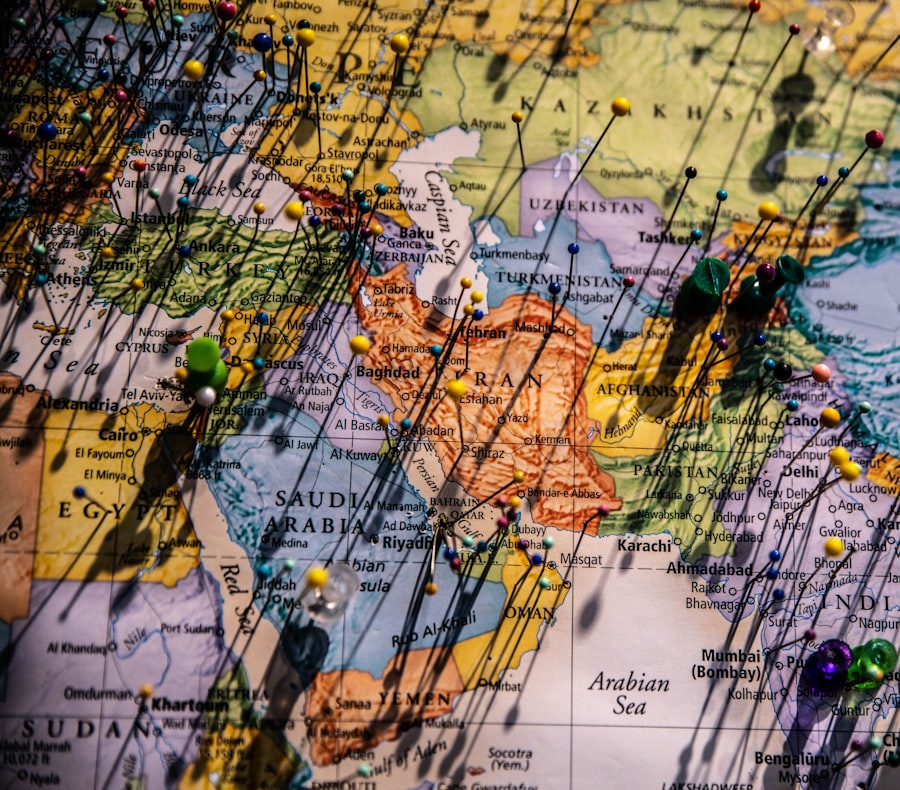
The Middle East, with its complex web of ethnic, religious, and political divides, continues to be a flashpoint for regional instability, often amplified by the involvement of external powers with competing interests. The ongoing conflicts and political fragmentation in this region serve as a stark illustration of the dangers inherent in escalating geopolitical competition.
Sub-Saharan Africa and Resource Competition
Sub-Saharan Africa, with its vast natural resources and growing populations, also presents fertile ground for geopolitical competition. External powers often vie for access to resources and influence, which can, in turn, fuel internal conflicts and hinder development.
Challenges to International Law and Norms
The erosion of established power structures and the rise of competing interests place significant strain on international law and established norms of conduct. The principle of national sovereignty is often invoked to justify actions that challenge multilateral agreements and international humanitarian principles, leading to a weakening of the global rules-based order.
The United Nations and Institutional Strain
The United Nations, designed to maintain international peace and security, faces considerable strain in the current geopolitical climate. The veto power of permanent Security Council members and the diverging interests of member states can paralyze collective action, highlighting the challenges of adapting existing institutions to a rapidly changing world.
The Future of Arms Control and Non-Proliferation
The intensification of great power competition also casts a shadow over arms control treaties and non-proliferation efforts. As nations seek to bolster their security in an uncertain environment, the temptation to develop or expand military capabilities can undermine existing agreements and increase the risk of proliferation.
Geopolitical instability continues to shape the dynamics of global power, as nations grapple with shifting alliances and emerging threats. A recent article explores the intriguing concept of ancient technologies and their potential influence on modern society, shedding light on how historical events can resonate through time. For a deeper understanding of these connections, you can read more in the article about the lost technology and its implications for contemporary geopolitics at this link.
Navigating the Uncertain Future
| Country | Geopolitical Instability Index | World Power Ranking |
|---|---|---|
| United States | 3.5 | 1st |
| China | 4.2 | 2nd |
| Russia | 5.8 | 3rd |
| India | 3.9 | 4th |
| United Kingdom | 3.2 | 5th |
The current geopolitical landscape is characterized by a profound sense of uncertainty. The old certainties are dissolving, and the contours of the future world order are still taking shape. Navigating this complex environment requires a nuanced understanding of the forces at play and a commitment to adaptive strategies.
The Importance of Diplomacy and Multilateralism
In an era of heightened competition, diplomacy and multilateralism are more crucial than ever. Robust dialogue, conflict prevention mechanisms, and a commitment to international cooperation are essential for de-escalating tensions and finding common ground. Strengthening multilateral institutions, despite their limitations, offers a vital framework for addressing shared global challenges.
Reforming and Strengthening Global Institutions
Adapting global institutions to reflect the contemporary distribution of power and to make them more effective is a critical undertaking. This involves ensuring equitable representation, enhancing transparency, and bolstering the capacity of these organizations to respond to evolving threats and challenges.
Investing in Conflict Resolution and Peacebuilding
A sustained focus on conflict resolution and peacebuilding efforts is paramount. This involves addressing the root causes of instability, supporting inclusive governance, and investing in long-term development strategies that foster resilience and reduce the likelihood of future conflicts.
Fostering Resilience and Adaptability
For nations and international actors alike, fostering resilience and adaptability will be key to navigating the uncertainties of the coming years. This involves diversifying economic partnerships, strengthening domestic institutions, and developing flexible strategies that can respond to unforeseen geopolitical shifts and emergent threats.
The Role of Technological Innovation and Adaptation
Technological innovation, while a driver of change, also offers potential solutions. Investing in research and development, promoting responsible technological governance, and leveraging digital tools for communication and coordination can contribute to greater stability and foster new avenues for cooperation.
Building Bridges and Understanding Across Divides
Ultimately, understanding and empathy are vital. Building bridges across ideological, cultural, and national divides, and fostering genuine dialogue, can help mitigate the risks of miscalculation and misunderstanding. The pursuit of shared interests and the recognition of our interconnectedness offer the most promising pathway towards a more stable and prosperous global future. The ongoing geopolitical realignment demands constant vigilance, astute analysis, and a commitment to collaborative solutions in the face of persistent instability.
FAQs
What is geopolitical instability?
Geopolitical instability refers to the unpredictable and volatile nature of global politics, including conflicts, power struggles, and shifting alliances among nations. It can be caused by factors such as territorial disputes, resource competition, and ideological differences.
What are world power shifts?
World power shifts refer to the changes in the distribution of global influence and authority among nations. These shifts can occur due to economic growth, military strength, technological advancements, and changes in political leadership.
What are the factors contributing to geopolitical instability?
Factors contributing to geopolitical instability include economic inequality, ethnic and religious tensions, competition for natural resources, political corruption, and the proliferation of weapons of mass destruction. These factors can lead to conflicts and power struggles between nations.
How do geopolitical instability and world power shifts impact global security?
Geopolitical instability and world power shifts can impact global security by increasing the likelihood of conflicts, terrorism, and the spread of weapons of mass destruction. They can also disrupt international trade, destabilize regions, and create humanitarian crises.
What are the implications of geopolitical instability and world power shifts for international relations?
The implications of geopolitical instability and world power shifts for international relations include the need for diplomatic negotiations, peacekeeping efforts, and the establishment of international alliances to address global challenges. These shifts can also lead to changes in global governance and the balance of power among nations.