
Göbekli Tepe stands as a monumental enigma, a testament to the astonishing capabilities and profound spiritual inclinations of humanity’s earliest known settled societies. For millennia, it lay buried, a silent sentinel in the Anatolian plains of southeastern Turkey, holding its secrets close. The discovery and ongoing excavation of this extraordinary site have irrevocably altered our understanding of human history, pushing back the dawn of complex monumental architecture and organized religion to a period previously thought incapable of such feats. It is a place that whispers of a lost world, demanding contemplation and challenging long-held assumptions about our ancestors.
The story of Göbekli Tepe’s emergence from obscurity is as captivating as the site itself. For decades, the vast mound, known locally as “Göbekli Tepe” (meaning “Potbelly Hill” in Turkish), was considered nothing more than an artificial hill, perhaps an ancient settlement or a natural geological formation. German archaeologist Klaus Schmidt, however, was drawn to its potential. His initial surveys in the late 1990s, building upon earlier preliminary work by others, hinted at something far more significant. The presence of scattered worked stones and the sheer scale of the mound suggested a human-made structure of immense age and importance.
The Persistent Vision of Klaus Schmidt
Klaus Schmidt’s unwavering belief in the potential of Göbekli Tepe was instrumental in its eventual uncovering. He recognized that the tell-tale signs pointed towards something beyond a mere village. His hypothesis, initially met with some skepticism, was that this was not a domestic settlement but a ritual or sacred site, predating even the earliest known agricultural communities. His persistent research, meticulous planning, and the securing of crucial funding allowed for the commencement of systematic excavations in 1995. It was under his dedicated leadership that the true marvel of Göbekli Tepe began to reveal itself, layer by painstaking layer.
The Initial Excavations and Astounding Discoveries
The early years of excavation were nothing short of revolutionary. The digging teams unearthed massive, T-shaped limestone pillars, many weighing many tons, intricately carved with depictions of animals. These were not rough, utilitarian stones; they were clearly monumental works of art and engineering. The sheer scale of these monoliths, some standing over 18 feet tall, coupled with their complex symbolism, indicated a society with a sophisticated understanding of organization, labor, and abstract thought. The discovery that these structures were deliberately backfilled and buried, preserving them for millennia, added another layer of mystery and purpose to their existence.
The Neolithic Revolution Reimagined
The dating of Göbekli Tepe to the Pre-Pottery Neolithic period (roughly 9600 to 8200 BCE) sent shockwaves through the archaeological community. This predates the development of pottery, widespread agriculture, and even settled villages in many parts of the world. Traditionally, the Neolithic Revolution was understood as a linear progression: first agriculture, leading to settled life, then surplus, allowing for specialization and the development of complex societies, including monumental architecture and religious practices. Göbekli Tepe challenged this paradigm, suggesting that complex ritualistic behavior and large-scale construction projects may have preceded, and perhaps even facilitated, the transition to agriculture and settled life.
Göbekli Tepe, an archaeological site in Turkey, is often regarded as one of the world’s oldest known temples, dating back to around 9600 BCE. Its significance lies in its intricate stone carvings and the implications it has for our understanding of prehistoric religion and society. For those interested in how ancient civilizations managed resources and societal structures, a related article discussing the safety of modern financial systems can be found here: Is My Retirement Account Safe From Government?. This article provides insights into contemporary issues of security and stability, drawing parallels to how ancient societies may have navigated their own challenges.
The Architectural Grandeur: A City of Stone Pillars
Göbekli Tepe is not a single building but a complex of interconnected enclosures, each featuring a distinctive arrangement of massive T-shaped pillars. These enclosures, believed to have been constructed sequentially over centuries, represent an astonishing feat of engineering and organizational prowess for a hunter-gatherer society. The scale and precision of these constructions speak volumes about the capabilities and motivations of their creators.
The Enigmatic T-Shaped Pillars
The most striking feature of Göbekli Tepe is its array of T-shaped monoliths. Carved from limestone, these pillars are not merely decorative but appear to represent stylized human figures, with the broader top section possibly symbolizing a head and the narrower shaft a body. Their sheer size and weight, some exceeding 20 tons, raise profound questions about how they were quarried, transported, and erected. Without the aid of metal tools, domesticated animals for heavy lifting, or sophisticated wheeled transport, these feats represent an incredible application of human ingenuity and collective effort.
The Circular Enclosures and Their Purpose
The primary architectural units at Göbekli Tepe are circular or oval enclosures, typically formed by a ring of these T-shaped pillars. At the center of each enclosure stand two larger, more elaborately decorated pillars, often facing each other. The purpose of these enclosures remains a subject of intense debate, but the prevailing theory is that they served as communal ritual spaces, places of assembly for religious ceremonies, storytelling, or shamanistic practices. The arrangement and orientation of the pillars may have held symbolic meaning, perhaps related to celestial observations or cosmological beliefs.
The Intricate Carvings and Symbolic Narratives
The surfaces of the T-shaped pillars are adorned with a rich tapestry of carvings, predominantly featuring animals. These include wild boars, foxes, lions, vultures, snakes, and various birds. The animals are rendered with a surprising degree of naturalism and dynamism, suggesting keen observation of the natural world. Beyond the animals, there are also abstract symbols, geometric patterns, and what appear to be representations of human hands and arms. These carvings are not random decorations; they are believed to convey a complex symbolic language, a visual narrative that hints at the beliefs, myths, and worldview of the people who created them.
The Deliberate Backfilling: A Preservation Strategy
A remarkable aspect of Göbekli Tepe is that the enclosures were not simply abandoned but deliberately and systematically backfilled with debris, including smaller stones and animal bones. This act of burial, over a period of centuries, has acted as a natural preservation mechanism, protecting the site from erosion and destruction. The reasons for this deliberate burial are not fully understood, but it suggests a ritualistic act of closure, perhaps to mark the end of an era or to safeguard the sanctity of the site for future generations.
The Art of the Hunter-Gatherers: Unlocking Symbolic Meanings
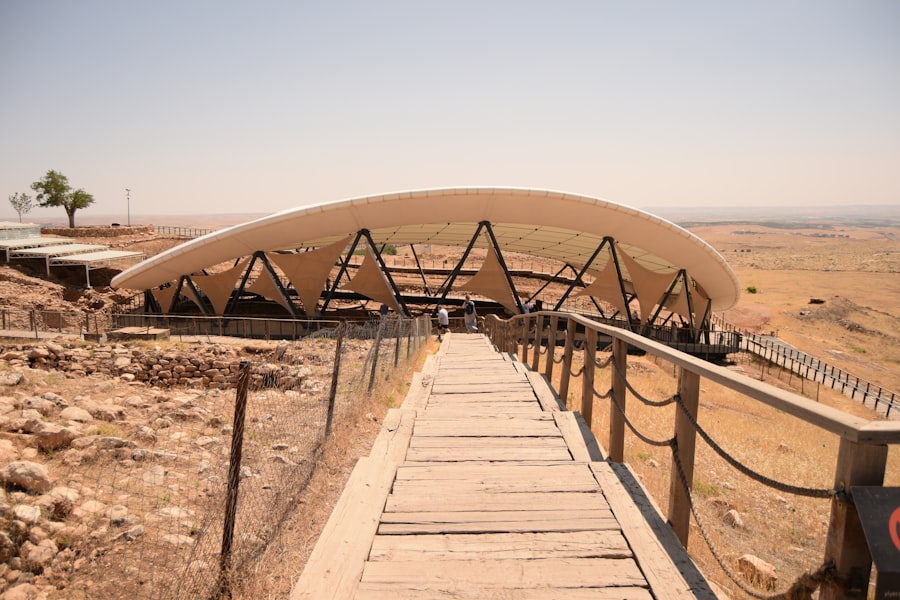
The art found at Göbekli Tepe offers a unique and invaluable window into the minds and culture of its creators. These are not the simple, utilitarian artifacts one might expect from hunter-gatherer societies. Instead, they display a sophisticated understanding of form, symbolism, and storytelling, challenging our preconceptions about the cognitive abilities of our prehistoric ancestors.
The Dominance of Animal Imagery
The prevalence of animal carvings is undeniable. The careful depiction of wild fauna suggests a deep connection with the natural world and the animals that inhabited it. However, the context in which these animals are depicted is not merely zoological. They are often shown in dynamic poses, sometimes interacting with each other, or alongside abstract symbols, hinting at a symbolic or mythological significance. This suggests that the animals were not just observed, but were imbued with spiritual or cosmic importance.
The Abstract Symbols and Their Interpretations
Alongside the animal imagery, Göbekli Tepe features a variety of abstract symbols. These include circles, dots, crescent shapes, and what appear to be stylized human representations. The interpretation of these abstract elements is particularly challenging, as they lack the immediate legibility of representational art. Scholars speculate that they could represent celestial bodies, cosmic forces, or abstract concepts related to their belief system. The combination of animal and abstract imagery suggests a complex cosmology and a sophisticated system of symbolic communication.
The ‘Man’ as a Pillar: A Shift in Representation
While the T-shaped pillars are often interpreted as stylized human figures, the absence of clear, individualistic human portraits is noteworthy. The focus appears to be on a collective or archetypal humanity, perhaps represented by the very pillars that form their sacred spaces. This suggests a worldview where the human community, in its relationship with the divine and the natural world, was paramount. The lack of explicit depictions of daily life or individual rulers further reinforces the notion that Göbekli Tepe was a place of spiritual and communal significance, not a historical record in the modern sense.
The Art as a Visual Language
The intricate and recurring patterns of imagery suggest that the art at Göbekli Tepe served as a form of visual language. It was a way for the community to express their beliefs, share their knowledge, and transmit their cultural heritage across generations. The skilled craftsmanship involved in creating these carvings implies a society where artistic skill was valued and perhaps specialized, further supporting the idea of social organization beyond simple hunter-gatherer bands.
The Spiritual Heart of the Neolithic: Religion and Ritual at Göbekli Tepe
The most profound implication of Göbekli Tepe is its contribution to our understanding of the origins of religion and organized ritual. The site strongly suggests that complex spiritual beliefs and communal religious practices were not a late development in human history, emerging only after the advent of settled agriculture, but may have been a driving force behind the very transition to a settled lifestyle.
A Temple Preceding Agriculture?
The dating of Göbekli Tepe to a period when humans were primarily hunter-gatherers is its most revolutionary aspect. It challenges the long-held “temple hypothesis,” which posited that the need for communal worship and religious centers arose as a consequence of surplus food production and settled villages. Göbekli Tepe, however, presents a compelling case for the opposite: that the desire and ability to construct monumental religious sites may have been a catalyst for people to congregate, share resources, and eventually adopt more settled lifestyles and agricultural practices to support these endeavors.
Communal Gatherings and Shared Beliefs
The scale of the enclosures and the effort required to construct them suggest that these were not solitary pursuits but communal undertakings. The construction and use of Göbekli Tepe likely fostered a sense of shared identity and collective purpose among disparate groups of hunter-gatherers. The rituals performed within these sacred spaces would have reinforced social bonds, transmitted shared myths and beliefs, and provided a framework for understanding the world and their place within it.
Possible Shamanistic Practices and Cosmology
The animal imagery, particularly predatory animals like lions and vultures, along with the abstract symbols, has led some scholars to propose connections to shamanistic practices. These may have involved altered states of consciousness, spirit journeys, and interactions with the spirit world. The careful arrangement of pillars and their potential alignment with celestial events further suggests a sophisticated understanding of the cosmos and a desire to connect with supernatural forces.
The Role of Ancestor Worship and Mythological Narratives
While direct evidence for ancestor worship is scarce, the monumental nature of the site and the symbolic representations could be interpreted as a way of honoring or appeasing ancestral spirits or divine beings. The carvings may have served as illustrations for origin myths, stories of creation, or epic tales that formed the foundation of their spiritual and cultural identity.
Göbekli Tepe, often regarded as one of the world’s oldest known temples, has sparked immense interest in the study of ancient civilizations and their monumental architecture. This archaeological site, located in southeastern Turkey, offers insights into the spiritual and social practices of prehistoric peoples. For those intrigued by ancient mysteries, a related article explores the enigmatic maps of Piri Reis and their connection to lost territories, shedding light on how ancient navigators perceived the world. You can read more about this fascinating topic in the article here.
The Legacy and Ongoing Mysteries: What Göbekli Tepe Still Teaches Us
| Aspect | Details |
|---|---|
| Location | Göbekli Tepe is located in southeastern Turkey, near the city of Şanlıurfa. |
| Age | It is estimated to be around 11,000 years old, making it one of the oldest known human-made structures. |
| Significance | Göbekli Tepe is considered to be a significant archaeological site as it challenges previous understanding of the development of early human societies. |
| Structure | The site consists of several large circular and rectangular structures, some of which are adorned with intricate carvings of animals and symbols. |
| Religious or Ritual Purpose | Many researchers believe that Göbekli Tepe was used for religious or ritualistic purposes, as evidenced by the elaborate carvings and the lack of evidence of permanent habitation. |
Göbekli Tepe is far from fully understood. The ongoing excavations continue to reveal new structures and artifacts, constantly refining and sometimes challenging existing theories. Its discovery has opened up a new chapter in our understanding of early human civilization, and its legacy continues to inspire awe and wonder.
The Unanswered Questions of Purpose and Function
Despite decades of research, the precise purpose of Göbekli Tepe remains a subject of ongoing debate. Was it a singular temple, a network of ritual sites, or something else entirely? The specific meaning of the carvings, the nature of the rituals performed, and the societal structure that supported such massive undertakings are all areas where further research is desperately needed.
The Enduring Enigma of its Abandonment
The deliberate backfilling of Göbekli Tepe raises a significant question: why was such a monumental and significant site abandoned and buried? Was it due to environmental changes, social upheaval, the development of new religious practices, or a conscious decision to preserve its sanctity? The reasons for its eventual abandonment and the shift in human activity away from this sacred landscape are still being pieced together.
The Impact on Our Understanding of Human History
Göbekli Tepe has fundamentally reshaped our understanding of human history. It has demonstrated that early hunter-gatherer societies were capable of far greater complexity, organization, and spiritual depth than previously imagined. It forces us to reconsider the timeline of human civilization and the driving forces behind major societal transformations.
The Future of Göbekli Tepe Research
The ongoing excavations at Göbekli Tepe are crucial for unlocking its remaining secrets. Future research will undoubtedly involve advanced dating techniques, detailed paleoenvironmental studies, comparative analysis with other emerging sites, and a continued interdisciplinary approach involving archaeologists, anthropologists, archaeoastronomers, and art historians. The site serves as a powerful reminder of the vastness of human history and the remarkable achievements of our ancestors, urging us to continue exploring and questioning.

The World Beyond Göbekli Tepe Is Far Bigger Than We Thought
FAQs
What is Göbekli Tepe?
Göbekli Tepe is an archaeological site located in southeastern Turkey, near the city of Şanlıurfa. It is a prehistoric site dating back to the Neolithic period, and it is known for its large stone pillars and intricate carvings.
When was Göbekli Tepe built?
Göbekli Tepe is estimated to have been built around 9600 BCE, making it one of the oldest known man-made structures in the world. This predates the construction of Stonehenge and the Egyptian pyramids by several thousand years.
What is the significance of Göbekli Tepe?
Göbekli Tepe is significant because it challenges the traditional understanding of the development of human civilization. The site’s advanced architecture and intricate carvings suggest a level of social organization and technological advancement that was previously thought to have emerged much later in human history.
Who built Göbekli Tepe?
The builders of Göbekli Tepe are believed to have been early hunter-gatherers who lived in the region. The exact identity of the people who built the site is still a subject of debate among archaeologists and researchers.
What is the current status of Göbekli Tepe?
Göbekli Tepe is a UNESCO World Heritage Site and is currently being excavated and studied by archaeologists. The site is open to visitors, and ongoing conservation efforts are in place to preserve the ancient structures and carvings for future generations.