
Göbekli Tepe: Uncovering Ancient Mysteries from the Ice Age
For millennia, the vast plains of southeastern Turkey held a secret, a buried wonder that challenged preconceived notions of human history and societal development. Unearthed only in recent decades, Göbekli Tepe stands as a monumental testament to the ingenuity and complexity of early human civilization. Far from being a simple settlement, this extraordinary archaeological site whispers tales of a world profoundly different from the one we once imagined, a world where hunter-gatherers, at the cusp of the Neolithic Revolution, erected structures of colossal scale and intricate design. This is the story of Göbekli Tepe, a discovery that has rewritten the prologue to human civilization and opened a portal to the deep past, offering unparalleled insights into the dawn of organized religion, ritual, and communal effort.
The story of Göbekli Tepe’s discovery is as remarkable as the site itself. For decades, local farmers had noticed unusual stone formations protruding from the earth, remnants of an ancient structure that lay hidden beneath centuries of soil and sediment. The true potential of the site, however, remained largely unrecognized until the late 1980s and early 1990s. It was then that German archaeologist Klaus Schmidt, intrigued by earlier surveys and reports, initiated systematic excavations that would forever alter our understanding of prehistory.
A Serendipitous Discovery
Schmidt’s initial investigations were driven by a belief that the region might hold clues to the origins of settled life and agriculture. What he found, however, far surpassed his wildest expectations. The site, a series of circular and oval enclosures, was adorned with massive T-shaped limestone pillars, many weighing several tons and standing over 5 meters tall. These were not primitive dwellings; they were clearly monumental constructions, indicative of a sophisticated and organized society.
The Importance of the Enclosures
The circular and oval arrangements of these pillars are a defining characteristic of Göbekli Tepe. These were not scattered individual structures but deliberately planned spaces, suggesting communal gatherings and rituals. The sheer labor involved in quarrying, transporting, and erecting these monolithic stones points to a level of social organization and cooperation hitherto believed impossible for hunter-gatherer societies. The precise arrangement of the pillars within each enclosure also suggests a deep understanding of astronomy or symbolic representation, adding further layers to the mystery.
Sculptures and Symbolism
Beyond their sheer scale, the pillars themselves are a treasure trove of information. Many are intricately carved with depictions of animals – boars, lions, foxes, snakes, and various birds. These are not merely decorative. The placement and nature of these carvings hint at a rich symbolic language, potentially related to mythology, totems, or astronomical observations. The absence of human depictions is particularly striking, suggesting a spiritual focus on the animal kingdom and possibly a belief system centered around forces of nature.
Göbekli Tepe, often regarded as one of the world’s oldest known temples, provides fascinating insights into the lives of prehistoric peoples during the late Ice Age. This archaeological site, located in southeastern Turkey, showcases monumental stone structures that predate Stonehenge by several millennia, suggesting that complex social and religious practices emerged much earlier than previously thought. For a broader understanding of ancient civilizations and their engineering feats, you might find this article on Mexico’s skilled engineering talent interesting, as it highlights the ingenuity and capabilities of ancient societies across different regions. You can read more about it here: Mexico’s Skilled Engineering Talent.
Redefining the Neolithic Revolution
Göbekli Tepe has fundamentally challenged the long-held paradigm of the Neolithic Revolution, which posited that agriculture led to settled life and subsequently to the development of complex societies and religious practices. Göbekli Tepe flips this narrative on its head, suggesting that it may have been the need for monumental construction and communal ritual that spurred the development of agriculture and settled communities.
The “Temple First” Hypothesis
Klaus Schmidt famously proposed the “temple first” hypothesis, arguing that the construction of Göbekli Tepe predates widespread agriculture in the region. The site is dated to the Pre-Pottery Neolithic A (PPNA) and Pre-Pottery Neolithic B (PPNB) periods, approximately 9600 to 8000 BCE. This means that the people who built Göbekli Tepe were primarily hunter-gatherers, subsisting on wild resources. Their ability to organize and dedicate significant resources to such a massive undertaking suggests that shared beliefs and social cohesion may have been the primary drivers of societal development, rather than the need for food security brought about by farming.
Hunter-Gatherers of Exceptional Skill
The implication that hunter-gatherers were capable of such monumental architectural feats is profound. It forces a reevaluation of their cognitive abilities, social structures, and technological prowess. The precision with which the stones were shaped and fitted, the sheer logistics of moving and raising them, and the artistic skill displayed in the carvings all point to a level of sophistication that has rewritten our understanding of early human capabilities.
The Role of Religion as a Catalyst
If Göbekli Tepe was primarily a ritual or religious center, then religion itself may have played a crucial role in prompting the changes associated with the Neolithic Revolution. The communal effort required to build and maintain such a site would have fostered cooperation, social bonding, and the development of shared cultural narratives. This shared purpose, driven by spiritual beliefs, could have then led to the intensive cultivation of wild cereals and the eventual domestication of plants and animals, as these became necessary to sustain the growing communities drawn to the ritual center.
The Enigmatic T-Shaped Pillars
The most iconic features of Göbekli Tepe are its colossal T-shaped pillars. These monolithic structures, carved from limestone, are arranged in circular and oval enclosures, forming distinct architectural spaces. Their purpose remains a subject of intense debate, but their design and adornments offer tantalizing clues.
Possible Anthropomorphic Representations
The T-shape has led many researchers to hypothesize that they represent stylized human figures. The broader ‘head’ might be an actual head, while the narrower shaft could represent a body. This interpretation is further supported by the fact that some pillars have incised carvings that could be interpreted as arms extending from the sides of the shaft. If these are indeed stylized humans, it suggests a focus on human presence, perhaps ancestors or deities, within these ritual spaces.
Pillars as Symbols of Power and Authority
Alternatively, the pillars could represent something else entirely. They might be totemic symbols of animal clans, or perhaps abstract representations of cosmic forces or sacred trees. The sheer scale and imposing nature of these pillars certainly suggest a display of power and authority, whether it be spiritual, social, or even political. They were designed to impress and inspire awe in those who gathered at the site.
The Meaning of the Animal Carvings
The elaborate carvings of animals on the pillars are a key to unlocking their meaning. While the precise symbolism is difficult to decipher, the frequent depiction of specific animals suggests their importance in the belief system of the builders. Some scholars have linked these animals to constellations or astronomical events, suggesting a sophisticated understanding of the cosmos. Others believe they represent mythological creatures or spirits that held significance in their spiritual practices. The predatory animals like lions and boars, alongside prey animals, may represent a balance of forces or the cyclical nature of life and death.
Ritual and Spiritual Life at Göbekli Tepe
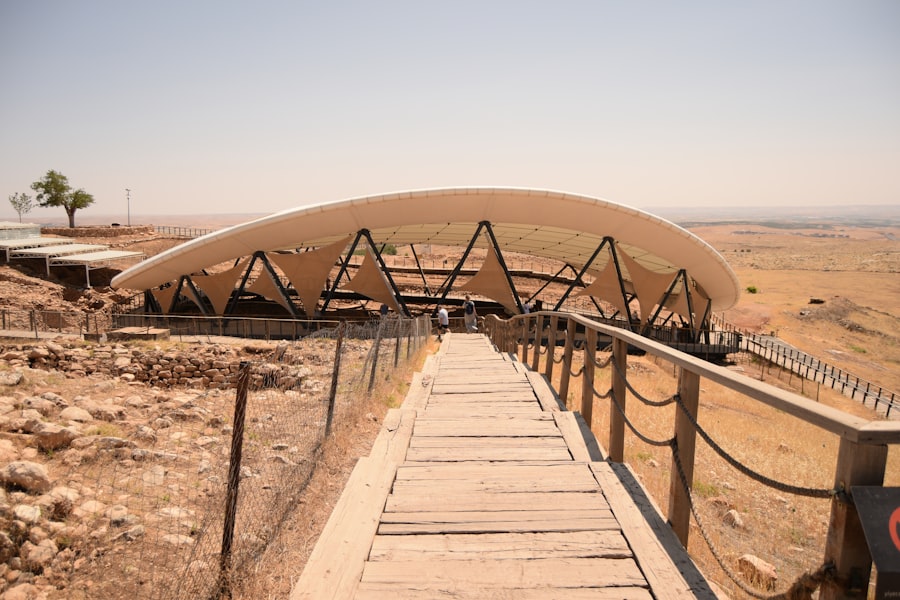
While Göbekli Tepe was not a residential settlement, the evidence strongly suggests it was a site of intense ritual activity and spiritual significance. The carefully constructed enclosures and the monumental nature of the pillars all point to a society deeply invested in religious or ceremonial practices.
Gathering Places for Sacred Rites
The circular and oval enclosures are widely believed to have been spaces for communal gatherings and sacred rites. It is envisioned that people from surrounding areas would have converged at Göbekli Tepe for specific ceremonies, festivals, or initiation rites. The scale of the enclosures suggests they were designed to accommodate significant numbers of people, fostering a sense of community and shared spiritual experience.
Evidence of offerings and feasting
While direct evidence of offerings is scarce, it is reasonable to infer that such important ritual sites would have been accompanied by feasting and the presentation of offerings. The presence of abundant wild game animals in the carvings suggests that hunting played a significant role in their provisioning, and that communal feasts would have been a part of these gatherings. The communal nature of such activities would have further strengthened social bonds.
Astronomical Alignments and Cosmic Significance
The precise orientation of some of the enclosures and the placement of certain pillars suggest a keen awareness of astronomical events. Researchers have found potential alignments with solstices and equinoxes, hinting at a sophisticated understanding of celestial cycles and their integration into their spiritual beliefs. The cosmos likely played a central role in their understanding of the world and their place within it, and Göbekli Tepe may have served as an observatory as well as a temple. This focus on celestial events would have underscored the timeless and cyclical nature of their spiritual worldview.
Göbekli Tepe, often regarded as one of the world’s oldest known temples, has sparked significant interest among archaeologists and historians, particularly in relation to the Ice Age. The site, which dates back to around 9600 BCE, offers insights into the lives of prehistoric people and their transition from nomadic lifestyles to settled communities. This shift is believed to have been influenced by climatic changes at the end of the Ice Age, which allowed for the development of agriculture and complex societies. For a deeper exploration of ancient civilizations and their technological advancements, you can read more in this fascinating article about lost secrets of ancient cultures here.
Enduring Mysteries and Future Discoveries
| Aspect | Details |
|---|---|
| Location | Göbekli Tepe, Turkey |
| Age | Estimated to be around 11,000 years old |
| Discovery | Discovered in the 1960s, excavations began in the 1990s |
| Structure | Consists of large stone pillars arranged in circles |
| Significance | Considered one of the oldest known religious structures |
| Ice Age | Believed to have been constructed during the end of the last Ice Age |
Despite the significant progress made in understanding Göbekli Tepe, much remains shrouded in mystery. The site is vast, and only a fraction has been excavated, leaving ample room for future discoveries that could further illuminate the lives and beliefs of its creators.
The Purpose of the Site’s Abandonment
One of the most perplexing questions is why Göbekli Tepe was eventually abandoned. The site was deliberately backfilled, with layers of soil and debris carefully deposited over the monumental structures. This suggests a conscious act of sealing or closure, rather than a gradual decline or destruction. The reasons behind this deliberate burial remain unknown, but it perhaps signifies a shift in beliefs, a relocation of sacred practices, or a deliberate effort to preserve the site for a future purpose.
The Identity of its Builders
While we know they were hunter-gatherers, the precise identity and cultural affiliations of the people who built Göbekli Tepe are still subjects of speculation. Were they a single, cohesive group, or a coalition of different tribes or communities? Their influence may have extended far beyond the immediate vicinity, as evidenced by the distribution of similar, albeit less monumental, artifacts in the wider region. Further archaeological finds will be crucial in piecing together their cultural landscape.
The Potential for Further Excavation
The vastness of Göbekli Tepe means that countless secrets still lie buried beneath the soil. Ongoing and future excavations have the potential to uncover new enclosures, more intricate carvings, evidence of daily life (if any occurred on-site), and perhaps even written records, though the latter is highly unlikely for such an early period. Each new discovery chips away at the veil of time, offering more profound insights into this enigmatic civilization. The sheer scale of the site suggests that what has been uncovered so far is merely a tantalizing glimpse of a much larger and more complex ancient complex.
Göbekli Tepe stands as a beacon of human achievement, a testament to the extraordinary capabilities of our ancient ancestors. It is a place where the whispers of the Ice Age still echo, challenging our assumptions and expanding our understanding of what it means to be human. As we continue to unearth its secrets, Göbekli Tepe promises to unveil even more profound mysteries, forever enriching our comprehension of our shared past and the remarkable journey of human civilization. The ongoing work at Göbekli Tepe is not just archaeology; it is a continuous dialogue with the very dawn of our collective consciousness, a process that is still very much underway.

Could Humanity Remember a World That No Longer Exists?
FAQs
What is Göbekli Tepe?
Göbekli Tepe is an archaeological site in Turkey, dating back to the Neolithic period, around 9600 BCE. It is considered one of the oldest known man-made structures and is known for its large stone pillars and intricate carvings.
What is the significance of Göbekli Tepe?
Göbekli Tepe is significant because it challenges previous beliefs about the development of human civilization. The site predates the invention of agriculture and pottery, leading researchers to reconsider the timeline of human cultural and technological evolution.
What is the connection between Göbekli Tepe and the Ice Age?
Göbekli Tepe is believed to have been constructed during a time when the region was experiencing a cooler climate, possibly during the Younger Dryas period, which occurred around 10,800 to 9,500 BCE. This suggests that the people who built Göbekli Tepe were adapting to environmental changes during the Ice Age.
Who built Göbekli Tepe?
The builders of Göbekli Tepe are believed to have been hunter-gatherers who lived in the region during the Neolithic period. The exact identity of the people who built the site is still a subject of ongoing research and debate among archaeologists.
What does Göbekli Tepe tell us about ancient societies?
Göbekli Tepe provides evidence that complex social and religious structures existed among hunter-gatherer societies, challenging previous assumptions about the development of civilization. The site suggests that early humans were capable of organizing large-scale construction projects and had sophisticated belief systems.