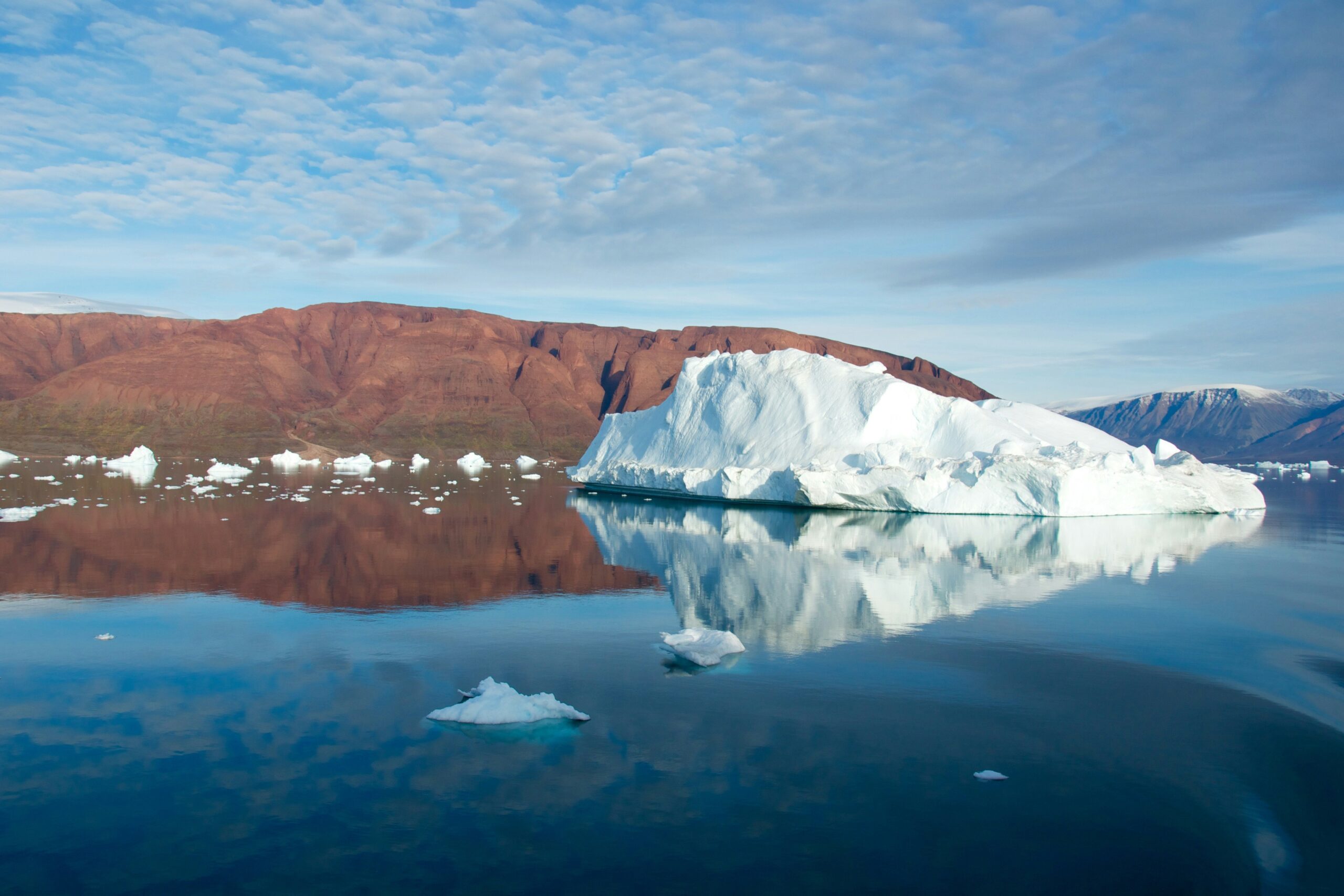
Greenland’s ice sheets hold an immense archive of Earth’s past, and within these frozen layers, scientists are diligently unpicking the threads of our planet’s climate history. For decades, researchers have extracted and analyzed ice cores from the vast expanse of Greenland, a process that provides an unparalleled glimpse into atmospheric conditions stretching back hundreds of thousands of years. These cylindrical samples of compressed snow and ice are far more than just frozen water; they are time capsules, preserving dust, volcanic ash, and trapped air bubbles that act as crucial indicators of past temperatures, atmospheric composition, and even the intensity of solar radiation.
The Genesis of Greenland Ice Cores: A Quest for the Past
The ambitious undertaking of drilling deep into the Greenland ice sheet began in earnest with initiatives like the Greenland Ice Sheet Project (GISP) and its European counterpart, the European Project for Ice Coring in Greenland (EPICA). These projects, involving international collaboration and groundbreaking engineering, aimed to reach bedrock and retrieve the oldest ice possible. The pursuit was driven by a fundamental scientific curiosity: to understand the natural cycles of Earth’s climate and to better predict its future trajectory in the face of contemporary environmental changes. The sheer logistic challenges were immense, requiring specialized drilling equipment capable of penetrating thousands of meters of ice, often in harsh, remote, and unforgiving conditions. The success of these endeavors, however, has yielded data of incalculable value, transforming our understanding of Earth’s climate system.
Early Explorations and the Dawn of Ice Core Science
The concept of using ice as a climate archive is not entirely new. Early glaciologists recognized that snowfall accumulates annually, and over time, these layers compact into ice, preserving evidence of past atmospheric conditions. Initial efforts in the 1950s and 60s focused on shallower ice cores, providing insights into more recent climate fluctuations. These pioneering studies laid the groundwork for the more ambitious projects that would follow, demonstrating the potential of ice cores to reveal detailed climate histories.
The Technological Leap: Deep Drilling and Modern Techniques
The ability to drill to kilometer depths required significant technological innovation. Specialized drill rigs were developed, capable of withstanding extreme cold and operating at remote locations. Techniques for efficiently extracting, storing, and transporting these delicate ice cores were refined to prevent contamination and preserve their fragile nature. Modern drilling often employs hot-water drills, which melt their way through the ice, or electromechanical drills, which use rotating cutting heads. The careful handling and meticulous logging of each ice core segment are paramount to the scientific integrity of the research.
Recent studies on Greenland ice core evidence have shed light on historical climate patterns and their implications for current environmental changes. For a deeper understanding of how climate change affects land preservation and desertification, you can explore the article on combating desertification and preserving our land. This article highlights the interconnectedness of climate dynamics and land management practices, emphasizing the urgent need for sustainable solutions. To read more, visit this link.
Inside the Ice: A Symphony of Climate Clues
The analysis of Greenland ice cores is a multi-faceted scientific endeavor, involving a diverse range of disciplines. Each layer, representing a snapshot in time, is meticulously examined for various proxies – physical and chemical indicators – that can be translated into meaningful climate data. This seemingly simple process of drilling and analyzing ice unlocks a complex narrative of Earth’s climatic journey.
Trapped Air Bubbles: Unveiling Past Atmospheres
Perhaps the most direct climate-relevant information within ice cores comes from the tiny air bubbles trapped within the ice matrix. As snow compacts into ice, pockets of the atmosphere at that specific time become sealed. Scientists carefully extract these bubbles and analyze their chemical composition.
Carbon Dioxide and Methane Concentrations: Greenhouse Gas Proxies
The most significant findings from air bubble analysis have been the reconstructions of past atmospheric concentrations of greenhouse gases like carbon dioxide (CO2) and methane (CH4). These gases play a crucial role in regulating Earth’s temperature. Ice core records show a clear correlation between higher concentrations of these gases and warmer global temperatures throughout Earth’s history. Crucially, the ice cores reveal that current levels of CO2 and methane are unprecedented in at least the last 800,000 years, far exceeding natural fluctuations.
Other Trace Gases: Isotopes and Atmospheric Dynamics
Beyond CO2 and methane, ice cores also contain information about other trace gases. The isotopic composition of gases like oxygen and nitrogen can provide insights into atmospheric circulation patterns and the sources of these gases. For example, the ratio of different oxygen isotopes in trapped air can be used to infer past temperatures.
Ice Chemistry: Signals of Precipitation and Pollution
The ice itself, composed of frozen water molecules, also carries valuable chemical information. Analyzing the chemical composition of the ice layers can reveal details about past precipitation patterns, atmospheric dust, and even volcanic activity.
Stable Isotopes of Water: Reconstructing Past Temperatures
The ratio of stable isotopes of oxygen (¹⁸O and ¹⁶O) and hydrogen (²H or D and ¹H) in the water molecules of the ice is a key proxy for reconstructing past temperatures. Heavier isotopes (¹⁸O and D) require more energy to evaporate from the ocean and are therefore more likely to be deposited closer to the source. As air masses move towards the poles, they lose water vapor, and consequently, the isotopic composition of the remaining water vapor, and the snow that forms from it, changes. This relationship allows scientists to estimate the temperature at the time of snowfall.
Dust and Aerosols: Indicators of Aridification and Volcanic Events
The presence of dust particles within the ice layers serves as a proxy for arid conditions and wind strength in source regions. Increased dust often signifies drier periods and more vigorous atmospheric circulation. Volcanic ash layers, identifiable by their mineral composition, act as precise time markers. These ash layers, originating from specific volcanic eruptions, allow scientists to cross-correlate different ice cores and establish precise timelines.
Chemical Impurities: Evidence of Marine Influence and Biological Activity
Measurements of various chemical impurities, such as sodium and chlorine, can indicate the extent to which marine air masses have influenced precipitation over the ice sheet. Other chemical species, like nitrates and ammonium, can offer insights into past biological activity and nitrogen cycling in the atmosphere.
The Greenland Ice Sheet as a Climate Barometer: Unraveling Past Warming and Cooling Events
The detailed records preserved within Greenland ice cores have been instrumental in understanding dramatic climate shifts of the past, including periods of rapid warming and cooling. These historical events provide crucial context for understanding the magnitude and potential speed of future climate change.
Dansgaard-Oeschger Events: Rapid Climate Shifts
One of the most striking discoveries from Greenland ice cores has been the identification of abrupt climate shifts known as Dansgaard-Oeschger (D-O) events. These events, occurring during the last glacial period, involved rapid warming episodes across the North Atlantic region, some taking place over mere decades. These events highlight the inherent instability of the climate system and the potential for rapid transitions.
The Magnitude and Speed of D-O Events
Analysis of ice cores has revealed that D-O events could lead to temperature increases of up to 10-15 degrees Celsius in Greenland within a single human lifetime. The speed at which these changes occurred is particularly alarming, suggesting that climate systems are capable of far more rapid shifts than previously imagined.
Potential Mechanisms and Ocean Circulation
The underlying mechanisms driving D-O events are still a subject of active research, but they are thought to be linked to major changes in ocean circulation, particularly in the North Atlantic. A shutdown or significant slowdown of the Atlantic Meridional Overturning Circulation (AMOC), which transports heat northward, is believed to be a key factor.
The Last Glacial Maximum and Interglacial Periods: Long-Term Cycles
The ice cores also provide invaluable data on the long-term cycles of glacial and interglacial periods, the Earth’s natural rhythm of ice ages and warmer intervals. The Holocene epoch, the current interglacial period, has been characterized by relative climate stability, which has allowed human civilization to flourish.
Understanding Natural Variability
By examining the ice cores from these extended periods, scientists can differentiate between natural climate variability and anthropogenic influences. The ice core data clearly shows that natural fluctuations, while significant, do not explain the rapid warming observed in recent decades.
The Holocene: A Period of Relative Stability
The relative warmth and stability of the Holocene, as depicted in the ice cores, have been crucial for the development of agriculture and the establishment of human societies. Understanding the conditions of this interglacial period helps us appreciate the climate conditions that have shaped our world.
Beyond the Past: Greenland Ice Cores and the Future of Climate Prediction
The insights gleaned from Greenland ice cores are not merely historical curiosities; they are fundamental to our ability to predict future climate change and inform mitigation strategies. By understanding how the climate system has responded to various forcing factors in the past, scientists can build more accurate models of future climate scenarios.
Model Validation and Improvement: Testing Climate Hypotheses
Climate models, sophisticated computer simulations used to predict future climate, are rigorously tested against the historical data provided by ice cores. If a model can accurately reproduce past climate events, such as past warming periods or the concentration of greenhouse gases, it increases confidence in its ability to predict future changes.
Simulating Past Climate Regimes
Ice core data allows researchers to validate climate models under a range of past climate conditions, including those with significantly different atmospheric compositions and global temperatures than today. This provides a robust test of the models’ underlying physics and chemistry.
Refining Future Projections
Discrepancies between model outputs and ice core data help scientists identify areas for improvement in their models, leading to more refined and accurate projections of future temperature increases, sea-level rise, and changes in extreme weather events.
Attribution of Current Warming: Distinguishing Natural vs. Anthropogenic
A critical role of ice core research is in attributing the current rapid warming trend to human activities. The unprecedented increase in greenhouse gas concentrations observed in the most recent ice layers, coinciding with the Industrial Revolution, provides compelling evidence of anthropogenic influence.
The Fingerprint of Human Activity
The unique isotopic signatures and chemical compositions found in the uppermost ice layers, correlating with increased human industrial output, serve as a clear fingerprint of human influence on the atmosphere. Comparing these to natural variations seen in deeper ice layers is crucial for attribution.
The Unprecedented Rate of Change
The speed at which greenhouse gas concentrations have risen in the last century, as revealed by ice cores, is orders of magnitude faster than any natural changes observed over hundreds of thousands of years. This rapid acceleration is a hallmark of anthropogenic forcing.
Recent studies of Greenland ice core evidence have provided crucial insights into past climate conditions, revealing how temperature fluctuations have influenced global weather patterns. For a deeper understanding of the implications of climate change on various regions, you might find it interesting to explore Mexico’s strategic development and industrial zone plan, which addresses environmental challenges in a rapidly changing world. This connection highlights the importance of historical climate data in shaping future policies. You can read more about it in this article here.
The Ongoing Legacy: Continued Research and Global Implications
The scientific journey with Greenland ice cores is far from over. New drilling projects continue to push the boundaries of temporal reach, and ongoing analysis of existing cores constantly yields fresh insights. The findings from Greenland have profound implications not only for understanding our planet’s climate but also for shaping global policy and inspiring collective action.
New Frontiers and Future Discoveries: Pushing the Temporal Limit
Scientists are continually striving to extract even older ice, potentially reaching back to periods before the most recent ice ages, to gain a more complete understanding of Earth’s long-term climate behavior. Exploring new drilling locations and developing even more advanced drilling technology are key to this pursuit.
Reaching the Deepest Ice: Seeking Older Climates
Efforts are underway to locate and drill into areas of Greenland where older ice might be preserved, providing data from periods predating the last glacial cycle. This could unlock understanding of even more extreme climate shifts and long-term climate sensitivities.
Advanced Analytical Techniques: Unlocking Finer Details
The development of new analytical techniques, such as ultra-high-resolution mass spectrometry, allows scientists to extract even finer details from the ice, revealing subtle climatic signals and events that may have been previously overlooked.
Policy and Public Awareness: Informing Action for a Sustainable Future
The stark evidence presented by Greenland ice cores – the unequivocal link between rising greenhouse gases and warming temperatures, and the demonstration of rapid, potentially disruptive climate shifts – has been instrumental in raising global awareness and informing policy decisions related to climate change mitigation and adaptation.
The Scientific Consensus: A Foundation for Action
The consistent and robust findings from ice core research have contributed significantly to the overwhelming scientific consensus on anthropogenic climate change, providing a solid foundation for international agreements and national policies aimed at reducing emissions and adapting to a changing climate.
Inspiring Global Collaboration and Understanding
The collaborative nature of ice core research, involving scientists from numerous nations, serves as a powerful example of how global challenges can be addressed through shared scientific endeavor and a commitment to understanding our planet. The public dissemination of these findings is crucial for fostering informed dialogue and driving the necessary actions to secure a sustainable future for all.

When the Ice Age Ended… Everything Changed
FAQs

What is the significance of Greenland ice core evidence?
Greenland ice core evidence provides valuable information about past climate conditions, atmospheric composition, and environmental changes. It helps scientists understand the Earth’s climate history and predict future climate trends.
How do scientists extract and analyze ice core samples from Greenland?
Scientists drill deep into the ice sheets of Greenland to extract ice core samples. These samples are then analyzed for isotopic composition, chemical composition, and trapped air bubbles to reconstruct past climate conditions and atmospheric composition.
What have scientists learned from Greenland ice core evidence?
Scientists have learned about past temperature variations, atmospheric greenhouse gas levels, volcanic eruptions, and human impact on the environment from Greenland ice core evidence. This information has contributed to our understanding of climate change and its potential impacts.
How far back in time can Greenland ice core evidence provide information?
Greenland ice core evidence can provide information about past climate conditions and environmental changes going back hundreds of thousands of years. This long-term perspective is crucial for understanding natural climate variability and human-induced climate change.
What are some of the key findings from Greenland ice core evidence?
Key findings from Greenland ice core evidence include evidence of past abrupt climate changes, such as rapid warming events and ice sheet melting, as well as insights into the relationship between greenhouse gas levels and climate variability over time.