The vast, icy expanse of Greenland holds secrets, remnants of a bygone era buried beneath layers of accumulated snow and ice. Among these frozen archives lies Camp Century, a forgotten military outpost that once served a clandestine purpose. Now, a remarkable radar discovery has brought this submerged history back into the light, revealing not only the chilling realities of its construction but also the surprising scientific endeavors that took place within its icy confines.
The Cold War, a period of intense geopolitical tension between the United States and the Soviet Union, fueled a desperate race for technological and strategic advantage. Military operations, often shrouded in secrecy, proliferated across the globe, including in the remote and challenging environments of the Arctic. It was within this context of strategic necessity and an ever-present undercurrent of potential conflict that the idea for Camp Century was conceived.
A Strategic Imperative in the Arctic
The Arctic, with its proximity to both superpowers, represented a critical strategic theatre during the Cold War. The vast, sparsely populated landscapes offered opportunities for intelligence gathering, surveillance, and the potential deployment of advanced military assets. The United States, keenly aware of the Soviet Union’s growing military presence in the region, sought to establish a foothold that would allow them to monitor Soviet activities and project American power. Camp Century, initially conceived as a forward operating base, was intended to fulfill this strategic imperative. Its location in northwest Greenland offered a unique vantage point, capable of observing and potentially influencing the northern approaches to North America.
The “Iceworm” Project and its Ambitions
Camp Century was more than just a rudimentary military installation; it was part of a larger, more ambitious undertaking known as Project Iceworm. This project, conceived in the late 1950s, envisioned a network of tunnels and facilities beneath the Greenland ice sheet, designed to house and protect intercontinental ballistic missiles (ICBMs). The idea was to create a mobile, hardened launch platform that would be virtually undetectable and impervious to enemy attack. Camp Century was to serve as the operational hub and primary research facility for this audacious plan. The sheer scale of the ambition was staggering, aiming to harness the immense power of the ice sheet for military purposes.
Logistical Nightmares and Ingenious Solutions
The construction and operation of a military base on the Greenland ice sheet presented unprecedented logistical challenges. The harsh Arctic environment, characterized by extreme cold, relentless winds, and perpetual snow, made every aspect of the operation incredibly difficult. Transporting materials, establishing communication lines, and ensuring the survival of personnel required innovative solutions. The military, in conjunction with civilian engineers, devised ingenious methods for construction, including prefabricated modules that could be transported by specialized vehicles. The idea was to build a city within the ice, a feat that demanded a deep understanding of glaciology and engineering.
The recent discovery of a radar system beneath Greenland at Camp Century has sparked significant interest in the implications of such findings for climate research and historical military operations. This intriguing development parallels discussions in other fields, such as trade agreements and their impacts on international relations. For a deeper understanding of how global agreements like the USMCA can influence various sectors, including environmental policies, you can read more in this related article: Understanding the USMCA Trade Agreement.
Unearthing Camp Century: The Radar Revelation
For decades, Camp Century lay dormant, its existence largely a footnote in military history. However, advancements in radar technology and a renewed interest in the region’s past have led to a remarkable rediscovery. Ground-penetrating radar (GPR) has become an invaluable tool for archaeologists and scientists alike, allowing them to peer beneath the surface of the earth, or in this case, the ice. This powerful technology has brought the forgotten infrastructure of Camp Century back into the spotlight, revealing the extent of the original construction and the surprising scientific activities that occurred there.
The Power of Ground-Penetrating Radar
Ground-penetrating radar works by emitting radio waves into the ground and measuring the time it takes for these waves to return after reflecting off different subsurface features. Variations in the reflected signals can be used to create a detailed image of what lies beneath the surface. In the case of Camp Century, GPR has been instrumental in mapping the network of tunnels, buildings, and infrastructure that were once buried in the ice. The radar signals are able to penetrate hundreds of feet of ice, providing a clear picture of the base’s layout and the preserved remnants of its past.
Mapping the Subglacial City
The radar surveys have revealed that Camp Century was far more extensive than initially believed. The images depict a complex network of interconnected tunnels, some several kilometers long, that housed barracks, a hospital, a mess hall, a recreation area, and even a small theater. The radar has also identified the locations of various vehicles, equipment, and the foundations of buildings that have long since collapsed or been consumed by the moving ice. The subglacial city, once a hub of military activity, has been meticulously reconstructed in the digital realm through the persistent work of radar operators.
Revealing the Human Element
Beyond the infrastructure, the radar data has also offered glimpses into the daily lives of the personnel stationed at Camp Century. Anomalous radar signatures have been interpreted as the remnants of personal belongings, tools, and even discarded waste, providing tangible evidence of the human presence. These findings offer a poignant reminder that behind the strategic ambitions and technological marvels, there were individuals enduring the isolation and challenges of life in one of the most unforgiving environments on Earth. The radar has become an unexpected window into the human experience of this frozen frontier.
Beyond the Military: The Scientific Legacy
While Camp Century’s primary purpose was military, it also served as a unique platform for scientific research, particularly in the field of glaciology. The extreme environment and the ability to access deep ice layers provided unparalleled opportunities for studying Earth’s climate history. The radar discoveries have not only illuminated the military past but also shed light on the crucial scientific work that was conducted beneath the ice, contributing valuable data to our understanding of past climates.
A Natural Archive: The Greenland Ice Sheet
The Greenland ice sheet is a colossal natural archive, holding within its frozen layers a meticulously preserved record of Earth’s climate over hundreds of thousands of years. Each year, as snow falls and accumulates, it traps atmospheric gases, dust, and other particles, creating distinct annual layers. By extracting and analyzing ice cores from deep within the ice sheet, scientists can reconstruct past temperatures, atmospheric composition, and even volcanic events. Camp Century, with its direct access to these deep ice layers, became an invaluable location for such research.
Glaciological Research and Ice Core Drilling
At Camp Century, scientists conducted extensive glaciological research. They drilled deep into the ice sheet, extracting ice cores that have provided invaluable insights into past climate variability. These cores have allowed researchers to study ice flow dynamics, understand the history of ice sheet accumulation and melt, and reconstruct past atmospheric conditions. The radar discoveries have helped pinpoint the exact locations where these crucial ice core samples were obtained, adding context to the scientific data they represent. This research has been fundamental to our understanding of climate change and its historical drivers.
Climate Reconstruction and Paleoenvironmental Studies
The ice cores retrieved from Camp Century have been instrumental in reconstructing past climates. By analyzing the isotopic composition of the water molecules and the trapped air bubbles within the ice, scientists can determine past temperatures and atmospheric greenhouse gas concentrations. This data has helped paint a detailed picture of how Earth’s climate has changed over millennia, providing crucial context for understanding current climate change trends. The scientific legacy of Camp Century, revealed through these radar-aided investigations, is as significant as its military history.
The Unforeseen Challenges and Eventual Abandonment

Despite the initial ambitions and the impressive engineering, Camp Century was not immune to the unforgiving realities of its environment. The very ice that provided its cover also posed a constant threat, leading to unforeseen challenges and its eventual abandonment. The moving nature of the ice sheet proved to be a far more dynamic and destructive force than initially anticipated.
The Destructive Power of the Moving Ice
The Greenland ice sheet is not static; it is a constantly flowing mass of ice. Over time, this movement exerts immense pressure on the structures built beneath it. Camp Century’s tunnels and buildings, designed to withstand considerable stress, were gradually compressed and distorted by the shifting ice. What was once a stable underground city began to buckle and deform, posing increasing risks to the personnel and the infrastructure. The ice was an ever-present, slow-moving, yet ultimately overwhelming adversary.
Structural Integrity and Maintenance Nightmares
Maintaining the structural integrity of Camp Century became an ongoing and increasingly difficult challenge. As the ice shifted, tunnels would warp, and supporting structures would be stressed. Constant repairs and modifications were necessary, draining resources and manpower. The initial vision of a permanent, hardened base began to falter under the relentless pressure of the ice. The costs and complexities of maintaining the base became unsustainable, a testament to the power of natural forces.
Environmental Concerns and Decommissioning
As the challenges mounted, the long-term viability of Camp Century came into question. Furthermore, growing environmental concerns regarding the potential contamination of the pristine Arctic environment from the abandoned base began to emerge. The decision was ultimately made to decommission Camp Century. The process of abandoning the base, however, was complex, involving the removal of hazardous materials and efforts to minimize the environmental impact. The radar discoveries have provided a clear understanding of the extent of the abandoned infrastructure, raising questions about the long-term environmental implications.
The recent discovery of radar signals beneath Greenland’s ice at Camp Century has sparked significant interest in understanding the region’s geological history and its implications for climate change. This fascinating development is reminiscent of the insights gained from ancient empires, which often faced environmental challenges that shaped their destinies. For a deeper exploration of how historical geopolitical dynamics can inform our understanding of contemporary issues, you can read more in this insightful article on geopolitical analysis of ancient empires.
The Enduring Significance of Camp Century Today
| Location | Discovery | Depth |
|---|---|---|
| Greenland | Camp Century radar | Beneath ice |
The radar discoveries at Camp Century have not only resurrected a forgotten military outpost but have also highlighted its enduring significance in understanding both human history and our planet’s climate. The site serves as a stark reminder of the ambition of past eras, the ingenuity of human engineering, and the powerful forces of nature.
A Monument to Cold War Ambitions
Camp Century stands as a testament to the immense resources and strategic imperatives that drove the Cold War. The audacious plan to build a missile base beneath the ice sheet, while ultimately unsuccessful, reflects the lengths to which nations were willing to go to gain military advantage. The radar-revealed city beneath the ice is a tangible monument to that era’s fervent pursuit of power and technological dominance. It is a frozen echo of a world shaped by ideological rivalry.
A Unique Climate Record
The scientific contributions of Camp Century, particularly in glaciology and climate research, cannot be overstated. The ice cores extracted from this location have provided invaluable data for understanding past climate change and for informing current climate models. The radar discoveries enhance our appreciation of the challenging conditions under which this critical scientific work was undertaken, underscoring the dedication of the researchers who braved the Arctic to expand our knowledge of Earth’s history.
Lessons for the Future
The story of Camp Century offers valuable lessons for the future. It highlights the importance of understanding and respecting the power of natural environments, particularly in fragile ecosystems like the Arctic. It also underscores the need for careful consideration of the long-term environmental consequences of human endeavors, especially those involving potentially hazardous materials. As climate change continues to reshape the Arctic, the lessons learned from Camp Century, brought to light by modern radar technology, will undoubtedly prove to be increasingly relevant. The melting ice is gradually revealing more of this forgotten world, prompting a renewed focus on its past and its future implications.
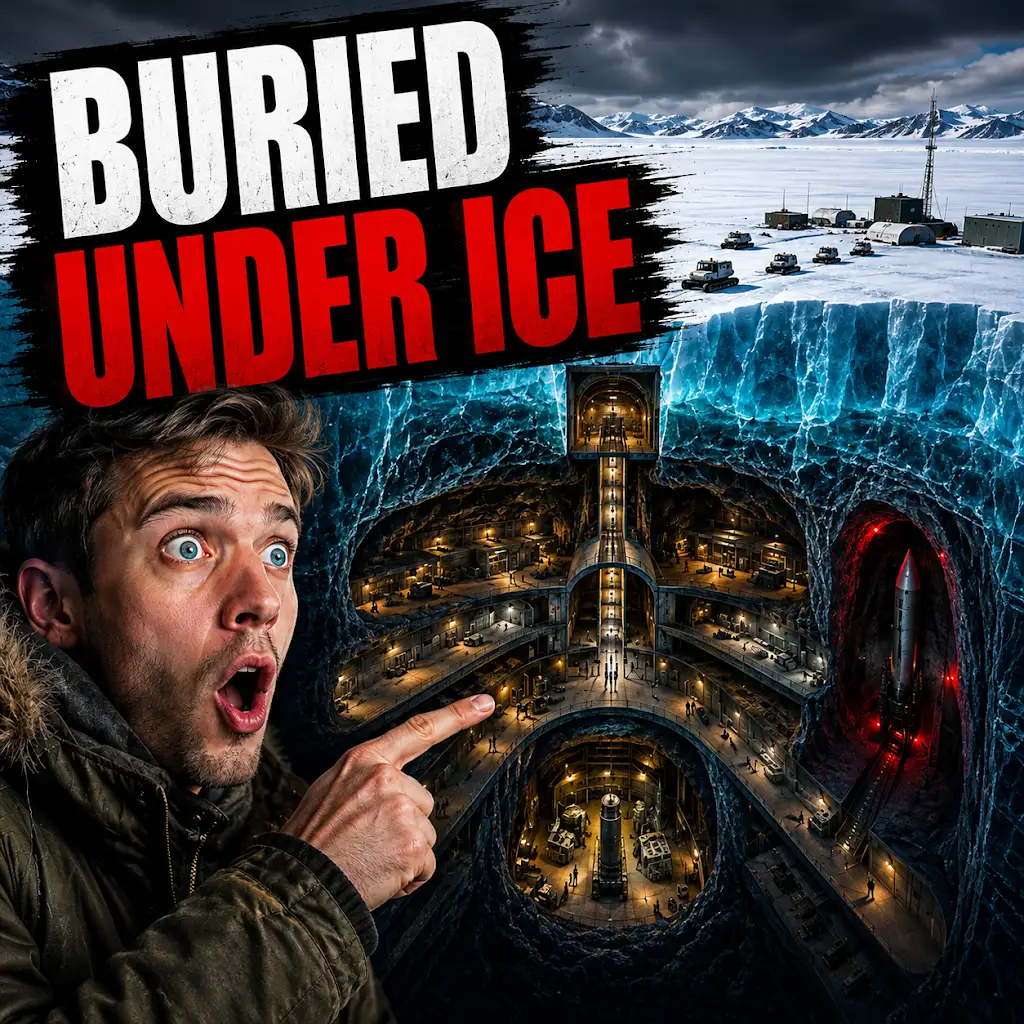
The U.S. Built a Nuclear City Under Greenland. The Ice Won.
FAQs
What is Camp Century and where is it located?
Camp Century was a military base built by the United States Army Corps of Engineers in northwestern Greenland in 1959. It was located beneath the surface of the Greenland Ice Sheet.
What was the purpose of Camp Century?
The primary purpose of Camp Century was to conduct scientific research and to test the feasibility of deploying nuclear missiles within the ice sheet during the Cold War.
What was discovered beneath the Greenland Ice Sheet at Camp Century?
Recent radar surveys have revealed that the ice and snow covering Camp Century have preserved the remains of the camp, including buildings, railway tunnels, and other infrastructure.
What are the implications of the discovery at Camp Century?
The discovery has raised concerns about the potential release of pollutants and radioactive waste as the ice sheet continues to melt due to climate change.
What are the next steps following the discovery at Camp Century?
Further research and monitoring are needed to assess the environmental and geopolitical implications of the discovery, as well as to develop strategies for addressing any potential hazards associated with the site.