
Greenland, a colossal island of ice and rock, occupied a surprisingly pivotal position during the protracted ideological struggle of the Cold War. Its immense, sparsely populated landmass, its strategic location straddling the North Atlantic and Arctic, and its inherent proximity to both the United States and the Soviet Union transformed it from a distant, icy territory into a crucial frontline in the global contest for dominance. The island’s story during this era is one of military adaptation, technological advancement, and a subtle yet profound geopolitical reimagining.
Greenland’s role in the Cold War was intrinsically linked to its geography. The island’s position at the highest latitudes of the Northern Hemisphere placed it directly between the emerging superpowers. This was not merely a passive observation; it was an active, exploitable advantage for both sides, though primarily for the United States and its allies.
The Northern Route and the Missile Gap
During the Cold War, the prevailing military doctrine, particularly in its early decades, was heavily influenced by the perceived threat of long-range bomber and, later, intercontinental ballistic missile (ICBM) attacks. The shortest aerial and missile routes between North America and the Soviet Union often passed over or near the Arctic. Greenland, due to its position, became a critical waypoint in this strategic calculus.
Early Warning Systems: The Distant Early Warning (DEW) Line
The development of the Distant Early Warning (DEW) Line stands as a monumental testament to Greenland’s strategic importance. This network of radar stations, stretching across the Arctic, was designed to provide early warning of incoming Soviet bomber or missile attacks. Greenland, with its rugged terrain and isolated outposts, offered ideal locations for these installations. The establishment of the DEW Line was a massive undertaking, requiring significant technological innovation, logistical prowess, and a substantial financial commitment.
The Technological Imperative of Radar
Radar technology, still in its relative infancy at the dawn of the Cold War, was paramount. The ability to detect aircraft and missiles at long distances was crucial for survivability. Greenland’s vast, open spaces, free from significant ground clutter in many areas, provided excellent conditions for radar deployment. The challenges of operating such sophisticated equipment in extreme Arctic conditions, however, were immense.
Logistics and Infrastructure in the Frozen North
Supplying and maintaining the DEW Line stations in Greenland was a logistical nightmare. Remote bases, accessible only by air or sea during brief summer months, required meticulous planning and execution. The U.S. military, in collaboration with its Danish and Canadian counterparts, had to develop specialized infrastructure, including airfields, port facilities, and supply chains capable of operating in sub-zero temperatures and perpetual darkness.
The Transatlantic Link: Securing the Lifeline
Beyond continental defense, Greenland held significant sway over the maritime routes of the North Atlantic. The vital sea lanes connecting North America to Europe were considered essential for the deployment of troops, the transport of supplies, and the logistical support of NATO allies. Controlling or at least monitoring these routes was a key objective for the United States.
Naval Strategy and Submarine Warfare
The Cold War saw a significant escalation in submarine warfare. Both the U.S. and the Soviet Union invested heavily in submarine technology, with nuclear-powered submarines capable of launching ballistic missiles becoming a significant threat. Greenland’s waters, and the broader Arctic, became a critical theater for submarine operations.
The Role of Naval Bases and Listening Posts
Greenland’s strategic location allowed for the establishment of naval bases and listening posts that could monitor Soviet submarine activity. The presence of U.S. naval forces in the region served as a deterrent and provided intelligence gathering capabilities, crucial for understanding the disposition and capabilities of the Soviet fleet.
Securing Convoys and Sea Lanes
In the event of a conflict, the safe passage of convoys across the Atlantic would be paramount. Greenland’s proximity allowed for rapid deployment of naval assets to escort and protect these vital supply lines, a crucial consideration in any large-scale conflict scenario.
Greenland’s strategic importance during the Cold War was underscored by its geographic location, serving as a critical point for military operations and surveillance between the United States and the Soviet Union. The island’s vast, icy expanse provided a unique vantage point for monitoring transatlantic activities, which was essential in the context of nuclear deterrence and defense strategies. For a deeper understanding of how historical cartography, such as the Piri Reis map, has influenced modern perceptions of geography and strategy, you can explore the related article at this link.
Operation BLUESPIKE: The U.S. Military’s Arctic Foothold
The United States, recognizing Greenland’s strategic value, embarked on a significant military buildup on the island. This was not a clandestine operation but a visible and substantial commitment, reflecting the seriousness with which Washington viewed the potential threats emanating from the Arctic.
Thule Air Base: The Crown Jewel of Arctic Defense
Thule Air Base, established in 1951, was the linchpin of the U.S. military presence in Greenland. Initially conceived as a bomber base, its role evolved significantly throughout the Cold War, adapting to the changing nature of military technology and strategy.
The Strategic Bomber Era
In the early years of the Cold War, strategic bombers were the primary means of delivering nuclear weapons. Thule’s location made it an ideal staging ground for these aircraft, capable of reaching targets in the Soviet Union with reduced flight times and potentially bypassing some Soviet air defenses.
The B-52 and Arctic Patrols
The iconic B-52 bomber played a significant role in Thule’s operations. These aircraft conducted long-range patrols, demonstrating U.S. airpower and serving as a visible deterrent. The harsh Arctic environment presented unique challenges for these massive aircraft and their crews.
Refueling and Forward Deployment
Thule served as a critical refueling and maintenance hub for bombers operating in the Arctic. This forward deployment capability was essential for projecting power and responding quickly to any perceived threats.
The Ballistic Missile Defense Era and Beyond
As intercontinental ballistic missiles (ICBMs) became the dominant strategic weapon, Thule’s role shifted. While its bomber operations continued, it also became a vital component of early warning systems for missile launches.
Ballistic Missile Early Warning System (BMEWS)
Thule was equipped with advanced radar systems as part of the Ballistic Missile Early Warning System (BMEWS). These radars were designed to detect the launch of Soviet ICBMs, providing precious minutes of warning to allow for retaliatory strikes.
The Ballistic Missile Defense (BMD) Debate
While the primary focus was early warning, the concept of ballistic missile defense was also a significant consideration. Although effective BMD remained largely elusive throughout the Cold War, Thule’s radar capabilities contributed to the ongoing research and development in this area.
Other U.S. Military Installations
Beyond Thule, other installations dotted the Greenlandic landscape, each serving a specific purpose in the broader Cold War strategy.
Radar and Surveillance Sites
Numerous smaller radar and surveillance sites were established across Greenland. These facilities played a crucial role in monitoring air and sea traffic, providing continuous intelligence on Soviet military movements.
The Challenge of Remote Operation
Operating these remote sites presented immense logistical and personnel challenges. Crews endured extreme isolation, harsh weather, and the constant psychological pressure of their mission.
Communication Hubs and Meteorological Stations
Greenland’s position also made it an ideal location for communication hubs and meteorological stations. These facilities were vital for supporting military operations, collecting crucial weather data for flight planning, and facilitating communication across vast distances.
The Soviet Perspective: A Shadowed Threat in the Frozen North
While the U.S. military presence in Greenland was overt and substantial, the Soviet Union viewed the island and its surrounding waters as a potential threat and an area of strategic interest. Their approach was less about direct occupation and more about intelligence gathering, technological competition, and the potential for disruption.
The Arctic as a Contested Domain
The Arctic, in general, became a frontier of the Cold War. Both superpowers sought to understand and potentially exploit its unique characteristics for military advantage.
Submarine Routes and Operations
The Soviet Union’s growing submarine fleet was a significant concern for the West. The Arctic Ocean provided a relatively secure environment for Soviet submarines to operate and patrol, and Greenland’s proximity to these waters made it a key area of concern for U.S. naval planners.
The Northern Sea Route and Soviet Naval Access
While not directly involving Greenland, the Soviet Union’s efforts to maintain control and accessibility of the Northern Sea Route were part of a broader Arctic strategy that influenced their approach to the broader region.
The “Bastion” Concept
Soviet naval doctrine increasingly emphasized the concept of “bastions” – heavily defended areas where their submarines could operate with a degree of impunity. The Arctic Ocean was considered a prime candidate for such a bastion, and Greenland’s presence on its periphery would have factored into their calculations.
Intelligence Gathering and Espionage
The Soviets were keenly interested in monitoring U.S. military activities in Greenland. Intelligence gathering, both overt and covert, was a constant feature of the Cold War.
Signals Intelligence (SIGINT)
The Soviets likely employed signals intelligence (SIGINT) efforts to intercept communications from U.S. bases in Greenland. This would have provided valuable insights into American military plans and capabilities.
Listening Posts and Reconnaissance Flights
While direct Soviet bases in Greenland were non-existent, their reconnaissance flights over or near the island, and potential covert listening posts on adjacent territories, would have been part of their intelligence gathering operations.
The Psychological Impact of U.S. Military Presence
The very existence of a significant U.S. military presence on Greenland served as a constant psychological reminder to the Soviet Union of the proximity of American power. This likely influenced their strategic planning and military deployments.
Life in the Cold War Frontier: The Danish-Greenlandic Experience
For the indigenous Inuit population of Greenland and the Danish administrators, the Cold War brought profound changes. The island, once a remote outpost of Danish sovereignty, became deeply integrated into the geopolitical machinations of two global superpowers.
The “Americanization” of Greenland
The arrival of thousands of American military personnel and the construction of massive bases had a significant impact on Greenlandic society and economy.
Economic and Social Transformation
The influx of American dollars and jobs created a boom in certain sectors of the Greenlandic economy. This brought new opportunities but also led to social changes and a growing awareness of the outside world.
Modernization and Infrastructure Development
The U.S. military’s investments in infrastructure, such as airfields and communication networks, also benefited the civilian population, leading to a degree of modernization.
Cultural Encounters and Tensions
The interaction between American soldiers and the local population was a complex mix of cultural exchange and, at times, tension. Differences in lifestyle, values, and expectations could lead to misunderstandings.
The Quest for Self-Determination
The increased engagement with the outside world and the strategic importance of Greenland ironically fueled a growing desire for greater self-determination among the Greenlandic people.
The Home Rule Movement
The experience of being a strategic asset for foreign powers, while benefiting from some aspects of modernization, also fostered a stronger sense of national identity and a desire to control their own destiny. This contributed to the growth of the Home Rule movement, which eventually led to significant autonomy for Greenland.
Danish Sovereignty and U.S. Influence
Denmark, as the sovereign power, had to navigate the complex relationship between its own national interests, its NATO commitments, and the desires of the Greenlandic population. The U.S. military presence often meant that Greenland, despite being Danish territory, was largely managed from a U.S. strategic perspective.
Greenland’s strategic importance during the Cold War cannot be overstated, as it served as a crucial military outpost for both the United States and the Soviet Union. The island’s location allowed for surveillance and control over the Arctic region, which was vital for monitoring missile launches and troop movements. For a deeper understanding of how Greenland’s unique geography influenced military strategies during this era, you can explore the article on the glacier mystery and its implications for the region’s geopolitical significance. This article can be found at glacier mystery.
The Legacy of the Cold War on Greenland
| Aspect | Importance |
|---|---|
| Geopolitical Location | Strategic position between North America and Europe |
| Military Presence | Hosted key military bases for surveillance and defense |
| Nuclear Missiles | Potential deployment site for nuclear missiles targeting the Soviet Union |
| Resource Extraction | Potential for access to rare earth minerals and oil reserves |
| Scientific Research | Opportunities for studying Arctic climate and environment |
The end of the Cold War did not erase Greenland’s strategic importance, but it certainly reshaped it. The massive military infrastructure built during the conflict, however, left an indelible mark.
Decommissioning and Environmental Concerns
The closure of many Cold War-era facilities presented new challenges. Decommissioning these sites, often located in environmentally sensitive areas, required significant effort and resources.
The Environmental Scars of Military Operations
The extensive military activities, including the storage of fuel and the operation of heavy machinery, left behind environmental scars that continue to be addressed. Concerns about contaminated sites and potential pollution remain a legacy of the Cold War era.
Radioactive Contamination and Waste Management
The storage and disposal of waste from military operations, including some potentially radioactive materials, have been a long-term environmental concern for Greenland.
The Enduring Geopolitical Significance
While the immediate threat of Soviet bombers and missiles receded, Greenland’s strategic location continues to be recognized. Its role in Arctic surveillance, scientific research, and its potential as a northern gateway remains relevant in the contemporary geopolitical landscape.
Climate Change and Arctic Access
As climate change opens up new shipping routes and resource opportunities in the Arctic, Greenland’s strategic importance is being re-evaluated. Its control over key passages and its potential role in governing these emerging areas are becoming increasingly significant.
New Great Powers and Arctic Ambitions
The rise of new global powers with interests in the Arctic means that Greenland, once a frontline in a bipolar world, could become a focal point in a multipolar strategic environment.
Greenland’s Cold War story is a compelling narrative of how a remote, icy landmass was thrust into the heart of global superpower rivalry. Its transformation from a neglected territory into a vital strategic asset underscores the profound impact of geopolitical forces on even the most isolated corners of the world. The legacy of this era continues to shape Greenland’s identity and its place on the world stage.
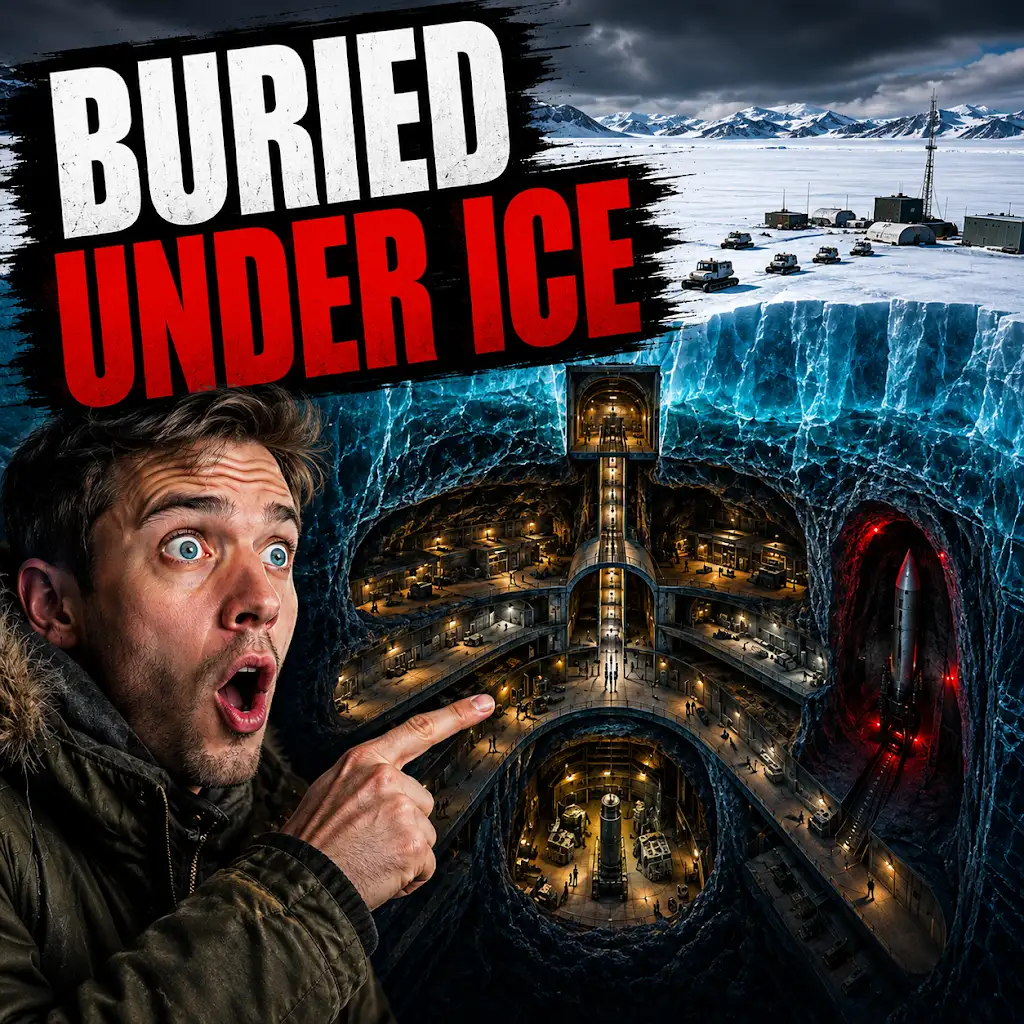
The U.S. Built a Nuclear City Under Greenland. The Ice Won.
FAQs
1. What is the strategic importance of Greenland during the Cold War?
Greenland’s strategic importance during the Cold War stemmed from its geographic location, which provided a crucial vantage point for monitoring and potentially intercepting Soviet military activities in the Arctic region.
2. How did the United States utilize Greenland during the Cold War?
The United States established military bases in Greenland, such as Thule Air Base, to monitor Soviet activities, conduct reconnaissance missions, and serve as a refueling and transportation hub for military operations in the Arctic.
3. Did Greenland play a role in the nuclear arms race during the Cold War?
Yes, Greenland’s proximity to the Soviet Union made it a strategic location for the deployment of early warning systems and radar installations to detect and track potential nuclear threats, contributing to the nuclear arms race between the United States and the Soviet Union.
4. How did the strategic importance of Greenland evolve after the end of the Cold War?
After the Cold War, Greenland’s strategic importance shifted towards environmental and economic concerns, including the impact of climate change on the Arctic region and the potential for resource extraction and shipping routes in the area.
5. What is the current status of military presence in Greenland?
The United States maintains a military presence in Greenland, primarily at Thule Air Base, which continues to serve as a key location for monitoring and responding to security threats in the Arctic region.