
The sun, which had for centuries warmed the sun-baked bricks and towering fortifications of Hattusa, the magnificent capital of the Hittite Empire, now cast a long, ominous shadow. A chilling wind, carrying the acrid scent of smoke, whispered through the deserted streets, a stark contrast to the vibrant clamor that had once defined this city. Hattusa, once the heart of a formidable Bronze Age power, was no more. Its emptied halls and blackened stones bore silent witness to a cataclysmic end, a swift and brutal demise that plunged a once-dominant civilization into the annals of forgotten history. The reasons for its abandonment and subsequent fiery destruction remain a subject of scholarly debate, a puzzle pieced together from archaeological fragments and scattered textual references. Yet, the evidence points to a confluence of internal weaknesses and external pressures that ultimately conspired to bring about the fall of this ancient metropolis.
The Zenith of Hittite Power and its Foundations
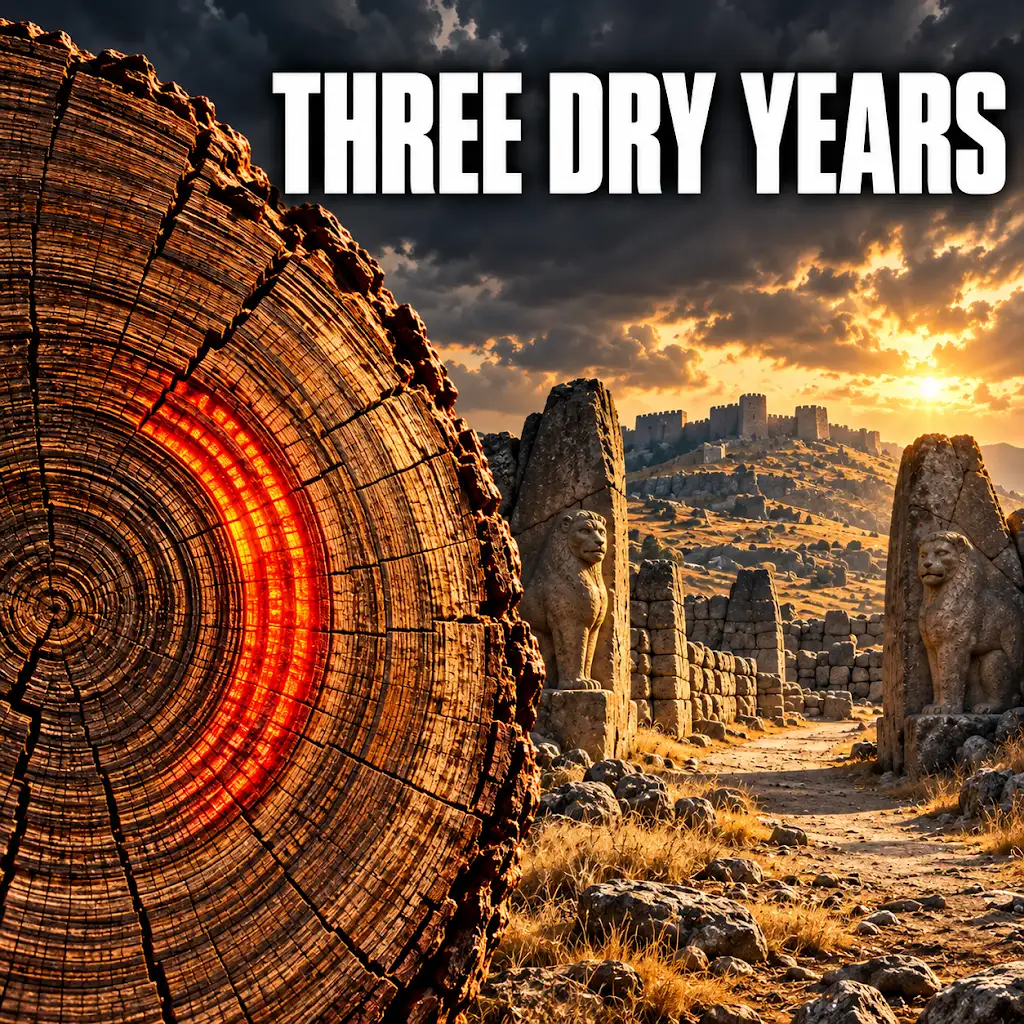
Hattusa, strategically perched on a rocky outcrop in north-central Anatolia, rose to prominence as the capital of the Hittite Old Kingdom and later the New Kingdom. Its formidable defenses, including the impressive Lion Gate and the imposing Sphinx Gate, were a testament to the Hittite kings’ commitment to security and their mastery of architectural engineering. The city’s layout, with its distinct Upper and Lower Towns, reflected a sophisticated urban planning that accommodated administrative, religious, and residential functions. The Great Temple, dedicated to the storm god Teshub and his consort Hebat, stood as the spiritual nexus of the empire, its grandeur mirroring the divine authority wielded by the Hittite monarchs. The royal palace, the administrative heart of Hattusa, housed the vast archives that would later offer invaluable insights into Hittite life, diplomacy, and governance.
The Strategic Importance of Hattusa’s Location
The very location of Hattusa was a key factor in the Hittite Empire’s success. Situated on a high plateau, it offered natural defensive advantages. The surrounding landscape, with its rugged terrain, made it difficult for invading armies to approach unseen. Furthermore, Hattusa controlled vital trade routes that crisscrossed Anatolia, connecting the Aegean Sea with Mesopotamia and the Black Sea. This strategic position allowed the Hittites to amass wealth through trade and exert considerable influence over their neighbors, forming a powerful empire that rivaled Egypt and Babylon during its peak. The Hittites were not merely warriors; they were astute diplomats and shrewd traders, and Hattusa was the engine of this multifaceted power.
The Bureaucratic and Religious Heartbeat
Life within Hattusa pulsed with the rhythm of a complex bureaucracy and a deeply ingrained religious system. The Hittite kings, often referred to as “Great King,” were not absolute rulers but were guided by councils of nobles and elders, particularly during the early periods. The vast archives discovered at Hattusa, written in cuneiform on clay tablets, reveal a sophisticated legal system, detailed administrative records, and extensive diplomatic correspondence. These tablets provide a window into the daily lives of the Hittites, their economic activities, their religious beliefs, and their interactions with other Bronze Age civilizations. The religious landscape was dominated by the worship of numerous deities, with Teshub and Hebat at the forefront. Elaborate rituals and festivals were conducted within the city, solidifying the connection between the divine and the earthly realms, and reinforcing the legitimacy of the royal house. The presence of numerous temples and cultic sites within Hattusa underscores its importance as a sacred as well as a political center.
The ancient city of Hattusa, once a thriving capital of the Hittite Empire, is known for its dramatic abandonment and subsequent destruction, which has intrigued historians and archaeologists alike. A related article that delves into the complexities of decision-making in high-stakes environments, such as military operations, can provide valuable insights into the strategic considerations that might parallel the decisions made by the Hittites during their decline. For further reading, you can explore the article on the impact of artificial intelligence on space military decision-making at this link.
Cracks in the Foundation: Internal Strife and External Pressures
Despite its outward appearance of strength, the Hittite Empire began to show signs of strain in the centuries leading up to its collapse. Internal political instability, marked by dynastic disputes and court intrigues, weakened the central authority. The vastness of the empire also presented logistical challenges, making it difficult to maintain effective control over its far-flung territories and to respond swiftly to threats. Simultaneously, the geopolitical landscape of the Late Bronze Age was becoming increasingly volatile. The emergence of new powers, shifts in alliances, and escalating conflicts all contributed to a precarious environment for the Hittites.
The Shadow of Civil Unrest and Succession Disputes
The Hittite monarchy was not always a stable institution. Historical records hint at periods of internal strife, where ambitious princes or powerful factions within the nobility vied for the throne. While the exact details of many of these disputes are lost to time, the underlying instability likely diverted resources and attention away from external defense and imperial administration. The loyalties of provincial governors and military commanders could be swayed, leading to fragmentation and a weakening of the unified front the empire needed to present to its adversaries. These internal divisions, like unseen fissures in a mighty dam, began to erode the empire’s structural integrity.
The Looming Threat of the Sea Peoples and other Migratory Groups
Perhaps the most significant external threat that plagued the Hittite Empire in its final years was the enigmatic “Sea Peoples.” These confederations of maritime raiders, whose origins remain debated among scholars, launched a series of devastating incursions across the Eastern Mediterranean. Their attacks targeted not only coastal cities and trade routes but also inland settlements, causing widespread destruction and contributing to the collapse of several powerful Bronze Age civilizations, including the Mycenaeans and the Egyptians (though Egypt managed to weather the storm, albeit significantly weakened). The Hittite Empire, despite its inland location, was not immune to these migratory pressures. While direct confrontations with the Sea Peoples at Hattusa are not definitively documented, the broader destabilization of the region and the disruption of trade networks would have had a profound impact on the Hittite economy and their ability to project power. Furthermore, other nomadic or semi-nomadic groups, driven by their own pressures, may have also contributed to the instability on the empire’s frontiers.
The Final Siege and the Fiery Apocalypse
The exact timeline and sequence of events leading to Hattusa’s final moments are still being reconstructed by archaeologists and historians. However, the archaeological record paints a vivid picture of a city under siege and ultimately overwhelmed. Evidence of destruction layers, widespread looting, and deliberate burning indicates a violent and decisive end. The once-proud city, with its imposing walls and majestic temples, was reduced to ashes, its inhabitants either fled or perished. The meticulously crafted archives, the very testament to Hittite civilization, were scattered and often burned, their knowledge lost for millennia.
Evidence of Hastily Abandoned Homes and Temples
The archaeological excavations at Hattusa reveal a poignant story of a city in its death throes. In many residential areas, houses appear to have been abandoned in haste, with everyday objects left behind as if their owners expected to return shortly. Pottery, tools, and even personal adornments have been found in situ, frozen in time by the disaster. The Great Temple, once the vibrant center of religious life, also bears signs of rapid desertion and subsequent destruction. Offerings may have been left in a desperate plea to the gods, or perhaps looted by the very invaders who would soon engulf the city. This sense of sudden departure and abandonment speaks volumes about the terror and chaos that must have reigned as the enemy approached.
The Scorched Earth and the Scattered Archives
The most damning evidence of Hattusa’s fall is the pervasive layer of ash and charcoal that blankets much of the site. The invaders, after a period of intense fighting and perhaps a final desperate defense, proceeded to set the city ablaze. This was not simply collateral damage; it appears to have been a deliberate act of obliteration, designed to erase Hattusa from the map and to ensure that the Hittite Empire would never rise again. The fires that consumed the city also played a tragic role in preserving parts of its legacy. The heat of the conflagration baked the clay tablets stored in the royal archives, hardening them and making them more resistant to the ravages of time. However, the act of burning also scattered these invaluable historical records, making their subsequent discovery and decipherment a monumental undertaking for modern archaeologists. The very act that destroyed the city also, paradoxically, preserved fragments of its knowledge.
The Aftermath: A Shattered Empire and a Forgotten People
The fall of Hattusa marked not just the destruction of a city, but the effective demise of the Hittite Empire as a major political and military power. Without its capital, the empire fractured, its administrative and military structures collapsing. The inhabitants who survived the destruction likely dispersed, their civilization fragmented and their cultural identity diluted. The world, which had once recognized the Hittites as a formidable force, was left to grapple with the sudden void created by their disappearance.
The Dispersal of the Hittite People and the End of an Era
Following the devastation of Hattusa, the organized structure of the Hittite Empire ceased to exist. The ruling elite, if they survived, likely fled to other regions, attempting to salvage what remained of their power or to establish new, albeit smaller, kingdoms. The majority of the population, however, would have been displaced, their lives uprooted by the cataclysm. Many likely integrated into neighboring communities, their distinct Hittite identity gradually fading into the broader cultural tapestry of Anatolia and the Levant. The once-unified empire dissolved into a mosaic of smaller, independent entities, some of which may have retained elements of Hittite culture for a time, but the grand edifice of their imperial power was gone.
Echoes in the Archaeological Record and the Rediscovery of a Lost Civilization
For centuries, the Hittites remained a shadowy presence in the historical consciousness, known only through scattered mentions in ancient texts and the biblical narrative of the Hittites as a significant people in the Levant. It was not until the late 19th and early 20th centuries that systematic archaeological excavations, particularly at the site of Hattusa, began to unveil the true scale and sophistication of this forgotten civilization. The discovery of the Hittite capital and its vast archives revolutionized our understanding of the ancient Near East. The decipherment of the Hittite language, an Indo-European tongue, provided invaluable insights into the linguistic history of the region. The artifacts unearthed, from monumental architecture to intricate pottery and metalwork, revealed a vibrant and complex society that had played a crucial role in the geopolitical landscape of the Bronze Age. The fall of Hattusa, once a silent testament to destruction, became a beacon of rediscovery, allowing a lost civilization to speak once more.
The ancient city of Hattusa, once a thriving center of the Hittite Empire, has long fascinated historians and archaeologists, especially after its mysterious abandonment and subsequent burning. This event raises questions about the fate of its inhabitants and the reasons behind such a drastic change. For those interested in exploring more about ancient civilizations and their secrets, a related article delves into the intriguing aspects of lost technologies and the mysteries surrounding them. You can read more about it in this insightful piece on unlocking the mysteries of lost tech.
The Enduring Mystery of Hattusa’s Final Moments
| Event | Date | Location | Description | Impact |
|---|---|---|---|---|
| Hattusa Emptied | c. 1200 BCE | Hattusa, Anatolia (modern-day Turkey) | The ancient Hittite capital was evacuated, possibly due to invading forces or internal collapse. | Abandonment of the city, loss of administrative control. |
| Hattusa Burned | c. 1200 BCE | Hattusa, Anatolia (modern-day Turkey) | The city was set on fire, likely as a result of invasion or warfare during the Late Bronze Age collapse. | Destruction of buildings, loss of cultural artifacts, end of Hittite dominance. |
While the archaeological evidence provides a compelling narrative of destruction, the precise agents responsible for Hattusa’s final moments and the exact timeline of events remain subjects of ongoing scholarly investigation. The absence of definitive textual accounts from the Hittites themselves, coupled with the fragmented nature of the records from neighboring civilizations, leaves room for interpretation and debate. The story of Hattusa’s emptying and burning is a stark reminder of the fragility of even the most powerful empires and the enduring allure of historical mysteries.
The Multifaceted Nature of the Invaders
The identity of the forces that ultimately brought about Hattusa’s downfall is complex and likely involved multiple actors. While the Sea Peoples are often implicated due to their widespread disruption of the Late Bronze Age, it is possible that they were not the sole conquerors of Hattusa. Indigenous Anatolian groups, perhaps the Kashka people who are known to have been a persistent threat to the Hittites, or other encroaching populations, may have played a significant role, either in conjunction with or independently of the Sea Peoples. The precise composition of the invading forces and their specific motivations continue to be a focal point of research, with new interpretations emerging as archaeological evidence is re-examined and new discoveries are made.
The Lingering Questions and the Legacy of Destruction
The question of why Hattusa was so thoroughly destroyed, rather than simply conquered and absorbed, continues to intrigue scholars. Was it a strategic decision to cripple the Hittite Empire permanently? Was it an act of vengeance or a symbolic gesture of dominance? The scale of the destruction suggests a concerted effort to erase the Hittite presence. The legacy of this fiery end is not just one of loss but also a testament to the resilience of human curiosity. The scattered fragments of Hattusa’s past, unearthed from the ashes, continue to offer glimpses into a world that, for a time, commanded respect and fear, a world that was ultimately silenced by fire and the relentless march of history.
Your 401(k) Withdrawal Can Make More of Your Social Security Taxable
FAQs
What was Hattusa?
Hattusa was the capital of the Hittite Empire, located in present-day Turkey. It was an important political and religious center during the late Bronze Age.
Why was Hattusa emptied?
Hattusa was likely emptied as a result of the Hittite Empire’s decline and the invasion of the Sea Peoples around 1200 BCE. The inhabitants may have fled due to the threat of invasion or other factors.
How was Hattusa burned?
Hattusa was likely burned by the attackers who invaded the city. The burning of the city could have been a deliberate act of destruction or a consequence of the chaos and violence of the invasion.
What was the significance of Hattusa’s burning?
The burning of Hattusa marked the end of the Hittite Empire and the city’s importance as a political and religious center. It symbolized the collapse of a once-powerful civilization.
What evidence supports the theory that Hattusa was emptied then burned?
Archaeological excavations at Hattusa have uncovered evidence of a sudden abandonment of the city, including burned buildings and artifacts left behind. These findings suggest that the city was emptied and then burned during a period of turmoil and conflict.