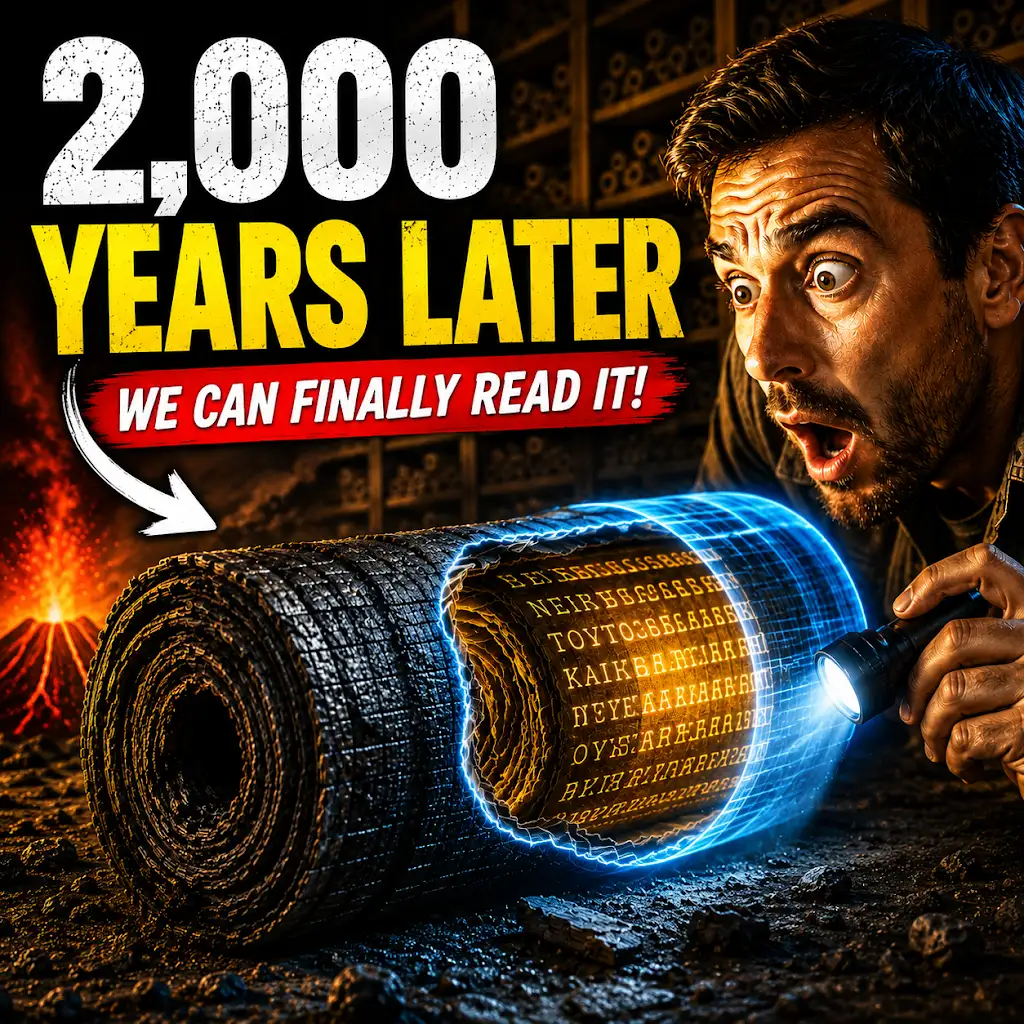
The delicate, charcoal-blackened scrolls, charred by the fiery embrace of Mount Vesuvius, lay dormant for centuries, their secrets locked within a brittle, carbonized shell. These Herculaneum Papyri, unearthed from the remarkably preserved ruins of the ancient Roman town, represent an unparalleled window into the intellectual and cultural landscape of the Roman world. For millennia, they have resisted conventional unrolling techniques, a testament to the destructive force of the eruption that both preserved and sealed their contents. However, a groundbreaking confluence of scientific innovation and historical dedication has ushered in a new era for these enigmatic artifacts: the advent of Herculaneum Papyri Virtual Unwrapping Technology. This revolutionary approach promises to unlock the lost wisdom and narratives contained within these fragile relics, offering humanity an unprecedented glimpse into its past.
The eruption of Mount Vesuvius in 79 CE was a cataclysmic event that buried Herculaneum and its neighboring cities under a torrent of volcanic ash, pumice, and pyroclastic flows. While Pompeii was primarily blanketed by ash, Herculaneum experienced a more intense and prolonged inundation, leading to a unique form of preservation. The intense heat and pressure carbonized organic materials, including papyrus, effectively turning them into fragile, charcoal-like scrolls. This process, while devastating, also created an environment where the scrolls could survive for two millennia, albeit in a highly vulnerable state.
The Discovery and Early Attempts at Unrolling
The rediscovery of Herculaneum in the 18th century sparked immense excitement among scholars and archaeologists. Excavations, initially conducted through haphazard tunneling, soon unearthed a treasure trove of artifacts, including the now-famous papyrus scrolls. The sheer volume of these scrolls, hundreds of which have been found, fueled the ambition to decipher their contents. However, early attempts at unrolling were fraught with peril. The carbonized papyrus was exceedingly brittle, and any attempt at physical manipulation often resulted in the disintegration of the scroll into countless fragments.
The Perils of Physical Intervention
Imagine holding a piece of ancient toast that has been compressed and heated to extreme temperatures. That is, in essence, the challenge faced by those who attempted to unroll the Herculaneum Papyri. The delicate layers of papyrus had fused together, and the intense heat had rendered them incredibly susceptible to breakage. Early methods involved painstaking efforts to gently separate the layers, often with the aid of specialized tools and considerable patience. These endeavors were met with limited success, with many scrolls being damaged or completely destroyed in the process. The loss of even a single scroll represented the potential loss of invaluable historical and philosophical texts.
The Intellectual Stakes: What Lies Within?
The importance of the Herculaneum Papyri cannot be overstated. They are believed to contain a wealth of philosophical treatises, literary works, and possibly even historical accounts from the ancient world. The scrolls recovered from the Villa of the Papyri, believed to have belonged to the family of Julius Caesar, are particularly significant, with a substantial number of them being philosophical in nature. The potential for discovering lost works by renowned philosophers like Epicurus, or even entirely new schools of thought, has been a driving force behind the decades of research dedicated to these texts.
Lost Philosophical Traditions and Literary Masterpieces
The philosophical texts are of paramount interest. Scholars hypothesize that these scrolls may hold complete versions of works that are currently only known through fragmented quotations or secondary sources. The possibility of uncovering the entirety of a lost philosophical system, or revealing nuances and interpretations of known philosophies that have been lost to time, is an intellectual pursuit of the highest order. Furthermore, the literary potential is equally vast, with hopes of unearthing lost plays, poems, and historical narratives that could significantly alter our understanding of ancient literature and its development.
The Limitations of Traditional Methods: A Bottleneck to Knowledge
For centuries, the scientific and academic community wrestled with the inherent fragility of the Herculaneum Papyri. The destructive nature of early attempts at unrolling, coupled with the sheer difficulty of the task, created a significant bottleneck in accessing the information contained within. The advent of new technologies was desperately needed to overcome these limitations.
The Cost of Success: Damage and Fragmentation
The unrolling process, when attempted physically, was not just difficult; it was often a destructive act in itself. Even with the most skilled hands and delicate instruments, the risk of tearing, crumbling, or completely losing sections of the papyrus was ever-present. This meant that each successful unrolling often came at the cost of some part of the original text being irrevocably damaged. The fragmented nature of many recovered scrolls further complicated the process, requiring extensive detective work to piece together the original words and sentences.
The Economic and Temporal Burden
Beyond the physical damage, the traditional methods were incredibly time-consuming and resource-intensive. Each scroll could take years, even decades, to painstakingly unroll and decipher. This immense investment of human capital and financial resources meant that only a fraction of the discovered papyri could realistically be subjected to this process, leaving the vast majority of them inaccessible and their secrets locked away.
The Development of Non-Invasive Techniques: A Paradigm Shift
The limitations of physical intervention spurred a relentless search for alternative, non-invasive methods. The goal was to “read” the scrolls without ever touching them, to coax their secrets out through scientific observation rather than physical manipulation. This quest for innovation laid the groundwork for the virtual unwrapping technologies that are now revolutionizing the field.
Early Explorations in Imaging and Analysis
Initial explorations into non-invasive techniques involved various forms of imaging. Researchers experimented with different light sources and spectral analyses to try and discern the faint ink marks from the carbonized papyrus. While these early attempts provided some limited insights, they were often hampered by the poor contrast and the inherent opacity of the charred material. The challenge was to differentiate between the ink, which is also carbon, and the papyrus itself.
The Rise of Virtual Unwrapping: Technology as the Key
The frustration of centuries gave way to a surge of optimism with the development of advanced imaging and computational techniques. The concept of “virtual unwrapping” emerged as a powerful solution, promising to unlock the papyri without posing any further risk to their fragile structure. This technological revolution is a testament to the power of interdisciplinary collaboration.
X-Ray Microtomography: Peering Through the Carbon
One of the most significant breakthroughs came with the application of X-ray microtomography. This advanced imaging technique allows scientists to create three-dimensional models of the papyri by scanning them with X-rays from multiple angles. The X-rays can penetrate the carbonized layers, revealing subtle differences in density that correspond to the ink applied by the ancient scribes.
Generating 3D Models of the Scrolls
The process involves placing a papyrus scroll within a specialized scanner. As the X-ray beam rotates around the object, detectors capture the attenuated X-rays. This data is then processed by sophisticated algorithms to reconstruct a detailed 3D representation of the scroll’s internal structure. The result is a digital model that allows researchers to virtually slice through the layers of the papyrus, layer by painstaking layer.
Computer Vision and Machine Learning: Deciphering the Hidden Ink
Once the 3D models are generated, the real challenge begins: deciphering the faint ink marks. This is where the power of computer vision and machine learning comes into play. Algorithms are trained to recognize the subtle variations in density that indicate the presence of ink, even when the contrast is extremely low.
Algorithms Trained on Known Texts
The development of these algorithms often involves training them on existing, partially unrolled Herculaneum Papyri or other carbonized texts with known content. By learning to identify patterns and features associated with ancient ink, the algorithms can then be applied to the unrolled 3D models to identify and isolate potential text. This is a process of pattern recognition on a massive scale, identifying subtle cues that are invisible to the naked eye.
The Virtual Unrolling Process: A Digital Renaissance
The virtual unwrapping process is a multi-stage endeavor. It begins with meticulous imaging, followed by data processing and the application of advanced analytical tools. The ultimate goal is to digitally “unroll” the scroll, separating its layers and revealing the text in a readable format.
Reconstructing the Scroll’s Geometry
A crucial step is accurately reconstructing the papyrus’s original geometry. As the scrolls were often found in a partially crushed or deformed state, understanding their original shape is essential for correctly orienting and aligning the layers once they are digitally separated. This involves sophisticated geometrical modeling and correction.
Isolating and Enhancing Textual Data
Once the layers are digitally separated and the geometry is understood, the focus shifts to isolating and enhancing the textual data. Algorithms are used to filter out noise, enhance the contrast between ink and papyrus, and even attempt to reconstruct missing or damaged characters. This iterative process of enhancement and refinement is critical to obtaining legible text.
The Breakthroughs Achieved: Unlocking Ancient Voices
The application of virtual unwrapping technology has already yielded remarkable results, offering tantalizing glimpses into the intellectual heritage of the ancient world. These breakthroughs are not merely academic curiosities; they represent the rediscovery of lost knowledge and the voices of individuals who lived millennia ago.
The Philosophical Revelations: Epicureanism Re-emerging
One of the most significant achievements has been the partial decipherment of several papyri that are believed to belong to the Epicurean school of philosophy. The Villa of the Papyri, where many of these scrolls were found, is strongly associated with Epicureanism, and the discovery of new texts from this tradition is of immense academic importance.
The Complete Works of Philodemus
Significant progress has been made in deciphering the works of Philodemus of Gadara, an Epicurean philosopher and poet who lived in the 1st century BCE. Virtual unwrapping has allowed for the retrieval of substantial portions of his philosophical treatises, shedding new light on Epicurean ethics, epistemology, and theology. This is particularly exciting as much of Philodemus’s work was previously only known through fragments.
Beyond Philosophy: Literary and Historical Insights
While philosophy has been a primary focus, virtual unwrapping also holds the promise of uncovering lost literary and historical works. The potential for discovering new plays by ancient playwrights or entirely unknown historical accounts is a thrilling prospect for scholars across various disciplines.
Uncovering Lost Literary Genres
The possibility of finding works that represent previously unknown literary genres or stylistic innovations is a tantalizing prospect. The ancient world was incredibly diverse in its literary output, and the Herculaneum Papyri offer a unique opportunity to expand our understanding of this diversity.
The Collaborative Nature of the Project: A Global Effort
The success of the Herculaneum Papyri Virtual Unwrapping Technology is a testament to the power of international collaboration. Researchers from various institutions and disciplines have come together, pooling their expertise and resources to tackle this monumental challenge.
International Research Teams and Partnerships
This project is not confined to a single university or country. It involves physicists, computer scientists, classicists, paleographers, and conservators working together. These collaborations foster a cross-pollination of ideas and techniques, accelerating the pace of discovery and innovation.
The Future of Virtual Unwrapping: Expanding the Possibilities
The current achievements represent just the beginning of what virtual unwrapping technology can offer. Ongoing research and development are pushing the boundaries of what is possible, promising even more profound discoveries in the years to come.
Refining Imaging and Analytical Techniques
The continuous refinement of X-ray microtomography and the algorithms used for text extraction is crucial. Researchers are constantly seeking ways to improve resolution, reduce scanning times, and enhance the accuracy of the decipherment process.
Higher Resolution and Faster Scanning
Advancements in X-ray detector technology and computational power are leading to higher resolution scans, allowing for the visualization of even finer details within the papyri. Similarly, faster scanning techniques will enable the processing of more scrolls in a shorter timeframe.
Artificial Intelligence and Deep Learning: The Next Frontier
The integration of artificial intelligence and deep learning promises to revolutionize the decipherment process. These advanced AI models are capable of learning and adapting, potentially identifying patterns and making connections that are currently beyond human capability.
Automating Decipherment and Reconstruction
The ultimate goal is to develop AI systems that can automate significant portions of the decipherment and reconstruction process. This would free up human researchers to focus on interpretation and historical analysis, rather than the laborious task of character recognition.
The Ethical Considerations: Preservation and Accessibility
As this technology advances, it also brings with it important ethical considerations regarding the preservation of the original artifacts and the accessibility of the discovered knowledge.
Balancing Preservation with Scholarly Access
Ensuring that the original papyri are not subjected to any unnecessary risk while still providing broad scholarly access to the digitally recovered texts is a delicate balance. The virtual unwrapping process, by its very nature, contributes to this balance by minimizing physical handling.
Open Access and Digital Archives
The establishment of open-access digital archives will be crucial for disseminating the findings to a global audience. This ensures that the rediscovered knowledge is not confined to a select few but is available to scholars, students, and the public alike, fostering a broader understanding of our shared heritage. The Herculaneum Papyri Virtual Unwrapping Technology is not merely a scientific endeavor; it is a bridge to the past, a conduit for lost voices, and a powerful testament to humanity’s enduring quest for knowledge and understanding. It is a digital renaissance, unrolling the scrolls of time and revealing the wisdom of the ancients for generations to come.