
The Unraveling of Ancestral Threads: Historical Genetics’ Triumph Over Past Limitations
For centuries, the pursuit of justice and understanding the human story relied on fragmented clues. Legal systems depended on eyewitnesses, circumstantial evidence, and the often-unreliable oral histories passed down through generations. Similarly, historical inquiry was a painstaking process of deciphering dusty documents, piecing together family trees from parish records, and interpreting the echoes of the past through archaeological finds. Both disciplines, while valuable, were inherently limited by the scarcity and degradation of evidence. The advent of historical genetics and, more recently, forensic genealogy, has revolutionized these fields, offering unprecedented power to connect the present with the distant past, to identify unknown perpetrators, and to illuminate the lives of our ancestors with a precision previously confined to the realm of science fiction. These disciplines have not merely supplemented existing methods; they have fundamentally reshaped the possibilities for solving cold cases, identifying victims, and understanding human migration and evolution.
For those interested in the complexities surrounding historical genetics and the limitations of forensic genealogy, a related article that delves into the broader implications of genetic research in conflict zones can be found at this link. This article explores how genetic data can intersect with issues of identity and justice, particularly in regions affected by prolonged conflict, highlighting the challenges and ethical considerations that arise in the application of forensic genealogy in such contexts.
The Dawn of Genetic Imprint: From Blood Typing to DNA Fingerprinting
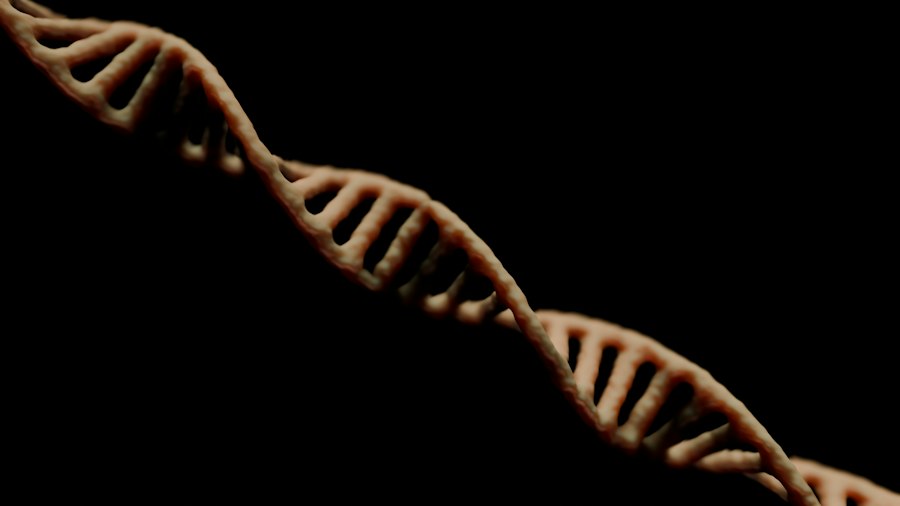
The initial steps toward a genetic understanding of identity were tentative, built upon the foundational discoveries of blood groups in the early 20th century. While blood typing offered a limited form of identification, it was far from definitive. The true revolution, however, began with the discovery of deoxyribonucleic acid (DNA) and the subsequent realization that its structure contained a unique biological blueprint for every individual. This understanding paved the way for the development of DNA fingerprinting, a technique that would profoundly alter the landscape of forensic science.
Early Forensic Applications: Limited but Transformative
The early applications of DNA technology in forensics, while groundbreaking, were constrained by the technology itself and the limited understanding of DNA’s full potential. Techniques like Restriction Fragment Length Polymorphism (RFLP) analysis, developed in the 1980s, were cumbersome, requiring relatively large amounts of degraded DNA and considerable time for processing. Despite these limitations, RFLP provided a significant leap forward. It allowed for the statistical likelihood of a match between crime scene DNA and a suspect to be calculated, moving beyond mere comparison to a probabilistic assessment of guilt or innocence. This was a monumental shift from the subjective interpretations of earlier forensic methods.
The Polymerase Chain Reaction (PCR) and the Amplification of Hope
The development of the Polymerase Chain Reaction (PCR) in the late 1980s marked a paradigm shift. PCR allowed scientists to amplify tiny amounts of DNA, making it possible to analyze samples that were previously too degraded or too small to be useful. This technological breakthrough dramatically expanded the applicability of DNA analysis, enabling the identification of individuals from minute biological traces such as a single hair follicle or a skin cell left at a crime scene. This amplification capability was crucial for unlocking the potential of DNA in challenging forensic scenarios, including cold cases where evidence might have been collected decades prior.
Short Tandem Repeats (STRs) and the Refinement of Identity
The subsequent development of Short Tandem Repeat (STR) analysis further refined DNA profiling. STRs are short, repetitive DNA sequences that vary in length among individuals. By analyzing a set of standard STR loci, a highly discriminating DNA profile can be generated, providing an extremely powerful tool for identification. The establishment of national DNA databases, such as CODIS in the United States, allowed for the systematic comparison of crime scene profiles against known offenders, leading to a surge in solved cases and a deterrent effect on criminal activity. This standardization and database integration represented a crucial step in overcoming the initial limitations of manual interpretation and limited accessibility.
Forensic Genealogy: Bridging the Gap Through Relational Networks

While historical genetics provided the tools to analyze DNA, forensic genealogy emerged as a powerful methodology for interpreting that genetic data in the context of familial relationships. This discipline leverages both genetic information and traditional genealogical research to identify unknown individuals, particularly perpetrators of crimes and unidentified victims. It acknowledges that while an individual’s DNA is unique, their genetic signature is inextricably linked to their family tree.
The Rise of Public Genealogy Databases and Ancestry Platforms
The explosion of public genealogy databases and direct-to-consumer ancestry testing services in the 21st century created an unprecedented reservoir of genetic information. Millions of individuals have voluntarily submitted their DNA for genealogical research, generating vast datasets that map out familial connections across generations. These platforms, while primarily intended for personal ancestry exploration, inadvertently created a powerful, albeit unstructured, resource for forensic investigations. The ability to upload unidentified DNA profiles to these public databases and search for matches with known individuals opened a new frontier in criminal investigations.
Identifying the Unidentified: Unraveling Cold Cases and Historical Mysteries
Forensic genealogy has proven particularly adept at solving cold cases that have remained unsolved for decades. By identifying a distant genetic relative of a suspect through a public genealogy database, investigators can then work backward through the family tree, using traditional genealogical research and further DNA testing, to pinpoint the perpetrator. This approach has breathed new life into investigations that were once considered intractable, offering closure to victims’ families and bringing perpetrators to justice. Beyond criminal cases, forensic genealogy has also been instrumental in identifying the remains of unknown soldiers or individuals lost to historical events, connecting them to their living descendants and preserving their legacies.
Ethical Considerations and the Responsible Use of Genetic Information
The power of forensic genealogy is accompanied by significant ethical considerations. The voluntary submission of DNA to commercial ancestry platforms raises questions about privacy, consent, and the potential for misuse of genetic information. Investigators must navigate a complex landscape of legal and ethical guidelines to ensure that genetic data is used responsibly and with appropriate legal authorization. The balancing act between solving crimes and protecting individual privacy is an ongoing challenge, demanding careful consideration of data access, retention policies,, and the potential for genetic discrimination.
Historical Genetics: Illuminating Our Ancestral Past
Beyond the realm of forensic science, historical genetics has opened a remarkable window into the deep past, allowing us to reconstruct the migration patterns, population dynamics, and evolutionary history of humankind. By analyzing ancient DNA (aDNA) extracted from fossilized remains, scientists can now directly examine the genetic material of our ancestors, bypassing the inferences and interpretations of purely archaeological or historical records.
The Challenges of Ancient DNA: Degradation and Contamination
Working with ancient DNA presents significant scientific hurdles. DNA degrades over time, especially in warmer climates or under unfavorable environmental conditions. Contamination from modern human DNA is also a persistent problem, requiring stringent laboratory protocols and sophisticated analytical techniques to distinguish true ancient genetic signals from background noise. Early attempts to extract and analyze aDNA were often plagued by contamination, leading to erroneous conclusions. Overcoming these challenges has required the development of specialized extraction methods, ultra-clean laboratory environments, and advanced bioinformatic tools for data analysis and filtering.
Revealing Migration Routes and Population Movements
The analysis of aDNA has provided definitive answers to long-standing questions about human migration. By comparing genetic profiles from ancient individuals found in different geographical locations, researchers can trace the movement of populations across continents and millennia. This has shed light on the peopling of the Americas, the spread of agriculture across Europe, and the complex intermingling of various ancestral groups. For instance, aDNA studies have revealed the intricate details of the Indo-European expansion, identifying both the genetic contributions and the routes taken by these ancient populations.
Unraveling Human Evolution and Disease Predisposition
Historical genetics has also made profound contributions to our understanding of human evolution. By examining the genetic variations present in ancient populations, scientists can track the development of key human traits, such as adaptations to different climates or diets. Furthermore, analyzing aDNA from individuals who lived during historical pandemics has provided insights into the evolution of pathogens and the genetic factors that influenced human susceptibility and resistance to diseases. This has implications for understanding current disease patterns and developing future strategies for disease prevention and treatment.
In exploring the complexities of forensic genealogy, one must consider the historical genetics limitations that can impact investigations. These limitations often arise from the availability and accuracy of genetic data, which can hinder the identification of individuals in cold cases. For a deeper understanding of how various factors influence forensic science, you might find it interesting to read an article about military strategies in a different context, such as the one found at Guardians of the Moon. This piece highlights the importance of strategic planning, which parallels the meticulous approach required in forensic genealogy.
Overcoming Past Limitations: A Synthesis of Disciplines
| Limitation | Description | Impact on Forensic Genealogy | Example |
|---|---|---|---|
| Degraded DNA Samples | Historical samples often have fragmented or chemically altered DNA. | Reduces the quality and quantity of genetic data available for analysis. | Old bones or hair shafts yielding incomplete STR profiles. |
| Limited Reference Databases | Historical populations may not be well represented in modern genetic databases. | Hinders accurate matching and genealogical inference. | Difficulty tracing ancestry in underrepresented ethnic groups. |
| Population Admixture | Complex historical migrations and mixing obscure genetic signals. | Complicates the identification of specific lineage or geographic origin. | Mixed ancestry leading to ambiguous genealogical results. |
| Incomplete Historical Records | Genealogical records may be missing or inaccurate for older generations. | Limits the ability to corroborate genetic findings with documented lineage. | Missing birth or marriage records from 18th century. |
| Ethical and Privacy Concerns | Use of genetic data from distant relatives raises consent issues. | May restrict access to certain databases or data sharing. | Restrictions on using public genealogy databases for forensic purposes. |
| Technological Limitations | Older sequencing methods may not detect all genetic variants. | Limits resolution and accuracy of genetic ancestry inference. | Inability to detect rare or novel mutations in historical samples. |
The synergy between historical genetics and forensic genealogy represents a powerful convergence of scientific disciplines, each building upon and enhancing the capabilities of the other. The limitations that once constrained investigations into the past, both recent and ancient, are rapidly being overcome through this integrated approach.
The Interplay of Techniques: From Ancient Traces to Modern Justice
The techniques developed for historical genetics, such as advanced DNA extraction and sequencing methods, are directly applicable to forensic investigations, particularly when dealing with degraded or challenging samples. Conversely, the genealogical methodologies honed by forensic genealogy provide a crucial framework for interpreting the genetic data unearthed by historical genetics, allowing for the reconstruction of family lineages and population histories. This interplay is crucial for making sense of the vast amounts of genetic information being generated. For example, aDNA from ancient burial sites can be analyzed to identify early human populations, and then forensic genealogy techniques can be applied to understand their relationship to modern populations, even if those relationships are extremely distant.
The Power of Data Integration: Unlocking Hidden Connections
The integration of genetic data with historical records, archaeological findings, and genealogical databases is unlocking previously hidden connections. By cross-referencing genetic profiles with historical documents, it becomes possible to confirm or refute oral traditions, identify individuals mentioned in historical texts, and gain a richer understanding of their lives and relationships. This data integration moves beyond simply identifying a genetic match; it provides a narrative context, transforming raw genetic data into compelling historical and legal evidence.
The Future of Identity: Ongoing Innovations and Expanding Frontiers
The field continues to evolve at a rapid pace. Advances in next-generation sequencing technologies are allowing for the analysis of even more degraded DNA and the extraction of greater amounts of genetic information. The development of more sophisticated bioinformatic tools is enhancing our ability to interpret complex genetic data and to reconstruct familial relationships with greater accuracy. Furthermore, the increasing accessibility of genetic information, coupled with ongoing ethical discussions, will continue to shape the responsible application of these powerful disciplines. The future promises even more remarkable achievements in solving historical mysteries, delivering justice, and deepening our understanding of the human journey.
The Expanding Horizons of Genetic Insight
The impact of historical genetics and forensic genealogy extends far beyond the courtroom or the dusty archives. They are fundamentally altering our understanding of what it means to be human, tracing our lineage back through millennia and revealing the intricate tapestry of our shared ancestry. The limitations that once seemed insurmountable have been systematically dismantled, replaced by a new era of genetic insight that promises to continue unraveling the secrets of the past and shaping our understanding of the present.
Personal Ancestry and Identity: A Deeper Connection to the Past
For individuals, these disciplines offer a profound connection to their personal heritage. The ability to trace family lines back centuries, to understand the journeys and challenges of ancestors, fosters a deeper sense of identity and belonging. It moves beyond the often-speculative narratives of family lore to a scientifically grounded understanding of one’s place in the grand sweep of human history. This personal exploration also fuels further genealogical research, creating a virtuous cycle of discovery.
Societal Impact: Informing Public Health and Historical Narratives
On a broader societal level, the insights gained from historical genetics inform public health initiatives by revealing genetic predispositions to diseases and understanding the evolutionary history of pathogens. It also compels a re-evaluation of established historical narratives, challenging assumptions and providing new perspectives on past events and human interactions. The ability to definitively link individuals and populations to historical events or migrations can lead to a more nuanced and accurate understanding of collective human experience.
The Ethical Landscape: Navigating the Future of Genetic Knowledge
As these fields continue to advance, the ethical considerations surrounding genetic information will remain paramount. Ongoing dialogue about data privacy, consent, potential for discrimination, and equitable access to these technologies is crucial. The responsible development and application of historical genetics and forensic genealogy will depend on a continued commitment to ethical principles, ensuring that the pursuit of knowledge serves humanity’s best interests. The future is not just about what we can discover, but how we choose to use that knowledge. The journey of unraveling our ancestral threads has only just begun, and the insights it promises are profound.

The Jesse James DNA Myth: Why Are There 3 Graves?
FAQs
What are the limitations of historical genetics in forensic genealogy?
Historical genetics in forensic genealogy is limited by the availability and quality of DNA samples from historical individuals, as well as the degradation of DNA over time.
How does the lack of genealogical records impact forensic genealogy?
The lack of genealogical records can make it difficult to establish familial relationships and trace ancestry accurately, which is crucial in forensic genealogy investigations.
What challenges arise when using historical genetic data in forensic genealogy?
Challenges include the potential for genetic mutations over generations, incomplete family trees, and the difficulty in distinguishing between individuals with similar genetic profiles.
Why is it important to consider population genetics in forensic genealogy?
Population genetics helps in understanding genetic variations within different populations, which is essential for interpreting DNA evidence accurately and avoiding misinterpretations in forensic genealogy.
How can ethical considerations impact the use of historical genetics in forensic genealogy?
Ethical considerations such as consent, privacy, and the potential for uncovering sensitive information about living relatives can influence the ethical use of historical genetics in forensic genealogy.