The wind howled, a constant, biting presence in the frozen expanse of Greenland. Beneath its relentless assault, a vast, icy wilderness stretched to the horizon, seemingly untouched and uninhabited. Yet, buried deep within this formidable landscape, a secret city once thrived, a testament to human ambition and the Cold War’s icy grip. This was Camp Century, a military base conceived not on fertile soil or arid desert, but within the very heart of a glacier. Its story is one of audacious engineering, strategic foresight, and ultimately, a silent surrender to the inexorable forces of nature.
The mid-20th century was a period of heightened tension, a global ideological struggle known as the Cold War. The United States and the Soviet Union, superpowers locked in a precarious standoff, engaged in a relentless arms race, a silent competition for technological and military dominance. Nuclear proliferation cast a long shadow, and the possibility of direct conflict, while terrifying, was a constant consideration. In this climate of uncertainty, strategic positioning and the ability to project power became paramount.
The Strategic Need for Arctic Dominance
The Arctic, once a remote and inaccessible frontier, suddenly found itself at the forefront of strategic planning. With the advent of intercontinental ballistic missiles (ICBMs), the shortest flight paths between North America and the Soviet Union traversed the polar regions. This geographical reality meant that the Arctic became a critical theater for both surveillance and potential offensive operations. Military planners recognized the need for a robust presence in this unforgiving environment, a base that could serve as a forward operating post, a communication hub, and a crucial early warning system against Soviet aggression.
The “Polaris” Submarine Program and its Arctic Implications
A significant driver for establishing a presence in Greenland was the development of the U.S. Navy’s Polaris submarine program. These nuclear-powered submarines, armed with ballistic missiles, offered a mobile and survivable nuclear deterrent. However, their operational effectiveness in Arctic waters, particularly during the long, dark winters, presented considerable challenges. A base in Greenland could facilitate critical research into submarine operations under ice, provide support for naval exercises, and act as a crucial link in the communication chain for these submerged assets.
Project Iceworm: The Genesis of Camp Century
The audacious concept that would ultimately lead to Camp Century emerged from the minds of engineers and military strategists tasked with this Arctic challenge. The idea was to create a facility that was not only functional but also resilient to the extreme environmental conditions of Greenland. The solution? To build inside the ice. This seemingly counterintuitive approach offered a unique set of advantages.
The Vision of a Mobile and Hidden Base
The primary vision was to create a network of subglacial bases, collectively known as “Project Iceworm.” Camp Century was to be the pilot project, a proof of concept for this innovative strategy. The idea was to construct a base that could be largely hidden from Soviet reconnaissance, offering a significant strategic advantage. Furthermore, the ice itself would provide natural insulation and protection from the elements. The initial conception envisioned a sprawling complex, capable of housing thousands of personnel and a significant amount of military hardware.
Camp Century, an abandoned military base located in Greenland, has a fascinating history tied to Cold War-era military strategies and the exploration of Arctic environments. For those interested in the broader implications of military operations and their impact on geopolitics, a related article discusses how various companies are exploiting loopholes in international regulations, particularly in Mexico. This article can provide insight into the ongoing complexities of military and corporate interests in different regions. To learn more, you can read the article here: Chinese Companies Exploiting Mexico Loophole.
Construction in the Ice: A Triumph of Engineering Ingenuity
The challenges of building within a moving glacier were immense, pushing the boundaries of contemporary engineering and construction techniques. Yet, the determination to establish this subglacial outpost fueled a remarkable feat of human ingenuity.
The “Melt-Down” Construction Method
The primary construction method employed at Camp Century was the “melt-down” technique. Instead of excavating a cavern and then building walls, engineers designed prefabricated modules and then used steam to melt them into the ice. This allowed the ice to essentially form the structure’s foundation and walls. As the ice flowed and shifted, it would re-encapsulate the structures, effectively holding them in place.
Prefabricated Modules and their Transport
The entire base was designed as a series of prefabricated modules. These sections were constructed in the United States and then shipped to Greenland. Once on-site, they were moved inland using specialized heavy-duty tracked vehicles. The sheer scale of transporting these massive modules across the treacherous Arctic terrain was a logistical challenge in itself, requiring meticulous planning and execution.
The Snow-Trencher and its Revolutionary Role
A key piece of equipment that enabled the construction of Camp Century was the Snow-Trencher. This massive vehicle, essentially a mobile tunnel-boring machine designed for ice, was crucial for excavating the initial corridors and pathways within the glacier. It could churn through hundreds of feet of compacted snow and ice, creating the foundational routes for the prefabricated modules to be inserted. Without the Snow-Trencher, the vision of a subglacial city would have remained an impossible dream.
Creating the Grid: A Network of Tunnels and Rooms
The construction process involved creating a vast network of parallel trenches, linked by connecting tunnels. These trenches would then house the prefabricated modules, which served as barracks, mess halls, workshops, laboratories, and even a hospital. The entire base was laid out in a gridded pattern, designed for efficiency and ease of movement within the subglacial environment. The sheer scale of the undertaking meant that thousands of feet of tunnels were eventually carved into the ice.
Life in the Subglacial City: A Unique and Challenging Existence
Life within Camp Century was unlike any other military installation. The isolation, the constant subterranean environment, and the ever-present threat of the moving ice created a unique and challenging existence for the personnel stationed there.
The Subterranean Environment: Light, Heat, and Psychological Effects
Personnel lived and worked in a completely artificial environment. Natural sunlight was absent, replaced by the constant glow of fluorescent lights. The temperature within the base was maintained at a comfortable level, but the psychological impact of living deep within the ice, with no view of the outside world, took its toll on some. The enclosed nature of the base, while offering protection, could also foster feelings of claustrophobia.
Adapting to the Arctic Darkness and Isolation
The long periods of Arctic darkness, with months of continuous night, further amplified the sense of isolation. Communication with the outside world, while present, was not instantaneous, and the sheer distance from home was a constant factor. Recreation and social activities were crucial for maintaining morale. The base featured amenities like a cinema, a library, and recreational facilities to help personnel cope with the unique demands of their assignment.
The “Ice Hotel” of the Military: Amenities and Daily Life
Despite its austere surroundings, Camp Century offered a surprising level of amenities for its time. The prefabricated modules were designed to be habitable, with living quarters, common areas, and essential services.
Culinary Delights in the Arctic Wilderness
The mess hall was a central hub of activity, providing regular meals for the hundreds of personnel stationed at the base. While the menu might not have rivaled fine dining establishments, it was designed to provide sustenance and comfort in the challenging environment. Efforts were made to vary the diet and offer a taste of home whenever possible, often relying on preserved and canned goods.
Maintaining Operational Readiness: Work and Training
The primary purpose of Camp Century was military in nature. Personnel were engaged in various operational duties, including research, communication, and readiness training. The base served as a platform for testing new technologies and strategies relevant to Arctic warfare and surveillance.
The Unseen Threat: The Shifting Glacier and the Base’s Demise
The very element that provided Camp Century with its unique advantages – the ice – ultimately proved to be its undoing. Glaciers are not static entities; they are constantly moving, albeit slowly. This inexorable flow of ice began to exert an increasing pressure on the base.
The Glacier’s Inevitable Flow and its Impact
The ice sheet upon which Camp Century was built was not a stable foundation. It was a dynamic, moving mass. As the glacier flowed downhill, it began to exert immense pressure on the subglacial structures. The tunnels, initially carved with precision, began to deform and buckle. The prefabricated modules, designed to withstand some stress, were subjected to forces beyond their intended capacity.
The Compressing Ice and the Buckling Tunnels
The constant pressure of the overlying ice compressed the tunnels, causing them to narrow and warp. Walls that were once straight began to bow inwards, and ceilings started to sag. This deformation made passage through the tunnels increasingly difficult and hazardous.
The Growing Danger: Structural Integrity and Operational Risks
As the ice continued its relentless movement, the structural integrity of Camp Century began to deteriorate. The once-proud subglacial city started to buckle under the strain. The risks to personnel increased significantly.
The Need for Constant Maintenance and Repair
Maintaining the base became an increasingly Sisyphean task. Engineers and technicians worked tirelessly to shore up failing structures, reinforce buckling tunnels, and make repairs. However, they were fighting a battle against a force of nature that was ultimately unstoppable.
The Inevitable Decision: Evacuation and Abandonment
By the late 1960s, it became clear that Camp Century was no longer sustainable. The cost and effort required to maintain the base in a safe and operational condition were becoming prohibitive. The strategic advantages it offered were being outweighed by the ever-increasing risks. In 1966, the difficult decision was made to evacuate the base and abandon it to the ice.
Camp Century, an abandoned military base located in Greenland, has a fascinating history that intertwines with Cold War strategies and the quest for Arctic exploration. The site was initially established in the 1950s as part of a secret project aimed at developing a nuclear missile launch facility beneath the ice. As the years passed, the base was ultimately abandoned, leaving behind remnants of its once-active presence. For those interested in the broader context of lost innovations and their impact on history, a related article can be found here, which explores various groundbreaking inventions that have shaped our world.
Legacy of the Frozen City: A Ghost in the Glacier
| Year | Event |
|---|---|
| 1959 | Construction of Camp Century begins |
| 1960 | Camp Century becomes operational |
| 1963 | Project Iceworm and Camp Century abandoned |
| 1995 | Denmark and the US sign an agreement for the removal of Camp Century’s waste |
| 2016 | Concerns raised about potential release of pollutants due to melting ice |
Though abandoned, Camp Century did not simply disappear. Its story continues to resonate, a potent reminder of human ambition, technological prowess, and the humbling power of nature.
The Environmental Concerns of a Frozen Relic
As Camp Century was left to the mercy of the glacier, it left behind a considerable amount of waste, including diesel fuel, sewage, and other materials. The concern is that as the ice melts, these contaminants could eventually be released into the environment, posing a long-term ecological threat.
The Melting Glacier and Potential Contamination
Scientists and environmentalists are increasingly concerned about the fate of Camp Century. As global temperatures rise and Greenland’s ice sheet melts at an accelerating rate, the buried base is being exposed. The potential for the release of hazardous materials into the pristine Arctic environment is a growing worry.
A Symbol of Cold War Ingenuity and Its Limitations
Camp Century stands as a monument to the Cold War era’s intense strategic competition and the willingness to undertake extraordinary engineering projects in pursuit of perceived advantages. It showcases the remarkable ingenuity of the time, a testament to what could be achieved with sufficient resources and a clear objective.
The Audacity of Human Endeavor in Extreme Environments
The construction and operation of Camp Century represent a remarkable feat of human endeavor in one of the planet’s most inhospitable environments. It highlights humanity’s capacity to adapt, innovate, and overcome seemingly insurmountable obstacles.
A Cautionary Tale of Technological Hubris and Environmental Respect
Ultimately, Camp Century serves as a cautionary tale. It demonstrates that even the most advanced engineering can be no match for the slow, inexorable power of nature. It underscores the importance of understanding and respecting environmental forces, and the potential long-term consequences of our actions, even in remote and seemingly stable environments. The frozen city, a ghost in the glacier, continues to whisper its stories of ambition, innovation, and the enduring power of the natural world.
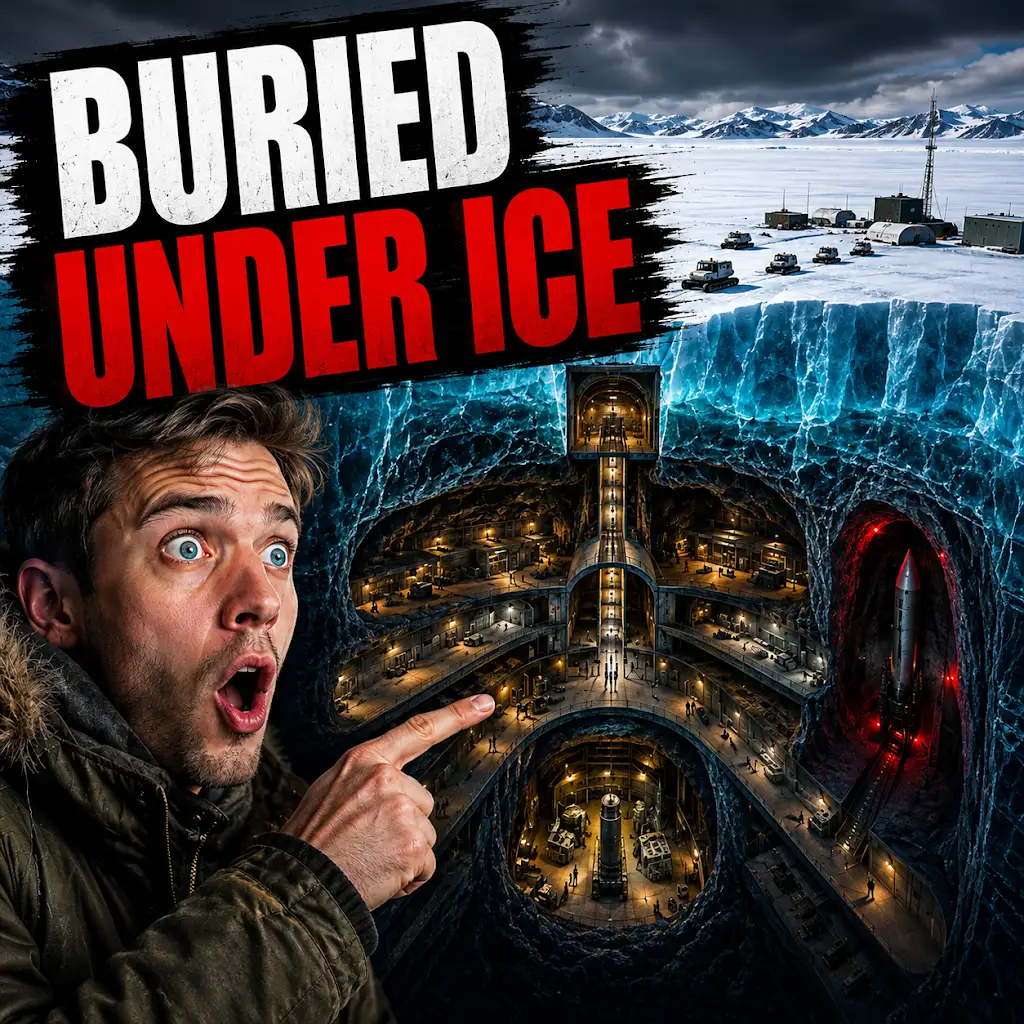
The U.S. Built a Nuclear City Under Greenland. The Ice Won.
FAQs
What is Camp Century?
Camp Century was a United States military base located in Greenland, built in 1959 as part of a secret Cold War project known as “Project Iceworm.” It was intended to be a network of tunnels and chambers under the ice, housing up to 600 nuclear missiles.
Why was Camp Century abandoned?
Camp Century was abandoned in 1967 due to the impracticality of the ice tunnels and the environmental impact of the base. The constant movement of the ice sheet caused the tunnels to become unstable, and the project was ultimately deemed unfeasible.
What was the environmental impact of Camp Century?
When Camp Century was abandoned, it was believed that the waste left behind, including diesel fuel, sewage, and radioactive coolant from the nuclear reactor, would be safely entombed in the ice forever. However, as the ice sheet continues to melt due to climate change, there is concern about the potential release of these pollutants into the environment.
What is the current status of Camp Century?
Camp Century remains abandoned and is now buried under layers of ice and snow. The Danish government, which has jurisdiction over Greenland, is working with the United States to address the environmental and security concerns associated with the base.
What is the significance of Camp Century in history?
Camp Century is significant in history as a symbol of the Cold War era and the ambitious, and sometimes controversial, military projects that were undertaken during that time. It also serves as a reminder of the long-term environmental impact of human activities in remote and fragile ecosystems.