
The long-held theory that a severe drought alone brought about the collapse of the Hittite Empire in the Late Bronze Age has been challenged by new research, suggesting a more complex interplay of factors led to the demise of this once-mighty Near Eastern power. For decades, scholars have pointed to evidence of prolonged arid conditions as the primary culprit behind the empire’s rapid decline around 1200 BCE. However, a recent comprehensive study, integrating archaeological data, paleoclimate records, and textual analysis, paints a far more nuanced picture, highlighting the critical role of socio-political instability, economic disruption, and military pressures in conjunction with environmental stress.
Revisiting the Environmental Narrative
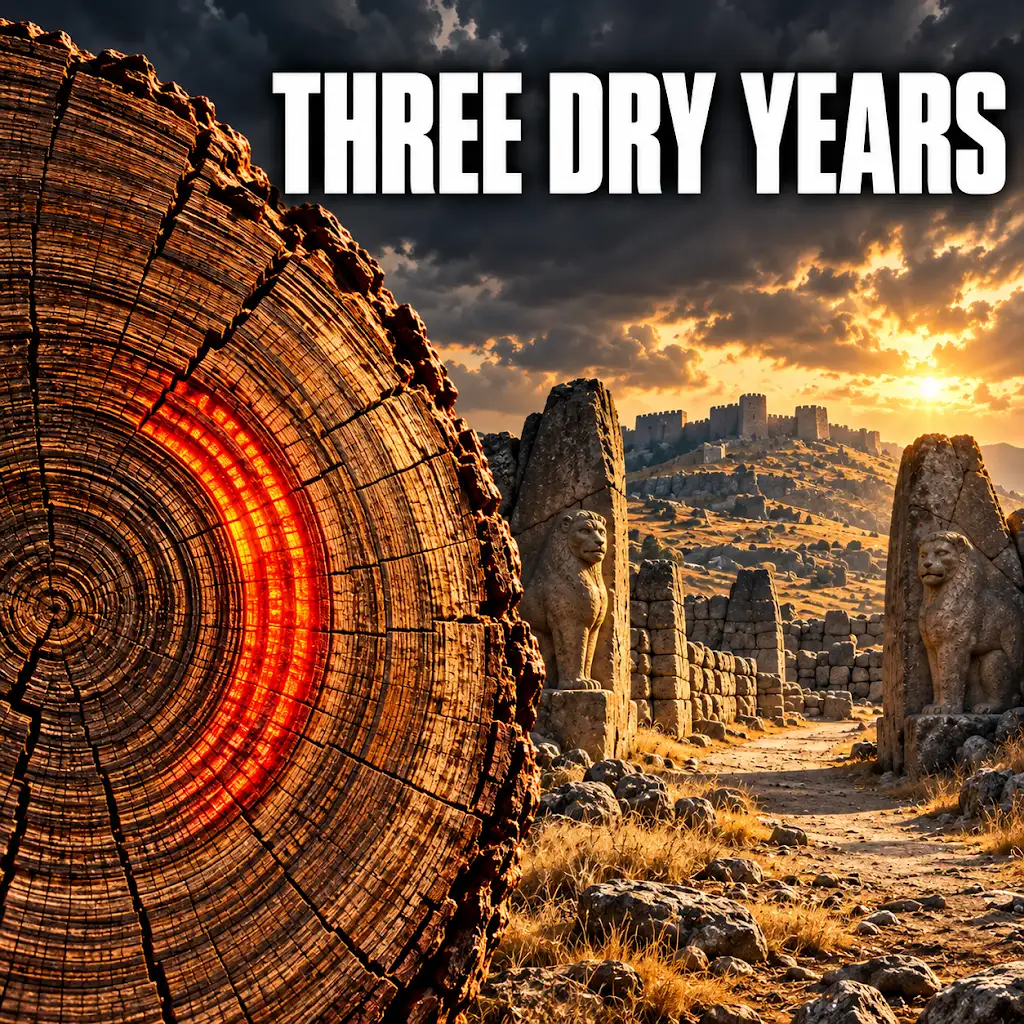
The notion of a climate-driven collapse gained significant traction following the identification of paleoclimatic evidence indicating a period of severe drought in the Eastern Mediterranean during the late second millennium BCE. This evidence, primarily derived from lake sediment cores and speleothems (cave formations), suggested a dramatic reduction in rainfall across the region. For the Hittites, whose agricultural heartland was situated in Anatolia, a land heavily reliant on rain-fed crops, such arid conditions would have had devastating consequences. Crop failures would have led to widespread famine, population displacement, and a breakdown of the social order. This environmental narrative, while compelling, has often been presented as a singular, deterministic cause, overshadowing other potential contributing factors.
The Limitations of Paleoclimate Proxies
While the paleoclimate data provides undeniable evidence of climatic shifts, its interpretation as the sole driver of Hittite collapse warrants closer scrutiny. The resolution of some of these records, particularly those from distant regions or with broader temporal sampling, may not perfectly align with the precise timeline and regional intensity of the Hittite crisis. Furthermore, attributing a civilization’s downfall to a single environmental variable, even a significant one like drought, risks oversimplification. The resilience of societies is often a function of their adaptive capacity, which is itself influenced by a multitude of internal and external factors. The Hittites, like many ancient states, likely possessed some degree of resilience against localized environmental challenges. The question is whether this resilience was ultimately overwhelmed by a confluence of stressors.
Re-evaluating the Anatolian Climate Experience
Recent advances in climate reconstruction have begun to offer more localized and nuanced perspectives on Anatolian climate history. Studies focusing on specific lake systems within or adjacent to the Hittite core territory are providing higher-resolution data. While these studies still indicate periods of reduced precipitation, they also suggest that the severity and duration might have varied across different sub-regions of the empire. Critically, some findings indicate that the drought may not have been a sudden, catastrophic event, but rather a prolonged period of increasing aridity that gradually strained resources. This gradual decline could have made the empire more vulnerable to other shocks, rather than being the sole precipitating event. The new research emphasizes that the Hittites were not simply passive victims of climate change; their response to it, and their existing vulnerabilities, were crucial.
The Hittite civilization, known for its remarkable achievements in the ancient world, faced a complex interplay of factors that contributed to its decline, with drought being a significant element but not the sole cause. This multifaceted situation is echoed in discussions about environmental challenges faced by modern societies, such as the plight of sinking island nations. For a deeper understanding of how climate change impacts vulnerable regions today, you can read more in the article on the threats posed to these nations by visiting this link.
Unpacking the Internal Stresses
Beyond the environmental narrative, the new study places significant emphasis on the internal vulnerabilities and socio-political dynamics that may have weakened the Hittite Empire prior to its final collapse. Evidence from Hittite texts, archaeological excavations of administrative centers, and the study of settlement patterns all point towards a system that was perhaps already under considerable strain, making it less able to withstand external pressures.
Succession Crises and Royal Instability
The Hittite Empire was characterized by a complex system of royal succession, which, at times, led to internal power struggles and periods of instability. While the empire achieved remarkable longevity, there were instances of dynastic disputes and competing claims to the throne. Such internal divisions could have weakened the central authority, diverted resources away from essential state functions, and made the empire more susceptible to external threats. The period leading up to the collapse may have been marked by an intensification of these internal tensions, eroding the empire’s capacity for unified action and effective governance. This could have manifested in weakened military command, reduced tax collection, and a general decline in administrative efficiency.
Economic Strain and Resource Management
The Hittite economy was heavily reliant on agriculture and the control of trade routes, particularly those related to metals like iron and copper. Evidence suggests that by the Late Bronze Age, the empire may have been facing significant economic challenges. Over-exploitation of agricultural land, disruptions to trade networks due to regional conflicts, and the potential for internal corruption or mismanagement of resources could have all contributed to economic strain. A weakened economy would have directly impacted the state’s ability to fund its army, maintain infrastructure, and provide for its populace, making it more vulnerable to famine and social unrest. The empire’s vast territorial reach also presented significant logistical challenges in terms of resource distribution and administration, potentially exacerbating any economic downturn.
Social Stratification and Elite Competition
Like many ancient societies, the Hittite Empire likely had a stratified social structure with competing elite groups. Tensions between the royal court, provincial governors, and powerful landowning families could have created internal friction. If these elite groups were prioritizing their own interests over the collective good of the empire, it could have undermined the state’s ability to respond effectively to crises. The breakdown of central authority might have allowed regional strongmen to consolidate power, further fragmenting the empire and hindering a cohesive defense against external enemies.
The Role of External Pressures
The Late Bronze Age was a period of significant upheaval across the Eastern Mediterranean, often referred to as the “Late Bronze Age Collapse.” The Hittite Empire did not exist in isolation, and the study argues that the pressures exerted by neighboring powers and migrating groups played a crucial role in its downfall, acting in concert with internal weaknesses and environmental stress.
The “Sea Peoples” and Migratory Movements
The mysterious “Sea Peoples” are frequently cited as a major factor in the collapse of numerous Late Bronze Age civilizations. While their exact origins and composition remain debated, evidence suggests that these groups were engaged in widespread raiding and migration across the Eastern Mediterranean, disrupting trade routes, sacking cities, and contributing to widespread instability. The Hittites would have been a prime target for such incursions, and their ability to repel these diverse and potentially well-armed groups would have been severely tested, especially if the empire was already weakened by internal strife and environmental hardship. The archaeological record shows evidence of destruction at several Hittite sites that could be attributed to these migrations.
Rival Empires and Regional Conflicts
The Hittite Empire was locked in a complex geopolitical landscape with other major powers, most notably Egypt and Assyria. The late second millennium BCE saw shifting alliances, border disputes, and periods of intense conflict in the region. The Hittites were engaged in protracted wars, particularly with Egypt, for control of territories like Syria. The strain of these ongoing military campaigns, even those not directly leading to decisive defeat, would have depleted resources, manpower, and attention that could have been directed towards internal issues or preparing for other threats. The decline of the Hittites also opened up power vacuums that other rising powers, like the Assyrians, were quick to exploit.
The Cumulative Impact of Warfare
The study highlights that it was likely not a single military defeat but the cumulative impact of sustained warfare and defensive efforts that weakened the Hittite military and state apparatus. The constant need to defend borders, suppress rebellions, and engage in regional conflicts would have been a significant drain on the empire’s resources. This constant state of alert and engagement could have prevented the empire from effectively addressing its internal economic and social problems, and made it less adaptable to unforeseen environmental challenges.
A Multi-Causal Explanation Emerges
The overarching conclusion of the new research is that the collapse of the Hittite Empire was not a monolithic event driven by a single cause. Instead, it was a complex, multi-causal process where environmental stress acted as a significant catalyst, but only because the empire was already vulnerable due to internal weaknesses and external pressures. The study champions a more integrated approach, recognizing the interconnectedness of these factors.
The Interplay of Environment and Society
The research underscores the critical concept of “vulnerability.” A society’s vulnerability to environmental change is not solely determined by the severity of the environmental event itself, but also by its pre-existing social, economic, and political resilience. The Hittites, when faced with a period of prolonged drought, were potentially less able to cope due to internal divisions, economic strain, and the constant demands of warfare. The drought, in this context, acted as a stressor that exposed and exacerbated existing fragilities, rather than being the sole cause of their demise. The failure to adapt and innovate in the face of environmental change was a symptom of deeper systemic issues.
The Cascade of Collapse
The study posits a “cascade of collapse,” where one factor amplified the others. For instance, crop failures due to drought could lead to famine, which in turn could fuel social unrest and weaken the central government’s authority. This weakened government would then be less able to repel external invaders, who might be drawn by the empire’s perceived weakness. The disruption of trade routes by migrating groups could further exacerbate economic problems, creating a vicious cycle. The intricate web of these interacting forces would have made a sustained and coordinated response exceedingly difficult, leading to a gradual but ultimately irreversible decline.
Moving Beyond Single-Cause Narratives
The implications of this research extend beyond the Hittites. It encourages a broader re-evaluation of why many Late Bronze Age civilizations collapsed around the same time. By adopting a multi-causal framework, scholars can develop a more sophisticated understanding of historical change and the complex interplay between human societies and their environments, as well as the internal dynamics that shape the trajectory of civilizations. This nuanced approach allows for a richer and more accurate portrayal of the past, moving away from simplistic explanations towards a more comprehensive and interconnected view of historical processes.
The Hittite civilization, known for its remarkable achievements in the ancient world, faced a significant drought that contributed to its decline, but recent studies suggest that this environmental factor was not the sole cause of their downfall. In fact, a combination of social, political, and economic pressures likely played a crucial role in their eventual collapse. For a deeper understanding of how environmental changes can impact advanced societies, you might find the article on uncovering evidence of a lost advanced civilization particularly insightful. It explores similar themes of societal resilience and vulnerability in the face of climate challenges. You can read more about it here.
Future Directions and Implications
| Factor | Description | Impact on Hittite Civilization | Evidence |
|---|---|---|---|
| Climate Change | Prolonged drought periods affecting rainfall patterns | Reduced agricultural productivity leading to food shortages | Tree ring data and sediment analysis showing decreased precipitation |
| Political Instability | Internal conflicts and weakening central authority | Disruption of trade and resource distribution | Archaeological records of destroyed cities and administrative decline |
| Economic Factors | Decline in trade routes and economic resources | Reduced wealth and inability to sustain large populations | Decrease in luxury goods and trade artifacts in excavations |
| Environmental Degradation | Deforestation and soil erosion due to overuse of land | Lowered land fertility exacerbating food shortages | Pollen analysis and soil studies indicating land degradation |
| External Invasions | Attacks by neighboring groups and migrations | Destruction of infrastructure and displacement of populations | Historical records and destruction layers in archaeological sites |
The new study not only revisits established theories but also opens up avenues for future research, promising a deeper understanding of the Hittite Empire and the broader Late Bronze Age collapse. The integration of diverse methodologies is proving to be a powerful tool for unraveling complex historical phenomena.
Enhanced Archaeological and Textual Analysis
Future research can build upon this integrated approach by focusing on more detailed archaeological investigations of Hittite sites, particularly those in regions identified as being most affected by climate fluctuations. Further textual analysis of Hittite archives, seeking any overlooked references to resource management, internal dissent, or the impact of external threats, could also yield valuable insights. The discovery of new archives or more detailed inscriptions could significantly refine our understanding of the empire’s internal workings during its final decades. Comparative studies with other contemporary empires that faced similar challenges but perhaps survived or declined differently could also offer crucial context.
Advancements in Paleoclimate Modeling
Continued advancements in paleoclimate modeling, particularly those that can provide higher-resolution data for Anatolia itself, will be crucial. Refining the accuracy and temporal precision of climate reconstructions will allow for more direct correlations between environmental shifts and specific historical events. The development of new proxy records or the more sophisticated analysis of existing ones could provide a more granular picture of rainfall patterns, temperature variations, and their impact on agricultural productivity. Understanding the spatial variability of climatic impacts is key to discerning regional responses and vulnerabilities.
The Legacy of the Hittites
The collapse of the Hittite Empire marked a significant turning point in Near Eastern history, paving the way for the rise of new powers and cultural developments. Understanding the multifaceted reasons for their decline offers valuable lessons about the fragility of complex societies and the importance of adaptability in the face of environmental, social, and political challenges. The study serves as a reminder that even seemingly robust empires are susceptible to a confluence of pressures, and that simplistic explanations rarely capture the full complexity of historical processes. The Hittite experience, in its nuanced demise, continues to offer profound insights into the dynamics of civilization.
Your 401(k) Withdrawal Can Make More of Your Social Security Taxable
FAQs
What were some contributing factors to the Hittite drought?
The Hittite drought was not caused by a single factor but rather a combination of several factors such as climate change, deforestation, overgrazing, and urbanization.
How did climate change play a role in the Hittite drought?
Climate change likely altered precipitation patterns in the region, leading to reduced rainfall and prolonged dry periods, which contributed to the Hittite drought.
What impact did deforestation have on the Hittite drought?
Deforestation disrupted the local ecosystem, leading to soil erosion, reduced water retention, and ultimately exacerbating the effects of the drought on the Hittite civilization.
How did overgrazing contribute to the Hittite drought?
Overgrazing by livestock led to soil degradation, decreased vegetation cover, and reduced water infiltration, all of which worsened the impact of the drought on the Hittite population.
Why was urbanization considered a factor in the Hittite drought?
The rapid growth of Hittite cities increased water demand for agriculture, industry, and domestic use, putting additional strain on already scarce water resources during the drought period.