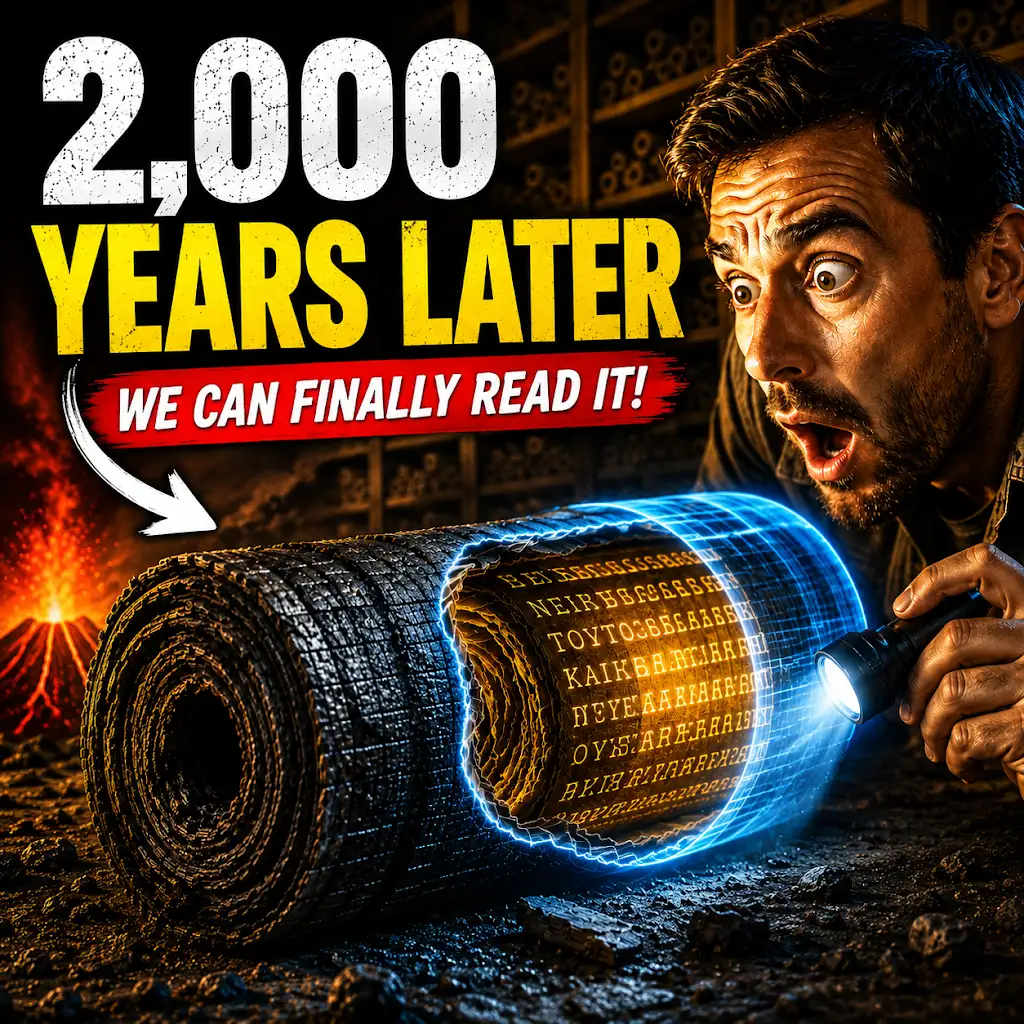
The whisper of ancient voices, trapped for millennia within charred husks, is slowly being coaxed back to life. Carbonized scrolls, the fragile remnants of libraries and personal archives consumed by fire, represent an archaeological and linguistic frontier. Once thought to be irretrievably lost, these brittle, blackened artifacts are now yielding their secrets thanks to a confluence of cutting-edge scientific techniques and painstaking scholarly endeavor. The process of decoding these carbonized manuscripts is not merely about recovering lost texts; it is about reawakening forgotten histories, understanding ancient cultures in greater depth, and pushing the boundaries of what we believe is salvageable from the past.
The very event that preserved these documents for future generations – the destructive inferno – also rendered them exceedingly vulnerable. The intense heat transforms delicate papyrus or parchment into brittle, carbonized material that crumbles at the slightest touch. This fragility poses a significant challenge, making physical handling a dangerous proposition.
The Nature of the Damage
- Brittle Transformation: Heat breaks down the organic fibers that make up papyrus and parchment, rendering them as fragile as ash. The ink, often carbon-based itself, becomes fused with the material, further complicating extraction.
- Physical Degradation: Centuries of burial or exposure can lead to further physical degradation. Moisture, soil acidity, and the sheer weight of earth can exacerbate the brittleness and cause cracks or fragmentation.
- Ink Adhesion: In many cases, the ink used in ancient writing was carbon-based, similar to the material of the scroll itself. This means the ink is not merely sitting on the surface but is often deeply embedded or fused with the carbonized fibers, making it difficult to distinguish from the surrounding material.
Early Attempts and Their Limitations
Historically, the approach to carbonized scrolls was one of extreme caution, often leading to their preservation without any attempt at reading. When attempts were made, they were rudimentary and often destructive.
- Manual Unrolling: Early attempts at unrolling were fraught with peril. The slightest pressure could cause the scroll to disintegrate. Many valuable fragments were lost in these early, untrained efforts.
- Limited Successes: While some scrolls were partially unrolled, the degree of carbonization and the resulting fragility meant that significant portions of text often remained illegible or were damaged beyond repair during the process. The sheer physical effort involved was also immense, with little guarantee of success.
The Dawn of Scientific Intervention
The true revolution in decoding carbonized scrolls began with the application of advanced scientific imaging techniques. These non-invasive methods allow scholars and scientists to “see” through the blackened layers without physically disturbing the fragile material.
X-ray and Synchrotron Imaging
One of the earliest and most impactful breakthroughs came with the application of X-ray technology. Later, more sophisticated synchrotron X-ray techniques offered even greater resolution and penetration.
X-ray Computed Tomography (XCT)
- Principles of XCT: XCT uses X-rays to create cross-sectional images of an object. By rotating the object and taking multiple X-ray projections, a three-dimensional model can be constructed. This allows researchers to visualize the internal structure of the scroll, including the layers of material and the ink.
- Revealing Layered Structures: The slight differences in density between the carbonized papyrus fibers and the carbon-based ink allow XCT to detect the presence of writing. The ink, even when blackened, can absorb X-rays differently, creating a subtle contrast.
- Virtual Unrolling: The most significant application of XCT is “virtual unrolling.” By digitally reconstructing the scroll from its cross-sectional data, researchers can simulate the process of unrolling without ever touching the artifact. This is a game-changer, as it allows for the complete visualization of the text on both sides of a tightly rolled or fused scroll.
Synchrotron Radiation X-ray Fluorescence (SRXRF)
- Enhanced Sensitivity: Synchrotron light sources produce incredibly intense and focused X-ray beams. SRXRF uses these beams to excite atoms within the scroll, causing them to emit characteristic fluorescent X-rays. Each element emits X-rays at a unique energy, allowing for elemental mapping of the scroll.
- Distinguishing Ink Components: While many ancient inks were carbon-based, they often contained trace amounts of metals or minerals. SRXRF can detect these subtle elemental signatures, which can help differentiate the ink from the surrounding carbonized material, even when visual contrast is minimal.
- Pinpointing Ink Locations: This technique is particularly effective at identifying the precise location of ink deposits, even when the ink has deeply penetrated the fibers or fused with them. This detailed mapping is crucial for subsequent image processing and text reconstruction.
Infrared and Ultraviolet Imaging
Beyond X-rays, other forms of light imaging have proven invaluable. Different wavelengths of light interact with materials in unique ways, revealing hidden details.
Infrared Reflectography
- Absorption and Reflection Properties: Infrared light penetrates some materials more deeply than visible light and can reveal differences in the absorption and reflection properties of various components.
- Identifying Faint Inks: For inks that are less carbonized or have faded significantly, infrared light can sometimes make them more visible by exploiting differences in how the ink and the substrate absorb or reflect infrared radiation.
- Complementary Data: Infrared imaging often provides complementary data to X-ray methods, offering another perspective on the composition and structure of the scroll.
Ultraviolet (UV) Fluorescence
- Exciting Luminescence: When certain materials are exposed to UV light, they fluoresce, emitting visible light. This phenomenon can be used to highlight areas of interest.
- Detecting Organic Residues: UV fluorescence can sometimes reveal organic residues or treatments applied to the papyrus that might not be visible under normal light or even infrared.
- Potential for Ink Differentiation: While less common for directly reading carbonized ink, UV fluorescence can be useful in understanding the preparation of the scroll material itself.
The Art of Digital Reconstruction and Enhancement
Once the raw imaging data is acquired, the complex task of digital reconstruction and enhancement begins. This is where sophisticated algorithms and computational power come into play to transform pixels into readable characters.
Image Processing and Segmentation
- Noise Reduction: Raw imaging data often contains noise that can obscure the text. Advanced filtering techniques are employed to reduce this noise without sacrificing important details.
- Contrast Enhancement: The subtle differences between ink and carbonized material are often magnified through contrast enhancement algorithms. This makes the faint outlines of letters more discernible.
- Segmentation: This crucial step involves separating the ink strokes from the background papyrus material. Machine learning algorithms are increasingly being used to automate and refine this process. The goal is to isolate every visible letter and punctuation mark.
Algorithms for Virtual Unrolling
The “virtual unrolling” process is a triumph of computational geometry and image manipulation.
- Mapping Curvature: The software analyzes the 3D data from XCT scans to understand the precise curvature and folding of the scroll.
- Unfolding Surfaces: Algorithms then mathematically unfold these curved surfaces into a flat plane, much like unfolding a gift wrap. This process requires sophisticated calculations to account for any stretching or compression of the material.
- Reconstructing Text: As the surfaces are unfolded, the corresponding ink data is remapped onto these virtual planes, revealing the text as it would have appeared on a flattened scroll. This can involve reconstructing text from multiple adjacent virtual layers.
Computational Linguistics and Machine Learning
The decoded images are still often fragmented and imperfect. This is where computational linguistics and machine learning play a vital role in making the text legible and understandable.
- Character Recognition: Machine learning models are trained on vast datasets of ancient scripts to recognize incomplete or distorted characters. They can predict missing strokes or correct misinterpretations based on patterns.
- Language Modeling: Once individual characters are identified, language models help to reconstruct words and sentences. These models understand the grammatical structures and common vocabulary of the ancient language, allowing them to fill in gaps and correct errors with a high degree of accuracy.
- Pattern Recognition: Machine learning can also identify recurring patterns in the text, such as names, place names, or common phrases, which can aid in decipherment and interpretation.
Case Studies: Voices from the Ashes
The application of these techniques has led to remarkable successes, breathing life back into texts that were once considered lost forever.
The Herculaneum Papyri
Perhaps the most iconic example of carbonized scroll decoding is the case of the Herculaneum Papyri. Buried by the eruption of Mount Vesuvius in 79 AD, these scrolls were carbonized by the volcanic ash and heat.
- Discovery and Early Challenges: Discovered in the 18th century, the scrolls were found in a villa believed to belong to Julius Caesar’s father-in-law. Their extreme fragility made traditional unrolling methods disastrous. Many early attempts resulted in the destruction of the scrolls.
- The “Smart” Unrolling Process: Modern methods, starting with meticulous CT scanning at facilities like the European Synchrotron Radiation Facility (ESRF), have allowed for virtual unrolling. This process involves scanning thousands of thin slices and using sophisticated software to digitally separate the layers and reveal the text.
- Philosophical and Literary Treasures: The Herculaneum Papyri have revealed significant philosophical works, including treatises by Philodemus of Gadara, a philosopher in the Epicurean tradition. These texts offer invaluable insights into ancient thought and scholarship. The ongoing decoding promises further revelations from this unique library.
Other Notable Discoveries
While Herculaneum is the most famous, similar efforts are underway for other carbonized artifacts.
- Sinaiticus Fragments: While not entirely carbonized, some ancient biblical manuscripts, like fragments of the Codex Sinaiticus, have undergone advanced imaging to reveal erased text or improve legibility, showcasing the broader application of these technologies.
- Potential for Future Finds: The ongoing archaeological exploration of ancient sites continues to uncover more fire-damaged artifacts. The developed techniques provide a roadmap for future discoveries to be deciphered.
The Future of Decipherment
The field of carbonized scroll decoding is dynamic and rapidly evolving. New technologies and refined algorithms promise even greater success in the years to come.
Advancements in Imaging Technology
- Higher Resolution Scanners: Future generations of scanners will offer even higher resolution, allowing for the detection of finer ink details and more subtle contrasts.
- Faster Acquisition Times: Innovations in imaging hardware and software will reduce the time required to scan and process large numbers of scrolls, accelerating the decipherment process.
- Portable Imaging Solutions: The development of more portable and accessible imaging technologies could enable on-site analysis of fragile artifacts, reducing the risk of damage during transport.
Sophistication of AI and Machine Learning
- Improved Character Recognition Models: AI models will become even more adept at recognizing and interpreting damaged or incomplete characters, even in highly fragmented texts.
- Cross-Linguistic Analysis: AI may be able to identify patterns and connections between different ancient languages, aiding in the decipherment of unknown scripts.
- Automated Contextual Analysis: Future AI could assist in understanding the content of the deciphered texts by automatically identifying themes, historical references, and connections to known historical events.
Interdisciplinary Collaboration
The success in decoding carbonized scrolls is a testament to the power of interdisciplinary collaboration.
- Archaeologists and Conservators: Their expertise in artifact handling and preservation is crucial for the initial stages of the process.
- Physicists and Imaging Scientists: Their knowledge of X-ray, synchrotron, and other imaging technologies is fundamental to acquiring the data.
- Computer Scientists and AI Specialists: Their skills in image processing, algorithms, and machine learning are essential for reconstruction and decipherment.
- Linguists and Historians: Their understanding of ancient languages, scripts, and historical contexts is vital for interpreting the recovered texts and making them understandable to us.
The journey from a charred husk to a legible historical document is long and arduous, demanding both scientific rigor and scholarly dedication. Yet, with each successful decipherment, the past speaks a little louder, offering us invaluable glimpses into the thoughts, beliefs, and lives of those who came before. The carbonized scrolls, once silent witnesses to destruction, are now becoming eloquent messengers of history, their voices amplified by the ingenuity of human endeavor.