
Twenty thousand years ago, the world was a vastly different place. Humanity, though scattered and small in number, had managed to not only persist but to thrive in the face of immense environmental challenges. The last glacial period, known as the Last Glacial Maximum, held the planet in its icy grip. Vast ice sheets covered much of North America and Eurasia, dramatically altering landscapes, weather patterns, and the availability of resources. Life for our ancestors was a constant, intricate dance with nature, a testament to their ingenuity, resilience, and deep understanding of the world around them. Their survival was not a matter of luck, but of accumulated knowledge and sophisticated strategies passed down through generations.
Mastering the Arctic and Subarctic Environments
The harsh realities of the Pleistocene dictated that survival hinged on an intimate knowledge of the prevailing climate and its impact on the flora and fauna. Humans of this era were not passive observers; they were active participants in their ecosystems, manipulating their surroundings and adapting their behaviors to exploit available resources.
Navigating Extreme Cold and Resource Scarcity
Twenty millennia ago, average global temperatures were significantly lower than today, with substantial portions of the Northern Hemisphere locked under thick ice sheets. This created extensive tundra, steppe, and boreal forest environments, teeming with large mammals that were crucial for human survival. These megafauna, such as mammoths, woolly rhinoceroses, giant deer (Megaloceros), and horses, provided not only meat for sustenance but also hides for clothing and shelter, bones and ivory for tools, and sinew for binding and sewing.
The challenges were immense. Extreme cold meant that exposure was a constant threat. Finding shelter, whether natural caves or expertly constructed dwellings, was paramount. These shelters often required significant effort to build and maintain, providing insulation against biting winds and freezing temperatures. The scarcity of fuel for fires, often relying on animal fat and bone, meant that heat management was a sophisticated skill. Understanding the best times for hunting, the migratory patterns of animals, and the seasonal availability of plant foods was critical for avoiding starvation. This required an observational acuity that modern humans, insulated by technology, can only imagine.
Innovative Shelter and Clothing Technologies
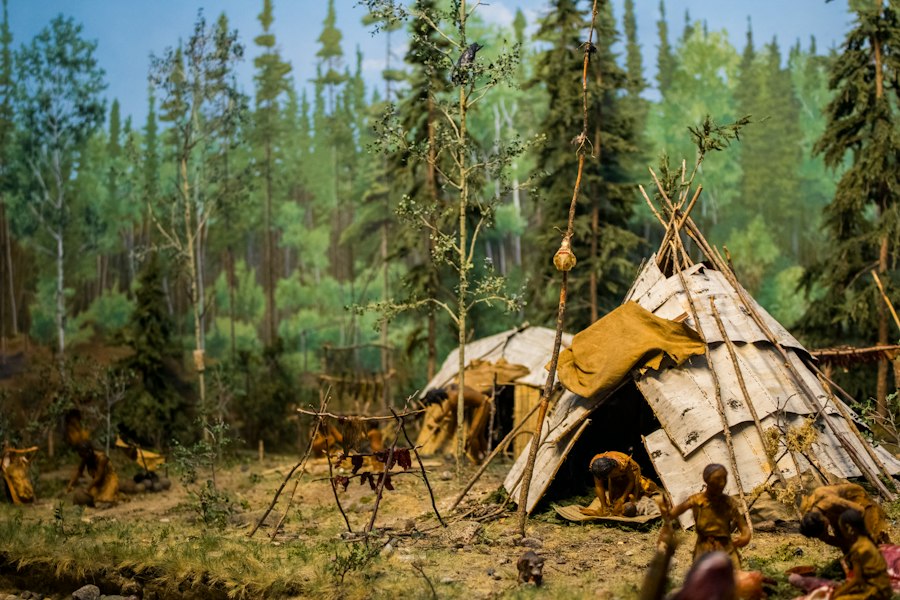
Human survival in these frigid zones was heavily reliant on their ability to create effective shelter and protective clothing. Natural shelters like caves and rock overhangs were likely the first choice, offering immediate protection. However, as human populations grew and moved into more open landscapes, the need for manufactured shelters became paramount.
Evidence suggests that early humans were skilled builders, utilizing readily available materials. In regions where wood was scarce, such as the open tundra, they constructed structures using mammoth bones, tusks, and hides, creating robust and surprisingly well-insulated dwellings. These structures, often semi-subterranean, would have been covered with thick layers of sod, animal skins, and possibly moss to further insulate them from the extreme cold.
Clothing was equally vital. The acquisition and processing of animal hides were complex endeavors. Hides were scraped clean of flesh and fat, then treated through methods like smoking or by rubbing them with animal brains, which contain natural emulsifiers that soften and preserve the leather. This process made the hides more pliable and water-resistant, crucial for surviving the damp and cold. Sewing was likely accomplished using bone awls and needles, with sinew as thread. The creation of multi-layered garments, such as fur-lined tunics, trousers, and foot coverings, provided essential insulation. The meticulous craftsmanship required to produce these garments speaks to a deep understanding of material properties and a high degree of manual dexterity.
Understanding how humans survived twenty thousand years ago provides valuable insights into our resilience and adaptability. For a deeper exploration of survival strategies and the evolution of human societies, you can read a related article that discusses the broader implications of human endurance and resource management throughout history. To learn more, visit this article.
Mastering the Art of Hunting and Gathering

The cornerstone of human survival 20,000 years ago was the ability to procure food reliably. This involved a profound understanding of the natural world, developed through millennia of observation and experimentation.
Coordinated Hunting Strategies and Toolkits
Hunting large game was not a solitary endeavor for humans 20,000 years ago. It was a highly coordinated, group activity that required planning, communication, and specialized knowledge. These hunts often targeted migratory herds, capitalizing on predictable movements. Strategies could involve driving animals towards natural traps like ravines or cliffs, or using fire to panic and funnel them into an ambush.
The development of sophisticated hunting tools was crucial. Spear-throwers (atlatls) greatly increased the velocity and range of spears, allowing hunters to engage prey from a safer distance. Points for spears and arrows were meticulously crafted from stone, bone, and antler, often flaked with remarkable precision to create sharp edges and barbed designs for better penetration and retention. The choice of material and design would have been dictated by the type of prey being targeted. For example, heavier, more robust points might be used for mammoths, while lighter, finely crafted points were suitable for smaller game or birds.
The effectiveness of these hunts also depended on an intimate understanding of animal behavior. Knowledge of scent, sound, and visual cues was paramount. Hunters likely employed camouflage, using mud, plant materials, or animal skins to blend into their surroundings. They understood the vulnerabilities of different species and the most effective ways to incapacitate them. This was a high-risk, high-reward activity, where a successful hunt could sustain a community for days or weeks, but a failure could have dire consequences.
The Importance of Plant-Based Foods and Seasonal Foraging
While large game provided a significant source of calories and nutrients, human diets were not solely reliant on meat. Foraging for plant-based foods played a crucial role, especially during seasons when large game might be scarce or migrations unpredictable. This required an extensive knowledge of local flora, including which plants were edible, when they were ripe, and how to process them to remove toxins or improve digestibility.
Ancient foragers would have identified a wide variety of edible roots, tubers, berries, nuts, seeds, leaves, and fungi. They understood the seasonal cycles of these plants, knowing when and where to find them. For example, certain berries ripened in the summer, while nuts and seeds were often available in the autumn and could be stored for winter consumption. Processing methods were diverse. Roots and tubers might be roasted in embers or boiled to make them tender and digestible. Nuts were often cracked open and sometimes ground into flour. Seeds could be gathered and eaten raw or roasted.
The ability to identify and utilize these plant resources provided a vital buffer against the uncertainties of hunting. It diversified their diet, providing essential vitamins, minerals, and carbohydrates that might be lacking in a meat-heavy diet. This knowledge was not static; it was constantly refined through observation and passed down through oral traditions. The ability to remember the locations of fruiting trees, the growth patterns of specific roots, and the best times to harvest was a fundamental survival skill.
The Power of Fire: A Tool of Survival and Innovation
Fire was arguably the most transformative tool in the human survival arsenal 20,000 years ago. Its mastery allowed for a host of advancements that dramatically improved the quality of life and expanded human capabilities.
Cooking, Warmth, and Protection
The ability to control and utilize fire offered immediate and profound benefits. Cooking food, for instance, made many plant and animal foods more digestible, releasing more nutrients and reducing the risk of foodborne illnesses. Roasted meat was not only more palatable but also easier to chew, saving energy. Certain plant foods, particularly roots and tubers, were toxic or indigestible raw and required cooking to become safe and nutritious.
Beyond sustenance, fire was a vital source of warmth in the frigid Pleistocene environments. A well-maintained fire could transform a cold, inhospitable cave into a relatively comfortable living space, allowing humans to extend their active hours and survive the long, dark winters. This warmth also played a crucial role in social bonding, as communities gathered around the hearth.
Fire also served as a powerful deterrent against predators. The flickering flames and the smoke would have kept many dangerous animals at bay, providing a crucial layer of protection for sleeping humans and their young. It could also be used to clear land for habitation or for agricultural purposes, though large-scale agriculture was not a feature of this period.
Toolmaking and Social Hub
The transformative power of fire extended to the realm of toolmaking. While early humans had mastered stone flaking, fire allowed for the hardening of wooden tools, such as spear shafts and digging sticks, making them more durable and effective. It also facilitated the creation of other materials, such as bone and antler, which could be shaped and polished more easily after being exposed to heat.
Moreover, the hearth served as a central social hub. It was around the fire that stories were told, knowledge was passed down, and social bonds were strengthened. This communal aspect was essential for maintaining group cohesion and transmitting the complex survival strategies necessary for life in the Pleistocene. The shared experience of tending the fire, preparing food, and simply being together in its warmth fostered a sense of belonging and collective identity, crucial for the survival of small, dispersed groups.
Social Organization and Knowledge Transmission
Human survival in the challenging environments of 20,000 years ago was not solely a matter of individual prowess. It was deeply intertwined with the social structures and the sophisticated methods of knowledge transmission that allowed for the collective advancement and adaptation of entire groups.
Small, Mobile Bands and Cooperative Living
The nomadic or semi-nomadic lifestyle of many human groups 20,000 years ago was a direct response to the availability of resources. They lived in small, mobile bands, typically ranging from 20 to 50 individuals. This size was optimal for efficient foraging and hunting. Larger groups would deplete local resources too quickly, while smaller groups might lack the manpower for effective hunting or defense.
Cooperation was the bedrock of these societies. Within the band, there was a division of labor, often based on age and gender, but with a strong emphasis on mutual reliance. Men might primarily focus on hunting large game, while women might be responsible for gathering plant foods, processing hides, and caring for children. However, these roles were not rigidly defined, and cooperation was essential across all activities. For instance, during a large hunt, everyone might play a role, whether driving game, preparing traps, or butchering the kill. Child-rearing was also a communal effort, with older individuals and other members of the band contributing to the care and education of the young. This interdependence ensured that no one was left behind and that the collective knowledge and skills were preserved.
Oral Traditions and the Passing Down of Expertise
The absence of writing meant that knowledge was passed down through oral traditions, a system that was remarkably effective. Elders and experienced individuals were the living libraries of their communities, holding vast stores of information about the environment, animal behavior, plant properties, toolmaking techniques, and social customs.
Storytelling, songs, and rituals were primary vehicles for this transmission. These narratives were not just entertainment; they were pedagogical tools, embedding practical knowledge within engaging stories and memorable verses. A story about a successful hunt might detail the terrain, the weather conditions, the behavior of the animals, and the specific techniques used, thereby instructing younger generations. Similarly, songs might describe the properties of different plants or the best methods for curing hides.
This process of knowledge transmission was continuous. Children learned by observing, participating, and listening. Apprenticeship was a fundamental aspect of learning; younger individuals would shadow experienced hunters, foragers, or craftspeople, gradually acquiring the necessary skills through hands-on experience. This system ensured the continuity of essential survival knowledge, allowing humanity to adapt and thrive across diverse and often challenging landscapes for millennia.
Understanding how humans survived twenty thousand years ago offers fascinating insights into our ancestors’ resilience and adaptability. Their ability to innovate tools, hunt, and gather food in harsh environments played a crucial role in their survival. For a deeper exploration of this topic, you can read more in this insightful article about early human life and survival strategies at this link. By examining archaeological findings and ancient practices, we can better appreciate the challenges they faced and the ingenuity that allowed them to thrive.
Resilience and Adaptation: The Enduring Human Spirit
| Survival Aspect | Details | Estimated Data / Metrics |
|---|---|---|
| Diet | Hunter-gatherer diet including meat, plants, nuts, and berries | ~60% meat, 40% plant-based foods |
| Tools | Stone tools for hunting and processing food | Over 100 types of tools identified from archaeological sites |
| Shelter | Natural shelters like caves and constructed huts from wood and animal hides | Temporary shelters lasting weeks to months |
| Social Structure | Small groups or bands of 20-50 individuals for cooperative survival | Group size: 20-50 people |
| Fire Use | Controlled use of fire for warmth, cooking, and protection | Evidence of fire use dating back over 400,000 years |
| Clothing | Animal skins and furs for protection against cold climates | Use of tailored clothing inferred from bone needles |
| Migration | Movement to follow animal herds and seasonal plants | Migration distances up to hundreds of kilometers annually |
| Communication | Early language and symbolic art for coordination and cultural transmission | Use of cave paintings and carvings dated 20,000+ years ago |
The story of human survival 20,000 years ago is a profound testament to the adaptability and resilience of our species. Faced with a planet dramatically altered by ice, resource scarcity, and unpredictable natural forces, our ancestors did not simply endure; they innovated, cooperated, and thrived.
The Foundation for Future Civilizations
The strategies and technologies developed during the Pleistocene were not merely ad hoc responses to immediate needs. They laid the groundwork for the future development of human civilization. The mastery of fire, the creation of sophisticated tools, the understanding of animal behavior and plant properties, and the development of complex social structures were all building blocks. The ability to successfully hunt large game led to more settled encampments and the eventual development of more permanent settlements. The careful observation and manipulation of the environment, even on a small scale, hinted at the agricultural revolution that would follow.
Furthermore, the cultural and social frameworks that emerged from these survival challenges – cooperation, shared knowledge, and a deep respect for the natural world – were essential for the long-term success of humanity. These were not just survival skills; they were the foundational elements of human culture and societal organization. The resilience demonstrated during this period instilled a spirit of innovation and perseverance that has characterized humanity throughout its history, enabling us to overcome countless challenges and explore the furthest reaches of our planet and beyond. The echoes of these ancient survival secrets continue to inform our understanding of ourselves and our place in the natural world, reminding us of the deep wellspring of ingenuity that lies within the human spirit.

Beneath the Ice: Surviving the Ice Age 20,000 Years Ago
FAQs
1. How did humans obtain food twenty thousand years ago?
Twenty thousand years ago, humans survived by hunting wild animals, fishing, and gathering edible plants and fruits. They used tools such as spears, bows and arrows, and traps to catch animals for food.
2. What kind of shelter did humans have twenty thousand years ago?
Humans twenty thousand years ago lived in temporary shelters made from materials such as animal hides, branches, and leaves. These shelters were often simple structures that could be easily moved as they followed the migration patterns of animals.
3. How did humans stay warm during the Ice Age twenty thousand years ago?
To stay warm during the Ice Age twenty thousand years ago, humans used animal furs and hides to make clothing and blankets. They also built fires using flint and other materials to provide warmth and cook food.
4. What tools did humans use for survival twenty thousand years ago?
Humans twenty thousand years ago used tools made from stone, bone, and wood. These tools included spears, knives, scrapers, and needles for sewing clothing. They also used fire for cooking, warmth, and protection.
5. How did humans communicate and cooperate with each other twenty thousand years ago?
Humans twenty thousand years ago communicated through spoken language, gestures, and possibly early forms of written symbols. They cooperated with each other in hunting, gathering, and building shelters through social bonds and shared knowledge passed down through generations.