The Art of the Blizzard: How Prehistoric Hunters Navigated Deep Snow Drifts Efficiently
The image of prehistoric hunters often conjures scenes of open plains and temperate forests, their lives dictated by the ebb and flow of seasons. Yet, evidence suggests that many early human populations not only endured but thrived in environments characterized by harsh winters and significant snowfall. Navigating these formidable white landscapes presented a unique set of challenges, requiring an intimate understanding of snow, terrain, and specialized techniques. The ability to traverse deep snow drifts efficiently was not merely a matter of convenience; it was a critical factor for survival, influencing hunting strategies, resource acquisition, and the very movement of nomadic groups. Understanding how these ancient peoples managed to move through such challenging terrain offers a profound glimpse into their ingenuity and adaptability.
Prehistoric hunters faced significant challenges when navigating deep packed snow drifts, which often obscured their prey and made travel arduous. To adapt, they likely developed specialized tools and techniques, such as snowshoes or sledges, to traverse these harsh conditions more effectively. Understanding how these early humans overcame such obstacles can provide valuable insights into their survival strategies. For a broader perspective on how environmental challenges can impact human behavior and decision-making, you may find the article on economic scenarios interesting: 2025 Worst Case Economic Scenarios Unveiled.
Masters of the White Wilderness: Sensory Acuity and Environmental Knowledge

Prehistoric hunters possessed an extraordinary degree of sensory acuity, honed by generations of living in intimate connection with their surroundings. This keen observation extended to the nuances of snow itself, a substance that, to the untrained eye, might appear uniform but which held vital clues for survival. They understood that snow was not a monolithic entity but a dynamic medium, its properties varying dramatically based on temperature, wind, and time.
Decoding the Snowscape: Visual and Tactile Cues
The visual cues provided by a snow-covered landscape were paramount. Hunters could discern subtle variations in snow depth and consistency based on the way it settled on different terrains. Areas where wind had sculpted drifts were easily identifiable, as were shallower patches that might offer firmer footing. The color of the snow, while seemingly trivial, could also betray underlying conditions. A darker hue might indicate exposed vegetation or ice beneath, signaling potential hazards or, conversely, points of interest for foraging.
Beyond visual assessment, tactile experience played a crucial role. The simple act of stepping into the snow provided immediate feedback. A soft, yielding feel signaled deep, unconsolidated snow, requiring a different approach than the firmer, more supportive crust that formed under specific temperature and wind conditions. Experienced hunters could judge the stability of snow by probing with a foot or a specially crafted tool, assessing its density and potential to support their weight or the weight of their prey. The sound of snow crunching underfoot was also a form of information, varying depending on its crystalline structure and moisture content.
Reading the Wind’s Influence: Drifts and Pathways
Wind was a constant sculptor of the snowscape, and prehistoric hunters were acutely aware of its power. They understood how prevailing winds created predictable drift patterns, accumulating snow on the leeward side of obstacles like hills, boulders, and forests. This knowledge allowed them to anticipate areas of deep snow and plan their routes accordingly, often seeking to skirt these accumulations rather than attempt to plow through them. Conversely, they also learned to identify areas where the wind had scoured the snow, creating thinner layers or even exposing ice, which could offer easier passage.
The wind also served as a natural indicator of direction and a way to assess the passage of other animals or even other human groups. The way snow was disturbed by wind could reveal the direction of travel of a hunted animal, providing a vital trail to follow. Furthermore, the accumulation of snow on tracks could indicate how recently those tracks were made, helping hunters differentiate fresh signs from older ones. The sound of the wind itself, its intensity and direction, offered a constant, albeit subtle, stream of environmental data.
Ingenuity in Motion: Tools and Techniques for Snow Traversal
The challenges of deep snow were not met with brute force alone. Prehistoric hunters developed and employed a range of ingenious tools and techniques to overcome these obstacles, demonstrating remarkable innovation in adapting their physical capabilities to the demands of their environment. These adaptations were crucial for maintaining hunting efficiency and enabling movement across vast, snow-laden territories.
The Evolution of Snowshoes: Spreading the Load
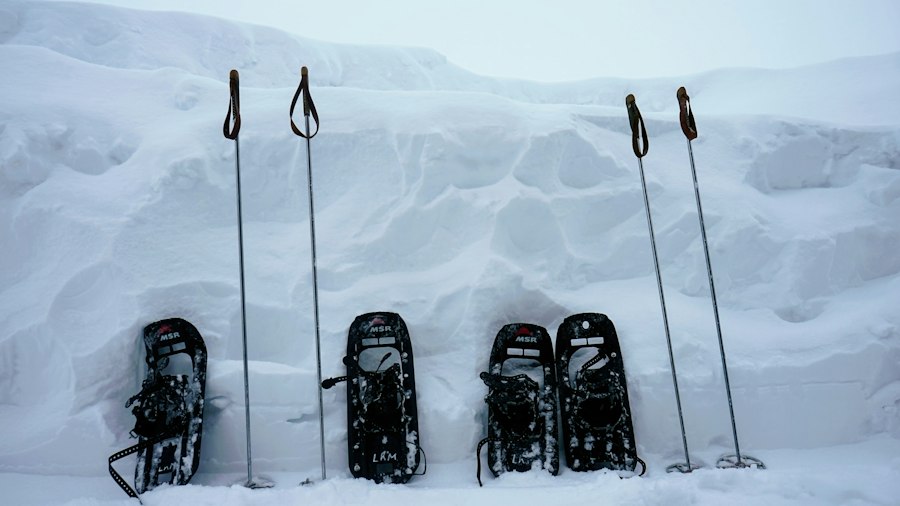
Perhaps the most iconic adaptation for deep snow travel is the snowshoe. While direct archaeological evidence of early snowshoes is scarce due to the perishable nature of organic materials, the widespread presence of Arctic and sub-Arctic cultures with sophisticated snowshoe technology strongly suggests their ancient origins. The fundamental principle of the snowshoe is simple yet highly effective: to increase the surface area of the foot, thereby distributing the wearer’s weight over a larger area and preventing them from sinking deeply into the snow.
Early snowshoes likely evolved from rudimentary forms, possibly simple wooden frames with rawhide lacing or even bundles of reeds. Over time, designs became more refined, tailored to specific snow conditions and the demands of the terrain. Different shapes and sizes would have been employed. Longer, narrower snowshoes might have been favored for traversing open, flat expanses, offering better glide and momentum. Shorter, wider models could have provided greater maneuverability in more varied terrain, allowing for sharper turns and easier navigation around obstacles. The materials used – wood, bone, sinew, and animal hides – were all readily available in prehistoric environments and allowed for the creation of lightweight yet strong and durable footwear. The ability to create and repair these essential tools was a vital skill passed down through generations.
Poles and Probes: Stability and Exploration
In conjunction with snowshoes, poles played a significant role in prehistoric snow travel. A long, sturdy pole, often tipped with bone or antler for durability, served multiple purposes. Primarily, it provided an additional point of contact with the ground, offering enhanced stability, especially when traversing uneven terrain or crossing particularly deep drifts. The pole acted as a counterbalance, helping hunters maintain their footing and prevent falls.
Beyond stability, poles were indispensable for probing the snow. Hunters would use their poles to test the depth of snow ahead, identify hidden obstacles such as rocks or fallen logs, and assess the stability of ice on frozen water bodies. This probing was a crucial safety measure, preventing potentially fatal plunges through thin ice or falls into unseen crevices. The pole could also be used to dislodge snow from branches, revealing hidden food sources or game trails, and in some cases, to assist in pushing or levering obstacles out of the way. The strategic placement and use of a pole required considerable skill and an understanding of the terrain’s hidden contours.
Navigational Strategies: Reading Tracks and Utilizing Landmarks
Efficient navigation through a snow-covered landscape was a complex skill that combined observation, memory, and an understanding of animal behavior. Prehistoric hunters were not just following trails; they were reading a dynamic environment.
Following the Scent and Sound: Animal Tracking Expertise
The primary objective for many prehistoric hunters was to locate and pursue game. This involved an unparalleled ability to interpret animal tracks in the snow. They could differentiate between the tracks of various species, estimate the age of the tracks based on how the snow had settled, and even infer the animal’s physical condition or gait from the impressions left behind. A skilled tracker could discern whether an animal was moving with purpose, foraging, or exhibiting signs of distress.
Beyond visual cues, sound played a critical role. The faint crunch of hooves on snow, the rustle of disturbed vegetation, or the distant call of an animal could guide hunters through seemingly featureless white expanses. They learned to listen for subtle sounds that indicated the presence of prey, filtering out the ambient noise of the wind and the wilderness. The wind itself could carry scents, allowing hunters to detect the presence of animals from a considerable distance.
Remembering the Terrain: Mental Maps and Celestial Navigation
Even in the seemingly monotonous white of winter, prehistoric hunters possessed a sophisticated understanding of their territory. They developed intricate mental maps of the landscape, retaining detailed knowledge of river valleys, prominent hills, and distinctive rock formations, even when these landmarks were obscured by snow. This internal cartography allowed them to orient themselves and plan routes with a high degree of accuracy.
In areas where visual landmarks were scarce, celestial navigation would have been a vital tool. The position of the sun during the day and the stars at night provided consistent directional cues. Their deep understanding of astronomical cycles and their ability to observe the subtle shifts in these celestial bodies would have enabled them to maintain a consistent bearing even during long journeys through featureless snowfields. The seasonal changes in the angle of the sun and the pattern of the constellations would have been as familiar to them as the changing leaves of autumn.
Strategic Hunting in the Winter White: Adapting to Prey and Environment
The deep snow of winter presented both challenges and opportunities for prehistoric hunters. While it hampered movement, it also dictated the behavior of prey animals, creating predictable patterns that resourceful hunters could exploit. Their hunting strategies were intrinsically linked to the environmental conditions, showcasing an impressive ability to adapt their methods to the prevailing circumstances.
Herding and Funneling: Exploiting Snow’s Physical Barriers
Deep snow could act as a natural barrier, slowing down larger, less agile animals and making them more vulnerable to pursuit. Hunters learned to use the terrain, combined with the deep snow, to their advantage. By understanding the migratory patterns and typical foraging grounds of their prey, they could anticipate where animals would congregate or be forced to travel.
Herding strategies became particularly effective. Groups of hunters could work together to gently steer herds of animals towards areas of particularly deep snow, where their progress would be significantly impeded. Alternatively, they might herd them towards natural funnel points like narrow ravines or dense thickets, where escape would be more difficult. The sound of hunters, amplified by the quiet winter air, could also be used to encourage animals to move in a desired direction. The cumulative effect of deep snow and strategic herding could significantly increase the success rate of hunts for large game.
Ambush Tactics and Opportunistic Stalking: Patience and Precision
The reduced visibility and the muffled sounds of a snow-covered landscape also created opportunities for ambush. Hunters could utilize natural cover, such as snowdrifts, rocky outcrops, or dense forests, to conceal themselves and wait for prey to approach. The silence of winter meant that their movements could be more subtle, their approach less detectable.
In some instances, hunters might lie in wait near known watering holes or feeding areas, where animals would be more concentrated and less wary. The ability to remain still and patient for extended periods, often in extremely cold conditions, was a testament to their discipline and focus. For smaller game, opportunistic stalking became more viable. The tracks of smaller animals like rabbits or foxes would be more readily apparent against the snow, allowing hunters to follow their movements and plan a precise strike. The skill of throwing a spear or loosing an arrow with accuracy in a snow-laden environment would have been honed through constant practice.
Prehistoric hunters faced significant challenges when navigating deep packed snow drifts, often relying on their ingenuity and understanding of the environment to adapt their hunting strategies. They likely utilized tools and techniques that allowed them to traverse these harsh conditions, such as snowshoes made from animal hides and wood. Additionally, the knowledge of animal behavior during winter months would have been crucial for successful hunting. For further insights into how ancient cultures adapted to their surroundings, you can explore this related article on consumer behavior in different environments at consumer behavior.
The Social Fabric of Winter Survival: Cooperation and Knowledge Transfer
| Technique | Description | Effectiveness | Evidence Source |
|---|---|---|---|
| Snowshoe Use | Wearing snowshoes made from wood and animal hide to distribute weight and prevent sinking into deep snow. | High – Allowed hunters to travel efficiently over snow drifts. | Archaeological finds of snowshoe fragments and ethnographic records. |
| Trail Breaking | One or more hunters would break a path through the snow for others to follow, reducing energy expenditure. | Moderate – Effective for group hunting and travel. | Ethnographic analogies and wear patterns on trails. |
| Use of Sleds or Toboggans | Transporting game and supplies on sleds pulled over snow to avoid deep snow obstacles. | Moderate – Facilitated movement of heavy loads. | Rock art depictions and ethnographic parallels. |
| Seasonal Migration | Moving to lower elevations or less snowy areas during heavy snow periods to avoid deep snow drifts. | High – Reduced exposure to difficult snow conditions. | Archaeological site distribution and paleoenvironmental data. |
| Use of Animal Tracks | Following paths made by animals in the snow to find firmer ground and easier routes. | Moderate – Helped conserve energy and improve navigation. | Ethnographic studies and animal track analysis. |
The challenges of surviving and thriving in deep snow environments were not solely individual endeavors. The success of prehistoric hunters in winter depended heavily on social cooperation and the effective transfer of knowledge between individuals and generations. The harshness of the season amplified the importance of community and shared expertise.
Collaborative Hunts: Strength in Numbers
Large-scale hunts, particularly for sizable game like mammoths or woolly rhinos, necessitated coordinated efforts. The deep snow made solo pursuits of such formidable creatures incredibly dangerous and often impossible. Groups of hunters would work together, employing specialized roles and communication signals to herd, corner, and ultimately bring down their prey.
The use of fire as a signaling tool could have played a role in coordinating large hunting parties across vast distances. The development of a shared understanding of vocalizations, hand signals, or even subtle visual cues would have been essential for ensuring everyone acted in unison. The success of these collective endeavors not only provided vital sustenance but also reinforced social bonds and strengthened the community’s resilience. The shared effort and the subsequent communal feast would have been powerful unifying events.
Passing Down the Wisdom: Oral Traditions and Apprenticeships
The intricate knowledge required to navigate and hunt in deep snow was not innate; it was learned. This knowledge was primarily transmitted through oral traditions and direct apprenticeship. Elders, possessing a lifetime of experience, would impart their understanding of snow conditions, animal behavior, effective tools, and safe travel routes to younger generations.
Stories, songs, and practical demonstrations would have been the primary vehicles for this knowledge transfer. Young boys and girls would accompany their elders on hunts, observing, assisting, and gradually taking on more responsibility. This hands-on learning, coupled with the stories and explanations provided by experienced hunters, ensured that the essential skills for winter survival were perpetuated. The survival of entire groups often depended on the successful transmission of this invaluable ancestral wisdom, ensuring that the next generation was as capable of mastering the white wilderness as those who came before them.
Legacy in the Snow: Enduring Adaptations and Archaeological Clues
While the direct evidence of prehistoric snow navigation is often ephemeral, the legacy of these ancient peoples’ ingenuity can be found in the enduring adaptations of modern indigenous cultures and in the subtle clues left behind in the archaeological record. Their mastery of the winter landscape serves as a powerful testament to the adaptability and resourcefulness of early humans.
Echoes in Modern Traditions: Contemporary Snow Travel Techniques
Many contemporary indigenous communities living in Arctic and sub-Arctic regions continue to utilize and refine snow travel techniques that bear a striking resemblance to those likely employed by their prehistoric ancestors. The snowshoe, in its various forms, remains a vital tool for traversing snowy terrain, and the principles of its design are remarkably consistent.
The deep understanding of snow conditions, the ability to read tracks, and the cooperative hunting strategies observed in these modern cultures offer a living link to the past. These traditions are not merely relics of a bygone era but are actively maintained and adapted to contemporary needs, demonstrating the timeless efficacy of these ancestral methods. The knowledge passed down through generations continues to inform how people interact with and survive in snow-dominated environments.
Traces in the Earth: Interpreting Archaeological Findings
The archaeological record, though often incomplete, provides tantalizing glimpses into the lives of prehistoric snow dwellers. The discovery of well-preserved tools, such as bone needles, awls, and projectile points, suggests the production of specialized winter clothing and hunting implements. The presence of hearths and shelters in winter-associated sites indicates successful habitation and resource utilization during the coldest months.
The study of faunal remains can reveal the types of animals hunted during winter, providing insights into the prey available and the strategies employed to acquire them. While direct evidence of snowshoes is rare, the ubiquity of societies that relied on them in snowy regions strongly implies their ancient development. Ongoing research, utilizing advanced dating techniques and paleoenvironmental reconstructions, continues to shed light on the intricate relationship between prehistoric humans and their winter environments, revealing a sophisticated adaptation to a challenging yet vital aspect of their world.

Life 20,000 Years Ago | When an Ice Age Wildfire Traps Your Primitive Family
FAQs
What techniques did prehistoric hunters use to navigate deep packed snow drifts?
Prehistoric hunters often utilized snowshoes made from wood and animal hides to distribute their weight and prevent sinking into deep snow. They also relied on established trails and animal tracks to navigate through challenging terrain, which helped them avoid the most difficult areas.
How did prehistoric hunters find food in snowy conditions?
During winter months, prehistoric hunters adapted their hunting strategies by targeting animals that were active in snowy conditions, such as deer and rabbits. They also used traps and snares to catch smaller animals, and some groups practiced scavenging for carrion left by predators.
What role did community play in hunting during snowy seasons?
Community cooperation was crucial for prehistoric hunters during snowy seasons. Groups often worked together to drive animals into specific areas or to share resources and knowledge about the best hunting grounds. This collaboration increased their chances of success in harsh winter conditions.
Did prehistoric hunters have any specific tools for dealing with snow?
Yes, prehistoric hunters developed specialized tools for snowy environments, including sleds for transporting heavy loads and sharpened sticks or poles for probing snow to locate hidden animals or to create pathways. These tools were essential for efficient movement and hunting in deep snow.
How did climate affect the hunting strategies of prehistoric peoples?
Climate played a significant role in shaping the hunting strategies of prehistoric peoples. In regions with heavy snowfall, hunters adapted by altering their seasonal migration patterns, focusing on animals that were more accessible during winter, and developing techniques to cope with the challenges posed by deep snow.