The Genesis of Angling: Early Forays into Lake Stocking
The presence of trout in many Norwegian lakes today is not a testament to their native distribution but rather a consequence of deliberate human intervention. For centuries, the pristine lakes of Norway, renowned for their beauty and ecological richness, were devoid of certain fish species. This article delves into the historical journey of how trout, primarily brown trout (Salmo trutta), were introduced into these often isolated freshwater environments, transforming them into vibrant ecosystems and cherished angling destinations. The story is one of ingenuity, evolving scientific understanding, and a growing appreciation for the recreational and economic potential of fish stocking.
The initial motivations behind introducing trout were multifaceted. In some instances, it was a quest to enhance the food supply. In others, particularly in more recent history, it was driven by the burgeoning popularity of recreational fishing. The concept of actively managing fish populations, rather than relying solely on natural reproduction and migration, began to take root. This historical overview will chart the course of these introductions, examining the methods employed, the species targeted, and the broader implications for Norway’s aquatic landscapes.
The introduction of trout into Norwegian lakes is a fascinating topic that highlights the impact of human activity on local ecosystems. For those interested in exploring how historical events and human exploration have shaped our understanding of geography and natural resources, a related article delves into the complexities of cartography and its implications. You can read more about this in the article “Debunking the Piri Reis Map: Why It’s Impossible” found at this link.
Uncharted Waters: Pre-Introduction Lake Ecologies
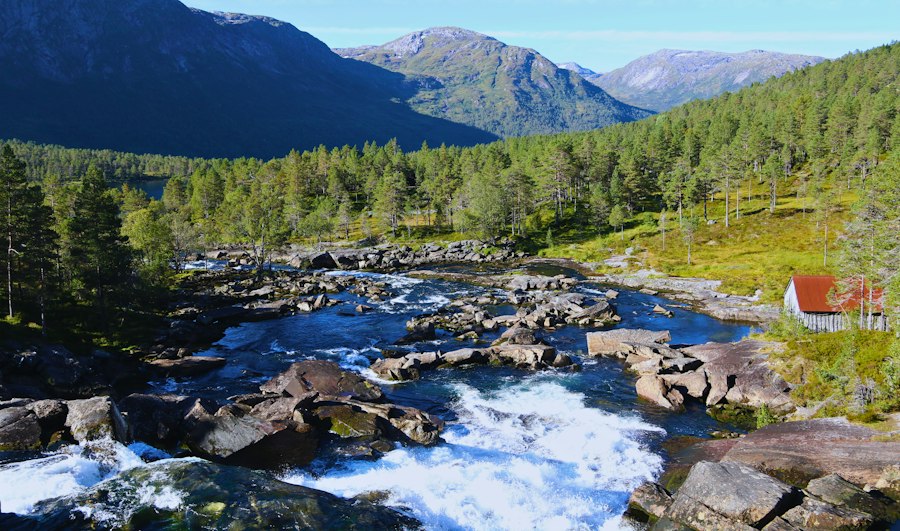
Before the arrival of human-introduced trout, the ecological tapestry of Norwegian lakes presented a different picture. Many high-altitude and geographically isolated lakes, particularly those above natural barriers like waterfalls or steep gradients, were often oligotrophic, meaning they had low nutrient levels and consequently, low biological productivity. These lakes typically harbored species that were either already present or could migrate into them through connected river systems. Common native inhabitants might have included Arctic char (Salvelinus alpinus) in colder, deeper lakes, or species like sticklebacks (Gasterosteus aculeatus or Pungitius pungitius) and various invertebrate fauna. The absence of trout in these environments was not an oversight but a natural state of affairs, dictated by geographical isolation and the specific adaptations required to colonize such habitats.
The introduction of trout into these previously trout-less lakes represented a significant ecological shift. It meant the introduction of a new predator, a competitor for existing resources, and a species with distinct dietary preferences and reproductive strategies. Understanding the original state of these lakes is crucial for appreciating the scale and impact of the stocking efforts that would follow. The challenges of establishing a new species in a pre-existing ecosystem were, and remain, a key consideration in the science and practice of fisheries management.
The Dawn of Intentional Stocking: Early Attempts and Motivations

The earliest attempts at introducing trout into Norwegian lakes were often rudimentary and driven by a blend of practical necessity and emerging scientific curiosity. While precise records from the very earliest, undocumented efforts are scarce, the general period of increased interest in deliberate stocking can be traced back to the mid-19th century. This era coincided with a growing awareness of the potential for manipulating natural resources to benefit human populations.
Early Scientific Interest and Practical Demands
The mid-19th century witnessed a burgeoning of scientific inquiry across Europe, and Norway was no exception. Naturalists and early biologists began to study aquatic ecosystems with greater detail, leading to a better understanding of species distribution and ecological interactions. Simultaneously, there was a growing demand for fish as a food source, both for local consumption and, in some areas, for commercial purposes. Introducing trout, a species known for its desirable flesh and sporting qualities, into lakes that could potentially support them offered a seemingly straightforward solution to augment existing fish stocks or create new ones.
The concept of a “fish farm” or hatchery, while still in its infancy, began to take hold. Early efforts at artificial propagation allowed for the controlled rearing of trout eggs and fry, providing a means to produce a larger number of young fish than could be obtained through natural spawning alone. This capacity was instrumental in facilitating the ambitious task of transporting and releasing these young fish into remote and often inaccessible lake systems.
The Role of Angling Societies and Private Initiatives
Much of the early impetus for trout introductions came from burgeoning angling societies and enthusiastic private individuals. These groups were driven by a passion for sport fishing and a desire to create more abundant opportunities for angling. They often took the lead in organizing expeditions to collect trout eggs or fry from established populations in rivers or coastal areas and then transplanting them to new locations. These were often labor-intensive and logistically challenging endeavors, requiring significant dedication and resources.
The vision was to transform otherwise unremarkable lakes into thriving trout fisheries. This often involved surveying lakes, assessing their potential suitability based on anecdotal evidence and early ecological observations, and then undertaking the often arduous process of transport and stocking. The success of these early efforts, though sometimes sporadic, fueled further enthusiasm and paved the way for more organized and scientifically informed stocking programs in the future.
The Expansion of Stocking Programs: Methods, Species, and Evolution
As the 19th century progressed into the 20th, the practice of introducing trout into Norwegian lakes became more systematic and widespread. Advances in transportation, improved hatchery techniques, and a growing body of ecological knowledge contributed to the expansion and refinement of stocking strategies. This period saw a broader range of lakes being targeted and a greater understanding of the factors influencing the success of introduced populations.
Innovations in Transportation and Hatchery Technology
The logistical hurdles of transporting live fish over long distances were gradually overcome by technological advancements. Early introductions might have involved carrying buckets of water with young fish, a method prone to high mortality. However, the development of improved containers, including those that could maintain water quality and oxygen levels for longer periods, significantly improved the viability of stocking operations. The establishment of more sophisticated hatcheries allowed for the production of larger numbers of healthy fry and fingerlings, making it possible to stock more lakes and with greater density.
Furthermore, the understanding of trout biology and their specific needs – such as optimal water temperature, oxygen requirements, and suitable habitat for spawning and growth – began to inform stocking practices. This led to a more informed selection of lakes and a better understanding of the appropriate age and size of fish to introduce for maximum survival and establishment.
The Dominance of Brown Trout and Other Species Considerations
The vast majority of trout introductions in Norway have focused on the native brown trout (Salmo trutta). This species is highly adaptable and has a wide ecological tolerance, making it a prime candidate for introduction into diverse lake environments. Its ability to reproduce naturally in suitable tributaries or lake margins was a key factor in its success as an introduced species. Brown trout were often sourced from populations known for their robust growth and desirable angling characteristics.
While brown trout were the primary target, other species were also occasionally considered, though less frequently for lake introductions. For instance, rainbow trout (Oncorhynchus mykiss), an anadromous species native to the Pacific coast of North America, was also introduced to some Norwegian waters, particularly for put-and-take fisheries where the focus was on immediate recreational angling rather than establishing self-sustaining populations. However, the ecological impact of rainbow trout introductions has been a subject of ongoing debate and concern, with potential for competition with native species and disease transmission. The vast majority of successful and long-term trout stocking in Norwegian lakes has been with brown trout.
The introduction of trout into Norwegian lakes is a fascinating topic that highlights the impact of human activity on local ecosystems. A related article discusses various environmental challenges and opportunities that arise from such introductions, shedding light on the broader implications for biodiversity. For those interested in exploring this connection further, you can read more about these dynamics in the article found here. Understanding how species like trout adapt and thrive in new environments can provide valuable insights into ecological balance and conservation efforts.
The Ecological and Angling Impact: Transforming Landscapes
| Year | Method of Introduction | Location | Number of Trout Introduced | Source of Trout | Impact on Local Ecosystem |
|---|---|---|---|---|---|
| 1860s | Deliberate stocking by fisheries authorities | Various lakes across Norway | Thousands of fry and fingerlings | Imported from rivers in Sweden and Germany | Established self-sustaining populations, increased recreational fishing |
| 1900s | Transport of adult trout for breeding programs | Mountain lakes in central Norway | Several hundred adults | Local hatcheries | Improved genetic diversity, some competition with native species |
| 1950s | Accidental introduction via connected waterways | Southern Norway lakes | Unknown | Natural migration from stocked rivers | Altered fish community dynamics |
| 2000s | Conservation and restoration projects | Selected lakes in northern Norway | Hundreds of fry | Native broodstock from local rivers | Enhanced native trout populations, improved biodiversity |
The introduction of trout into Norwegian lakes had profound and lasting consequences, shaping both the ecological character of these water bodies and the landscape of recreational angling. These introductions were not without their controversies and have continued to be a subject of study and management.
Altering Aquatic Ecosystems: Competition and Predation
The arrival of trout, particularly in lakes that were previously trout-less, significantly altered the existing food webs. As apex predators in many of these new environments, trout exerted predatory pressure on native fish populations, such as Arctic char, and on invertebrate communities. This could lead to declines in the populations of prey species and shifts in the overall structure of the ecosystem.
Competition for food and habitat also became a significant factor. Introduced trout competed with native species for plankton, insects, and smaller fish. In some cases, this competition may have contributed to the decline or displacement of less competitive native fauna. The introduction of a new species with a different set of ecological requirements created a dynamic and sometimes unpredictable response within the lake ecosystem. The long-term effects on biodiversity and the delicate balance of these aquatic environments have been a central theme in ecological research following stocking initiatives.
The Rise of a Popular Sport: Angling and Economic Benefits
The most visible and perhaps the most celebrated impact of trout introductions has been the creation and expansion of recreational angling opportunities. Lakes that were once rarely visited by anglers became sought-after destinations, attracting both local enthusiasts and tourists. The challenge and reward of catching a well-conditioned trout became a significant draw, contributing to the growth of the angling tourism industry.
This increased angling activity brought with it economic benefits for local communities, supporting businesses such as accommodation providers, fishing guides, and tackle shops. The cultural significance of trout fishing in Norway was, in many ways, cemented and amplified by the success of these stocking programs. The economic value of these fisheries, while sometimes difficult to quantify precisely, has undoubtedly been substantial over the decades. Furthermore, the management of these fisheries has evolved, with regulations on catch limits, seasons, and gear aimed at ensuring the sustainability of trout populations and the continued enjoyment of anglers.
The introduction of trout into Norwegian lakes has a fascinating history that reflects both natural and human influences on the ecosystem. Many fish species were introduced to enhance local fishing opportunities, but the impact on native species and habitats has been a topic of discussion among ecologists. For a deeper understanding of how such introductions can affect environments, you might find it interesting to read about the broader implications of strategic resource management in different contexts, such as in this article on the militarization of the moon. You can explore it further by following this link: militarization of the moon.
Contemporary Perspectives and Future Directions
As our understanding of ecological processes and the long-term impacts of species introductions has deepened, so too has the approach to fish stocking in Norway. The era of unbridled introduction has given way to more nuanced and scientifically guided management strategies, with a strong emphasis on conservation and the maintenance of ecological integrity.
Scientific Scrutiny and Adaptive Management
Modern fisheries management in Norway is heavily informed by scientific research. The ecological impacts of past introductions are continuously monitored, and decisions regarding future stocking are based on detailed assessments of lake ecosystems. This includes evaluating the carrying capacity of lakes, the potential for competition with native species, and the genetic integrity of wild trout populations.
Adaptive management principles are now central. This means that stocking strategies are not static but are regularly reviewed and adjusted based on monitoring data and evolving scientific knowledge. The focus has shifted from simply increasing fish numbers to ensuring the health and sustainability of both the trout populations and the broader ecosystem. This may involve targeted stocking of specific strains of trout, in specific lakes, and at specific densities, with careful consideration given to the potential for natural reproduction and the genetic implications for wild populations.
Balancing Recreation and Conservation
The future of trout stocking in Norway lies in finding a delicate balance between the desire for recreational angling and the imperative of ecological conservation. While stocking will likely continue in many areas to support angling, there is an increasing emphasis on using stocking as a tool for restoration rather than simply for creation. This might involve re-stocking lakes where populations have declined due to environmental changes, or introducing trout to support native populations that are struggling.
There is also a growing recognition of the importance of protecting and enhancing natural spawning habitats and ensuring the genetic diversity of wild trout populations. The debate continues regarding the extent to which artificial stocking should complement, or in some cases replace, natural recruitment. The ultimate goal is to ensure that Norwegian lakes remain vibrant ecosystems that can support both their native biodiversity and the cherished tradition of trout fishing for generations to come. The historical journey of trout introductions serves as a valuable lesson in the complexities of managing aquatic environments and the evolving relationship between human activity and the natural world.

The 7,000-Year-Old Secret Hidden Under a Lake
FAQs
1. How did trout get into Norwegian lakes?
Trout were introduced into Norwegian lakes by humans through stocking programs. The first trout were likely brought to Norway from England and Scotland in the mid-1800s.
2. Why were trout introduced into Norwegian lakes?
Trout were introduced into Norwegian lakes for recreational fishing purposes. They were seen as a valuable addition to the local fisheries and provided a new angling opportunity for fishermen.
3. What impact did the introduction of trout have on the ecosystem of Norwegian lakes?
The introduction of trout had both positive and negative impacts on the ecosystem of Norwegian lakes. While trout provided a new recreational fishing opportunity, they also competed with native fish species for food and habitat, potentially leading to changes in the ecosystem.
4. Are there any regulations in place regarding trout stocking in Norwegian lakes?
Yes, there are regulations in place regarding trout stocking in Norwegian lakes. These regulations are designed to ensure that stocking programs are carried out responsibly and sustainably to minimize negative impacts on the environment and native fish populations.
5. How have trout populations in Norwegian lakes fared since their introduction?
Trout populations in Norwegian lakes have generally thrived since their introduction. They have become a popular target for anglers and have successfully established themselves in many lakes throughout the country.