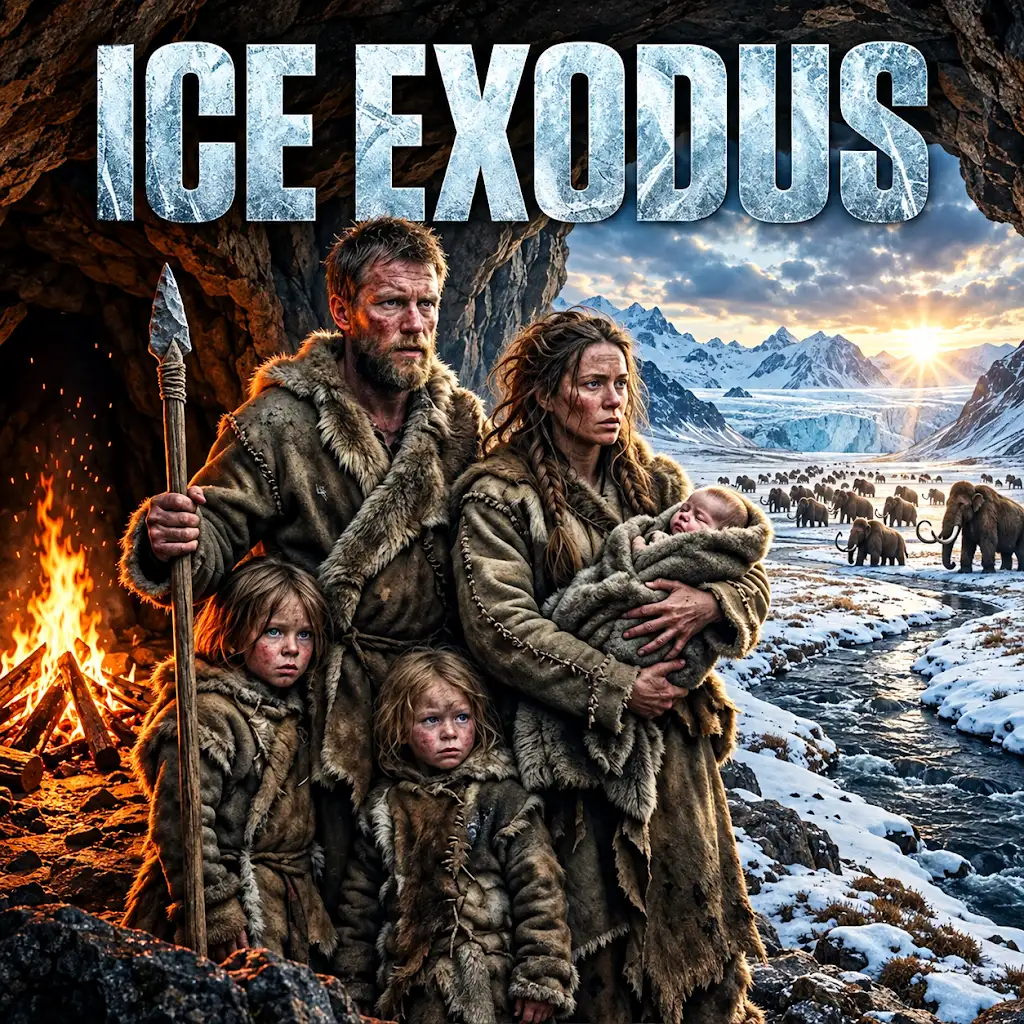
The biting wind whipped across the frozen tundra, carrying with it the scent of snow and the distant growl of a saber-toothed cat. For Anya and her mate, Kael, this was not a scene of impending doom, but simply the harsh reality of their existence. They were part of a small band of Homo erectus, a family unit carving out a precarious life on the fringes of the Pleistocene epoch, a time often referred to as the Ice Age. Their world was a canvas of stark contrasts: vast, glistening ice sheets stretching to the horizon, punctuated by rugged mountains and sparse, hardy vegetation that clung stubbornly to life. Survival was a constant, gnawing preoccupation, a relentless test of strength, cunning, and the unwavering bonds of kinship.
The story of Anya and Kael, and their small family, is not a documented epic in the annals of history, for their lives predated written records by tens of thousands of years. Yet, by piecing together the fossil record, the archaeological discoveries, and our understanding of human evolution, we can construct a plausible narrative of their epic journey through time. It is a tale of resilience, adaptation, and the indomitable spirit that would eventually lead our species to dominate the planet. Their journey was not a single, linear progression but a series of nomadic treks, driven by the ever-shifting glaciers and the elusive promise of sustenance.
The Hearthstone of Hope
The heart of Anya and Kael’s existence, as with any early human family, revolved around the hearth. It was more than just a source of warmth; it was a nexus of community, safety, and the transmission of essential knowledge. Their fire, carefully tended with dried grasses and branches, was a beacon in the encroaching darkness, both literal and metaphorical. Around it, stories were whispered in grunts and gestures, lessons were passed down from elder to young, and the day’s meager spoils were shared. Anya, her hands calloused and strong, would often tend the flames, her keen eyes watching the embers, ensuring the precious heat would last through the frigid night. Kael, a hunter of formidable skill, would return from his expeditions, his spear notched and his muscles aching, often bringing back the promise of a meal, the scent of blood clinging to his fur-lined tunic.
The Circle of Kin
Their immediate family consisted of their two young children, Lyra and Tor, and a scattering of elder relatives who still possessed the wisdom and strength to contribute to the group’s survival. Lyra, a bright spark with an insatiable curiosity, would mimic her mother’s movements, learning the art of preparing hides and identifying edible roots. Tor, more boisterous and eager, would trail his father, learning the subtle signs of animal tracks and the art of stealth. The elders, their faces etched with the stories of countless winters, provided a vital link to ancestral knowledge, recalling hunting grounds that had once been bountiful and warning of dangers that had claimed others. This intergenerational dependency was the bedrock of their survival, a living testament to the power of cooperation in the face of overwhelming odds.
The Sacred Flame
The control of fire was a monumental achievement for early humans, and for Anya and Kael’s band, it was their most prized possession. They understood its dual nature: a creator of warmth and light, and a terrifying force of destruction. The careful selection of fuel, the protective ring of stones around the hearth, and the vigilance required to keep it alive were all skills honed through generations of experience. The fire was also a social lubricant. Evenings were spent huddled together, the flickering light casting dancing shadows on their faces, creating a sense of unity and belonging. It was here that the rudimentary beginnings of language, expressed through a complex interplay of vocalizations and gestures, would have been practiced and refined, forging the bonds of shared understanding that were crucial for coordinated action.
In exploring the themes of prehistoric family dynamics and survival during the Ice Age, one can gain further insights by examining the article on ancient control technology. This piece delves into the innovative strategies employed by early humans to adapt to their harsh environments, shedding light on the social structures that may have supported family units during this challenging period. For a deeper understanding of how these technologies influenced survival, you can read the article here: Unearthing Ancient Control Technology.
The Hunt for Survival

The relentless pursuit of sustenance was the defining characteristic of Anya and Kael’s lives. Their world offered little in the way of easily accessible food, and the ebb and flow of the glacial periods dictated the availability of prey. Hunting was a dangerous profession, demanding not only physical prowess but also an intimate understanding of the environment and the behavior of the animals that roamed it. Kael, a seasoned hunter, would lead small hunting parties, their movements coordinated and silent, relying on sharpened spears tipped with stone or bone, and the strategic use of terrain to their advantage.
Tracking the Mammoth’s Shadow
The majestic mammoth, a creature of immense power and a rich source of meat, fat, and hide, was a prime target. But hunting a mammoth was an undertaking of immense risk. Kael and his companions would spend days tracking these giants, their keen eyes scanning for the telltale signs of disturbed earth, broken branches, and the distinct, earthy odor that signaled their presence. The hunt itself was a carefully orchestrated ballet of courage and caution. They would seek to corner the mammoth, using natural barriers like ravines or cliffs, or the strategic deployment of fire to drive it into a vulnerable position. The final thrust of their spears, delivered with all the force they could muster, was often the culmination of a dangerous gamble, with the potential for both a life-sustaining meal and a fatal encounter.
The Small Game and the Gathering Basket
While the larger game provided the most substantial rewards, Anya and her family also relied heavily on smaller animals and the bounty of the land. Anya, with her intimate knowledge of the flora, would lead the women and children on gathering expeditions. They would scour the sparse woodlands and open plains for edible roots, berries, nuts, and seeds. These foraged foods, though less calorically dense, provided essential vitamins and minerals, and a crucial supplement to their diet when hunting proved unsuccessful. Trapping small game, like hares or birds, using rudimentary snares and nets, was also a vital skill, providing a more consistent, albeit smaller, source of protein.
The Great Migration North

As the glaciers advanced, the familiar landscape would transform into an impassable wall of ice. This relentless pressure forced Anya and Kael’s band to embark on arduous migrations, seeking new territories that offered a chance for survival. These were not planned expeditions in the modern sense, but rather desperate, instinctual movements driven by the primal need to find food and shelter. Their journey was a testament to their adaptability, a slow, painstaking progress driven by necessity.
Following the Sun’s Fading Promise
The southward retreat of the ice often signaled a period of relative abundance, with new vegetation emerging and game following the retreating glaciers. Conversely, as the seasons shifted and the ice advanced again, they would be forced to move. These migrations were often dictated by the subtle cues of nature: the changing patterns of animal herds, the direction of the prevailing winds, and the position of the sun. They would travel for weeks, sometimes months, carrying their meager possessions, their young clinging to them for warmth and security. The journey was fraught with peril: treacherous terrain, encounters with predators, and the constant threat of starvation.
Refuge in the Caves
Finding shelter was as crucial as finding food. During their migrations, and as a refuge from the harshest elements, caves and rock overhangs became invaluable havens. These natural formations offered protection from the wind, the snow, and the predators that roamed the landscape. Anya and Kael’s band would establish temporary camps within these shelters, utilizing the natural protection to their advantage. Here, they would build their fires, prepare their food, and rest before continuing their journey. These caves, though often damp and dark, represented a temporary sanctuary in a world that was constantly trying to reclaim them.
The Whispers of Innovation
While survival was their immediate concern, the story of Anya and Kael’s family, like that of their ancestors and descendants, is also a story of slow, incremental innovation. The challenges they faced spurred the development of new tools, techniques, and a deeper understanding of their environment. These innovations, though seemingly simple to us today, were revolutionary in their time, laying the groundwork for future advancements that would ultimately define humanity.
Sharpening the Stone, Honing the Mind
The development of stone tools was a cornerstone of early human survival. Anya and Kael’s band would have used meticulously chipped stone handaxes and scrapers for a variety of tasks, from butchering carcasses to preparing hides. The process of knapping flint, the careful striking of one stone against another to create a sharp edge, was a skill that required patience, precision, and a deep understanding of the material’s properties. Beyond the purely functional, the very act of creating and refining these tools demonstrated a growing cognitive capacity, the ability to plan, to problem-solve, and to imbue objects with purpose. This iterative process of improvement, passing on techniques and refining designs, represented a nascent form of technological advancement.
The Art of the Hide
The thick hides of the animals they hunted were not merely discarded. Anya, skilled in the art of hide preparation, would meticulously scrape away the flesh and fat, then process the skins using bone tools and natural tannins derived from plants. These prepared hides were essential for their clothing, providing vital insulation against the biting cold. They were also used to fashion simple shelters, to create carrying pouches, and even as rudimentary sleeping mats. The ability to effectively utilize every part of the animal, from meat to bone to hide, was a hallmark of their resourcefulness and a key factor in their ability to thrive in a challenging environment.
In exploring the themes of survival and resilience in prehistoric family dynamics during the Ice Age, one can draw parallels to modern narratives that address the complexities of navigating challenging environments. A compelling article that delves into the intricacies of overcoming obstacles in a post-colonial context can be found here: navigating post-colonial borders. This piece highlights the enduring human spirit, much like the families of the Ice Age who relied on each other to endure harsh climates and scarce resources.
A Legacy Carried Forward
| Metric | Value | Description |
|---|---|---|
| Time Period | 2.6 million – 11,700 years ago | Duration of the Ice Age (Pleistocene Epoch) |
| Average Family Size | 5-8 members | Typical size of prehistoric family groups for survival |
| Primary Food Sources | Mammoths, Mastodons, Plants, Fish | Main diet components during Ice Age survival |
| Survival Tools | Stone tools, Spears, Fire | Essential tools used by prehistoric families |
| Average Lifespan | 30-40 years | Estimated lifespan of prehistoric humans during Ice Age |
| Clothing Materials | Animal hides, Fur | Used for warmth and protection against cold |
| Shelter Types | Caves, Huts made of bones and hides | Common shelters for prehistoric families |
| Migration Distance | Up to 100 km/year | Estimated movement range to follow food and climate |
The lives of Anya and Kael, though seemingly brief and fleeting in the grand sweep of geological time, were crucial chapters in the epic saga of human evolution. Their resilience, their ingenuity, and their unwavering commitment to their family laid the foundation for the future. The skills they honed, the knowledge they passed down, and the very survival of their lineage ensured that the flame of humanity would continue to burn, even through the harshest of ice ages. Their story is not just about enduring the cold; it is about the warmth of the hearth, the strength of the hunt, the courage of the migration, and the spark of innovation that propelled our ancestors forward, a testament to the enduring power of life itself.
The Echoes in Our Genes
Though we may never unearth the specific remains of Anya and Kael, their legacy lives on. Their DNA, woven into the tapestry of human genetics, carries the echoes of their struggles and their triumphs. They are our distant ancestors, their experiences etched into the very fabric of our being. The adaptations they developed to survive the Ice Age, the cognitive leaps they made, and the social structures they forged are all part of the inherited legacy that has allowed our species to flourish and spread across the globe. Their epic journey through time is not merely a historical curiosity; it is an intrinsic part of our own story, a reminder of the incredible resilience and adaptability that has characterized humanity from its very beginnings. The story of Anya and Kael, and countless others like them, is a silent, powerful testament to the indomitable spirit of survival that has brought us to where we are today.
Life 20,000 Years Ago: The Ultimate Ice Age Fight to Survive
FAQs
What challenges did prehistoric families face during the Ice Age?
Prehistoric families faced extreme cold temperatures, food scarcity, dangerous predators, and the need to constantly find shelter to survive during the Ice Age.
How did prehistoric families adapt to the harsh conditions of the Ice Age?
Prehistoric families adapted by creating warm clothing from animal hides, developing tools for hunting and gathering, building shelters out of natural materials, and forming close-knit communities for support and protection.
What role did each family member play in ensuring the survival of the group during the Ice Age?
Each family member had specific responsibilities such as hunting, gathering, childcare, shelter-building, and fire-making to contribute to the overall survival of the group during the Ice Age.
Did prehistoric families have any rituals or traditions to help them cope with the challenges of the Ice Age?
Prehistoric families likely had rituals and traditions related to hunting, gathering, storytelling, and spiritual beliefs to help them cope with the challenges of the Ice Age and strengthen their bonds as a community.
How has the survival strategies of prehistoric families during the Ice Age influenced modern family dynamics?
The survival strategies of prehistoric families during the Ice Age, such as cooperation, resourcefulness, and resilience, have influenced modern family dynamics by emphasizing the importance of working together, adapting to change, and supporting one another in times of hardship.