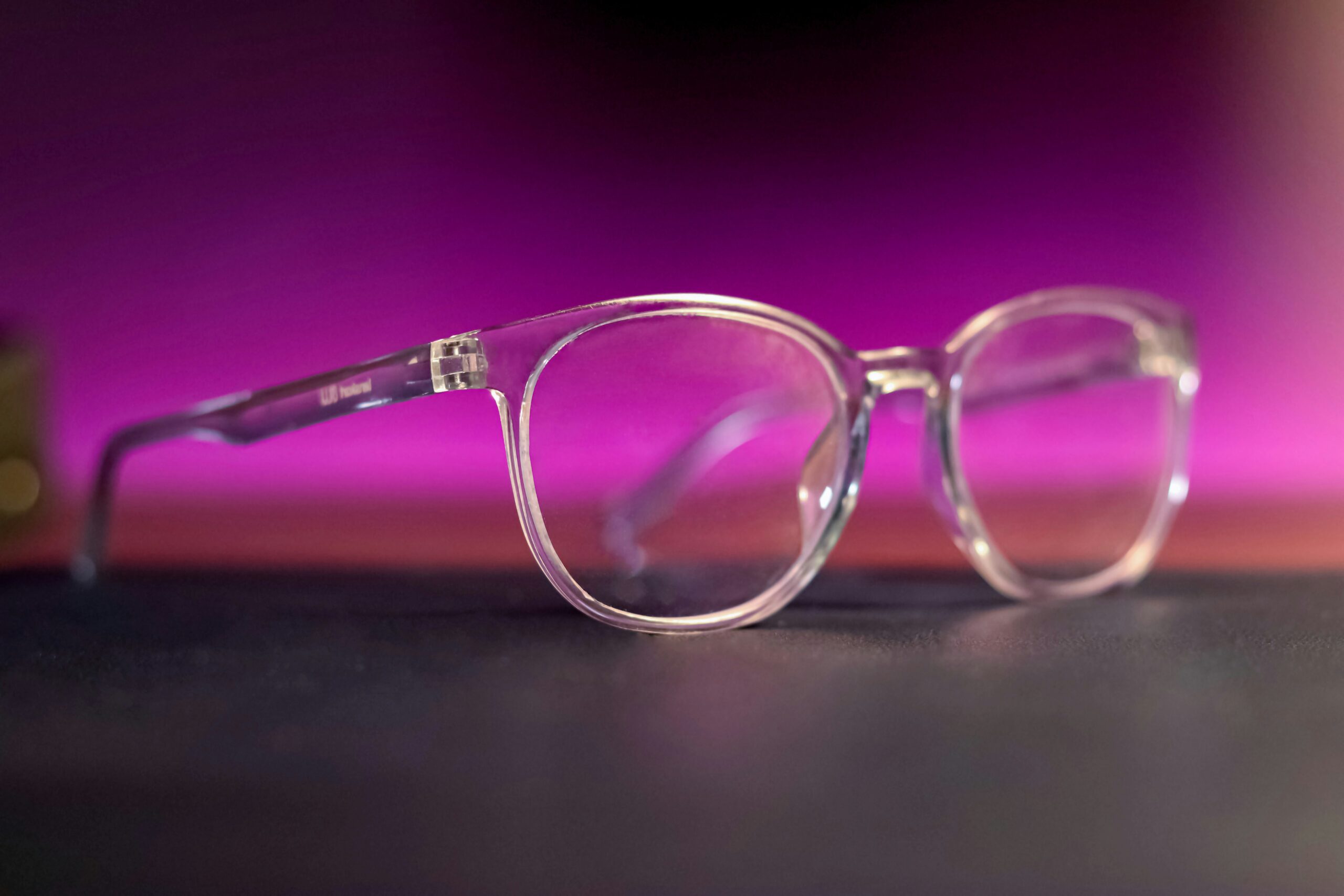
The Genesis of Vision: Unveiling Early Italian Spectacles
The 13th century in Italy was a period of burgeoning intellectual curiosity and burgeoning innovation. While the grand cathedrals were reaching towards the heavens and universities were solidifying their foundations, a subtler, yet profoundly impactful, revolution was taking place in the realm of personal vision. This revolution, born from necessity and fueled by nascent scientific understanding, culminated in the invention of eyeglasses, a device that would fundamentally alter the lives of scholars, scribes, and countless others whose livelihoods depended on sharp eyesight. It is a testament to the ingenuity of these medieval artisans that their rudimentary creations laid the groundwork for a technology we now take for granted.
The genesis of spectacles was not a sudden, isolated spark, but rather a slow burn, an evolution driven by a specific societal need. As the Middle Ages progressed, literacy, though still a privilege, began to expand. Monastic scriptoria, burgeoning universities, and the expanding merchant class all contributed to an increased demand for reading and writing. This rise in intellectual and commercial activity placed a greater burden on the eyes, particularly as the natural process of presbyopia—the age-related decline in the ability to focus on near objects—began to hinder the productivity of those who relied on detailed visual tasks. Before the advent of eyeglasses, individuals experiencing such visual impairment faced a stark choice: cease their demanding work or struggle with increasingly blurry text, leading to frustration, errors, and a diminished quality of life. The existing tools for magnification were cumbersome and limited. Reading stones, essentially convex lenses placed directly on text, offered some assistance but were impractical for sustained use or for reading anything beyond a single line at a time. It was within this context of pressing need that the groundbreaking innovation of spectacles began to take shape.
In exploring the fascinating history of spectacles in 13th century Italy, one can draw interesting parallels to the journeys of explorers who ventured into the unknown, much like the development of optical devices that changed the way people viewed the world. For a deeper understanding of exploration and discovery during this era, you might find the article on early Antarctic explorers enlightening. It provides insights into the spirit of adventure that characterized both the scientific advancements and the expeditions of the time. You can read more about it here: Explorers of Antarctica Before 1820.
Crafting Clarity: The Materials and Mechanics of Early Eyeglasses

The construction of these early 13th-century Italian spectacles, while seemingly simple by modern standards, represented a significant leap in craftsmanship and understanding of optical principles. The lenses themselves were the most critical component, and their creation involved a meticulous process of grinding and polishing. Typically, these lenses were made from quartz or beryl, materials that could be worked into a convex shape with sufficient clarity. The choice of material was crucial; less pure or improperly worked stones would have introduced distortions and aberrations, negating the intended benefit. The process likely involved skilled artisans, possibly with backgrounds in gem cutting or glassmaking, who possessed the dexterity and patience required to shape these materials into functional lenses. The grinding would have been a labor-intensive process, using abrasive powders and water to slowly sculpt the desired curvature. Polishing then followed, aiming to achieve a surface smooth enough to allow light to pass through with minimal scattering.
The Art of the Lens: Shaping Vision with Convexity
The defining characteristic of these early lenses was their convexity. This outward curvature is fundamental to correcting presbyopia. A convex lens converges light rays, effectively bringing them to a focus closer to the eye. For someone with presbyopia, whose natural lens has lost its elasticity and ability to bulge sufficiently to focus on near objects, the convex lens acts as a supplementary focusing mechanism. The degree of convexity varied, with artisans likely experimenting to find the optimal curvature for different levels of visual impairment. It is important to note that these early spectacles were not designed to correct myopia (nearsightedness) or astigmatism, as the understanding of those conditions and the precise optical corrections required were still centuries away. Instead, they primarily addressed the universal challenge of age-related farsightedness, opening up the world of detailed visual tasks to a wider demographic.
The Frame’s Embrace: Holding Vision Together
Beyond the lenses, the frame that held them together was another area of significant, albeit less optically complex, innovation. Early frames were not the delicate and adjustable structures we know today. Instead, they were typically constructed from bone, leather, or wood. These materials were shaped and carved to create a rudimentary bridge to rest on the nose and two sockets to hold the lenses. The design was often simplistic, with the two lenses being joined together, sometimes by a rivet or a sturdy connecting piece. This meant the wearer had to hold the spectacles in place, or they would rest precariously on the bridge of the nose. There were no ear pieces or temple arms as we understand them. The wearer would often have to consciously keep their head still to maintain the correct position of the glasses, a practice that would have become natural over time. Despite their limitations, these frames were essential, providing a stable mounting for the lenses and allowing them to be positioned correctly in front of the eyes. The artistry in their construction lay in their durability and their ability to hold the precious lenses securely.
The Italian Cradle of Innovation: Florence and the Birthplace of Eyeglasses

The prevailing historical consensus points to Northern Italy, specifically Florence and Pisa, as the most likely birthplace of eyeglasses. This geographical association is not arbitrary. These regions were centers of significant economic prosperity, intellectual activity, and skilled craftsmanship during the late 13th and early 14th centuries. The presence of a thriving merchant class, a growing demand for literacy, and a tradition of fine artisan work provided fertile ground for such an invention. The earliest documented references to eyeglasses and their makers appear in these areas, further solidifying their claim to this pivotal invention.
Witnesses to the Dawn: Early Mentions and Makers
The earliest known written mention of eyeglasses comes from a sermon delivered by the Dominican friar Giordano da Pisa in 1286. He spoke of eyeglasses being invented “not twenty years ago” and that they allowed people to “see well.” This sermon, delivered in Florence, directly links the invention to that city and to a timeframe consistent with the mid-13th century. Following this, records begin to emerge of individuals identifying themselves as “spectacle makers” or “lens grinders.” The earliest of these is believed to be Salvino D’Armate degli Armati of Florence, who, according to later (and possibly apocryphal) accounts, is credited with the invention. While the precise details of his role remain debated, his name, along with others from Pisa and Venice, appears in guild records and legal documents related to the nascent optical trade. These early makers were not merely craftsmen; they were pioneers, experimenting with materials and techniques to achieve a new level of visual acuity.
A Thriving Trade: The Guilds and the Spread of the Craft
As the demand for eyeglasses grew, so too did the establishment of specialized trades and guilds. In Florence and Pisa, guilds of lens grinders and spectacle makers began to form. These guilds served multiple purposes: they regulated the quality of the products, ensured fair trade practices, and provided a framework for apprenticeships, passing down the specialized knowledge and skills required to create eyeglasses from one generation to the next. The existence of these guilds suggests a well-established and recognized craft. From these Italian centers, the knowledge and technology of spectacle making gradually spread throughout Europe. Traveling merchants, scholars, and artisans likely carried the secrets of lens grinding and frame construction, leading to the establishment of similar trades in other urban centers. The Italian innovation thus became a catalyst for a pan-European adoption of this transformative technology.
Societal Impact: Transforming Scholarship and Daily Life
The invention of eyeglasses was far more than a mere technological novelty; it was a profound societal innovation that rippled through various aspects of medieval life. Its most immediate and perhaps most significant impact was on the intellectual sphere. Scholars, monks, and scribes, whose work was intrinsically tied to the written word, found their careers and their ability to contribute to knowledge significantly extended. Previously, as eyesight deteriorated with age, many faced a decline in their productivity, sometimes leading to an early retirement from their intellectual pursuits. Eyeglasses offered a reprieve, allowing them to continue reading, writing, and researching well into their later years. This preservation of accumulated knowledge and experience was invaluable for the progress of learning.
The Scholar’s Ally: Extending the Life of the Mind
The monk meticulously copying manuscripts, the university scholar poring over ancient texts, the legal scribe drafting documents – all these professions benefited immensely from the advent of spectacles. The ability to maintain sharp vision meant that the transmission of knowledge was less likely to be interrupted by the natural limitations of the human body. It allowed for a deeper engagement with complex texts, fostering more nuanced interpretations and contributing to a more robust intellectual discourse. The longevity of a scholar’s career was effectively increased, meaning that the wisdom and experience gained over decades could continue to inform and guide future generations. This was particularly important in a period where the formal transmission of knowledge was still developing and the written word was a primary vehicle for its preservation and dissemination.
Beyond the Scriptorium: Broader Applications and Accessibility
While scholars were the most immediate beneficiaries, the impact of eyeglasses extended to other walks of life. Artisans who relied on fine detail work, such as jewelers, watchmakers (though the latter were still some centuries away in their modern form), and even certain types of medical practitioners, found their precision and efficiency enhanced. The growing merchant class, engaged in bookkeeping, correspondence, and the examination of contracts, also benefited. The increasing affordability and availability of spectacles, as the craft matured, meant that they were not solely the preserve of the elite. While still a relatively expensive item, their accessibility widened over time, allowing a broader segment of the population to overcome visual limitations and participate more fully in their respective trades and daily lives. This democratizing effect, though gradual, was a significant consequence of the invention.
In exploring the fascinating history of spectacles in 13th century Italy, one can draw intriguing parallels to other ancient technologies that shaped human perception and understanding. For instance, the development of celestial navigation techniques by the Minoans demonstrates how early civilizations sought to enhance their observational skills. This connection is highlighted in a related article that delves into the intricacies of Minoan navigation methods, which can be found here. Such advancements not only reflect the ingenuity of their time but also underscore the universal quest for improved vision and insight throughout history.
The Legacy and Evolution: From Medieval Marvel to Modern Necessity
| Metric | Data/Value | Description |
|---|---|---|
| Century | 13th | Time period when spectacles were first documented in Italy |
| Location | Italy | Country where spectacles were invented and first used |
| Invention Date | Circa 1286 | Approximate year when spectacles were first created |
| Material | Glass lenses, wooden or metal frames | Common materials used in early spectacles |
| Primary Use | Vision correction | Purpose of spectacles in the 13th century |
| Users | Scholars, monks, craftsmen | Typical users of spectacles in medieval Italy |
| Lens Type | Convex lenses | Type of lenses used to correct farsightedness |
| Manufacturing Centers | Venice, Florence | Major Italian cities known for producing spectacles |
| Impact | Improved reading and craftsmanship | Effect of spectacles on literacy and work quality |
The 13th-century Italian spectacles, though rudimentary by today’s standards, represent a pivotal moment in the history of human ingenuity and optical science. They were the tangible proof that the limitations of natural vision could be overcome through human intervention and understanding. The fundamental principles established by these early artisans—the use of convex lenses to correct presbyopia and the development of a frame to hold them in place—remain at the core of eyeglass technology even today.
The Long Road to Refinement: Centuries of Improvement
The journey from these early convex lenses to the sophisticated corrective lenses of the 21st century is a testament to centuries of scientific inquiry and technological advancement. The understanding of optics, the development of glassmaking techniques, and the discovery of new materials all played a role in refining the eyeglass. Myopia correction, for instance, wouldn’t become commonplace for several more centuries, requiring the development of concave lenses. Astigmatism correction followed even later. The design of frames also underwent significant evolution, with the introduction of nose pads, adjustable temples, and lighter, more durable materials. Yet, the initial spark of innovation, the conceptual breakthrough of placing lenses before the eyes to augment vision, originated in the workshops of medieval Italy.
A Cornerstone of Modernity: The Enduring Impact of Early Eyeglasses
The enduring legacy of these 13th-century spectacles cannot be overstated. They represent the first widely adopted and practical optical aid for vision correction. Their invention did not just help individuals see better; it broadened the scope of human potential, extended the lifespan of intellectual contributions, and fostered greater participation in a world increasingly reliant on visual acuity. Today, billions of people rely on eyeglasses, contact lenses, or corrective surgery to navigate the world. This ubiquitous technology, so integral to modern life, traces its lineage directly back to the ingenious craftsmen of medieval Italy who, with quartz, beryl, and a keen understanding of light, gave the world the gift of clearer vision. Their innovation, born out of necessity and crafted with skill, continues to shape our world, one lens at a time.

Did This Ancient Crystal Help People See?
FAQs
1. What are 13th century spectacles?
13th century spectacles were early forms of eyeglasses that were developed in Italy during the 13th century. They were used to aid individuals with vision problems.
2. How were 13th century spectacles made?
13th century spectacles were typically made from convex lenses that were set into frames made of materials such as wood, metal, or bone. The lenses were shaped to help correct vision issues like nearsightedness.
3. Who invented 13th century spectacles?
The exact inventor of 13th century spectacles is unknown, but they are believed to have been developed by craftsmen in Italy around the 13th century. The earliest known mention of spectacles dates back to the 1280s.
4. What was the significance of 13th century spectacles in Italy?
13th century spectacles revolutionized the way people with vision problems could see and read. They allowed individuals to improve their vision and carry out tasks that were difficult without proper eyesight.
5. How did 13th century spectacles impact society?
The invention of 13th century spectacles had a significant impact on society by improving the quality of life for individuals with vision impairments. It also paved the way for advancements in optics and the development of modern eyeglasses.