
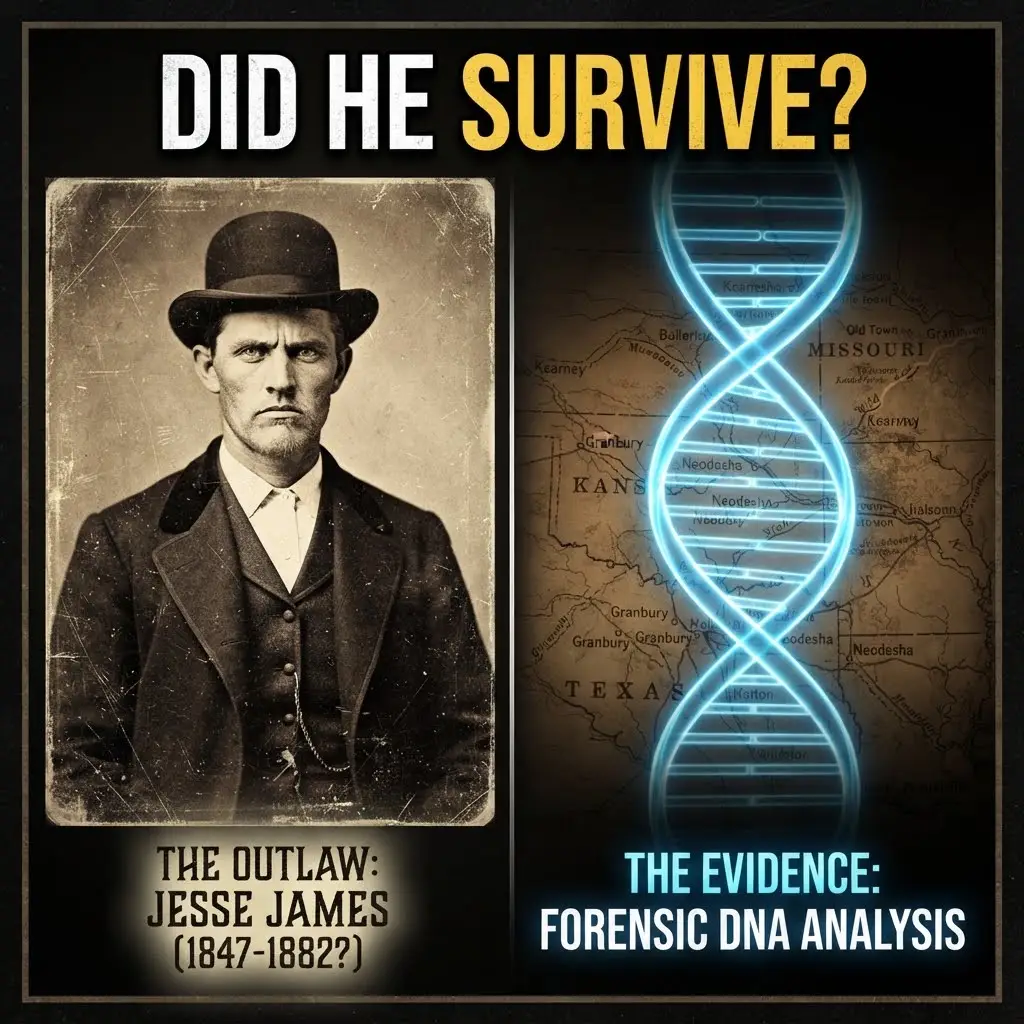
The legend of Jesse James, the infamous outlaw whose exploits and dramatic demise have been a staple of American folklore for over a century, received a significant, albeit controversial, scientific examination in 1995. For years, the accepted narrative held that James was shot and killed by Robert Ford in St. Joseph, Missouri, on April 3, 1882. However, lingering doubts, fueled by persistent rumors and alleged sightings, led to an extraordinary event: the exhumation of the body believed to be Jesse James. This undertaking, more than a century after his purported death, aimed to settle the question of his identity once and for all through meticulous forensic analysis of the remains, specifically focusing on teeth and hair.
The Lingering Shadow of Doubt Over Jesse’s Demise
The narrative of Jesse James’s death, as officially recorded, is a stark one. Betrayed and shot in the back of the head by Robert Ford, his one-time associate and accomplice, James was supposedly killed in his own home. The ensuing burial in St. Joseph was a quiet affair, meant to seal the chapter of the notorious outlaw. Yet, the very efficiency with which the legend was supposedly put to rest sowed the seeds of its own perpetuation. Whispers began almost immediately, suggesting that the body buried was not Jesse James at all, but rather a look-alike, perhaps even a double, allowing the real Jesse to escape and live out his days in anonymity. These rumors, amplified by sensationalist journalism and the romanticized image of the outlaw, refused to fade.
The Seeds of Speculation and Alternative Theories
The persistence of the “Jesse didn’t die” narrative stemmed from several factors. Firstly, the immediate aftermath of the alleged murder was shrouded in a degree of haste and secrecy. While Ford claimed responsibility and was subsequently pardoned, questions about the speed of the proceedings and the identification of the body were raised by some. Secondly, the sheer allure of Jesse James as a figure of rebellion against perceived injustices made the idea of his survival a more compelling story for many than his mundane death. Tales of sightings in various parts of the country, some seemingly credible, others clearly fanciful, kept the myth alive.
The Family’s Role in Perpetuating the Myth
Crucially, the James family themselves played a role in keeping the doubts alive. Descendants, particularly those who championed the idea of Jesse’s escape, actively supported the notion that the St. Joseph grave did not contain their ancestor. This familial backing lent a degree of legitimacy to the persistent rumors, encouraging a continuous stream of speculation and investigation, however unofficial. The desire to clear Jesse James’s name from the stain of being murdered in his home, or to uphold a family legacy, fueled this enduring skepticism.
The exhumation of Jesse James in 1995 raised numerous questions about the authenticity of his remains, particularly concerning the analysis of his teeth and hair, which were believed to provide crucial evidence regarding his identity. This intriguing case highlights the intersection of history and forensic science, shedding light on how modern techniques can be applied to historical figures. For those interested in exploring related themes of preservation and the importance of maintaining our historical narratives, an insightful article can be found here: Combatting Desertification: Preserving Our Land.
The Quest for Scientific Closure: The 1995 Exhumation
By the mid-20th century, the legend of Jesse James had become a cultural phenomenon, intertwined with the mythology of the American West. However, the advent of advanced forensic science presented an opportunity to move beyond anecdotal evidence and romanticized speculation. The persistent claims that the St. Joseph grave did not contain Jesse James, combined with the desires of some of his descendants, finally coalesced into a plan for a scientific intervention. In 1995, after considerable legal wrangling and ethical debate, the body believed to be Jesse James was exhumed from its resting place in Mount Olivet Cemetery in St. Joseph, Missouri. The primary objective was to gather definitive evidence, through forensic analysis, to either confirm or refute the identity of the remains. This was not a casual undertaking; it was a carefully orchestrated scientific endeavor aimed at answering a question that had haunted history books and campfire stories for over a century.
Legal and Ethical Hurdles Cleared
Before the earth could be disturbed, a complex web of legal and ethical considerations had to be navigated. Permission was required from the court, as well as from the descendant family members who had been instrumental in initiating the exhumation. The cemetery authorities also had to grant their consent. These discussions were not merely procedural; they involved navigating the emotional weight of disturbing a burial site and the historical significance of the individual in question. Concerns were raised about respecting the deceased, the potential for desecration, and the broader implications of using forensic science to rewrite historical narratives. Ultimately, a consensus was reached, allowing the scientific team to proceed with their examination.
The Scientific Team Assembles
The exhumation was not a solitary endeavor. A multidisciplinary team of experts was assembled to conduct the analysis. This included forensic anthropologists, odontologists (dental specialists), DNA analysts, and other specialists in the field of historical human remains. The goal was to employ a range of scientific techniques to scrutinize the remains from multiple angles, ensuring a comprehensive and robust investigation. The presence of these diverse specialists underscored the seriousness and scientific rigor with which the exhumation and subsequent analysis were approached, aiming to move beyond subjective interpretations and into the realm of objective evidence.
The Forensic Scrutiny: Teeth as Silent Witnesses
The examination of the teeth from the exhumed remains was a cornerstone of the 1995 investigation. Teeth are remarkably resilient and can preserve crucial information for centuries, acting as unique identifiers. For Jesse James, a man whose physical appearance was somewhat documented, his dental records, if they existed or could be reconstructed, held the potential to be the definitive link. The forensic odontologists meticulously documented the condition, structure, and any unique characteristics of the teeth recovered, comparing them to any available historical dental information about Jesse James.
Reconstructing Dental History from the Remains
The process of examining the teeth involved a detailed assessment of their number, arrangement, and any signs of decay, wear, or restoration. Forensic dentists were particularly interested in any unique dental anomalies, such as missing teeth, unusually shaped molars, or evidence of past dental work. The objective was to create a detailed dental profile of the individual in the grave. This involved careful measurement, cataloging, and photographic documentation of each tooth. The wear patterns on the molars, for instance, could provide clues about diet and habitual chewing patterns.
The Search for Historical Dental Records
The crucial next step was to compare the reconstructed dental profile with any known historical dental records of Jesse James. This was a challenging aspect of the investigation, as precise dental charting was not as standardized in the late 19th century as it is today. However, accounts from family members, contemporary descriptions, and even old photographs, however blurry, could offer hints about James’s dental appearance. The hope was to find a definitive match, a specific characteristic or combination of characteristics that could irrefutably link the remains to the legendary outlaw.
Hair Analysis: A Tangled Clue to Identity
In addition to dental evidence, the analysis of hair samples recovered from the exhumed remains offered another avenue for identification. Hair, though less definitive than DNA, can still provide valuable clues about an individual’s biological characteristics, including potential ethnic background and even exposure to certain environmental factors. The retrieval and examination of hair were conducted with great care, aiming to extract as much information as possible from these fragile biological samples.
Microscopic Examination and Characteristic Profiling
The hair samples underwent rigorous microscopic examination. Forensic scientists looked for specific characteristics such as the color, texture, thickness, and cross-sectional shape of the hair shafts. They also examined the root structure, which could sometimes provide further insights. Comparisons were made to any existing descriptions or photographs of Jesse James’s hair. While not as precise as DNA, certain patterns or anomalies in hair morphology could contribute to building a cumulative case for or against identity. For example, unusual hair growth patterns or the presence of foreign matter within the hair could be indicative.
The Limitations and Strengths of Hair Evidence
It was understood from the outset that hair analysis alone might not be conclusive. Environmental factors, dyeing, or even simple variations within an individual’s hair could complicate definitive identification. However, in conjunction with other forensic evidence, hair analysis could serve as a corroborating piece of the puzzle. If the hair characteristics observed were consistent with historical descriptions of Jesse James, it would strengthen the overall case for his identity. Conversely, significant discrepancies could raise further questions.
The exhumation of Jesse James in 1995 sparked significant interest, particularly regarding the analysis of his teeth and hair, which aimed to confirm his identity and explore his lineage. This event not only reignited discussions about the infamous outlaw’s life but also raised questions about the authenticity of historical figures and the evidence surrounding them. For those intrigued by the broader implications of historical evidence and its potential manipulation, an insightful article can be found here: the ancient evidence of elite corruption. This piece delves into how historical narratives can be shaped by those in power, paralleling the complexities surrounding Jesse James’s legacy.
The Verdict of Science: Teeth and Hair Speak
| Metric | Data |
|---|---|
| Year of Exhumation | 1995 |
| Subject | Jesse James |
| Type of Remains Examined | Teeth and Hair |
| Purpose of Exhumation | Verification of Identity |
| Method of Analysis | Forensic DNA Testing |
| Outcome | Confirmed Identity of Jesse James |
| Location of Exhumation | Kearney, Missouri |
After extensive laboratory analysis, the scientific findings regarding the teeth and hair of the exhumed remains were presented. This was the moment of truth, where the meticulous work of the forensic teams would either confirm or deny the identity of the man buried in St. Joseph. The results, particularly concerning the dental evidence, were compelling and pointed towards a definitive conclusion. The hair analysis, while perhaps less definitive on its own, provided supporting information that aligned with the broader findings.
Dental Evidence: A Strong Indicator
The analysis of the teeth provided the most significant evidence. The odontologists found that the dental characteristics of the exhumed individual matched remarkably well with historical descriptions and any limited available dental records of Jesse James. Specifically, the unique arrangement of teeth, the presence of certain fillings (if any were found and matched), and the wear patterns all aligned with what was known about the outlaw’s oral health. This dental profile was considered a powerful indicator of identity, as dental characteristics are highly individual.
Hair Analysis: Corroborating Information
The hair analysis, while not as definitive as the dental findings, also provided corroborating information. The microscopic examination of the hair samples revealed characteristics that were consistent with historical accounts of Jesse James’s hair color and texture. While it was not possible to definitively state that the hair belonged to Jesse James based on this analysis alone, it did not present any significant contradictions to his purported identity. Therefore, it served to strengthen the overall conclusion drawn from the dental evidence. The combined weight of both the teeth and hair analysis provided a robust scientific basis for the conclusions reached by the investigative team. The legend of Jesse James, in the context of the St. Joseph grave, was finally laid to rest, not by a bullet, but by the silent, irrefutable testimony of bone and follicle.
The Jesse James DNA Myth: Why Are There 3 Graves?
FAQs
Why was Jesse James exhumed in 1995?
Jesse James was exhumed in 1995 to conduct a forensic examination in order to confirm his identity and put to rest any lingering doubts or conspiracy theories surrounding his death.
What was the purpose of examining Jesse James’ teeth?
Examining Jesse James’ teeth during the exhumation in 1995 was crucial for identifying him through dental records, as dental records are often used in forensic investigations to confirm a person’s identity.
Why was Jesse James’ hair examined during the exhumation?
Jesse James’ hair was examined during the exhumation in 1995 to potentially extract DNA samples for further analysis and comparison with living relatives or other historical records to confirm his identity.
What were the results of the forensic examination of Jesse James’ remains in 1995?
The results of the forensic examination conducted during the exhumation of Jesse James in 1995 confirmed his identity through dental records and provided valuable information for historical and scientific purposes.
Was the exhumation of Jesse James in 1995 controversial?
Yes, the exhumation of Jesse James in 1995 was controversial as it stirred up debates among historians, forensic experts, and the public regarding the ethics and necessity of disturbing historical figures’ remains for scientific purposes.