The legend of Jesse James is as American as apple pie and the open road, a tale woven from outlaw daring, societal upheaval, and the enduring human fascination with the unattainable. For decades, his violent demise has been a cornerstone of his mythos, the dramatic climax to a life lived on the run. Yet, the very intensity of that legend has, almost inevitably, spawned a counter-narrative: the persistent whispers and elaborate theories suggesting Jesse James did not die in that St. Joseph, Missouri farmhouse on April 3, 1881. These survival rumors, fueled by lingering doubts, tantalizing clues, and the romantic appeal of an unpunished outlaw, have etched themselves into the folklore of the American West, transforming the assassination into a branching point for enduring mystery.
The Official Account and Its Lingering Questions
The prevailing narrative, etched in history books and widely accepted, is that Jesse James was shot and killed by Robert Ford, a disgruntled member of his own gang. Ford, along with his brother Charley, had turned informant, seeking a pardon for their own crimes in exchange for James’s capture. The scene, as recounted, is one of betrayal and swift retribution. Jesse, known for his meticulous nature, had reportedly been annoyed by a dusty picture on the wall and, in a moment of vulnerability, removed his pistol to clean it. It was then that Robert Ford, seizing the opportune moment, fired two shots, one fatally striking Jesse in the back of the head.
The Identification Debacle
Despite the official pronouncement and the supposed identification of the body, inconsistencies and ambiguities began to surface almost immediately, sowing the seeds of doubt. The body presented for identification was reportedly in a decomposed state, a consequence of it being April and the rudimentary methods of preservation available at the time. This decomposition, coupled with the severe head trauma inflicted by the gunshot, made definitive identification challenging. Witnesses at the scene, including Jesse’s wife Zerelda, claimed the body was not Jesse’s, citing discrepancies in facial features, height, and even the presence of scars. While these claims were often attributed to grief or a desire to protect Jesse’s legacy, they resonated with a public already predisposed to believing in his ability to evade capture.
The Stolen Relics
Adding further fuel to the flames were the reports of Jesse James’s personal effects being stolen from the farmhouse shortly after his supposed death. This included his distinctive clothing, jewelry, and even his guns. If Jesse were truly dead, what was the purpose of pilfering these items? This act of vandalism, or perhaps a calculated removal of evidence, fueled speculation that the body on display was a decoy, a stand-in to convince the authorities and the public that the notorious outlaw was no more. The theory proposed that Jesse, ever the master strategist, had orchestrated his own death to escape the constant pressure of law enforcement and live out his remaining years in obscurity.
The rumors surrounding the assassination of Jesse James and the possibility of his survival have intrigued historians and enthusiasts alike for years. These theories often draw parallels to other historical figures who may have faked their deaths to escape notoriety. For a deeper exploration of deception throughout history, you can read more in the article titled “Uncovering the Deceptions of Ancient Rulers,” which delves into various instances of rulers and notable figures who manipulated their fates. You can find the article here: Uncovering the Deceptions of Ancient Rulers.
The Emergence of Alternative Narratives
As the dust settled on the official account, alternative theories began to crystallize, offering compelling explanations for how Jesse James could have survived. These narratives, often passed down through oral tradition and sensationalized in dime novels and newspapers, painted a picture of a cunning outlaw who outsmarted his pursuers one last time. The desire for a hero who could elude the iron grip of the law proved a potent force in shaping these legends.
The “Double” Theory
One of the most persistent and popular theories posits that the body discovered was not Jesse James, but a look-alike, a double hired to take his place. Proponents of this theory suggest that Jesse, perhaps with the help of loyal confederates or even corrupt officials, arranged for his own demise to be staged. This would have allowed him to disappear and begin a new life, free from the constant threat of capture and imprisonment. The supposed discrepancies in the body’s identification were cited as evidence, suggesting that the staged assassination was so convincing that even close associates struggled to pinpoint the differences.
The Escape and the New Life
Following the “double” theory, the narrative often diverts into speculations about Jesse’s post-assassination life. Some legends claim he lived out his days as a quiet farmer in a remote region, perhaps under an assumed name, while others suggest he continued a life of clandestine activities, albeit on a smaller scale. The idea that Jesse, with his considerable wealth (rumored to be hidden in various caches), could simply vanish and build a new existence was particularly appealing. This romanticized vision of an outlaw finding redemption or at least peace in anonymity resonated with a public disillusioned by the realities of the Gilded Age.
The “Confessions” and Pseudonyms
Over the years, several individuals have come forward, claiming to be Jesse James. These individuals, often appearing late in life, would present elaborate stories of their exploits and their subsequent escape from fame. While most of these claims were quickly debunked by historians and genealogists, their sheer number and the conviction with which they were presented kept the survival rumors alive. Each “confession,” no matter how spurious, added another layer to the intricate tapestry of the Jesse James legend.
The Missouri claimants
Within Jesse James’s home state of Missouri, the rumors of his survival have always held a particular sway. The stories of men claiming to be the infamous outlaw were not confined to isolated incidents. There were individuals who, in their twilight years, would claim the mantle of Jesse James, offering anecdotal evidence and weaving tales that mirrored the popular mythology. These claimants often garnered local attention, their stories circulating within communities, further entrenching the idea that the man buried in the grave was not the true Jesse James. The emotional connection to a local hero, even a notorious one, meant that many were eager to believe in a happy ending, or at least an unwritten one.
The “Alias” Phenomenon
The allure of an assumed identity for a man like Jesse James is undeniable. If he were to escape, a new name and a new life would be paramount. This has led to speculation about individuals who, throughout history, have borne a striking resemblance to descriptions of Jesse or whose life stories contained intriguing parallels. The absence of definitive proof to the contrary allowed these individuals to be cast in a speculative light, their lives becoming canvases upon which the Jesse James legend could be painted. The “alias” phenomenon is less about concrete evidence and more about the power of suggestion and the human desire to fill in the blanks of a captivating mystery.
The Role of Folklore and Media
The Jesse James legend, including the survival rumors, has been inextricably linked to the power of folklore and the burgeoning mass media of the late 19th and early 20th centuries. Dime novels, sensationalized newspaper articles, and later, films and television shows, all played a crucial role in shaping public perception and perpetuating the myths surrounding the outlaw. These narratives often prioritized entertainment and dramatic flair over historical accuracy, ensuring that the most sensational aspects of Jesse’s life and supposed death remained in the public consciousness.
The Dime Novel Impact
The proliferation of dime novels in the late 1800s was a watershed moment in the dissemination of popular culture. Jesse James, with his daring robberies and his perceived defiance of authority, was a tailor-made subject for these cheap, widely distributed stories. These novels often embellished his exploits, portraying him as a Robin Hood figure, a heroic outlaw fighting against corrupt institutions. The survival rumors, too, found fertile ground in the pages of dime novels, allowing authors to explore the tantalizing possibility of Jesse’s continued existence and his clever escape from justice. These fictional accounts, consumed by millions, became a powerful force in shaping the public’s understanding and acceptance of the Jesse James myth.
Cinema and Television’s Contribution
As the mediums evolved, so too did the perpetuation of the Jesse James legend. Early silent films, and later Hollywood blockbusters, brought the outlaw to life on screen. These cinematic interpretations, while often fictionalized, continued to feed the public’s imagination. The survival rumors, though sometimes downplayed in favor of more conventional narrative arcs, often found their way into these adaptations, either as subtle plot points or as subject matter for sequels and spin-off stories. The visual medium, in particular, has a powerful ability to solidify a legend, making the image of Jesse James – whether alive or dead – an indelible part of American cultural memory. Television series and documentaries have continued this tradition, exploring the historical debates and the enduring mystery surrounding his death.
The rumors surrounding Jesse James’ assassination and his supposed survival have long captivated historians and enthusiasts alike. These tales often intertwine with broader discussions about the impact of historical narratives on modern perceptions of outlaws and their legacies. For a deeper understanding of how historical events shape contemporary issues, you might find it interesting to explore the article on the impact of nearshoring on global trade frameworks. This piece provides insights into how past decisions influence current economic landscapes, much like the way Jesse James’ story continues to resonate today. You can read more about it here.
The Unending Allure of the Mystery
| Metric | Details |
|---|---|
| Event | Assassination of Jesse James |
| Date of Assassination | April 3, 1882 |
| Location | St. Joseph, Missouri |
| Assassin | Robert Ford |
| Official Outcome | Jesse James killed |
| Survival Rumors | Persistent rumors claimed Jesse James survived the assassination attempt |
| Rumor Origins | Conflicting eyewitness accounts and lack of immediate public verification |
| Reported Sightings | Multiple alleged sightings in the late 19th and early 20th centuries |
| Historical Consensus | Most historians agree Jesse James died in 1882 |
| Impact of Rumors | Contributed to Jesse James’ legend and folklore status |
Ultimately, the survival rumors surrounding Jesse James are a testament to the enduring power of his legend and the human fascination with the unresolved. The inability to definitively lay the ghost of Jesse James to rest speaks volumes about the man and the myth he has become. The questions, the “what ifs,” and the tantalizing possibilities continue to captivate, ensuring that the story of Jesse James is far from over.
The Enduring Appeal of the Outlaw Hero
The figure of the outlaw hero, a character who operates outside the bounds of conventional society yet often embodies a certain code of honor or a defiance against injustice, has always held a powerful appeal. Jesse James, in his romanticized portrayal, fits this archetype perfectly. The idea that such a figure could escape the clutches of the law and live to see another day is deeply satisfying to a certain segment of the population. It represents a victory of the individual against the system, a triumph of cunning and resourcefulness over brute force and institutional power.
The Quest for Closure and the Embrace of Uncertainty
While many crave definitive answers and closure, there is also a profound human inclination to embrace mystery and the unknown. The Jesse James survival rumors offer a space for imagination to flourish, a playground for endless speculation. The absence of irrefutable evidence to the contrary allows for the continued existence of these alternative narratives. Perhaps, in a way, the enduring debate is more compelling than a simple, straightforward conclusion. The legend of Jesse James, perpetually on the run, both in life and in the tales told about him, is a testament to the fact that some stories are best left unfinished, their endings forever shrouded in the mists of time and legend. The question of whether Jesse James truly died that day in St. Joseph may never be definitively answered, but the very act of asking, of exploring the rumors and legends, ensures that his story, in all its enigmatic glory, will continue to live on.
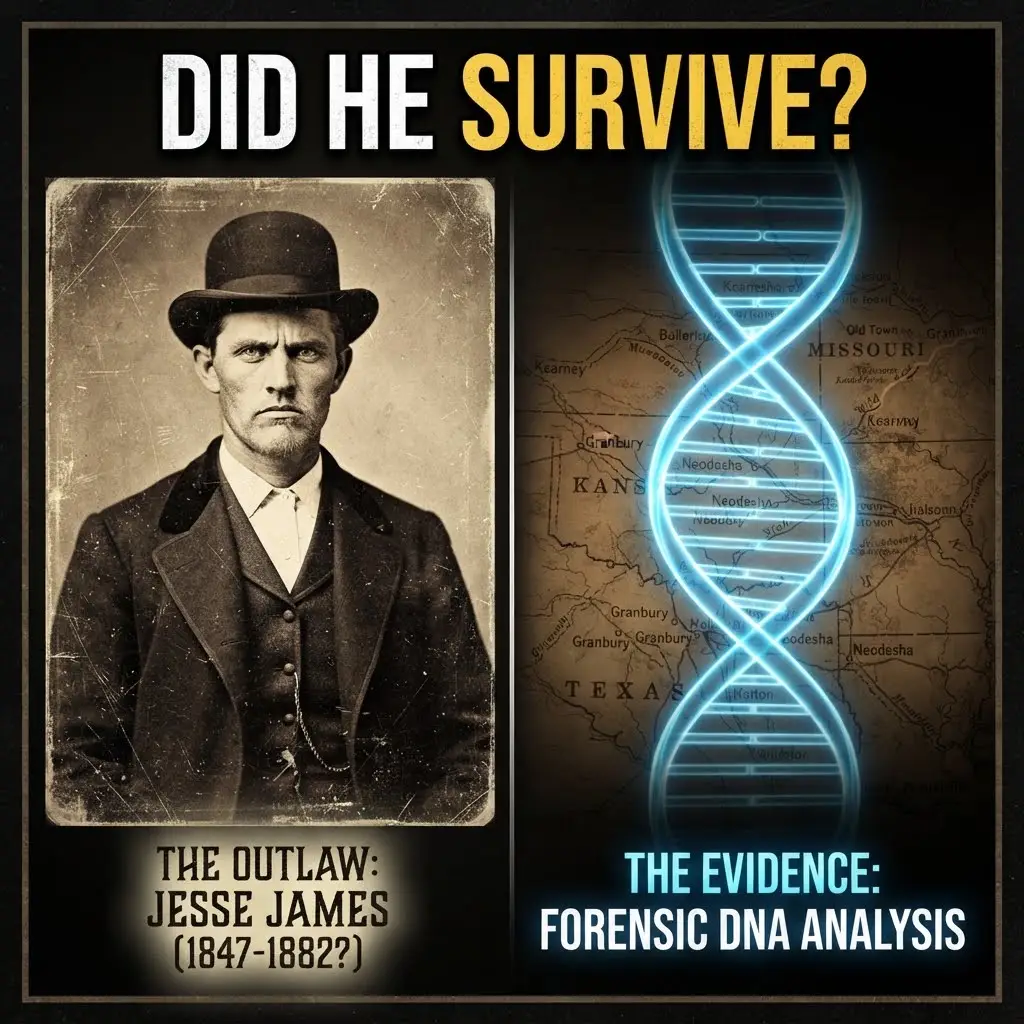
The Jesse James DNA Myth: Why Are There 3 Graves?
FAQs
1. Was Jesse James actually assassinated?
Yes, Jesse James was assassinated on April 3, 1882, by Robert Ford, a member of his own gang, who shot him in the back of the head while James was adjusting a picture on the wall in his home.
2. Are there rumors that Jesse James survived the assassination attempt?
Yes, there have been persistent rumors and conspiracy theories suggesting that Jesse James faked his death and actually survived the assassination. These rumors have been fueled by various claims and alleged sightings over the years.
3. What evidence supports the theory that Jesse James survived the assassination?
Supporters of the theory that Jesse James survived point to inconsistencies in the official account of his death, alleged physical differences in the body that was identified as James, and reported sightings of a man claiming to be Jesse James after the assassination.
4. How have historians and experts responded to the survival rumors surrounding Jesse James?
Most historians and experts dismiss the survival rumors surrounding Jesse James as unfounded and lacking credible evidence. They argue that the assassination of Jesse James by Robert Ford is a well-documented historical event supported by multiple sources.
5. What is the general consensus among historians regarding Jesse James’ fate?
The general consensus among historians is that Jesse James was indeed assassinated by Robert Ford in 1882 and did not survive the attempt. While there are conspiracy theories and rumors suggesting otherwise, the historical evidence overwhelmingly supports the official account of his death.