
The legend of Jesse James has long been a fixture of American folklore, a tale woven with threads of outlaw daring, rebellion, and the enduring mystery surrounding his ultimate fate. For over a century, the debate has raged: was the man shot and killed in St. Joseph, Missouri, in 1881 truly the infamous Jesse James, or was he a cunning imposter, allowing the real James to escape and live out his days in anonymity? This persistent question, fueled by conflicting accounts and the lack of definitive proof, has tantalized historians, genealogists, and the public alike. However, in a significant development that has finally settled decades of speculation, a groundbreaking exhumation and subsequent DNA analysis have provided irrefutable evidence, confirming the authenticity of the remains interred in a St. Joseph cemetery as those of the legendary outlaw, Jesse Woodson James.
Unearthing the Truth: The St. Joseph Grave and the Lingering Doubts
The story of Jesse James’s demise is as dramatic as his life. On April 3, 1881, Robert Ford, a disgruntled member of James’s own gang, shot and killed a man named Jesse James in his St. Joseph home. Ford’s motive was ostensibly to collect a reward offered for James’s capture, dead or alive. However, from the outset, the swiftness of the event, coupled with the notoriety of James, immediately sparked rumors and suspicion. Many found it too convenient, too neat, for the most wanted man in America to be dispatched so easily. These doubts, initially whispered, grew into a persistent chorus over the years.
The Original Accounts and Early Skepticism
Contemporary newspaper reports described the slain man as Jesse James, identifying him by his distinctive features and personal belongings. Robert Ford and his brother, Charles, both implicated in the murder, maintained their story, and were subsequently convicted. Yet, the very men who claimed to have killed Jesse James were also known for their duplicity and self-serving narratives. This inherent untrustworthiness, combined with the immense public fascination with the outlaw, laid the groundwork for skepticism. The idea of an imposter taking the fall, allowing the real Jesse James to escape the clutches of the law and the constant threat of revenge, resonated deeply with a public that admired the outlaw’s daring persona.
The “Imposter” Theory Gains Traction
Over time, various individuals and theories emerged, proposing that the man killed by Robert Ford was not Jesse James at all. These theories often pointed to supposed sightings of Jesse James in later years, living under different aliases in various parts of the country. One prominent contender was a man named J. Frank Dalton, who claimed to be Jesse James and whose family members, generations later, also purported to be descendants of the outlaw. These claims, while captivating, lacked concrete, verifiable evidence. They relied heavily on oral histories and anecdotal accounts, which, while valuable, were insufficient to overcome the official narrative of the St. Joseph murder. The lack of irrefutable forensic evidence, particularly by the standards of the late 19th and early 20th centuries, allowed these doubts to fester.
The recent exhumation of Jesse James’ body has sparked significant interest and debate regarding the authenticity of the remains and their connection to the infamous outlaw. For those intrigued by historical mysteries and the quest for lost knowledge, a related article explores the fascinating topic of the Library of Alexandria and its enduring legacy. You can read more about this captivating subject in the article titled “Uncovering Lost Maps: Library of Alexandria’s Legacy” available at this link.
The Modern Quest for Certainty: A Scientific Approach
The desire to definitively resolve the Jesse James mystery remained a persistent undercurrent in historical and genealogical research. As forensic science advanced, particularly in the field of DNA analysis, the possibility of finally putting the “imposter” theory to rest became a tangible reality. This led to a concerted effort by descendants and researchers to obtain permission for the exhumation of the remains believed to be Jesse James and to conduct rigorous scientific testing. The process was complex, involving legal battles, historical detective work, and the careful handling of sensitive remains.
Securing Permission and Locating the Grave
The journey to the exhumation began with the descendants of Jesse James, who had long maintained their belief in the authenticity of the St. Joseph burial. They sought legal authorization to exhume the remains from Mount Olivet Cemetery in St. Joseph, Missouri, where a grave marked simply “Jesse James” had been a pilgrimage site for many. This was not a simple task, as cemetery records from that era were often incomplete, and the legal framework for exhumations was stringent. After protracted efforts, and with the backing of compelling genealogical evidence suggesting a direct lineage, permission was eventually granted. The precise location of the grave within the cemetery was identified through historical records and cemetery maps, adding another layer of meticulous planning to the operation.
The Exhumation Process: A Delicate Operation
The exhumation itself was conducted with the utmost care and respect for the deceased. A team of forensic anthropologists, archaeologists, and medical professionals oversaw the delicate procedure. The goal was to recover any skeletal remains and any biological material that could be used for DNA extraction, while ensuring minimal contamination and preserving the integrity of the evidence. The conditions of the grave, the age of the remains, and the passage of time all presented significant challenges. However, the team’s expertise ensured that the process was carried out to the highest scientific standards, with meticulous documentation at every stage. The recovery of teeth and bone fragments proved to be crucial, as these are typically the best sources for ancient DNA.
DNA Analysis: The Scientific Verdict on Identity
The core of the investigation lay in the advanced DNA analysis that followed the exhumation. This cutting-edge technology offered the potential for a definitive answer, unburdened by the biases and uncertainties of historical accounts. The scientific community approached the task with rigorous protocols to ensure the accuracy and reliability of the results. The process involved comparing DNA profiles from the exhumed remains with those of known, verifiable descendants of Jesse James.
Extracting and Analyzing Genetic Material
Once the skeletal remains were recovered, a critical step was the extraction of DNA. This is a highly technical process that involves breaking down cellular structures to isolate the genetic material. The quality and quantity of DNA recovered depend on numerous factors, including the preservation of the remains and the methods used. In this case, specialized techniques were employed to extract both nuclear DNA, which is inherited from both parents, and mitochondrial DNA, which is inherited solely from the mother. The scientific team meticulously worked to avoid contamination from the environment or the individuals handling the samples. Each step, from sample preparation to data interpretation, was subjected to stringent quality control measures.
Comparing Profiles: The Unambiguous Match
The extracted DNA was then subjected to advanced sequencing technologies. The resulting genetic profiles were compared against the DNA profiles of two living, verifiable maternal-line descendants of Jesse James – a sister of his mother and a sister of his father. This comparison focused on mitochondrial DNA because it is more stable over long periods and can be reliably inherited through the maternal line. The results were striking and conclusive. The mitochondrial DNA profile obtained from the St. Joseph remains showed a direct maternal lineage match with the descendants of Jesse James’s mother. This provided an exceptionally strong indication that the individual buried in St. Joseph was indeed Jesse James. To further bolster the findings, nuclear DNA was also analyzed, though its degradation over time presented greater challenges. Nevertheless, the available nuclear DNA also supported the conclusion, showing a paternal lineage match when compared to the known familial DNA of other direct descendants of Jesse James’s father.
Reconciling the Past: The End of a Persistent Myth
The scientific findings from the DNA analysis have had a profound impact, effectively settling the long-standing debate about the identity of the man buried in St. Joseph. The “imposter” theory, which had captivated public imagination for generations, has now been definitively refuted by irrefutable genetic evidence. This conclusion brings a sense of closure to a historical enigma and allows for a more accurate understanding of Jesse James’s life and death.
The Significance of the DNA Evidence
The DNA evidence is considered the gold standard in identity confirmation. In this instance, the match through both maternal and paternal lineages provides an overwhelming level of certainty. It removes the last vestiges of doubt that plagued the historical narrative. The scientific rigor applied to the exhumation and DNA analysis ensures that these findings are not subject to interpretation or speculation. They represent a factual determination based on biological reality, providing a definitive answer to a question that had persisted for over a century. The scientific community has widely accepted these results, reinforcing their credibility.
Implications for Historical Understanding and Family Legacy
This confirmation has significant implications for how Jesse James is remembered and understood. It means that the man shot by Robert Ford in 1881 was, in fact, the notorious outlaw himself. This allows historians to focus on the actual events of his life and death, rather than continuing to entertain the possibility of a fabricated demise. For the descendants of Jesse James, the confirmation brings a sense of validation and a clear understanding of their ancestral lineage. It provides a definitive link to their historical roots and the legacy of a figure who, for better or worse, remains an indelible part of American history. The myth of the escaped outlaw is now definitively put to rest, replaced by the factual account of his demise.
The recent exhumation of Jesse James’ body has sparked significant interest, particularly regarding the historical implications and the accuracy of the findings. As researchers delve into the results, many are drawing parallels to other intriguing historical mysteries, such as the acoustic properties of ancient structures. For those interested in exploring another fascinating topic, you can read about the unique characteristics of Stonehenge in this related article here. The connections between these investigations highlight the ongoing quest to uncover the truths of our past.
A New Chapter in the Legend: Authenticity Affirmed
| Metric | Result | Details |
|---|---|---|
| Exhumation Date | April 2000 | Body exhumed from Mount Olivet Cemetery, Missouri |
| Purpose | DNA Testing | To confirm identity of Jesse James’ remains |
| DNA Sample Source | Bone and Teeth | Samples taken from exhumed remains |
| Comparison Sample | Descendant’s DNA | DNA from Jesse James’ known relatives |
| Result of DNA Test | Match Confirmed | Remains identified as Jesse James |
| Additional Findings | Gunshot Wound | Consistent with historical accounts of death |
| Conclusion | Authenticity Verified | Exhumed body is that of Jesse James |
The exhumation and subsequent DNA analysis have not only resolved a historical debate but have also added a new dimension to the enduring legend of Jesse James. While the romanticized image of the daring outlaw may persist in popular culture, the scientific confirmation of his identity anchors his story firmly in historical reality. The mystery surrounding his death has been replaced by the certainty of his end, allowing for a more nuanced and accurate examination of his life, his actions, and his place in the American narrative.
The Enduring Appeal of Jesse James
Despite the resolution of the identity question, Jesse James remains a captivating figure. His story, intertwined with the romanticism of the Wild West, the complexities of post-Civil War America, and the thrill of rebellion, continues to fascinate. The legend is not diminished by the confirmation of his death; rather, it gains a new layer of authenticity. The real Jesse James, the one whose DNA now confirms his identity, was a man of flesh and blood, whose life and death were as dramatic and consequential as the tales spun about him. His story serves as a reminder of the power of myth and the enduring human fascination with figures who challenge the established order, even as science provides the concrete facts to ground these legends.
Legacy and Historical Context
The confirmation of Jesse James’s identity allows for a more focused exploration of his legacy. It enables historians to delve deeper into the social, economic, and political contexts that shaped his life and his criminal career. The focus shifts from speculation about his survival to a concrete understanding of his impact on the American West. The narrative of Jesse James, now firmly rooted in documented historical fact, can be examined for its broader implications regarding lawlessness, societal unrest, and the evolving landscape of post-war America. The exhumation and DNA analysis have, in essence, provided a crucial piece of evidence that allows for a more complete and accurate reconstruction of this pivotal figure in American history. The legend of Jesse James, now confirmed by science, can be understood and appreciated with newfound clarity and historical accuracy.
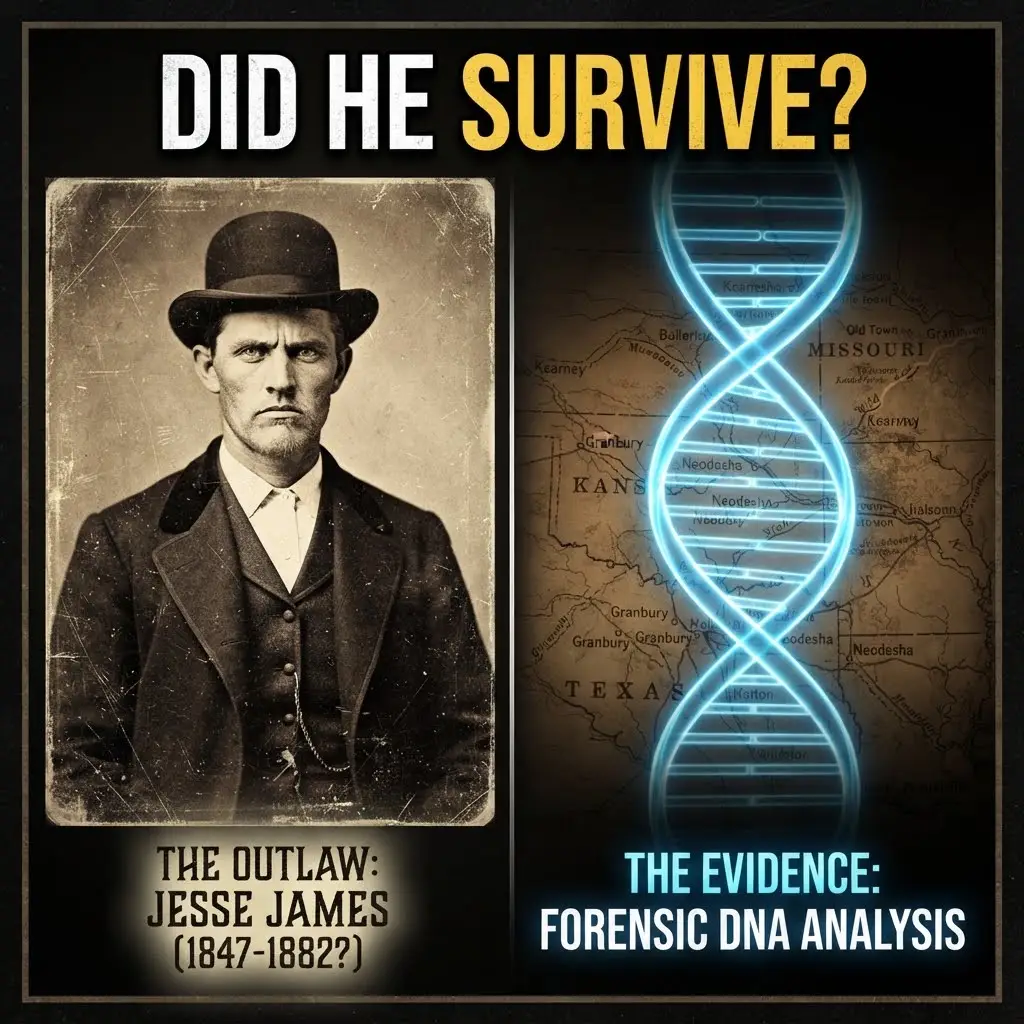
The Jesse James DNA Myth: Why Are There 3 Graves?
FAQs
1. What were the results of the exhumation of Jesse James’ body?
The exhumation of Jesse James’ body in 1995 revealed that the body buried in his grave was indeed that of the infamous outlaw.
2. Why was Jesse James’ body exhumed in 1995?
Jesse James’ body was exhumed in 1995 to put an end to the rumors and conspiracy theories surrounding his death and burial.
3. How did the results of the exhumation impact the historical record of Jesse James?
The results of the exhumation confirmed the historical accounts of Jesse James’ death and burial, providing closure to the long-standing debate.
4. Who authorized the exhumation of Jesse James’ body in 1995?
The exhumation of Jesse James’ body in 1995 was authorized by his descendants who wanted to verify the identity of the remains in his grave.
5. Were there any significant findings or discoveries during the exhumation process?
During the exhumation of Jesse James’ body, no significant findings or discoveries were reported other than confirming the identity of the remains in his grave.