
The Phantom of the Plains: Jesse James and the Enduring Enigma
The name Jesse James conjures images of daring bank robberies, daring escapes, and a life lived on the razor’s edge of lawlessness. For over a century, the legend of Jesse James has permeated American folklore, a romanticized figure of the Wild West who became a folk hero to many. Was he a ruthless killer and bandit, or a wronged man fighting against an unjust system? The truth, as is often the case with legendary figures, is likely far more complex and has remained shrouded in mystery. However, advancements in forensic science have begun to chip away at the edifice of myth, offering a tantalizing glimpse into the historical reality of Jesse James and the final, fateful moments of his life. This case study delves into the scientific investigations that have sought to unravel the enduring mystery of this notorious outlaw, from the questionable circumstances of his death to the persistent claims of his survival.
In the realm of forensic science, the Jesse James case study presents a fascinating exploration of historical criminal investigation techniques. For those interested in the intersection of history and forensic analysis, a related article titled “The Antarctic Conspiracy: Uncovering the Mystery of the Piri Reis Map” delves into the intriguing aspects of historical mysteries and the methods used to uncover their truths. You can read more about it by following this link: The Antarctic Conspiracy: Uncovering the Mystery of the Piri Reis Map.
The Unsettled Demise: Examining the Evidence of the Northfield Raid and its Aftermath
The traditional narrative of Jesse James’s demise paints a clear, albeit tragic, picture. On April 3, 1882, Jesse and his brother Frank, along with fellow gang members, attempted to rob the First National Bank of Northfield, Minnesota. The raid, however, went disastrously wrong. The citizens of Northfield, far from being cowed by the notorious outlaws, put up a fierce resistance. The gang was forced to flee, leaving behind two dead members and a trail of unanswered questions. Jesse, though wounded, managed to escape with his brother. Their subsequent years were spent in hiding, constantly on the run from the law. It was during this period of elusory freedom that the end, as commonly told, arrived.
The Ambiguous End in St. Joseph
According to popular accounts, Jesse James was killed by Robert Ford, a disgruntled member of his own gang, in a house in St. Joseph, Missouri. Ford, seeking a reward and a pardon, shot Jesse in the back while he was allegedly straightening a picture on the wall. The body, allegedly identified as Jesse James, was put on public display, reinforcing the certainty of his death. However, from the outset, questions lingered. Was the body truly Jesse James? Were there discrepancies in the physical description? Forensic science, in its nascent stages at the time, was not equipped to definitively answer these questions. The lack of rigorous scientific examination at the scene, coupled with the hurried public display of the body, left room for doubt. The prevailing belief, amplified by sensationalized newspaper reports, was that Jesse James was dead. Yet, the seeds of doubt, sown in the immediate aftermath of his purported death, would continue to sprout and flourish over the ensuing decades, fueled by anecdotal evidence and the potent allure of a man who could cheat death.
The Shadow of Doubt: Persistent Claims of Survival
Despite the official pronouncements and the public display, whispers and claims of Jesse James’s survival began to surface almost immediately. These claims, often dismissed as fabrications or wishful thinking, persisted for generations. Individuals purporting to be Jesse James, or to have known him after his supposed death, emerged sporadically, adding fuel to the fire of the legend. These claimants often offered plausible, if unverified, accounts of how Jesse had orchestrated his own demise to escape the relentless pursuit of the law. The story went that he had paid someone to impersonate him, or that the body displayed was not his at all. Without concrete evidence, these theories remained in the realm of speculation, a testament to the enduring fascination with Jesse James and the romantic notion of an outlaw who defied his fate. The passage of time, far from burying these claims, only seemed to solidify them in the popular imagination. The absence of definitive proof of his death allowed for the proliferation of alternative narratives, each attempting to fill the void of certainty.
The Unlocking of Secrets: Forensic Anthropology and the St. Joseph Skeleton
The most significant breakthrough in the Jesse James mystery, in terms of scientific investigation, came with the exhumation of a body believed to be Jesse James from a cemetery in Granbury, Texas. This skeleton, allegedly belonging to a man named John W. Howard who died in 1951 and was claimed by some to be the aged Jesse James, became the focal point of intensive forensic examination. The potential to finally lay the legend to rest, or conversely, to validate the survival theories, spurred a multidisciplinary approach utilizing the most advanced forensic techniques available.
The Analytical Arsenal: DNA, Skeletal Analysis, and Ballistics
The investigation involved a comprehensive suite of forensic techniques. DNA analysis was paramount, comparing genetic material extracted from the Texas skeleton with that of known relatives of Jesse James, specifically descendants of his sister, Susan James. Skeletal analysis, conducted by forensic anthropologists, focused on determining the age, sex, stature, and any distinguishing features of the skeleton. This included examining the bones for signs of trauma, disease, or injuries consistent with Jesse James’s known life experiences. Ballistics experts also played a role, analyzing any bullet fragments or damage to the bones that might be consistent with the purported cause of death documented in historical accounts of Jesse James’s demise in St. Joseph. The meticulous application of these scientific disciplines aimed to move beyond speculation and toward empirical evidence, promising to provide a definitive answer to the long-standing question of Jesse James’s identity and fate.
The Verdict of the Bones: Unveiling the Truth
The results of the forensic investigations on the Granbury skeleton were largely conclusive. DNA analysis revealed a significant disparity between the genetic profile of the Texas skeleton and that of Jesse James’s known relatives. This indicated, with a high degree of certainty, that the skeleton was not Jesse James. Furthermore, the skeletal analysis revealed characteristics that were inconsistent with historical descriptions and purported details of Jesse James’s life and death. While the body in Texas did exhibit some signs of a life lived with hardship, it did not possess the specific markers that would definitively identify it as the notorious outlaw. The combination of these findings effectively debunked the claim that the Granbury skeleton represented the aged Jesse James, striking a significant blow against the survival theories and reinforcing the traditional narrative of his death in St. Joseph.
Re-examining the Past: The St. Joseph Skeleton and the Weight of Evidence
While the Granbury investigation offered a strong rebuttal to the survival claims, the original burial site in St. Joseph, Missouri, remained the focus of continued scientific interest. The body interred there was, for generations, accepted as that of Jesse James. However, with the advent of more sophisticated forensic tools and the persistence of lingering doubts, a re-examination of this original burial became imperative to truly solidify the historical record.
The Crucial Comparison: Skeletal Remains and Historical Records
The primary objective of re-examining the St. Joseph skeleton was to directly compare its physical characteristics with detailed historical accounts and any available physical descriptions of Jesse James. Forensic anthropologists meticulously studied the remains for age-at-death estimations, skeletal markers of trauma that might align with known injuries or bullet wounds, and general anthropometric data. This involved a careful analysis of the skull, mandible, and other skeletal elements that could provide clues about the individual’s appearance and life history. The goal was to ascertain whether the physical evidence from the grave matched the established biographical details of Jesse James, thereby strengthening the case for his identity and demise in St. Joseph.
The Scientific Confirmation: A Lingering Question Answered
The scientific investigations conducted on the St. Joseph skeleton provided compelling evidence supporting the traditional account of Jesse James’s death. The age-at-death estimates derived from the skeletal remains were consistent with the age Jesse James would have been at the time of his purported death in 1882. Moreover, the examination revealed evidence of bullet wounds to the skull that were consistent with the historical accounts of how Jesse James was shot. While definitive DNA analysis on the original St. Joseph remains proved challenging due to degradation over time, the confluence of skeletal evidence and historical data created a powerful case. The scientific consensus emerged that the remains in St. Joseph were, in all likelihood, those of Jesse James, finally providing a substantiation of his historical end and putting to rest, at least scientifically, the most persistent survival theories.
The intriguing case study of Jesse James in forensic science highlights the complexities of historical investigations and the challenges faced by modern forensic experts. For those interested in how historical artifacts can shed light on past mysteries, a related article discusses the Piri Reis map and its connection to ancient navigation. You can explore this fascinating topic further by visiting this link, which delves into the work of Charles Hapgood and the implications of his findings.
The Legend Endures: The Role of Forensic Science in Historical Mysteries
| Metric | Details |
|---|---|
| Case Name | Jesse James Forensic Science Case Study |
| Subject | Jesse James, American outlaw |
| Year of Study | 2000s (various forensic analyses conducted) |
| Type of Forensic Analysis | DNA testing, ballistics, historical document examination |
| Sample Sources | Remains believed to be Jesse James, artifacts, historical records |
| Key Findings | DNA matched with living relatives, confirming identity of remains |
| Forensic Techniques Used | mtDNA analysis, STR profiling, ballistic comparison |
| Outcome | Confirmed authenticity of Jesse James’ remains and historical accounts |
| Significance | Demonstrated application of modern forensic science to historical cases |
The case of Jesse James is a potent illustration of how forensic science, even in its evolving stages, can serve as a powerful tool for illuminating historical mysteries. What was once shrouded in folklore, rumor, and sensationalized reporting can now be subjected to rigorous scientific scrutiny, offering a more objective and evidence-based understanding of past events. The investigation into Jesse James’s death and the persistent claims of his survival demonstrate the scientific community’s ability to dissect complex narratives and arrive at verifiable conclusions.
Beyond the Bullet: The Broader Implications for Historical Research
The Jesse James case highlights the expanding role of forensic science in historical research. It is no longer solely the domain of criminal investigations. Forensic anthropology, DNA analysis, and other scientific disciplines are increasingly being employed to authenticate historical artifacts, identify remains of unknown individuals, and even to challenge long-held historical interpretations. The ability to analyze minute traces of evidence and to reconstruct past events with scientific precision opens new avenues for understanding our collective past. This interdisciplinary approach, bridging the gap between the scientific and the historical, promises to yield even more profound insights into humanity’s story, offering a scientific counterpoint to the sometimes-unreliable nature of oral traditions and written accounts.
The Future of Myth-Busting: Continued Scientific Inquiry
While the forensic science applied to the Jesse James case has provided substantial clarity, the allure of the legend itself ensures that the story will continue to be debated and reinterpreted. The scientific findings, however, provide a solid foundation for understanding the historical reality. As forensic techniques continue to advance, it is not inconceivable that further investigations could arise, perhaps focusing on other aspects of Jesse James’s life or death if new evidence emerges. The pursuit of truth, aided by the ever-evolving capabilities of forensic science, will undoubtedly continue to chip away at the layers of myth and legend, offering a more nuanced and evidence-based understanding of figures like Jesse James, ensuring that their stories, while perhaps less romantic, are ultimately more accurate. The legend may persist in popular culture, but the scientific inquiry into Jesse James’s life and death has brought a definitive, albeit less sensational, closure to a centuries-old enigma.
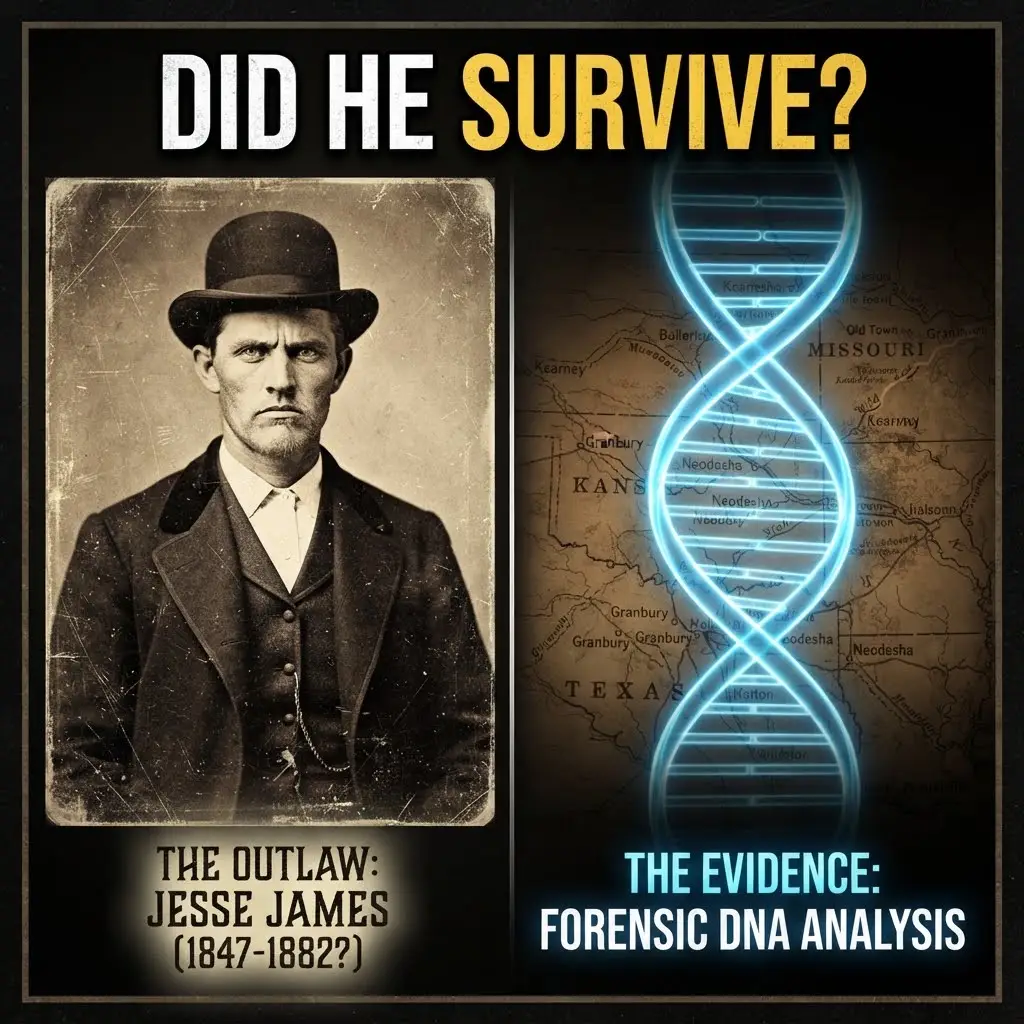
The Jesse James DNA Myth: Why Are There 3 Graves?
FAQs
What was the Jesse James forensic science case study about?
The Jesse James forensic science case study was a project that aimed to analyze the remains believed to be those of the infamous outlaw Jesse James to confirm his identity through forensic techniques.
What forensic methods were used in the Jesse James case study?
In the Jesse James case study, forensic scientists utilized techniques such as DNA analysis, facial reconstruction, and historical research to identify and confirm the remains of Jesse James.
What were the results of the forensic analysis in the Jesse James case study?
The forensic analysis in the Jesse James case study confirmed that the remains examined were indeed those of Jesse James, providing conclusive evidence of his identity through scientific methods.
Why was the Jesse James forensic science case study significant?
The Jesse James forensic science case study was significant as it demonstrated the power of forensic science in confirming historical identities and solving long-standing mysteries, shedding light on the life and death of a notorious figure like Jesse James.
How did the Jesse James forensic science case study contribute to the field of forensic science?
The Jesse James forensic science case study contributed to the field of forensic science by showcasing the effectiveness of combining various forensic techniques to solve historical mysteries and confirm identities, further validating the importance of scientific methods in such investigations.