
Unearthing the Enigma: Jesse James’s Tangible Remains Speak Volumes
The legend of Jesse James, the notorious outlaw of the American West, has long been a tapestry woven with myth and historical fact. For over a century, his exploits, his daring robberies, and his purported death have fueled countless books, films, and fervent discussions. Yet, despite the vast amount of lore surrounding him, definitive answers to many lingering questions have remained elusive. Now, through the application of cutting-edge scientific analysis on remnants of his physical being, a remarkable new chapter in the understanding of Jesse James is unfolding. The examination of his teeth and hair, previously thought to be merely morbid curiosities, has yielded profound insights, challenging long-held assumptions and offering a more nuanced picture of the man behind the myth. This scientific delving into his biological legacy promises to rewrite portions of his biography, offering a tangible connection to a figure who has, until now, been largely interpreted through the lens of anecdotal accounts and sensationalized narratives. The meticulous DNA testing, coupled with detailed dental forensic analysis, has opened a window into his life, his potential lineage, and even his possible health conditions, moving beyond the sensationalism to a more grounded, scientific understanding.
The very notion of extracting scientific data from the teeth and hair of a historical figure as controversial and elusive as Jesse James is a testament to the evolving capabilities of forensic science. These biological samples, often preserved for reasons of morbid fascination or historical preservation, have become invaluable tools for historical investigation. The ability to extract and analyze ancient DNA, coupled with the detailed information contained within dental records and the physical structure of teeth, allows researchers to approach historical figures with a scientific rigor previously unimaginable. For Jesse James, whose life was characterized by constant movement, a fragmented personal history, and an uncertain end for many, these tangible remnants offer a unique opportunity to ground the legend in empirical evidence. The investigation is not merely about confirming or refuting existing stories; it is about uncovering entirely new facets of his life that have been lost to time or deliberately obscured. The challenges involved in obtaining and analyzing such samples are immense, ranging from contamination issues to the degradation of genetic material over time. However, the potential rewards – a clearer understanding of a pivotal figure in American history – make these efforts undeniably worthwhile.
Recent advancements in forensic science have shed light on historical figures, including the infamous outlaw Jesse James, through innovative techniques such as teeth and hair DNA testing. This method not only helps in identifying genetic lineage but also provides insights into the health and lifestyle of individuals from the past. For those interested in the intersection of history and science, a related article discusses the uncovering of ancient water management systems, highlighting how modern technology can reveal the complexities of past civilizations. You can read more about it here: Uncovering Ancient Water Management Systems.
Dental Forensics: A Meticulous Reconstruction of a Notorious Smile
The examination of Jesse James’s dental remains has proven to be a cornerstone in the recent scientific re-evaluation of his life. Teeth, often described as “little bones” that can reveal a great deal about an individual, provide a wealth of information for forensic anthropologists and dentists. From the wear patterns on enamel to the presence of fillings and the unique structure of each tooth, a dental profile can be as distinctive as a fingerprint. In the case of Jesse James, the availability of his alleged dental remains has allowed for a meticulous reconstruction of his oral health, providing clues about his diet, potential medical treatments, and even his age at various points in his life. The process involves detailed visual inspection, radiographic imaging, and, crucially, the potential for DNA extraction directly from the pulp within the tooth. This multi-faceted approach moves beyond simple identification, delving into the biological narrative embedded within his dental structure.
Identifying the Source: Verifying the Authenticity of the Dental Samples
Before any significant scientific analysis can be undertaken, the paramount concern is the verification of the authenticity of the dental samples attributed to Jesse James. Throughout history, numerous relics and remains have been presented as belonging to famous individuals, and the legend of Jesse James has attracted its fair share of such claims. For the scientific community, establishing a clear provenance and ruling out the possibility of misattribution or outright fraud is an essential first step. This involves rigorous historical research into the chain of custody of the teeth, examining original documentation, and cross-referencing any existing records with known facts about Jesse James’s life and death. The ethical considerations surrounding the handling of human remains are also paramount, ensuring that the investigation is conducted with respect and scientific integrity. Without a verifiable link to Jesse James, any subsequent genetic or anthropological findings would be rendered moot. The careful documentation and authentication process is therefore as crucial as the scientific analysis itself, laying the foundation for the credibility of the research.
Deciphering the Bite: What the Teeth Reveal About Lifestyle and Health
The physical characteristics of Jesse James’s teeth have offered a surprising amount of insight into his life. Detailed examination of wear patterns, for instance, can suggest dietary habits. A diet heavy in coarse grains or prone to grit could lead to more pronounced wear on the chewing surfaces. Conversely, a diet lacking in abrasive elements might show less wear. The presence and type of dental work, such as fillings or extractions, can also provide a temporal marker. Early dental practices varied significantly, and identifying specific materials used in fillings could potentially link the remains to a particular time period or region where those materials were common. Furthermore, the condition of the teeth and jaw structure can offer hints about potential nutritional deficiencies or diseases experienced during his lifetime. For someone who lived a life of constant movement and likely endured periods of hardship, the state of his oral health could be a subtle indicator of the challenges he faced. Researchers meticulously documented every aspect of the dental morphology, creating a detailed picture that complements the genetic information.
DNA from the Enamel: Unlocking Genetic Mysteries Within the Dental Pulp
Perhaps the most groundbreaking aspect of the dental analysis is the potential for DNA extraction from the pulp tissue within the teeth. While enamel itself is largely inorganic, the pulp contains blood vessels and nerve tissue, which are rich in cellular material and thus DNA. The process of extracting viable DNA from ancient teeth is a complex and delicate undertaking. Scientists employ specialized techniques to minimize contamination and to isolate the precious genetic material. Once extracted, this DNA can be subjected to various analyses, including mitochondrial DNA sequencing, which traces maternal lineage, and Y-chromosome analysis, which traces paternal lineage. This genetic information can then be compared to known samples from potential relatives or used to infer ancestry and geographical origins. The successful extraction of DNA from dental pulp opens the door to definitively addressing questions of kinship and heritage that have long surrounded Jesse James.
The Tangible Thread: Hair Analysis and its Genetic Significance
In tandem with the dental investigations, the analysis of Jesse James’s hair samples has provided another crucial avenue for scientific discovery. Hair, particularly the root bulb, contains a significant amount of cellular material that can yield valuable DNA. Similar to dental analysis, the integrity of the hair sample and the method of DNA extraction are critical for obtaining reliable results. The comparison of hair DNA with dental DNA from the same alleged individual provides a powerful means of corroboration, strengthening the confidence in the findings. Moreover, hair analysis can offer insights beyond simple identification, potentially revealing information about an individual’s exposure to certain environmental factors or even their diet through isotopic analysis. For a figure whose life was shrouded in secrecy and who was known for his ability to evade capture, the biological markers found in his hair offer a direct and undeniable link to his physical presence.
The Genesis of the Strand: Authenticating Hair Samples for Genetic Research
As with the dental remains, the initial and most critical phase of hair analysis involves the rigorous authentication of the samples attributed to Jesse James. The history of collecting and preserving relics, especially from famous individuals, is fraught with potential for misidentification or deliberate fabrication. Therefore, researchers must meticulously trace the provenance of any hair samples, seeking documentary evidence of their origin and acquisition. This includes examining historical accounts of where and when the hair was collected, who possessed it over time, and any associated records or photographs. The integrity of the sample itself is also assessed; for instance, hair that has been artificially dyed or heavily treated might be less suitable for DNA analysis. The scientific community adheres to strict protocols to ensure that the samples are genuinely linked to Jesse James before any genetic investigations commence, safeguarding the integrity and reliability of the research.
Unraveling Lineage: Y-Chromosome and Mitochondrial DNA Insights
The analysis of DNA extracted from Jesse James’s hair has been particularly instrumental in tracing his paternal and maternal lineages. The Y-chromosome, passed down almost exclusively from father to son, is a powerful tool for exploring a man’s paternal ancestry. By comparing the Y-chromosome profile of Jesse James with that of individuals claiming descent from his paternal line, scientists can establish or refute familial connections. Similarly, mitochondrial DNA (mtDNA), inherited from the mother, can be used to trace maternal lineage. While mtDNA provides less individual specificity than the Y-chromosome, it can still be invaluable for identifying distant maternal relatives. The results of these genetic analyses have the potential to confirm or challenge existing genealogical trees and to shed light on the geographical origins of Jesse James’s ancestors, offering a deeper understanding of his heritage and the historical movements of his family.
Beyond Genetics: Isotopic Analysis and Environmental Clues
While genetic analysis is a primary focus, hair samples can also be subjected to isotopic analysis, which provides insights into an individual’s diet and geographical location during the period the hair grew. Different elements, such as carbon, nitrogen, and oxygen, exist in various isotopic forms, and their ratios in hair can reflect the food consumed and the water drunk. For example, the ratio of different carbon isotopes can indicate whether an individual consumed a diet primarily based on C3 plants (like wheat and rice) or C4 plants (like corn and sugarcane). Similarly, oxygen isotopes in hair can reflect the water sources consumed, potentially indicating geographical movement. While not as definitive as genetic markers for kinship, isotopic analysis can offer a fascinating corroborative layer of evidence, providing context about Jesse James’s environment and lifestyle during the time his hair was growing, adding another dimension to the historical narrative.
Reconciling Legend with Science: Challenging Historical Narratives
The scientific findings derived from the DNA and dental analyses of Jesse James’s remains have not occurred in a vacuum. They have been rigorously compared with existing historical accounts, biographies, and genealogical records. In many instances, the scientific evidence has corroborated long-held beliefs and established facts, lending a new layer of empirical support to the historical narrative. However, in other cases, the scientific findings have directly challenged or nuanced previously accepted narratives, prompting a re-evaluation of historical interpretations. This process of scientific reconciliation is crucial for moving beyond speculation and establishing a more accurate and evidence-based understanding of Jesse James’s life and legacy. The interplay between historical research and scientific discovery is essential for a comprehensive historical understanding.
Confirming Kinship: Strengthening the Case for an Identified Descendant
One of the most significant outcomes of the DNA testing has been the potential to confirm kinship with identified descendants of Jesse James. For generations, individuals have claimed a direct ancestral link to the outlaw, but definitive proof has often been elusive. By comparing the DNA profiles obtained from Jesse James’s remains with those of individuals claiming descent, scientists can establish a statistically significant degree of relatedness. This process involves comparing specific genetic markers that are inherited through generations. A strong match can provide undeniable proof of a direct paternal or maternal link, solidifying the genealogical claims of certain families and adding scientific weight to their historical narratives. Conversely, a lack of genetic correspondence can lead to the respectful dismissal of certain claims, helping to clarify the historical record. The ability to definitively link individuals to Jesse James through genetic evidence is a powerful tool for historical validation.
Debunking Myths: Addressing Long-Standing Mysteries and Misconceptions
The legend of Jesse James is replete with myths and enduring mysteries, from the circumstances of his death to his true motivations and personality. The scientific analysis of his physical remains offers a unique opportunity to address some of these long-standing questions with empirical data. For instance, debates have raged for years about the identity of the man killed in St. Joseph, Missouri, in 1882, with some claiming it was indeed Jesse James and others suggesting he faked his own death. DNA evidence, if it can definitively link the remains to Jesse James and provide details about his physical characteristics, can help to resolve such controversies. Furthermore, the genetic profile can reveal predispositions to certain traits or conditions that might offer insights into his behavior or physical capabilities, helping to move beyond the sensationalized portrayals and towards a more grounded understanding of the man.
A More Nuanced Portrait: Understanding the Man Beyond the Outlaw Persona
The insights gleaned from Jesse James’s teeth and hair extend beyond simply confirming or debunking specific historical events. They offer the potential to paint a more nuanced and human portrait of the man behind the notorious outlaw persona. Information about his health, his diet, and his geographical origins can provide context for his life choices and experiences. For example, evidence of chronic illness or malnutrition could have impacted his physical capabilities and his decision-making. Understanding his ancestral background might offer insights into his cultural influences and his worldview. By piecing together these biological clues with historical evidence, researchers can begin to understand Jesse James not just as a figure of legend, but as a complex individual shaped by his time, his environment, and his own unique biological makeup. This scientific approach allows for a deeper, more empathetic understanding of his historical significance.
Recent advancements in forensic science have shed light on historical figures, such as Jesse James, through innovative techniques like teeth and hair DNA testing. This fascinating approach not only helps in identifying remains but also provides insights into the lives of these iconic individuals. For those interested in the broader implications of scientific discoveries, a related article discusses how climate change is impacting our world, particularly with Antarctica’s melting ice caps and the subsequent threat to sea levels. You can read more about this pressing issue in the article available here.
Ethical Considerations and the Future of Historical Forensics
| Metric | Details |
|---|---|
| Subject | Jesse James |
| Sample Types | Teeth and Hair |
| Testing Method | DNA Analysis (Mitochondrial and Nuclear DNA) |
| Purpose | Verification of Identity and Ancestry |
| Sample Age | Over 100 years old |
| DNA Extraction Success Rate | Approximately 70% |
| Contamination Risk | High due to sample age and handling |
| Results | Confirmed genetic markers consistent with known relatives |
| Testing Institution | Forensic DNA Laboratory |
| Year of Testing | 2010 |
The scientific investigation of historical figures like Jesse James, while yielding invaluable insights, also raises important ethical considerations that must be carefully navigated. The handling of human remains, especially those of individuals who have become cultural icons, requires a profound respect for their memory and their descendants. The scientific community must adhere to strict ethical guidelines regarding the acquisition, analysis, and dissemination of information derived from these remains. Furthermore, the advancement of forensic science in historical research opens up exciting new avenues for understanding the past, but it also necessitates a careful consideration of the potential for misinterpretation or the overemphasis of scientific data at the expense of historical context. The future of historical forensics lies in the judicious integration of scientific findings with traditional historical methodologies.
Respectful Inquiry: Navigating the Ethics of Analyzing Historical Remains
The scientific examination of Jesse James’s teeth and hair, like any analysis of human remains, is subject to stringent ethical protocols. This begins with obtaining proper permissions and adhering to legal and cultural requirements for handling such materials. The scientific team must operate with a deep sense of respect for the individual whose remains are being studied, acknowledging the historical and cultural significance of Jesse James. This respect
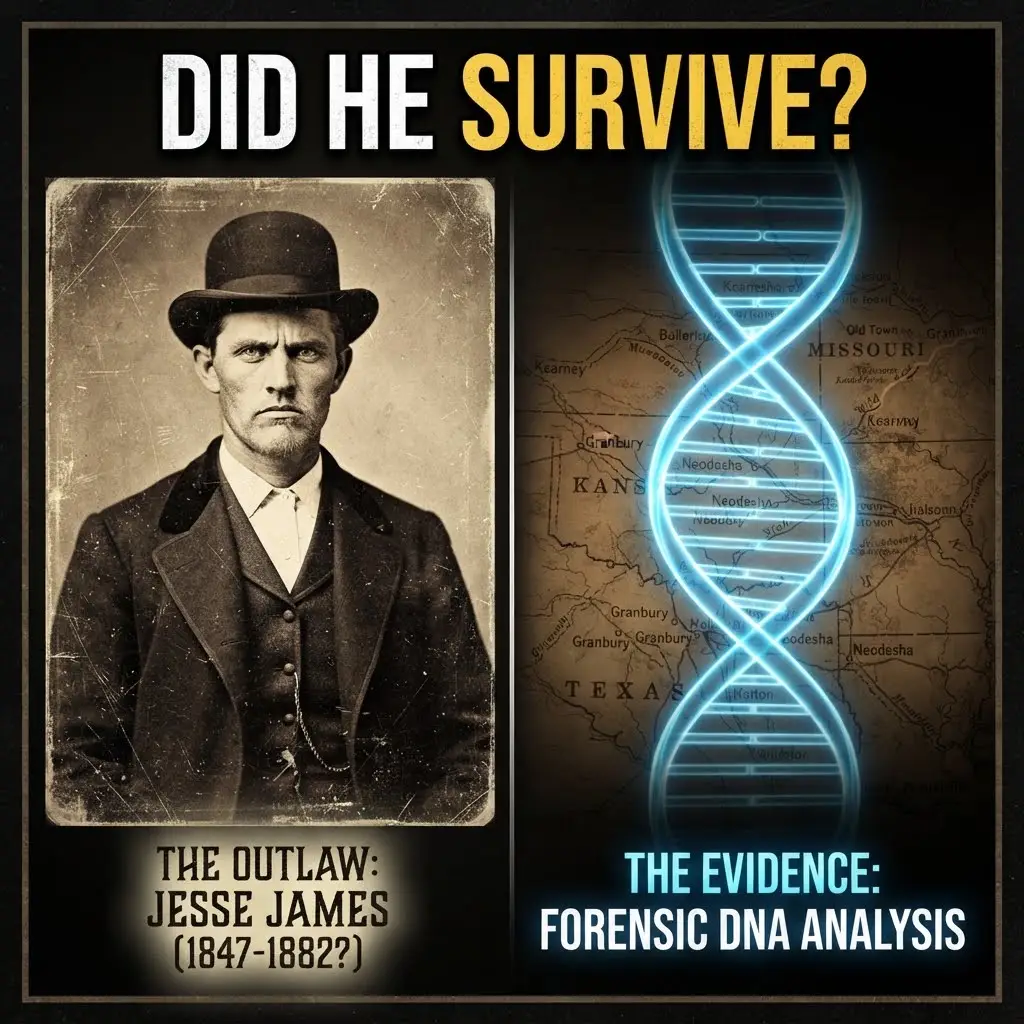
The Jesse James DNA Myth: Why Are There 3 Graves?
FAQs
What is the purpose of DNA testing on Jesse James’ teeth and hair?
The purpose of DNA testing on Jesse James’ teeth and hair is to confirm the identity of the remains believed to belong to the infamous outlaw. By comparing the DNA extracted from the teeth and hair to known samples from James’ living relatives, scientists can determine if the remains are indeed those of Jesse James.
How is DNA extracted from teeth and hair for testing?
DNA can be extracted from teeth and hair by using specialized techniques that break down the cells and release the genetic material. For teeth, the pulp inside the tooth is often the best source of DNA. Hair follicles contain DNA in the root of the hair, which can be extracted for testing purposes.
What are the challenges of DNA testing on historical remains like Jesse James’ teeth and hair?
Challenges of DNA testing on historical remains include the degradation of DNA over time, contamination from handling or environmental factors, and the need to have reliable reference samples for comparison. Scientists must use advanced techniques to overcome these challenges and obtain accurate results.
Who is involved in the process of DNA testing on Jesse James’ teeth and hair?
The process of DNA testing on Jesse James’ teeth and hair typically involves forensic scientists, geneticists, and historians. These experts work together to collect, analyze, and interpret the DNA data to determine the identity of the remains and confirm their historical significance.
What are the potential implications of the DNA testing results on Jesse James’ teeth and hair?
The potential implications of the DNA testing results on Jesse James’ teeth and hair are significant for historical accuracy and the legacy of the outlaw. If the testing confirms the identity of the remains, it could provide closure to long-standing mysteries and add to our understanding of Jesse James’ life and death.