
The legend of Jesse James is a tapestry woven from audacious train robberies, daring escapes, and a dramatic, often debated, death. Central to this enduring myth is the enigma of his burial, or rather, the multiple locations where his remains are purportedly interred. The concept of “Jesse James Three Graves” is not a literal assertion of three distinct bodies buried simultaneously, but rather a reflection of the historical confusion, competing claims, and enduring folklore surrounding his final resting place. This article will delve into the separate analyses of the legend of Jesse James and the tangible legacy of these burial claims, exploring the historical context, the evidence, and the cultural impact of this enduring mystery.
The Shadow of the Bandit: Fabricating the Jesse James Legend
The myth of Jesse James did not arise in a vacuum. It was actively constructed and disseminated during his lifetime and, perhaps more powerfully, in the decades following his death. The sensationalism surrounding his outlaw activities, coupled with his image as a Robin Hood-like figure who robbed from the rich, resonated with a populace grappling with the aftermath of the Civil War and the complexities of westward expansion. His story, amplified by dime novels, newspapers, and later, early cinema, transformed a notorious criminal into an American icon.
The Evolution of the Outlaw Archetype
Jesse James quickly became a character larger than life. Early accounts, often penned by those with vested interests in sensationalism or even by individuals seeking to profit from his fame, painted him as a cunning strategist and a daring daredevil. The narrative of a wronged Confederate sympathizer, driven to a life of crime by oppressive Reconstruction policies, provided a sympathetic, albeit romanticized, lens through which many viewed his actions. This narrative was particularly potent in the South, where it offered a counterpoint to the dominant Union-centric historical accounts.
The Influence of Popular Media
The burgeoning mass media of the late 19th and early 20th centuries played a crucial role in cementing James’s legend. Dime novels, with their lurid tales of outlaws and adventurers, were immensely popular, and Jesse James was a frequent subject. These stories, while often lacking in factual accuracy, contributed significantly to the public’s perception of him. Later, the advent of motion pictures would further solidify his image, casting him in roles that often blurred the lines between historical figure and fictional hero. The archetypal Western outlaw, with his stoic demeanor and moral ambiguity, found a powerful embodiment in the celluloid portrayal of Jesse James.
In exploring the complexities surrounding Jesse James and the myths of his three graves, one can draw parallels to the economic uncertainties highlighted in the article on the impending US debt crisis. The article provides valuable insights into the potential repercussions of financial instability, much like the legends that have emerged around James’ life and death, which reflect societal fears and narratives. For a deeper understanding of these contemporary issues, you can read the article here: Preparing for a US Debt Crisis: What You Need to Know.
The Enduring Question of the Final Rest: The Three Graves
The very notion of “three graves” stems from the persistent confusion and conflicting claims surrounding Jesse James’s death and burial. While historical consensus points to his death in 1882 at the hands of Robert Ford, the circumstances, the subsequent identification of remains, and the emergence of alternative burial sites have fueled decades of speculation and debate.
The St. Joseph, Missouri Burial: The Official Account
The most widely accepted account of Jesse James’s death and burial places him in St. Joseph, Missouri. Following his assassination by Robert Ford on April 3, 1882, James’s body was allegedly identified by his wife, Zerelda, and his mother, and subsequently buried in the family plot at the Mount Olivet Cemetery in St. Joseph. This location has historically been considered the primary burial site, and for many years, a marker identified the grave as Jesse James. The narrative is that Robert Ford, seeking a reward, shot and killed Jesse James while he was straightening a picture frame. The ensuing identification and burial were intended to definitively end the legend of the elusive outlaw.
The Granbury, Texas Claim: A Lingering Doubt
A significant challenge to the St. Joseph burial claim emerged with the story of Charlie and John Bingham, who claimed to be Jesse and Frank James, respectively, and had relocated to Granbury, Texas, after their outlaw days. The Granbury grave, marked with a weathered stone bearing the name “J.J. Samuel,” became a focal point for those who believed Jesse James had faked his death. The basis for this claim often rests on anecdotal evidence, family traditions passed down through generations, and supposed physical resemblances observed by those who knew Jesse James. Proponents of this theory suggest that the man killed in St. Joseph was not Jesse James, but rather an imposter, perhaps a look-alike or a deceased associate, whose body was then identified as James to allow the outlaw to escape law enforcement and live a quiet life in Texas.
In exploring the intriguing legend of Jesse James and the mystery surrounding his three graves, one might find it fascinating to consider how historical narratives can be shaped by various factors, including technology and security. For a deeper understanding of how modern advancements impact our perception of history, you can read an insightful article on the importance of safeguarding our satellites and defending deep space assets. This connection highlights the ongoing relevance of historical figures in the context of contemporary challenges. To learn more, visit this article.
The Oklahoma Connection: Further Complications
Adding another layer of complexity, claims have also surfaced regarding a burial site in Oklahoma. In some versions of the legend, individuals with ties to the James family or associates have been linked to burial locations in Oklahoma, often tied to Frank James’s eventual life after escaping legal repercussions. While less prominent than the St. Joseph or Granbury claims, these narratives contribute to the overall confusion and the persistent idea that Jesse James’s final resting place remains an open question. These Oklahoma stories often involve a desire for anonymity and a quiet end away from the notoriety that plagued his earlier life, further suggesting a staged death.
Forensic Investigations: Unearthing the Truth
The persistent debate over Jesse James’s burial sites has inevitably led to scientific scrutiny. Forensic analysis, particularly DNA testing, offers the potential to definitively resolve the long-standing questions of identity and ancestry. However, these investigations are fraught with their own challenges, from the condition of skeletal remains to the availability of viable reference samples.
The DNA Revelations of 2015
In 2015, a team of researchers conducted DNA testing on skeletal remains exhumed from the St. Joseph, Missouri grave. They compared these remains to those of Jesse James’s descendants. The results of this analysis were significant. The DNA extracted from the St. Joseph grave did match that of known descendants of Jesse James, strongly supporting the claim that the body buried in Mount Olivet Cemetery was indeed the outlaw. This scientific evidence provided a powerful blow to the Granbury, Texas, theory and many other alternative burial claims. The study meticulously documented the process, from the careful exhumation to the genetic sequencing and statistical analysis, aiming to provide irrefutable proof.
Re-evaluating the Granbury Claim
While the 2015 DNA study provided compelling evidence for the St. Joseph burial, it did not entirely silence the Granbury claim. Proponents of the Texas theory often point to alleged discrepancies or question the methodology of the DNA testing. Some argue that the “descendants” used for comparison might not be direct enough, or that the remains in Granbury could belong to another individual with a similar name or appearance, further complicating the narrative. The lack of clear, verifiable historical documentation for the Bingham brothers’ alias and their purported lives in Granbury also continues to be a point of contention. The enduring power of family lore and the romantic notion of a hidden outlaw can be incredibly persuasive, even in the face of scientific evidence.
The Unresolved Puzzles and Future Possibilities
Despite the scientific consensus reached in 2015, the story of Jesse James’s graves remains a subject of fascination. The allure of the mystery, the possibility of a hidden truth, and the inherent human desire to solve puzzles continue to fuel interest. Future investigations, perhaps employing more advanced forensic techniques or uncovering new historical documents, could theoretically shed further light on the matter. However, the practicalities of exhuming remains and obtaining viable DNA samples from potentially older, more degraded sites present significant hurdles. The legend, it seems, is not easily buried.
The Legacy of Folklore: Jesse James in the American Consciousness
The legend of Jesse James, amplified by the mystery surrounding his burial, has left an indelible mark on American culture. His story transcends mere historical fact, becoming a potent symbol of rebellion, a cautionary tale of the outlaw life, and a cornerstone of American folklore. The “three graves” concept, while perhaps factually inaccurate, speaks to the enduring power of the myth itself and its ability to adapt and persist.
The Romanticized Rebel and the Cautionary Tale
Jesse James represents a complex duality in the American psyche. On one hand, he is the romanticized rebel, the defiant figure who challenged authority and the perceived injustices of his time. This image, particularly potent in the post-Civil War era, resonated with those who felt marginalized or wronged. On the other hand, his story serves as a stark reminder of the destructive consequences of a life of crime. The violence, the fear he instilled, and the ultimate betrayal and death underscore the grim reality behind the romantic veneer. The “three graves” narrative, in its own way, can be seen as a manifestation of this duality, with the hope of a quiet escape battling with the grim reality of an violent end.
The Enduring Appeal of the Unsolved Mystery
The persistent debate over Jesse James’s burial sites is a testament to the enduring appeal of unsolved mysteries. Human beings are naturally drawn to puzzles, to the possibility of uncovering hidden truths. The “three graves” concept offers a tangible focus for this fascination, allowing people to engage with the legend on a physical level. Whether through visiting the purported gravesites, researching historical documents, or discussing the possibilities, the mystery keeps Jesse James alive in the public imagination. This intrigue fuels tourism to historical sites and continues to inspire new generations of storytellers, historians, and amateur sleuths.
Jesse James in Popular Culture and Tourism
The legacy of Jesse James extends far beyond academic debates. His story has been retold countless times in books, films, and television shows, each iteration adding new layers to his legend. These portrayals, while often fictionalized, have shaped public perception and reinforced his status as an iconic American outlaw. Furthermore, the various burial sites have become tourist attractions, drawing visitors eager to connect with the history and the mystery. The “three graves” idea, even if debunked, continues to draw attention and economic benefit to these locations, demonstrating the profound and lasting impact of folklore on tangible places. The legend, in essence, has become a commodity, a source of fascination and commerce that continues to thrive.
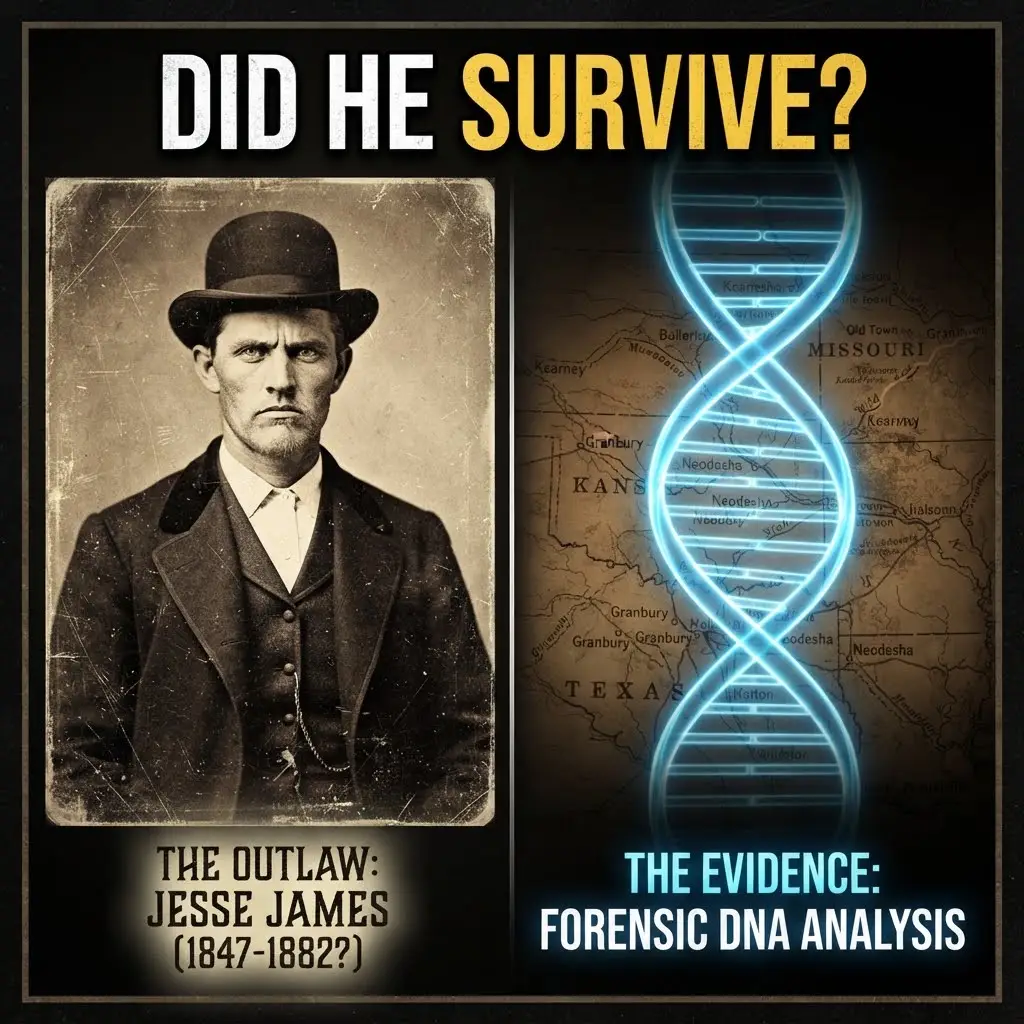
The Jesse James DNA Myth: Why Are There 3 Graves?
FAQs
What is the significance of Jesse James having three separate graves?
The three separate graves of Jesse James symbolize the mystery and controversy surrounding his death. Some believe that the multiple graves were created to confuse and mislead those seeking to find his final resting place.
How do the three graves of Jesse James differ from each other?
The three graves of Jesse James differ in location, with one in Kearney, Missouri, one in Granbury, Texas, and one in Columbia, Tennessee. Each grave has its own unique story and claim to be the true burial site of the infamous outlaw.
What are some theories surrounding the three graves of Jesse James?
Some theories suggest that the multiple graves were created to protect the real burial site of Jesse James from grave robbers or to perpetuate the legend of the outlaw. Others believe that the different graves were established by individuals seeking to profit from the notoriety of Jesse James.
How have historians and researchers attempted to solve the mystery of Jesse James’ three graves?
Historians and researchers have used forensic analysis, historical documents, and eyewitness accounts to try to determine the true burial site of Jesse James. Despite their efforts, the mystery of the three graves continues to intrigue and puzzle many to this day.
What impact has the controversy surrounding Jesse James’ three graves had on his legacy?
The controversy surrounding Jesse James’ three graves has added to the mystique and legend of the outlaw, further fueling interest in his life and death. The multiple burial sites have become a part of Jesse James’ folklore, contributing to the enduring fascination with his story.