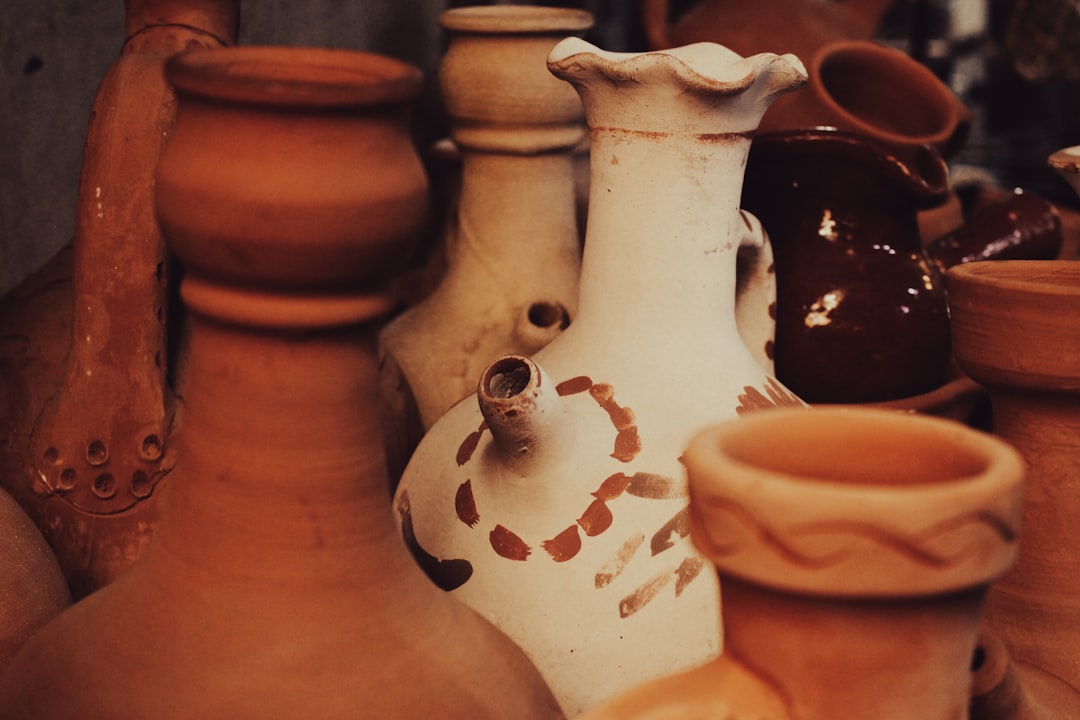
The story of humanity’s technological and artistic advancements is often a tapestry woven with threads of innovation, adaptation, and cultural expression. Among the earliest and most enduring of these threads is ceramics, a transformative technology that redefined how humans stored, cooked, and ritualized their existence. While the Near East often receives accolades for early agricultural advancements, the archipelago of Japan silently holds the distinction of nurturing some of the earliest, and arguably the most artistically sophisticated, pottery in the world. This ancient craftsmanship, produced by the Jomon people, offers a profound glimpse into a sophisticated hunter-gatherer society that thrived for millennia, leaving behind an astonishing legacy of earthenware.
The Jomon Period: A Long Prehistory
The Jomon Period, spanning an incredible 10,000 BCE to 300 BCE, represents a vast swathe of Japanese prehistory. This era witnessed the rise and flourishing of a complex hunter-gatherer culture that, unlike many of their global contemporaries, developed sedentary or semi-sedentary lifestyles without engaging in extensive agriculture. The term “Jomon” itself, meaning “cord-marked,” refers to the distinctive decorative technique prevalent in much of their pottery, a testament to the ingenuity of their artistic expression. The longevity of this period provides a unique laboratory for observing the evolution of a single technological and artistic tradition over millennia.
Environmental Context and Lifestyle
To understand Jomon pottery, one must first appreciate the environmental canvas upon which it was created. Post-glacial Japan, with its rich biodiversity, abundant marine resources, and temperate climate, offered a fertile ground for human habitation. The Jomon people, far from being nomadic wanderers, established settled villages, often near rivers or coastal areas, allowing them to exploit a wide range of resources. This abundance, coupled with sophisticated foraging techniques, provided the necessary stability for the development of complex social structures and, crucially, the leisure time to innovate and refine artistic practices like pottery making. This stands in stark contrast to the common perception of hunter-gatherers as perpetually on the move, a testament to the diverse paths human societies have taken.
Chronological Divisions of Jomon
The Jomon Period is typically divided into six sub-periods, each showcasing distinct stylistic developments in pottery: Incipient (10,000–8,000 BCE), Initial (8,000–5,000 BCE), Early (5,000–3,000 BCE), Middle (3,000–2,000 BCE), Late (2,000–1,000 BCE), and Final (1,000–300 BCE). This chronological framework is less a rigidity of development and more a fluid progression, a geological strata of artistic evolution. Each period offers its own unique fingerprint in the ceramic record, from simple, functional vessels to elaborate, almost sculptural forms. These divisions are not arbitrary but are based on observable shifts in pottery form, decoration, and manufacturing techniques, providing archaeologists with a robust timeline for understanding cultural evolution.
The Innovation of Pottery: Beyond Utility
The invention of pottery, globally, is a watershed moment in human history. It permitted the storage of food and water, the safe boiling of liquids, and the transformation of raw ingredients into more palatable and nutritious meals. For the Jomon people, pottery was not merely a functional tool; it was a canvas for expression, a testament to their cosmological beliefs, and a profound marker of their sophisticated material culture. The earliest Jomon pottery predates the widespread adoption of agriculture elsewhere, challenging conventional narratives about technological advancement.
Early Stages of Ceramic Production
The earliest Jomon pottery, dating back to approximately 10,000 BCE, is shockingly sophisticated for its age. While often described as crude, these initial vessels, typically small and round-bottomed, demonstrate a clear understanding of basic ceramic principles. They were primarily used for cooking and storage, facilitating the processing of wild grains, nuts, and shellfish. The revolutionary aspect lies not in their immediate aesthetic grandeur, but in their very existence. They represent a fundamental shift in human interaction with their environment, moving beyond immediate consumption to delayed gratification and structured storage. Imagine a world without containers, a life tethered to instant use; pottery offered a new horizon of possibilities.
Construction Techniques and Materials
Jomon potters utilized a coil-building technique, where coils of clay were stacked and then smoothed to form the vessel’s shape. This method, while seemingly basic, allowed for remarkable plasticity and the creation of diverse forms. The clay itself was typically low-fired at relatively low temperatures (around 400-600°C), making the vessels somewhat porous but still effective for their intended purposes. Tempering agents, such as plant fibers, mica, or crushed shell, were often added to the clay to prevent cracking during firing and to improve thermal shock resistance. This demonstrates an intuitive understanding of material science, a practical wisdom passed down through generations.
Aesthetic Mastery: Decoration and Form
What truly distinguishes Jomon pottery from many other early ceramic traditions is its astonishing artistic diversity and ingenuity. While early vessels were often plain or minimally decorated, the pottery of the Middle and Late Jomon periods explodes with an exuberance of form and intricate surface treatment, transforming mere containers into dynamic works of art. The functional often married with the spiritual, creating objects that served both practical and profound purposes.
Cord Marking and Impressed Patterns
As the name “Jomon” suggests, cord marking was a dominant decorative technique. Various types of cords, some single-stranded, others twisted or braided, were pressed into the wet clay to create intricate patterns. This technique alone allowed for an incredible range of textures and visual complexity. Beyond cord marking, Jomon potters also employed a variety of tools – sticks, shells, and even fingernails – to create impressed, incised, and combed patterns. These patterns were not merely superficial adornment; they imbued the vessels with character, a unique identity much like a fingerprint.
Flame Ware and Jomon “Dogu” Figurines
The Middle Jomon period witnessed the zenith of artistic expression with the emergence of “Flame Ware” (Kaen Doki) and “Crown Ware.” These vessels are characterized by their dramatic, undulating rims that often ascend upwards, resembling flickering flames or elaborate crowns. These elaborate forms, often incorporating intricate cutouts and applied clay elements, are considered high points of prehistoric ceramic art. While their exact function remains debated, they likely played a significant role in rituals, feasts, or as prestige items. Simultaneously, Jomon clay figurines, known as “dogu,” emerged. These anthropomorphic and zoomorphic figures, often featuring exaggerated eyes and stylized bodies, are thought to have had ritualistic or shamanistic significance, perhaps representing deities, ancestral spirits, or fertility symbols. The dogu, like the pottery, are not static representations but dynamic entities, imbued with an otherworldly presence.
Regional Variations and Cultural Exchange
Despite the vastness of the Jomon Period and the geographic spread of the Jomon culture across the Japanese archipelago, a powerful current of regional variation and cultural exchange is evident in their pottery. This is not a monolith but a vibrant tapestry of localized styles and influences, a conversation between communities spanning thousands of years.
Northern versus Southern Styles
Broadly speaking, Jomon pottery exhibits discernable regional differences. In northern Japan, particularly in thetohoku region, early Jomon pottery tendsto be more robust and often features deeply incised patterns. As the period progresses, elaborately sculptured vessels, including the aforementioned Flame Ware, become prominent. In contrast, southern Japan saw a greater emphasis on finer-grained clays, thinner vessel walls, and often more rectilinear or geometrically inspired patterns. These are not rigid boundaries, but rather gradients, like the subtle shifts in weather across a continent. These variations suggest semi-independent cultural trajectories, each responding to local resources and aesthetic preferences, while still participating in a broader Jomon identity.
Evidence of Trade and Interaction
The distribution of certain pottery styles, as well as the presence of exotic materials like obsidian from specific quarries found far from their origin, points to a sophisticated network of trade and cultural exchange within Jomon society. While not on the scale of later agricultural civilizations, this interaction facilitated the spread of ideas and artistic techniques, leading to both convergence and divergence in pottery styles. Imagine the stories carried with each traded vessel, not just of its contents, but of its origin, its creator, and the hands that passed it along. This suggests a dynamism, a societal interconnectedness that belies the simple label of “hunter-gatherer.”
The Legacy of Jomon Pottery
Jomon pottery, far from being a relic of a forgotten past, continues to resonate in contemporary Japan and beyond. Its aesthetic principles, its profound connection to nature, and its testament to human ingenuity have left an indelible mark on Japanese art and cultural identity. It serves as a powerful reminder that complex artistry and cultural sophistication do not solely arise from agricultural surpluses or urban centers.
Influence on Later Japanese Art
The expressive forms and decorative sensibilities of Jomon pottery are often cited as foundational influences on later Japanese art forms, from the dynamic lines of ukiyo-e woodblock prints to the minimalist elegance of Raku pottery. The integration of unevenness, the appreciation for natural textures, and the profound connection to the earth seen in Jomon ceramics often find echoes in subsequent artistic movements. The echoes of an ancient drum, still heard in the modern symphony.
Modern Interpretations and Preservation
Today, Jomon pottery is celebrated for its artistic merit and its historical significance. Museums worldwide curate extensive collections, offering scholars and the public an opportunity to engage with these ancient masterpieces. Contemporary artists draw inspiration from Jomon forms and techniques, reinterpreting them through a modern lens. The ongoing archaeological excavations continue to unearth new finds, deepening our understanding of this extraordinary period. Protecting these sites and artifacts is paramount, as they are not merely clay and stone, but tangible links to a deep and rich human past. The pots are silent narrators, patiently awaiting our careful attention.
Jomon pottery stands as a towering monument to human creativity and resilience. It challenges our preconceived notions about what is possible for a prehistoric, non-agricultural society, demonstrating that art, functionality, and spiritual expression can flourish in unexpected corners of the world and for extended periods. It is a testament to the enduring power of the human hand to transform humble clay into objects of enduring beauty and profound historical significance, a message whispered across millennia by the earth itself.
FAQs
What is Jomon pottery?
Jomon pottery refers to the ancient ceramic vessels created by the Jomon people of Japan. It is characterized by its distinctive cord-marked patterns, which were made by pressing cords into the clay before firing.
Why is Jomon pottery considered significant in the history of ceramics?
Jomon pottery is significant because it is among the earliest known ceramics in the world, dating back to around 14,000 BCE. This makes it one of the oldest examples of pottery, predating many other ancient ceramic traditions.
How were Jomon pottery pieces made?
Jomon pottery was handmade using coiling techniques, where clay was rolled into long strips and then coiled to build up the walls of the vessel. The surface was often decorated with impressions made by cords or other tools before the pottery was fired.
What was the purpose of Jomon pottery?
Jomon pottery was primarily used for cooking, storage, and food preparation. The durable ceramic vessels allowed the Jomon people to boil food and store liquids, which was important for their hunter-gatherer lifestyle.
Where have Jomon pottery artifacts been found?
Jomon pottery artifacts have been found throughout the Japanese archipelago, particularly in regions such as Honshu, Hokkaido, and Kyushu. These findings provide valuable insights into the early development of ceramic technology in East Asia.