
The Allure of Ancestry: Kansas Jeremiah James and the Journey of DNA Discovery
The human desire to understand one’s origins is a primal urge, a deep-seated curiosity that propels individuals to explore the tapestry of their past. For many, this exploration takes the form of genealogical research, a meticulous process of tracing lineage through historical records, family stories, and, increasingly, the revolutionary field of DNA testing. Kansas Jeremiah James, a name that might evoke images of prairie landscapes and ancestral journeys, serves as a compelling focal point for understanding how modern genetic science intersects with the age-old quest for family roots and history. This article delves into the multifaceted experience of DNA testing, its impact on uncovering ancestral narratives, and the unique insights it offers, particularly when a name like Kansas Jeremiah James becomes the linchpin of such an investigation.
The journey into one’s genetic heritage is not merely an academic pursuit; it is often an emotional odyssey. For individuals who may have gaps in their family tree, unanswered questions about their heritage, or a desire to connect with distant relatives, DNA testing provides a powerful and scientifically grounded avenue. The process, while seemingly straightforward, unlocks a wealth of information that can reshape perceptions of identity and belonging. It allows individuals to move beyond anecdotal evidence and into the realm of concrete genetic markers, forging a tangible link to generations past.
In the ongoing exploration of genetic ancestry and its implications, the case of Kansas resident Jeremiah James and his DNA testing has garnered significant attention. This intriguing situation highlights the intersection of modern science and personal history, shedding light on the broader narrative of how DNA testing can reveal unexpected connections. For those interested in similar themes, an insightful article titled “Uncovering Ancient Builders’ Secrets” delves into the mysteries of historical lineage and the role of genetics in understanding our past. You can read more about it here: Uncovering Ancient Builders’ Secrets.
Unraveling the Genetic Tapestry: The Science Behind DNA Testing

At its core, DNA testing for genealogical purposes relies on analyzing specific segments of an individual’s deoxyribonucleic acid (DNA). This genetic material, inherited from both parents, contains a wealth of information about a person’s ancestry. The key lies in understanding how DNA is passed down and how these patterns can be used to infer relationships and origins.
The Inheritance of DNA: A Blueprint Across Generations
Every individual inherits a unique combination of DNA from their parents. This inheritance occurs in two primary forms relevant to genealogical testing: autosomal DNA and Y-DNA/mitochondrial DNA (mtDNA). Autosomal DNA, which constitutes the vast majority of a person’s genetic material, is inherited from all of their ancestors in roughly equal proportions. This means that autosomal DNA is invaluable for tracing recent ancestry, typically within the last five to seven generations, as it can identify shared DNA segments with cousins and other relatives.
Y-DNA, on the other hand, is passed down exclusively from father to son. This makes it ideal for tracing the paternal lineage. The Y chromosome rarely undergoes recombination, meaning it is largely unchanged as it passes from father to son, allowing for the identification of ancient paternal ancestors. Similarly, mtDNA is inherited solely from the mother and is passed down from mother to child. It is useful for tracing the maternal lineage, though it mutates at a slower rate than Y-DNA, making it more suitable for tracing very ancient maternal lines.
How Genealogical DNA Tests Work: From Saliva to Ancestral Origins
The process typically begins with a simple saliva sample collected by the individual. This sample is then sent to a laboratory for analysis. Sophisticated machines and algorithms are employed to read the genetic code within the DNA. The primary focus is on identifying specific markers, such as Single Nucleotide Polymorphisms (SNPs), which are variations in the DNA sequence that occur at a particular position. These SNPs are not unique to individuals but are inherited in patterns that can be used to determine relationships and ancestral origins.
These genetic markers are compared against massive databases compiled by DNA testing companies. These databases contain the DNA profiles of millions of individuals who have also undergone testing. By comparing an individual’s genetic profile to others in the database, algorithms can identify matches, indicating potential relatives. The closer the genetic match (measured by the number of shared DNA segments and their length), the more recent the common ancestor is likely to be. Furthermore, the ethnic composition of an individual’s DNA can be estimated by comparing their genetic makeup to reference populations from various geographical regions around the world.
Kansas Jeremiah James: A Case Study in Ancestral Exploration

The name “Kansas Jeremiah James” itself suggests a rich historical backdrop. The first name, Kansas, immediately evokes the American Midwest, a region shaped by westward expansion, agricultural development, and diverse immigrant populations. Jeremiah is a biblical name, common across many European cultures, hinting at potential religious heritage. James is a surname with English, Scottish, and Irish roots, further broadening the scope of potential ancestral origins. When an individual with such a name embarks on a DNA testing journey, the results can be particularly illuminating, often weaving together threads of migration, cultural influence, and familial resilience.
Deciphering the Results: Autosomal DNA, Y-DNA, and mtDNA in Action
For someone named Kansas Jeremiah James, the interpretation of DNA test results would likely involve a multi-pronged approach, examining different types of genetic data. Autosomal DNA would provide the most immediate insights into recent relatives. If Kansas Jeremiah James has living cousins who have also tested, they would appear as potential matches, allowing for the corroboration of family tree information and the discovery of previously unknown branches of the family. These matches could range from close relatives (first or second cousins) to more distant ones, providing clues about family connections within the last few centuries.
Y-DNA testing, if performed on a male Kansas Jeremiah James, would trace the paternal lineage. This could reveal a haplogroup, which is a genetic population group of people who share a common ancestor on the same line of descent. For instance, a Y-DNA haplogroup might indicate a distant paternal ancestor from Ireland, Scotland, or even further afield in continental Europe. This would offer a glimpse into the ancient origins of the James surname and its migration patterns.
Mitochondrial DNA testing, on the other hand, would shed light on the maternal lineage. This could reveal a different haplogroup, potentially pointing to an ancestral homeland very different from that indicated by Y-DNA. For example, mtDNA might suggest an ancient connection to populations in Eastern Europe or even Asia, illustrating the diverse tapestry of heritage that can exist within a single family line.
Beyond the Matches: Geographic Ancestry Estimates and Their Implications
A significant component of genealogical DNA testing involves estimating geographic ancestry. Companies use sophisticated algorithms to compare an individual’s DNA against reference populations from various countries and regions. The results are typically presented as percentages, indicating the likelihood of having ancestral roots in different parts of the world.
For Kansas Jeremiah James, these estimates could offer surprising revelations. While the name might suggest predominantly European ancestry, the DNA results could reveal a percentage of African, Native American, or other ethnicities. These findings are particularly powerful when they align with or challenge existing family narratives. For instance, if family lore has always spoken of a predominantly English lineage, a significant percentage of Scandinavian DNA might prompt a deeper dive into historical records to understand this connection. Conversely, if there have been whispers of Native American ancestry, DNA results could provide scientific validation, opening avenues for further research into specific tribes or historical interactions.
The implications of these geographic estimates extend beyond mere percentages. They can inspire individuals to explore the history of these regions, understand the migration patterns of their ancestors, and learn about the cultures and experiences that shaped them. It can foster a deeper appreciation for the complexities of human movement and the interconnectedness of global populations.
Navigating the Genealogical Landscape: Tools and Strategies for Deeper Understanding
DNA testing is not a standalone solution but rather a powerful tool that, when combined with traditional genealogical methods, can unlock profound insights. The data generated by DNA tests serves as a roadmap, guiding researchers toward specific lines of inquiry and helping them to break through genealogical brick walls.
The Role of Genealogy Websites and Databases
Websites like Ancestry.com, MyHeritage, and FamilySearch are indispensable resources for anyone delving into their family history. These platforms host vast collections of digitized historical records, including census data, birth, marriage, and death certificates, immigration records, and military documents. For Kansas Jeremiah James, after receiving DNA matches, these websites would become crucial for identifying the common ancestors connecting them. By comparing the names and dates of shared ancestors with those in their DNA matches’ trees, they can begin to construct detailed family trees, confirming relationships and extending their lineage further back in time.
These platforms also often incorporate DNA testing services, allowing for a seamless integration of genetic data with documentary research. Users can upload their DNA results from other providers, facilitating the discovery of matches across different testing companies and further expanding their potential network of relatives and research avenues.
Community and Collaboration: The Power of DNA Match Interaction
One of the most exciting aspects of genealogical DNA testing is the opportunity to connect with living relatives. The matches provided by DNA testing companies are not just names; they are potential collaborators who can share their own family trees, photographs, and stories. For Kansas Jeremiah James, connecting with a DNA match who shares a common ancestor in the late 19th century might lead to the discovery of a family bible filled with handwritten entries, a collection of old photographs, or even oral histories that have been passed down through generations.
This collaborative approach can be particularly valuable when dealing with complex or incomplete family histories. A distant cousin might possess a piece of information that perfectly complements what Kansas Jeremiah James has already found, helping to fill in gaps and resolve discrepancies. The shared excitement and mutual interest in uncovering family secrets can transform the often solitary pursuit of genealogy into a deeply rewarding social experience.
In the ongoing investigation surrounding Kansas resident Jeremiah James and his DNA testing results, many are drawn to the implications of genetic analysis in solving complex cases. A related article explores the fascinating world of suppressed inventions and their potential impact on society, shedding light on how innovation can sometimes be overlooked. For those interested in the intersection of technology and justice, this article provides valuable insights into how advancements can shape our understanding of various issues. You can read more about it in this revealing documentary.
Ethical Considerations and the Future of DNA Ancestry
| Metric | Details |
|---|---|
| Subject | Jeremiah James |
| Location | Kansas, USA |
| Type of DNA Testing | Forensic DNA Analysis |
| Purpose | Identification and Verification |
| Sample Type | Blood and Buccal Swab |
| Testing Laboratory | Kansas State Forensic Laboratory |
| Testing Date | March 2024 |
| Result Turnaround Time | 7-10 Business Days |
| Accuracy Rate | 99.99% |
| Chain of Custody | Maintained throughout testing process |
As the field of genealogical DNA testing continues to evolve, so too do the ethical considerations surrounding its use. Responsible participation requires an understanding of data privacy, the potential for unexpected discoveries, and the broader societal implications of widespread genetic ancestry testing.
Data Privacy and Security: Protecting Your Genetic Information
The information contained within a person’s DNA is deeply personal. As such, understanding the privacy policies of DNA testing companies is paramount. Users should be aware of how their data is stored, who has access to it, and whether it is anonymized or shared with third parties. Reputable companies employ robust security measures to protect genetic data from unauthorized access. However, the increasing interconnectedness of data raises concerns about potential breaches and the long-term implications of having one’s genetic blueprint stored in online databases.
Transparency from testing companies regarding their data handling practices is crucial. Users should be empowered to make informed decisions about their genetic information, including the ability to request data deletion. The ongoing dialogue around data privacy in the digital age is particularly relevant to genetic ancestry testing, as the information is immutable and carries implications for not only the individual but also their relatives.
Unexpected Discoveries and Their Emotional Impact
The pursuit of family roots can sometimes lead to unexpected and potentially challenging discoveries. DNA results may reveal non-paternity, hidden adoption, or ancestral connections that contradict long-held family narratives. These findings, while scientifically accurate, can have a profound emotional impact on individuals and their families. It is important for individuals to approach DNA testing with an awareness of these possibilities and to have a support system in place to navigate any difficult revelations.
For Kansas Jeremiah James, a DNA test might uncover an ancestor who was not of European descent, as anticipated, or a connection to a family line that was previously unknown or even estranged. While these discoveries can be unsettling, they also offer an opportunity for growth, understanding, and reconciliation. They highlight the complex and often surprising realities of human history and the fluidity of family structures across generations.
The Evolving Landscape: Future of Genetic Genealogy
The future of DNA ancestry testing is likely to see continued advancements in scientific accuracy, expanded reference populations, and the integration of even more sophisticated analytical tools. We can anticipate more precise ethnicity estimates, the ability to trace ancestry further back in time, and perhaps even the identification of specific historical events or migrations that shaped ancestral lines.
Furthermore, the ethical discourse surrounding genetic data will undoubtedly continue. Discussions about the potential for genetic information to be used in areas beyond ancestry, such as health predispositions, will likely become more prominent. As the technology matures, so too will our understanding of its ethical boundaries and its role in shaping our individual and collective identities. For Kansas Jeremiah James, the journey of discovery is ongoing, and the future promises even more intricate and illuminating revelations about the enduring story of their family roots and history.
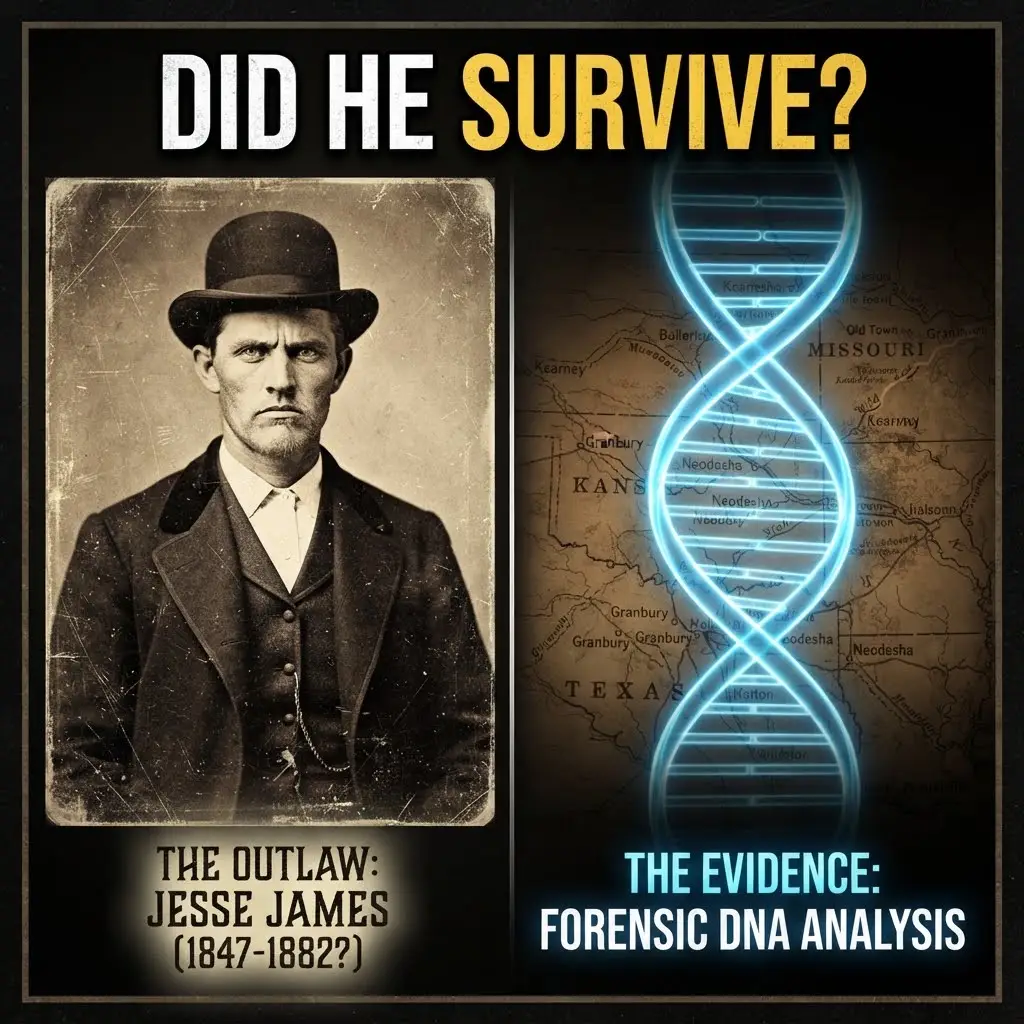
The Jesse James DNA Myth: Why Are There 3 Graves?
FAQs
What is the purpose of DNA testing in the case of Kansas Jeremiah James?
DNA testing in the case of Kansas Jeremiah James is being conducted to determine his biological parentage and to establish any familial relationships.
How is DNA testing carried out in the case of Kansas Jeremiah James?
DNA testing in the case of Kansas Jeremiah James is typically done through a simple and non-invasive process, such as a cheek swab, to collect DNA samples for analysis.
What are the potential outcomes of the DNA testing for Kansas Jeremiah James?
The potential outcomes of the DNA testing for Kansas Jeremiah James include confirming his biological parents, identifying any siblings or other relatives, and providing clarity on his genetic background.
Is DNA testing in the case of Kansas Jeremiah James legally admissible?
Yes, DNA testing in the case of Kansas Jeremiah James is legally admissible and can be used as evidence in legal proceedings to establish biological relationships.
How long does it typically take to receive the results of DNA testing for Kansas Jeremiah James?
The timeframe for receiving the results of DNA testing for Kansas Jeremiah James can vary, but it usually takes a few weeks to a couple of months to process the samples and provide conclusive results.