The collapse of the Hittite Empire, a formidable power in the Late Bronze Age, did not signify the end of its cultural influence. While the political structures and centralized authority crumbled, often attributed to the Sea Peoples’ invasions and internal strife around 1178 BCE, the embers of Hittite civilization continued to glow, shaping the landscape of the ancient Near East for centuries to come. This legacy manifested in various forms, from linguistic and religious continuity to artistic styles and political adaptations, demonstrating the enduring impact of a once-dominant culture. The Hittites left an indelible mark, a testament to their sophisticated society and the resilience of their cultural contributions, which seeped into the fabric of successor states and neighboring civilizations.
Whispers of the Old Kingdom: Linguistic and Administrative Continuity
The immediate aftermath of the Hittite Empire’s fall saw a fragmentation of the Anatolian heartland. However, the administrative and linguistic foundations laid by the Hittites proved remarkably persistent. In the vacuum left by the empire, smaller Neo-Hittite city-states emerged, particularly in southeastern Anatolia and northern Syria. These successor entities, while politically independent, often inherited and adapted Hittite administrative practices and bureaucratic terminology. The Akkadian language, which had served as the lingua franca of diplomacy and administration within the Hittite Empire, continued its role in these Neo-Hittite kingdoms, often alongside Luwian, the indigenous Anatolian language.
The Lingering Echoes of Luwian
Luwian, the Anatolian language spoken by the majority of the Hittite populace, did not vanish with the empire. While Hittite cuneiform script faded from common use, Luwian continued to be spoken and, significantly, was increasingly adapted to hieroglyphic script. This development is a crucial indicator of cultural adaptation and survival. The monumental inscriptions found in Neo-Hittite sites, such as Carchemish and Malatya, are predominantly in Hieroglyphic Luwian. These inscriptions, detailing the reigns of local rulers, their military achievements, and their dedications to deities, serve as direct descendants of the administrative and historical records kept by the Hittites. The very act of monumental inscription, a practice well-established by the Hittites, was perpetuated and adapted by their successors. The vocabulary and grammatical structures found in these later Luwian texts often reveal a direct lineage from the older Hittite language, demonstrating a continuity of thought and expression. It was not merely a matter of borrowing words; it was the preservation of a linguistic heritage.
Administrative Blueprints for New Regimes
The Hittite bureaucracy, with its intricate systems of taxation, land allocation, and legal codes, provided a ready-made model for the nascent Neo-Hittite states. While direct evidence of Hittite administrative texts being copied verbatim is scarce, the structure and terminology employed in Neo-Hittite documents suggest a profound influence. The concept of the “king’s land,” the management of temple estates, and the organization of military levies likely drew heavily from Hittite precedents. Even in regions where Akkadian maintained its prestige, the underlying organizational principles may have been informed by Hittite practices. This administrative continuity, though less visible than linguistic or artistic manifestations, was fundamental to the stability and functioning of these successor polities, allowing them to establish their own forms of governance in a post-imperial world. The Hittites had mastered the art of statecraft, and their expertise, even if indirectly transmitted, provided a solid foundation for those who followed.
The Hittite culture, which flourished in Anatolia during the second millennium BCE, experienced a significant decline following the collapse of their empire around 1200 BCE. This period of upheaval led to a transformation in the region’s social and economic structures, as well as shifts in maritime practices among neighboring cultures. For a deeper understanding of how ancient mariners navigated these turbulent times and adapted their wayfinding techniques, you can explore the article “Navigating the Seas: Ancient Mariners’ Lost Wayfinding” available at this link.
Religious Syncretism and Divine Persistence
The religious landscape of the ancient Near East was characterized by a remarkable degree of syncretism, and the Hittite pantheon played a significant role in this process. Even after the empire’s fall, the worship of Hittite deities persisted, often integrated into the religious systems of neighboring cultures. The Hittites themselves were adept at incorporating foreign gods into their own pantheon, a practice that facilitated the transmission of their deities to other peoples.
The Enduring Pantheon: Storm Gods and Sun Goddesses
The Storm God of Hatti and the Sun Goddess of Arinna were two of the most prominent deities in the Hittite pantheon. Their worship, deeply ingrained in Hittite society, did not cease with the empire. In the Neo-Hittite city-states, these deities continued to be venerated, often alongside local deities. Furthermore, the influence of Hittite religion extended beyond Anatolia. The Storm God of Hatti, in particular, left a significant imprint on the religious beliefs of the Arameans and Phoenicians. The Assyrians, in their later expansion, also adopted and adapted aspects of Hittite religious practices, including the iconography and attributes associated with certain deities. The resilience of these divine figures highlights the enduring power of religious beliefs and their ability to transcend political boundaries. The very essence of Hittite spiritual life, embodied in their gods, found new homes and continued to inspire devotion.
Rituals and Omen Interpretation: A Shared Heritage
Hittite ritual texts and practices, particularly those related to omen interpretation and divination, also seem to have influenced neighboring cultures. The Hittites were meticulous record-keepers of omens, and their systematic approach to understanding the divine will through signs and portents may have been adopted by other societies seeking to understand their own destinies. While direct textual evidence of this transmission can be elusive, the shared cultural milieu of the Late Bronze Age and its immediate aftermath suggests a flow of such practices. The meticulous observation of natural phenomena and their interpretation for political and personal guidance was a hallmark of ancient Near Eastern societies, and the Hittites were significant contributors to this tradition. Their emphasis on structured ritual and the seeking of divine guidance likely found receptive audiences in the post-imperial era, reinforcing a sense of shared cultural heritage.
Artistic Echoes: Sculptural Traditions and Architectural Motifs
The artistic output of the Hittite Empire was distinctive, characterized by its monumental scale, its powerful and often stylized depictions of figures, and its integration of both Anatolian and Mesopotamian influences. While the grand imperial constructions ceased, the artistic traditions of the Hittites continued to inform the art of the Neo-Hittite city-states and left their mark on other regional styles.
The Rise of Neo-Hittite Sculpture
The Neo-Hittite period witnessed a flourishing of monumental sculpture, particularly in the form of orthostats – carved stone slabs that adorned the bases of city walls and palace façades. These orthostats often depicted processions of tribute bearers, religious scenes, mythological narratives, and representations of kings and deities. The style of these sculptures, while evolving, clearly shows a debt to Hittite precedents. The rendering of musculature, the depiction of clothing, the characteristic profile views of figures, and the use of processions are all elements that can be traced back to the artistic conventions of the Hittite Empire. Carchemish, in particular, became a major center for Neo-Hittite art, producing some of the most impressive examples of this tradition. The relief carving, the attention to detail in regalia and weaponry, and the narrative quality of these reliefs all speak to a direct artistic lineage. It was not a mere imitation but an adaptation and continuation of a powerful sculptural tradition.
Architectural Legacies and Iconographic Borrowing
Beyond sculpture, Hittite architectural elements and iconographic motifs also saw a degree of continuity. The distinctive “crowstep” crenellation, a characteristic feature of Hittite fortifications, can be found in Neo-Hittite architecture. Similarly, certain decorative elements and symbols, such as winged sun discs and representations of bull horns, which held symbolic meaning for the Hittites, continued to appear in the art and architecture of successor states. While the grand temple complexes and palaces of the Hittite Empire were not replicated in scale, the underlying aesthetic principles and symbolic language persisted. This architectural and iconographic borrowing demonstrates a conscious engagement with the past, a desire to evoke the grandeur and legitimacy associated with the Hittite Empire, even as new political entities emerged. The very stones of their cities whispered the stories of their predecessors.
The Hittite Script and its Successors: From Cuneiform to Hieroglyphs
The writing systems employed by the Hittites played a crucial role in their administration and cultural expression. The cuneiform script, borrowed from Mesopotamia, was adapted for the Hittite language, while the indigenous Luwian language developed its own hieroglyphic script. The decline of the empire saw a shift in the prominence of these scripts.
The Fading of Cuneiform
The cuneiform script, used for Hittite proper, largely disappeared with the collapse of the empire. The cuneiform tradition was primarily associated with the Hittite administration and its scribal schools. As these institutions dissolved, so too did the widespread use of Hittite cuneiform. While isolated instances of cuneiform might have persisted in certain regions or for specific purposes for a short time, it did not become the script of choice for the successor states. The focus shifted, and the complex system of wedge-shaped signs gradually faded from practical use in Anatolia and northern Syria, replaced by other scripts that were more readily adaptable to the evolving political and linguistic landscape.
The Flourishing of Hieroglyphic Luwian
In contrast, the Hieroglyphic Luwian script experienced a resurgence and significant development in the Neo-Hittite period. This script, which had likely been in use for administrative and monumental purposes during the empire, became the primary medium for recording Luwian in the Neo-Hittite city-states. The monumental inscriptions found across the region are almost exclusively in this script. The evolution of Hieroglyphic Luwian during this period, with regional variations in style and the development of a more standardized script, highlights its importance as a symbol of local identity and cultural continuity. The clarity and symbolic power of these hieroglyphs made them ideal for public pronouncements and monumental statements, allowing the Neo-Hittite rulers to connect their reigns to the ancient legacy of Anatolian civilization. The visual language of these hieroglyphs became a powerful tool for asserting a distinct identity in a changing world.
After the collapse of the Hittite Empire, the cultural landscape of Anatolia underwent significant transformations, leading to the emergence of new powers and influences in the region. Scholars have explored how the remnants of Hittite culture persisted and adapted in the face of these changes, particularly in the realms of language, art, and governance. For a deeper understanding of the complexities surrounding cultural transitions in ancient civilizations, you might find this article on militarization and logistics in deep space intriguing, as it draws parallels to how societies evolve and secure their legacies in challenging environments. You can read more about it here.
The Hittite Influence on Neighboring Powers: A Broader Impact
| Aspect | Details | Time Period | Notes |
|---|---|---|---|
| Political Structure | Fragmented city-states and Neo-Hittite kingdoms | c. 1180–700 BCE | Successor states emerged in southeastern Anatolia and northern Syria |
| Language | Use of Luwian hieroglyphs and Aramaic | c. 1100–700 BCE | Transition from Hittite cuneiform to local scripts and languages |
| Art and Architecture | Continuation of Hittite artistic motifs with Assyrian influences | c. 1100–700 BCE | Reliefs and sculptures depicting gods and kings |
| Religion | Preservation of Hittite deities with syncretism | c. 1100–700 BCE | Integration of local and Mesopotamian gods |
| Economy | Trade networks maintained with neighboring regions | c. 1100–700 BCE | Focus on agriculture, metallurgy, and trade |
| Military | Smaller scale warfare among Neo-Hittite states and against Assyrians | c. 1100–700 BCE | Decline in large-scale Hittite military power |
The fall of the Hittite Empire did not isolate Anatolia and northern Syria; rather, it led to a diffusion of Hittite cultural elements into neighboring civilizations, most notably the Arameans and, to a lesser extent, the Assyrians and Phoenicians. The power vacuum created by the Hittite collapse allowed these emerging powers to absorb and adapt aspects of Hittite culture, incorporating them into their own developing identities.
Aramean Adoption and Adaptation
The Arameans, who rose to prominence in the centuries following the Hittite collapse, were particularly receptive to Hittite cultural influences. Their expanding trade networks and increasingly settled communities facilitated the exchange of ideas, technologies, and cultural practices. Aramean kingdoms adopted Hittite architectural styles, particularly in fortifications and monumental structures. They also likely inherited aspects of Hittite administrative organization and legal traditions. Moreover, the Arameans are believed to have borrowed certain religious concepts and iconography from the Hittites, especially regarding storm deities. The spread of Aramaic script, which eventually became the dominant lingua franca of the Near East, may also have been indirectly influenced by the scribal traditions that existed within the Hittite sphere. The Arameans, in their ascendant trajectory, became significant inheritors and disseminators of the Hittite legacy.
Assyrian Encounters and Incorporations
The Neo-Assyrian Empire, which emerged as a major power in the later Iron Age, also had significant interactions with the Neo-Hittite states and, consequently, with Hittite cultural remnants. Assyrian conquest and control over these regions led to a direct encounter with Hittite traditions that had been preserved or adapted. While the Assyrians had their own rich cultural heritage, they were also adept at incorporating elements from conquered peoples. There is evidence to suggest that Assyrian art, particularly in its monumental reliefs, was influenced by Neo-Hittite styles, especially in the depiction of figures and narrative scenes. Furthermore, the Assyrians likely absorbed certain Hittite administrative and legal concepts through their interactions with the Neo-Hittite kingdoms. The Assyrian kings, in their grand pronouncements and inscriptions, often sought to legitimize their rule by referencing the ancient traditions of the lands they controlled, including those that bore the imprint of the Hittites.
The legacy of Hittite culture after the empire’s collapse is a testament to the enduring power of civilization. Though their empire fractured, their language, religion, art, and administrative practices continued to resonate, shaping the identities and development of successor states and neighboring powers. The whispers of the old Hittite kingdom, carried on the winds of change, continued to inform the cultural tapestry of the ancient Near East for centuries, a profound and lasting testament to their once-great civilization. Their influence, though often subtle and indirect, was undeniably woven into the fabric of the subsequent historical and cultural landscape.

Your 401(k) Withdrawal Can Make More of Your Social Security Taxable
FAQs
What caused the collapse of the Hittite Empire?
The collapse of the Hittite Empire was likely caused by a combination of factors, including invasions by the Sea Peoples, internal unrest, and possibly climate change leading to drought and famine.
How did the collapse of the Hittite Empire impact Hittite culture?
After the collapse of the Hittite Empire, Hittite culture continued to exist in a fragmented form among smaller city-states and regions. The central authority of the empire was gone, leading to a decentralization of power and cultural practices.
What were some key aspects of Hittite culture that persisted after the empire’s collapse?
Some key aspects of Hittite culture that persisted after the empire’s collapse include their language, religious beliefs, artistic styles, and architectural techniques. These elements continued to influence the regions that were once part of the empire.
How did the Hittite culture adapt to the post-collapse period?
After the collapse of the Hittite Empire, Hittite culture adapted by integrating with other cultures in the region, such as the Assyrians and Phrygians. This cultural blending led to the development of new artistic styles, religious practices, and political structures.
What archaeological evidence exists to help us understand Hittite culture after the collapse?
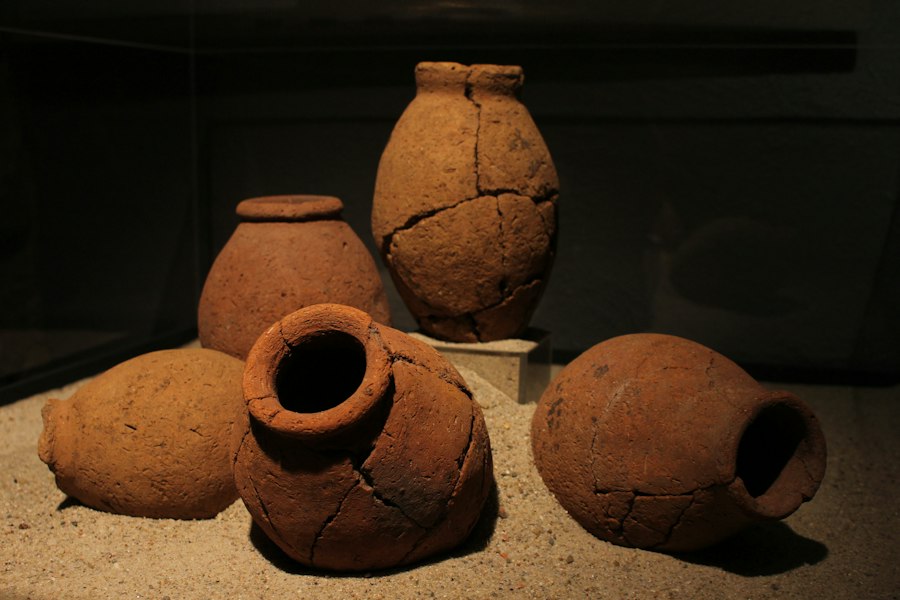
Archaeological evidence such as pottery, inscriptions, and architectural remains have provided valuable insights into Hittite culture after the collapse of the empire. Excavations at sites like Hattusa and other former Hittite cities have revealed important information about the continuation and transformation of Hittite cultural practices.