
So, you’re curious about “Life on Ice: A Dramatic Reenactment of Ice Age Camps and Survival.” Let’s dive in. The short answer is, as of right now, there isn’t a widely publicized, specific production with that exact title making waves in the news or entertainment world. Think of it like this: if it were a big movie release, a Broadway show, or a major documentary series, we’d likely be hearing about it.
However, the idea behind such a reenactment is absolutely fascinating and deeply rooted in what archaeologists and paleontologists are uncovering. While we don’t have a show by that name, the themes it would explore – how our ancient ancestors survived the incredibly harsh conditions of the Ice Age – are very much alive in scientific research and other forms of media. So, while the specific title might be elusive, the essence of Ice Age survival is a rich and ongoing area of study.
The Enduring Allure of the Ice Age
The Ice Age, a period stretching back hundreds of thousands of years, conjures images of vast, frozen landscapes, formidable megafauna, and human survival against overwhelming odds. It’s a time that ignites the imagination, prompting us to ask fundamental questions: How did our ancestors, armed with relatively simple tools, manage to not just endure, but thrive in such brutal environments? What were their daily lives like, their struggles, their triumphs? The appeal lies in connecting with our deepest past, understanding the resilience that has allowed humanity to spread across the globe, and appreciating the ingenuity required to carve out an existence where survival was a daily, often precarious, achievement. This fascination is not new; it’s a recurring theme in human curiosity about our origins and the incredible journey our species has taken.
Why Ice Age Survival Captivates Us
The Ice Age presents a unique crucible for human adaptation. Unlike many other historical periods that might focus on societal structures or technological advancements in more familiar contexts, the Ice Age strips away the comforts of civilization. It forces us to consider the absolute basics: shelter, warmth, food, and safety from predators. These are primal concerns that resonate with everyone. When we think about Ice Age survival, we’re often thinking about the rawest form of human existence, the fundamental drives that shaped our evolution. The sheer scale of the challenge – mammoths, saber-toothed cats, blizzards, and a world very different from our own – makes for compelling narratives of struggle and perseverance. It’s a testament to the tenacity of the human spirit.
In exploring the fascinating world of prehistoric life, the dramatized reconstruction of Ice Age camps offers a vivid glimpse into the survival strategies of our ancient ancestors. For those interested in how modern technology intersects with historical narratives, a related article discusses the innovative developments in securing lunar power grids, which could revolutionize our understanding of energy in extreme environments. You can read more about this intriguing topic in the article found here: Securing Lunar Power Grid Development.
Unearthing the Secrets of Ancient Camps
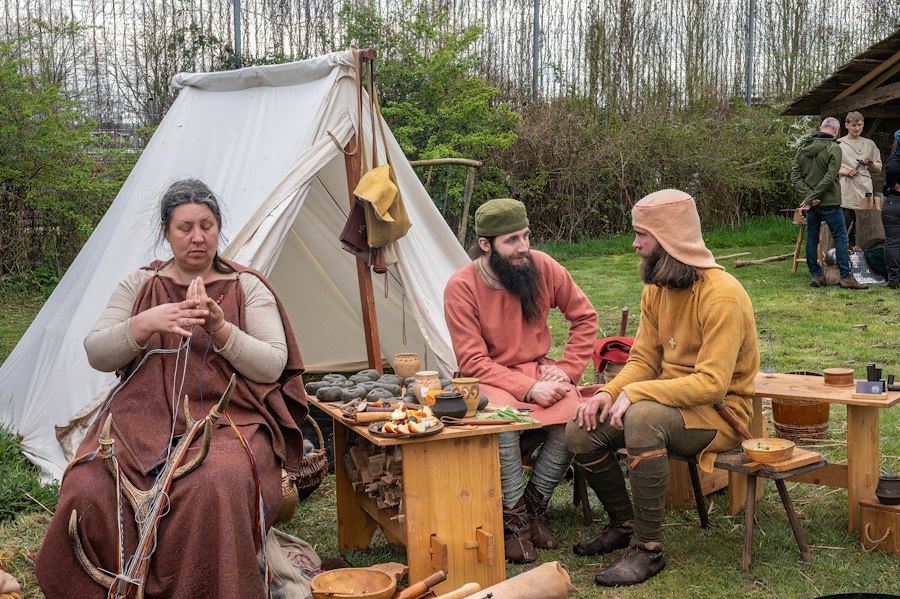
While we might not have a direct theatrical or cinematic production with the exact title “Life on Ice: A Dramatic Reenactment of Ice Age Camps and Survival,” the scientific community is constantly unearthing new details about what life was like. These archaeological discoveries are, in their own way, dramatic reenactments, pieced together from fragmented evidence left behind by people who lived tens of thousands of years ago. Imagine digging into the earth and finding the faint outlines of ancient hearths, discarded tools, and animal bones – each a clue to a long-vanished world. These sites are our primary window into how people organized their lives, secured resources, and navigated the challenging landscapes of the Ice Age.
Evidence from the Ground Up
Archaeological digs provide the bedrock of our understanding. Researchers meticulously excavate sites, looking for patterns and artifacts. For instance, studies on base camps, like those found on the Bering Land Bridge in Alaska dating back 13,800 to 12,700 years ago, offer incredibly detailed insights. These digs reveal structured living areas, with distinct zones for cooking (hearths), processing game (butchering areas), and crafting tools. The presence of specialized tools suggests a division of labor and a sophisticated understanding of their environment. The types of animal bones found, and how they are fragmented, tell us what was hunted, how it was transported, and how it was consumed. This isn’t just random debris; it’s a carefully preserved record of human activity.
Reconstructing Daily Routines
From the artifacts and structures unearthed, archaeologists can begin to reconstruct the daily routines of Ice Age people. Think about the simple act of making a fire. Evidence of hearths tells us not only that they made fire but also where and how. Were these fires central to communal living? Were they used for warmth, cooking, or protection? The presence of specific tool types – flint spearheads, bone needles, scrapers – indicates activities like hunting, hide preparation, and clothing manufacture. The arrangement of these findings within a camp can suggest how space was organized, perhaps indicating sleeping areas, communal gathering spots, and specialized work zones. This allows us to visualize the rhythm of life, from the morning hunt to the evening gathering around the fire.
The Backbone of Survival: Shelter and Sustenance
For anyone trying to survive the Ice Age, two things were absolutely paramount: staying warm and finding enough to eat. These weren’t minor inconveniences; they were the constant, all-consuming challenges that dictated every decision. Without effective shelter, hypothermia was a swift and deadly threat. Without a reliable food source, starvation was inevitable. The ingenuity and resourcefulness displayed in meeting these basic needs are truly remarkable, showcasing the deep evolutionary drive that kept humanity alive during this formidable era.
Building a Haven Against the Cold
Shelter in the Ice Age was not about comfort; it was about survival. The structures people built needed to withstand fierce winds, snow, and freezing temperatures. Evidence from various sites suggests a range of techniques. Some groups likely utilized natural features like caves and rock overhangs, enhancing them with animal hides and branches. Others constructed more elaborate shelters, often semi-subterranean dwellings that provided excellent insulation. These might have been built using mammoth bones and hides stretched over a framework of wood or bone. The ability to find or create such a haven was crucial for escaping the elements, allowing for rest, food preparation, and protection from predators. The internal organization of these shelters, with specific areas for sleeping or cooking, further highlights a sophisticated understanding of their needs.
The Hunt for Sustenance
The diet of Ice Age humans was largely dictated by what was available in their environment, and this meant a significant reliance on hunting. The large mammals of the era – mammoths, woolly rhinoceros, bison, reindeer – provided not just meat but also hides for clothing and shelter, bones for tools and weapons, and fat for fuel. The hunting strategies employed were likely varied and highly coordinated. We can infer from archaeological evidence that these hunts were dangerous undertakings, requiring teamwork, specialized tools, and a deep knowledge of animal behavior. The butchering sites unearthed by archaeologists show how these massive animals were processed, indicating efficient use of every part. It wasn’t just about bringing down prey; it was about maximizing the return from each successful hunt.
Community and Culture in a Harsh World
Survival on the Ice Age was rarely a solitary endeavor. Humans are social beings, and the immense challenges of the era would have necessitated strong community bonds. These groups weren’t just about shared survival; they were also the incubators of early culture, where knowledge was passed down, traditions formed, and a sense of identity was forged. Even in the most challenging circumstances, there were elements of social organization, communication, and shared experience that went beyond mere existence.
The Strength of the Group
Cooperation was essential for hunting large game, sharing resources, and protecting the vulnerable within the group. Archaeological evidence, such as the clustering of settlements or evidence of shared activities at a site, points to the importance of communal living. Imagine a small band working together to track a mammoth, or a group huddled around a fire, sharing stories and reinforcing social ties. These shared experiences would have been vital for psychological well-being as well as physical survival. The ability to form and maintain these social networks would have been a significant factor in human success during the Ice Age.
Passing Down the Knowledge
The skills and knowledge needed to survive the Ice Age were not innate; they had to be learned and passed down through generations. This transmission of information would have been a cornerstone of their culture. Think of the complex techniques required to knap flint into sharp tools, to prepare hides for clothing, or to track animals through vast, often treacherous landscapes. These skills were likely taught through observation, practice, and verbal instruction. Storytelling, art, and ritual would have played a role in reinforcing social norms, passing on crucial knowledge about the environment, and providing a sense of meaning and connection in a world that could often feel overwhelming. The surviving cave paintings, for example, are not just art; they are a window into the minds and beliefs of these early people.
Recent studies have shed light on the fascinating world of Ice Age camps, revealing how early humans adapted to their harsh environments. A related article discusses the strategic development plans that have emerged in various regions, showcasing how modern societies can learn from ancient survival strategies. For more insights on this topic, you can read about Mexico’s strategic development initiatives in this article. Understanding these historical contexts not only enriches our knowledge of human resilience but also informs contemporary planning efforts.
Modern Echoes and Future Explorations
| Metric | Value | Description |
|---|---|---|
| Number of Camps Reconstructed | 5 | Total dramatized Ice Age camps recreated for study and exhibition |
| Average Camp Size | 150 m² | Estimated living area based on archaeological findings |
| Duration of Reconstruction | 3 months | Time taken to build each camp using period-accurate methods |
| Number of Participants | 20 | Actors and archaeologists involved in the dramatized reconstruction |
| Types of Materials Used | Stone, wood, animal hides | Authentic materials sourced to replicate Ice Age living conditions |
| Temperature Range Simulated | -10°C to 5°C | Environmental conditions recreated to mimic Ice Age climate |
| Duration of Camp Occupation | 2 weeks | Period actors lived in the camp to simulate daily life |
| Number of Educational Workshops | 10 | Workshops held to educate visitors about Ice Age survival techniques |
While “Life on Ice: A Dramatic Reenactment of Ice Age Camps and Survival” might not be a title you can go see at the cinema or on a stage right now, the spirit of it is very much alive. The ongoing discoveries in archaeology, coupled with the broader interest in our prehistoric past, mean that the story of Ice Age survival is constantly being retold and re-examined. Documentaries and series that explore prehistoric life, even if not under this specific banner, are bringing these ancient worlds to life for modern audiences, often incorporating the latest scientific findings about how our ancestors coped with extreme environments.
The Continuous Unveiling of the Past
The field of archaeology is a dynamic one. New technologies and analytical methods allow researchers to extract more information from ancient sites than ever before. For example, advanced DNA analysis can reveal migration patterns and even genetic relationships between ancient populations, while sophisticated dating techniques refine our understanding of timelines. This means our picture of Ice Age life is not static; it’s continually being updated and enriched. Each new excavation, each re-analysis of existing finds, adds another layer to our understanding of how these early humans adapted, innovated, and ultimately, survived. This ongoing process is, in essence, a continuous dramatic reenactment, bringing the distant past into sharper focus with every discovery.
Engaging with the Ice Age Today
The fascination with the Ice Age endures, and it manifests in various ways. While a specific theatrical production might not be currently advertised, other media like documentaries and educational programs actively explore this period. Series such as Apple TV’s Prehistoric Planet have brought the natural world of prehistoric times to vivid life, and while its focus might vary, the broader theme of life in extreme conditions, including Ice Age environments, is a common thread in such content. Furthermore, museums and historical sites often feature exhibits dedicated to prehistoric life, allowing the public to engage directly with artifacts and interpretations of Ice Age societies. The ongoing scientific research, as mentioned with the Bering Land Bridge findings, also keeps the practical realities of Ice Age survival in the public consciousness, even if presented in a scientific rather than dramatized format. The potential for a dedicated, dramatic reenactment remains, and as our knowledge grows, so does the possibility for compelling new ways to bring this incredible chapter of human history to life.

Life 20,000 Years Ago | When Your Ice Age Family Can’t Feed the Dog
FAQs
What is a dramatized reconstruction of Ice Age camps?
A dramatized reconstruction of Ice Age camps is a creative representation that aims to depict the living conditions, social interactions, and daily activities of prehistoric humans during the Ice Age. These reconstructions often involve actors, detailed set designs, and historical research to provide an immersive experience that reflects the realities of life during that period.
What materials were typically used to construct Ice Age camps?
Ice Age camps were primarily constructed using natural materials available in the environment, such as wood, animal hides, and stones. These materials were utilized to create shelters, fire pits, and storage areas, allowing prehistoric humans to adapt to their surroundings and survive harsh climatic conditions.
How do researchers determine the accuracy of these reconstructions?
Researchers use a combination of archaeological evidence, anthropological studies, and experimental archaeology to ensure the accuracy of dramatized reconstructions. This includes analyzing artifacts, studying ancient tools, and examining the remains of past settlements to gather insights into the lifestyles and practices of Ice Age peoples.
What role do actors play in these reconstructions?
Actors in dramatized reconstructions portray the daily lives of Ice Age humans, engaging in activities such as hunting, gathering, and crafting tools. Their performances help to bring the historical context to life, allowing audiences to better understand the challenges and social dynamics of the time.
Where can one experience these dramatized reconstructions?
Dramatized reconstructions of Ice Age camps can often be experienced at historical reenactment events, museums, and educational programs focused on prehistoric life. Some archaeological sites may also host live demonstrations or guided tours that include dramatized elements to enhance visitor engagement and learning.