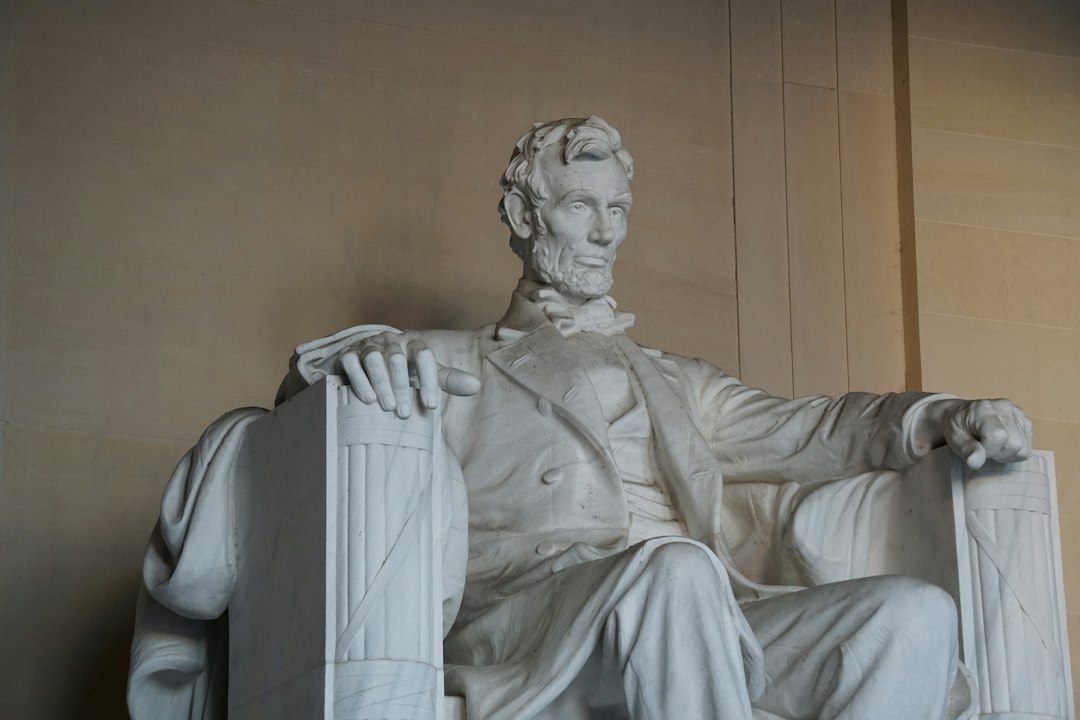
The question of Abraham Lincoln’s paternal lineage has long been a subject of persistent historical inquiry, a knot in the tapestry of American history that continues to fascinate and elude definitive unraveling. While the broad strokes of Lincoln’s life and presidency are etched in the annals of the nation, the precise identity of his father, Thomas Lincoln, and the circumstances surrounding his birth and parentage, remain shrouded in a degree of ambiguity that has fueled decades of speculation and research. This article will delve into the known facts, the prevailing theories, and the enduring mysteries that surround the paternal identity of the sixteenth president, exploring the historical context, the documentary evidence, and the challenges in definitively resolving this intriguing puzzle.
The Established Narrative and Early Doubts
The generally accepted account of Abraham Lincoln’s birth places him as the son of Thomas Lincoln and Nancy Hanks Lincoln. Thomas Lincoln, a farmer and carpenter, was a man of modest means who moved frequently throughout his life, settling in Kentucky, Indiana, and eventually Illinois. His marriage to Nancy Hanks in 1806 is well-documented. Abraham Lincoln was born on February 12, 1809, in a log cabin near Hodgenville, Kentucky. This narrative, while widely accepted, has been subject to scrutiny over the years, not due to outright contradictions in primary source documents, but rather due to certain circumstantial elements and a relative lack of explicit, unambiguous statements from Lincoln himself or his closest biographers regarding the paternity beyond the established marriage.
Early Biographical Accounts
The earliest biographies of Lincoln, written shortly after his death, largely followed the established lineage. However, even these accounts sometimes betray a certain reticence or lack of detailed information about Thomas Lincoln’s own background and ancestry. This can be attributed, in part, to the common illiteracy and transient nature of many families in the frontier era, where detailed genealogical records were not a priority or even a possibility. The focus was on survival and establishing a life, not on meticulously preserving family trees. When Lincoln himself spoke of his parents, he tended to do so with affection but without delving into exhaustive biographical details. This personal reserve, coupled with the societal norms of the time regarding public discussion of family matters, contributed to the nascent silences that would later be interpreted as significant.
The “Illegitimate Son” Hypothesis
The idea that Abraham Lincoln might have been born out of wedlock, or that Thomas Lincoln might not have been his biological father, began to emerge and gain traction in later years. This hypothesis often hinges on the perceived social standing of the Hanks family, Nancy Hanks’s maternal lineage, and the perceived lack of substantial documentation directly linking Thomas Lincoln to Abraham’s birth in a way that might satisfy a modern, rigorous genealogical standard. These doubts, while often fueled by a desire to “uncover” a hidden truth or to sensationalize a historical figure, have also prompted diligent historians to re-examine the available evidence with a critical eye.
The mystery surrounding Abraham Lincoln’s father has intrigued historians and enthusiasts alike, prompting various discussions about the influences that shaped the iconic president. A related article that delves into historical enigmas and their implications is available at this link: Unlocking the True Purpose of the Baghdad Battery. This piece explores the significance of ancient artifacts and their connections to broader historical narratives, paralleling the exploration of Lincoln’s paternal lineage and the impact of ancestry on identity.
Tracing the Lincoln Family Tree
To understand the mystery, it is essential to examine the known lineage of Thomas Lincoln. The Lincoln family had a presence in America dating back to the colonial period. Thomas Lincoln’s father was also named Abraham Lincoln, a Virginia planter who, along with his wife Bathsheba Herring, moved to Kentucky. This elder Abraham Lincoln was killed by Native Americans in 1786, an event that significantly impacted the family’s fortunes and prompted his son, Thomas, to become largely self-sufficient at a young age.
Thomas Lincoln’s Early Life and Marriage
Thomas Lincoln’s early life was marked by hardship and frequent relocations. He learned the carpenter’s trade and worked as a farmhand. His marriage to Nancy Hanks in 1806 is recorded in the vital statistics of Washington County, Kentucky. The officiant was Jesse Head, a minister. While the marriage itself is not in doubt, the circumstances surrounding Nancy Hanks’s own parentage have been a focal point of the paternity debate. Nancy’s mother was Lucy Hanks, and the identity of Nancy’s father has been a subject of much discussion, with some suggesting it was an unknown or possibly a prominent figure of the era. This uncertainty about Nancy’s paternal line has, by extension, cast a shadow of doubt on Thomas’s role as Abraham’s father.
The Hanks Family and Social Standing
The Hanks family, particularly Nancy’s mother Lucy, were often described as poor and of lower social standing than some of their contemporaries. This has led some to speculate that Nancy might have been involved with a man of higher social standing, who then, for reasons of reputation or circumstance, did not acknowledge the child. However, the historical record does not provide strong evidence to support such claims. While the Hanks were not wealthy, they were part of the frontier society, and marriage between individuals of varying social strata was not uncommon. The argument that a more prominent father would have taken responsibility, or that Nancy’s lineage inherently suggests illegitimacy, is a speculative leap rather than a conclusion drawn from direct evidence.
The Documentary Evidence: What We Know and What’s Missing
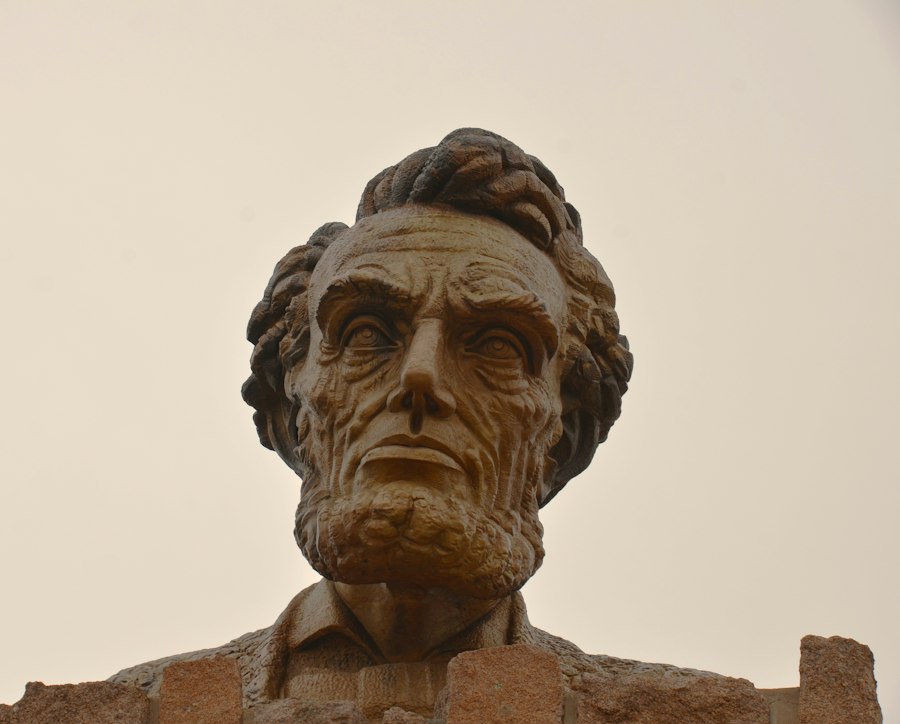
The investigation into Lincoln’s paternity relies on a careful examination of existing documents. These include marriage records, land deeds, tax lists, personal letters, and contemporary accounts. While the marriage of Thomas and Nancy Lincoln is documented, the absence of more explicit familial records directly linking Thomas as the biological father of Abraham, especially in a way that would satisfy modern genealogical standards, is a key element in the ongoing debate.
Marriage and Birth Records
The marriage record of Thomas Lincoln and Nancy Hanks, dated June 12, 1806, in Washington County, Kentucky, is a crucial piece of evidence. This record establishes their legal union. However, the birth record of Abraham Lincoln in 1809 is less formal. In the frontier era, birth registration was not always meticulously maintained. While the fact of his birth to Nancy Hanks is clear, the explicit naming of Thomas Lincoln as the father in a formal birth certificate is often absent, as such documents were not universally required or standardized at the time. This omission, though common for the period, becomes a point of contention for those seeking absolute certainty.
Lincoln’s Own Statements and Biographies
Abraham Lincoln himself, in later autobiographical sketches, referred to Thomas Lincoln as his father. For instance, in a sketch written for the Illinois State Register in 1860, he stated, “My parents were both born in Virginia, of poor but respectable lineage. My father was Thomas Lincoln, and my mother, Nancy Hanks.” However, these statements, made later in life and often for public consumption, are sometimes viewed with skepticism by those who suspect a deliberate omission of a more complex truth. Early biographers, such as William Herndon, who interviewed many who knew Lincoln, also largely accepted Thomas as the father, though Herndon’s own research sometimes unearthed conflicting anecdotes or rumors.
The Absence of Definitive Proof
The core of the mystery lies in the absence of a “smoking gun” – a definitive document that unequivocally states, “Thomas Lincoln is the biological father of Abraham Lincoln,” presented in a manner that predates any potential motivation to fabricate or conceal. This lack of absolute, incontestable proof allows for the persistence of alternative theories, even if those theories are based on weaker evidence or more conjecture. Historians strive for evidence-based conclusions, and in the case of Lincoln’s paternity, the evidence, while strong for the established narrative, is not so overwhelmingly conclusive as to silence all speculation.
Leading Theories and Counterarguments
Over the years, several alternative theories have been proposed regarding Abraham Lincoln’s paternal identity. These theories range from the plausible to the highly speculative, and each has its proponents and detractors. Examining these theories alongside the counterarguments is crucial to understanding the full scope of the historical debate.
The “Unknown Father” Theory
This theory suggests that while Nancy Hanks was married to Thomas Lincoln, Abraham’s biological father was another man. This unknown father is often speculated to be of higher social standing, providing a reason for the secrecy. Some proponents point to the perceived resemblance between Lincoln and certain historical figures. However, the evidence for this is largely circumstantial and based on resemblances that are subjective and can be found between many unrelated individuals. There is no concrete documentary evidence to support the existence of a secret lover or a clandestine affair that resulted in Lincoln’s birth.
The “Moses of the Hanks Clan” Speculation
One persistent theory connects Lincoln’s paternity to a figure named “Moses,” often interpreted as a wealthy planter or landowner. This idea often stems from vague mentions in oral histories or anecdotal evidence passed down through generations of the Hanks family. However, identifying a specific “Moses” who could have been Nancy Hanks’s father or a significant figure in her life, and then linking him unequivocally to Abraham’s paternity, has proven to be an insurmountable challenge. The historical record lacks any clear individual matching this description with a strong, verifiable connection to Nancy Hanks and Abraham’s birth.
The “Southern Gentleman” Hypothesis
Another avenue of speculation suggests that Nancy Hanks may have had an affair with a wealthy Southern gentleman, perhaps during a period of travel or residence in Virginia. This theory often attempts to explain the perceived intellectual prowess of Lincoln, suggesting he inherited it from a more educated or sophisticated father. However, this remains entirely conjectural. The documentation of Nancy Hanks’s movements and social interactions does not readily support such a prolonged or significant relationship with a clandestine partner. Furthermore, Lincoln’s intellect is widely attributed to his own voracious reading habits and his keen observational skills, developed through his self-education and life experiences.
Counterarguments and the Strength of the Established Narrative
The primary counterargument to these speculative theories is the sheer lack of supporting evidence. The established narrative, while not possessing every conceivable piece of documentation, is supported by: the marriage record of Thomas and Nancy Lincoln; Lincoln’s own statements about his parents; and the general consensus of early biographers who had access to people and information no longer available. The absence of evidence for an alternative father is not evidence of his non-existence, but it does mean that the established narrative remains the most plausible and best-supported explanation based on the available historical record. The burden of proof, in historical inquiry, lies with those proposing extraordinary claims.
The mystery surrounding Abraham Lincoln’s paternal identity has intrigued historians for generations, leading to various theories and speculations. In a related article, the discussion of how historical narratives can shape our understanding of identity is explored in depth. This examination is particularly relevant when considering the broader implications of personal and national identity in the context of economic changes, such as those discussed in the article on nearshoring and its impact on American jobs. For more insights on this topic, you can read the article here.
The Enduring Legacy and Historical Significance
| Aspect | Details |
|---|---|
| Subject | Lincoln’s Father Identity Unknown |
| Historical Context | Abraham Lincoln’s father was Thomas Lincoln, whose identity is well-documented; no credible historical evidence suggests his identity is unknown. |
| Common Misconceptions | Some conspiracy theories or myths claim Lincoln’s paternity is uncertain, but these lack historical support. |
| Primary Sources | Birth records, family letters, and biographies confirm Thomas Lincoln as Abraham Lincoln’s father. |
| Impact of Misconceptions | Can lead to misinformation about Lincoln’s heritage and historical narrative. |
| Conclusion | Lincoln’s father identity is known and documented; claims of unknown paternity are unfounded. |
Regardless of the unanswered questions surrounding his paternal lineage, Abraham Lincoln’s impact on American history is undeniable. His presidency saw the nation through its most profound crisis, the Civil War, and his leadership preserved the Union and paved the way for the abolition of slavery. The mystery of his paternity, while intellectually engaging, does not diminish his achievements or the significance of his place in American consciousness.
Lincoln’s Character and the “Self-Made Man” Mythos
The enduring interest in Lincoln’s origins is perhaps tied to the powerful narrative of the “self-made man” that he embodies. His humble beginnings and his rise to the presidency are inspirational. The question of his paternity, in a way, could be seen as an attempt to further exoticize or explain his extraordinary rise, perhaps by attributing it to some unknown, exceptional heritage. However, Lincoln’s own life story demonstrates that extraordinary achievement can stem from determination, intellect, and opportunity, rather than solely from inherited status or lineage.
The Role of Genealogy and Historical Research
The ongoing fascination with Lincoln’s paternity highlights the dynamic nature of historical research. As new techniques in genealogy emerge and as historical documents are re-examined, our understanding of the past can evolve. While definitive answers may remain elusive, the pursuit of knowledge itself is valuable. The meticulous work of historians and genealogists who have delved into this mystery has illuminated many aspects of Lincoln’s family life and the frontier era, even if the central question remains open to interpretation for some.
The Importance of Context and Interpretation
It is crucial to approach historical mysteries like Lincoln’s paternity with an understanding of the context in which they arose. The frontier society of the early 19th century was vastly different from our own. Record-keeping was inconsistent, social norms were different, and the pursuit of accurate genealogical data was not a widespread practice. Interpreting the available evidence through a modern lens without acknowledging these historical realities can lead to misinterpretations and unfounded speculation. The absence of explicit documentation about Lincoln’s paternity, therefore, should be understood within the framework of its time, rather than solely as a deliberate act of concealment. The life and legacy of Abraham Lincoln stand on their own monumental achievements, and the subtle uncertainties surrounding his paternal identity, while a compelling historical footnote, do not fundamentally alter the course of the nation he led.
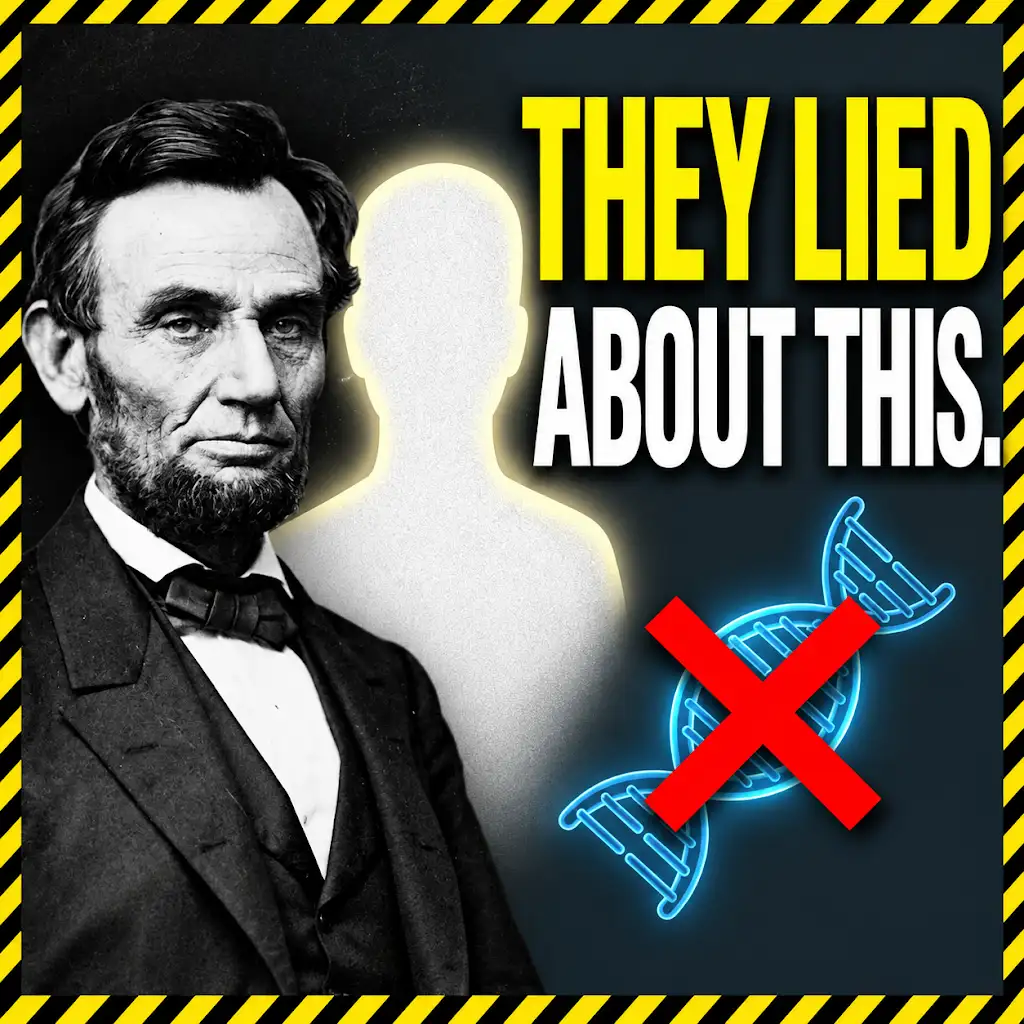
The Lincoln DNA Study: Why the Internet is Wrong
FAQs
1. Who was Abraham Lincoln’s father?
Abraham Lincoln’s father was Thomas Lincoln, a farmer and carpenter from Kentucky.
2. Why is the identity of Lincoln’s father unknown?
The identity of Abraham Lincoln’s father has been a subject of speculation and debate due to the lack of concrete evidence and conflicting historical accounts.
3. Are there any theories about Lincoln’s father’s identity?
Some theories suggest that Abraham Lincoln’s father may have been someone other than Thomas Lincoln, such as Abraham Enloe or Abraham Enlow, but these claims lack definitive proof.
4. How has the mystery of Lincoln’s father’s identity impacted historical research?
The uncertainty surrounding Lincoln’s father’s identity has led to continued research and analysis by historians and genealogists in an attempt to uncover the truth and shed light on Lincoln’s family history.
5. What evidence exists regarding Lincoln’s father’s identity?
Historical records, including census data, marriage certificates, and personal accounts, provide some information about Thomas Lincoln as Abraham Lincoln’s father, but definitive proof remains elusive.